
Smoked Turkey Breast up or Down: Easy Smoking Guide
When smoking turkey, choosing breast up gives you crisp, browned skin and easier temperature monitoring with direct heat exposure for a high-heat finish.
Breast down locks in moisture by self-basting, protecting the lean meat from drying out during slow cooking.
Flipping near the end balances juiciness and presentation. You’ll also want to take into account factors like altitude, inject seasoning, and allow resting for ideal results.
Exploring these details can help perfect your smoked turkey technique.
Key Takeaways
- Breast-up smoking promotes better skin browning, easier temperature monitoring, and allows high-heat finishing for crispy skin.
- Breast-down smoking enhances moisture retention through natural basting as fat drips over the breast.
- Flipping the turkey breast-up near the end balances juiciness with an appealing, browned skin presentation.
- Breast-up orientation offers direct heat and smoke exposure, improving Maillard reactions and texture.
- Breast-down shields breast from direct heat, enabling slower, even cooking and minimizing surface drying.
Which Orientation Is Best for Smoking Turkey Breast?

When deciding which orientation is best for smoking turkey breast, you’ll want to weigh the benefits of both breast-up and breast-down positions carefully.
Placing the turkey breast side up is common, offering easier internal temperature monitoring and the option for high-heat finishing to crisp the skin.
In contrast, breast-down positioning allows fat to baste the meat naturally, potentially enhancing juiciness and mimicking traditional roasting techniques.
This method also minimizes skin contact marks from equipment. You can flip the bird to breast-up later in cooking to adjust appearance.
Ultimately, your choice depends on whether you prioritize straightforward temperature tracking and skin presentation or moisture retention through consistent basting.
Both methods have valid merits and can be adapted based on your smoking preferences and goals.
For best results, maintaining a steady smoking temperature around 225–250°F ensures even cooking and optimal smoke flavor.
How Breast Up Enhances Skin Browning When Smoking Turkey?
Placing the turkey breast side up consistently promotes superior skin browning due to direct exposure to heat and smoke. This position allows the skin to dry and crisp efficiently, enhancing Maillard reactions that result in a visually appealing golden-brown crust. Additionally, you can monitor internal temperature more easily, ensuring ideal cooking without compromising skin quality.
Smoking at a consistent temperature promotes even cooking and helps develop a rich, flavorful crust through enhanced Maillard reactions.
| Factor | Breast Up | Impact on Skin Browning |
|---|---|---|
| Heat Exposure | Direct | Promotes even browning |
| Smoke Contact | Unobstructed | Enhances smoky flavor, color |
| Temperature Monitoring | Easy access to breast | Prevents overcooking |
| Skin Crisping Option | High-heat finishing possible | Improves texture |
| Aesthetic Outcome | Uniform golden-brown skin | More visually appealing |
This method objectively maximizes skin browning when smoking turkey.
How Breast Down Boosts Juiciness in Smoked Turkey?
When you place the turkey breast down, something magical happens. The fat from the turkey starts to baste the meat while it smokes, which really amps up the juiciness. It’s like giving the meat a cozy blanket of flavor!
This technique helps keep the moisture locked in, kind of like traditional roasting does, so your turkey stays nice and tender.
Now, if you’re worried about how it looks, you can always flip the breast up near the end. That way, you get that beautiful presentation without losing any of those juicy benefits. It’s the best of both worlds!
For even better moisture retention and flavor, consider spritzing during smoking to maintain surface moisture and enhance the overall taste.
Natural Basting Effect
Frequently, smoking enthusiasts choose the breast-down orientation to take advantage of the natural basting effect it provides.
When you position the turkey breast down, fat and juices from the bird’s upper parts drip continuously over the breast meat. This natural flow helps maintain moisture, effectively basting the meat throughout the smoking process without manual intervention.
The constant self-basting minimizes drying, especially during long, low-temperature cooking sessions. Additionally, this method mimics traditional roasting techniques that prioritize moisture retention.
While you might lose some skin crispness initially, the trade-off for juicier meat is significant. You can also flip the breast up near the end to address skin appearance.
Using an elevated grate ensures better smoke and heat circulation around the turkey for more even cooking while benefiting from the natural basting effect.
Moisture Retention Techniques
The natural basting effect observed with breast-down orientation directly contributes to improved moisture retention in smoked turkey.
When you place the breast down, fat consistently drips over the meat, creating a self-basting layer that minimizes surface drying.
This process helps the breast maintain its juiciness by reducing moisture loss through evaporation.
Additionally, the breast-down position shields the meat from direct heat exposure, allowing slower, more even cooking.
You’ll also notice minimal skin groove patterns, which preserve the structural integrity of the breast, preventing juices from escaping prematurely.
While you can flip the turkey breast up during the final hour for presentation, keeping it down initially guarantees peak hydration of the meat fibers.
This results in a tender, juicy smoked turkey breast with enhanced flavor retention.
For best results, always ensure the turkey is properly thawed before reheating to preserve texture and safety.
Traditional Roasting Benefits
Embracing the breast-down orientation during smoking taps into time-tested roasting principles that enhance juiciness by leveraging natural fat redistribution.
When you position the turkey breast down, fat continuously drips from the back over the breast meat, naturally basting it throughout the cooking process.
This technique mirrors traditional whole-bird roasting, which prioritizes moisture retention in leaner areas.
You’ll notice reduced surface dryness and improved tenderness compared to breast-up methods.
Additionally, this orientation minimizes skin contact with cooking surfaces, limiting groove marks and helping maintain a smooth exterior.
If needed, flipping the bird breast-side up during the final hour lets you balance appearance and texture.
To ensure optimal results, it is important to monitor internal temperature regularly to maintain safety and juiciness.
How to Monitor Internal Temperature for Breast Up and Down?
Monitor the internal temperature by inserting a wireless meat thermometer into the thickest part of the breast, regardless of whether you position it breast up or down. This guarantees consistent, accurate readings critical for food safety and peak juiciness.
With breast up, the probe access is straightforward, allowing easy adjustments during smoking. When placed breast down, you’ll need to carefully guide the thermometer through to the thickest breast muscle without contacting bone, which could skew results.
Aim for an internal temperature between 160°F and 165°F, accounting for carryover heat during resting. Regularly checking the temperature avoids overcooking and maintains moisture.
Wireless thermometers provide real-time data, eliminating guesswork and enabling timely decisions without opening the smoker and losing heat.
Using a continuous probe thermometer is essential to monitor temperature closely and achieve perfect doneness.
Timing Your Smoke: When to Flip and Use High Heat Finishing?
You’ll want to time your flip just right to keep that moisture in and get that beautiful skin browning. Usually, flipping it breast side down or up about an hour before finishing works best.
Now, when you crank up the heat at the end, it really helps crisp up the skin and boost the flavor. But keep a close eye on the temperature because you don’t want to risk overcooking it.
Getting the timing on your flip and that high heat finish can really make a difference in how your dish looks and tastes. Trust me, it’s worth paying attention to!
For best results, maintain a steady smoker temperature between 225–250°F during the smoking process to ensure even cooking and moisture retention.
Optimal Flip Timing
Although many smoking recipes recommend starting with the breast side up for better skin browning and easier temperature monitoring, knowing when to flip your turkey breast can materially impact juiciness and final appearance.
Flipping too early may disrupt the natural basting effect if you begin breast side down. Flipping too late can hinder skin crisping and even cooking.
| Flip Timing | Effect on Juiciness |
|---|---|
| Early (1-2 hours) | Maximizes fat basting |
| Midway (2-3 hours) | Balances moisture and browning |
| Late (3+ hours) | Enhances skin appearance |
Aim to flip at the midpoint of the total smoke time to optimize moisture retention and skin coloration before final cooking stages. Maintaining the skin-side up position during smoking promotes even moisture evaporation and helps achieve a crispier skin.
High Heat Finishing
Timing your flip during smoking sets the stage for an effective high heat finishing phase that crisps the skin and enhances flavor.
When you flip the turkey breast, typically after most of the smoke absorption and internal temperature rise, you prepare it for a short period of higher heat, usually above 300°F.
This step intensifies browning, especially on the skin side, improving texture and visual appeal.
You should monitor internal temperature closely, aiming to pull the turkey at around 160°F before finishing.
Apply high heat for 10-15 minutes to develop a crisp exterior without overcooking the meat.
This method works best with breast-up orientation, allowing direct skin exposure to heat.
Proper timing guarantees balanced moisture retention and desirable skin crispness, optimizing both juiciness and presentation.
For food safety, ensure the smoked turkey reaches an internal temperature of at least 165°F before consumption to prevent foodborne illness.
Cherry and Pecan Wood: Flavor Profiles for Smoking Turkey
Cherry and pecan wood combination offers a balanced smoke profile that enhances turkey breast flavor without overpowering the meat’s natural taste.
Cherry wood imparts a mild, sweet fruitiness during the initial three hours, creating a subtle, aromatic base. Pecan wood, added in the final hour, introduces a richer, nuttier depth, complementing cherry’s lighter notes and adding complexity.
This dual-phase smoking approach lets you control smoke intensity and flavor layering effectively. You’ll want to maintain a steady wood supply throughout the four-hour process to assure consistent smoke output.
The result is a nuanced profile that highlights turkey’s lean texture while providing a pleasant sweetness and mild earthiness. This combination is ideal if you prefer a refined smoked flavor that respects the turkey’s natural qualities.
How Altitude Affects Smoking Time and Temperature for Turkey?
When you’re smoking turkey at higher altitudes, there are a few adjustments you’ll need to make. The lower air pressure and reduced oxygen levels can really affect how your turkey cooks. So, you’ll want to increase the cooking time by about 10 to 15 minutes per pound.
But don’t worry! You can still keep your smoker temperature in that sweet spot of 225-250°F. Just keep an eye on things. Monitoring the internal temperature is super important to ensure your turkey not only cooks through but also reaches that delicious finish we all love. Happy smoking!
Altitude Impact On Cooking
Although smoking turkey at higher altitudes presents unique challenges, understanding how altitude affects cooking time and temperature can help you achieve consistent results.
At elevations above 5,000 feet, lower atmospheric pressure reduces the boiling point of water, slowing heat transfer and extending cooking duration.
You’ll need to account for an additional 10-15 minutes per pound to guarantee thorough doneness.
The thinner air also influences smoker efficiency, potentially requiring more attentive management of fuel and airflow to maintain steady temperatures between 225-250°F.
Monitoring internal temperature becomes critical since elapsed time alone doesn’t guarantee doneness.
By adapting your smoking approach to altitude effects, you can maintain proper moisture retention and avoid undercooked or unevenly smoked turkey.
This ensures a safe, flavorful outcome every time.
Temperature Adjustments Required
Because altitude directly influences atmospheric pressure and heat transfer, you’ll need to adjust your smoking time and temperature to guarantee your turkey cooks thoroughly.
At higher elevations, lower air pressure reduces the boiling point of water, slowing heat transfer and extending cooking duration. To compensate, increase the smoker temperature slightly within safe limits and allow extra time per pound.
| Altitude Range | Temperature Adjustment | Time Increase per Pound | Notes |
|---|---|---|---|
| Sea level to 2,000 ft | No change | Standard time | Baseline smoking parameters |
| 2,001 to 5,000 ft | +5°F | +5-7 minutes | Moderate altitude adjustment |
| 5,001 to 7,000 ft | +10°F | +10-15 minutes | Significant altitude impact |
| Above 7,000 ft | +15°F | +15-20 minutes | Requires close temperature monitoring |
Adjusting accordingly guarantees consistent internal temperature and safe, evenly cooked turkey.
Spatchcocking Turkey for More Even Smoking
Spatchcocking a turkey involves removing the backbone and flattening the bird, which helps even out the heat distribution during smoking.
This technique places the thighs closer to the thinner breast tip, balancing cooking rates across the bird’s varying meat densities. You’ll notice more consistent doneness and reduced risk of drying the breast while waiting for the dark meat to finish.
Consider these key advantages when spatchcocking:
- Uniform Cooking: Flattened shape allows more even heat exposure to all parts.
- Improved Smoke Penetration: Increased surface area enhances smoke flavor absorption.
- Simplified Carving: Flattened bird is easier to slice post-smoking.
While spatchcocking requires extra prep, it delivers superior cooking consistency compared to traditional whole bird methods.
Injecting and Seasoning: Boosting Moisture and Flavor Before Smoking
After preparing the turkey through spatchcocking for even cooking, enhancing moisture and flavor becomes the next priority.
You’ll want to inject a butter-based solution into the thickest parts of the breast to maintain juiciness during the low-and-slow smoking process. This method guarantees deeper moisture penetration than surface seasoning alone.
Next, apply an oil slather to help the rub adhere evenly without drying the skin. Use a balanced blend of salt, sugar, and spices to enhance flavor complexity and promote proper browning.
Be precise with injection points and seasoning distribution to avoid oversaturation or uneven taste. These steps optimize moisture retention and flavor infusion, setting a solid foundation for the smoking phase and improving the overall eating experience.
Resting Your Turkey: Carryover Cooking and Juice Redistribution
While the turkey rests after smoking, its internal temperature continues to rise due to carryover cooking. This can increase by 5-10°F. This process completes cooking without direct heat, so you should pull the turkey from the smoker slightly before your target temperature.
Resting also allows juices to redistribute, preventing excessive moisture loss when carving.
Focus on these key points during resting:
- Tent loosely with foil to retain heat without trapping steam, preserving skin texture.
- Rest for 20-45 minutes, balancing carryover cooking and peak juice retention.
- Avoid cutting too soon, as juices remain concentrated in the muscle fibers and need time to equilibrate.
Frequently Asked Questions
What Type of Smoker Works Best for Smoking Turkey Breast?
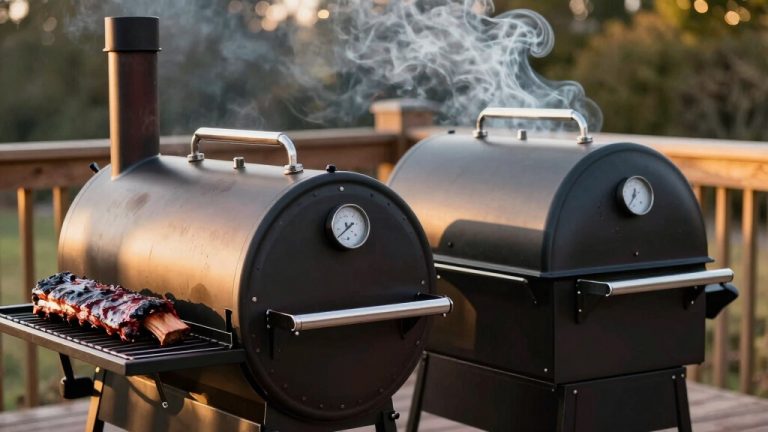
You’ll get the best results using a pellet smoker or a charcoal smoker with a water pan.
Pellet smokers offer precise temperature control between 225-250°F, ensuring steady heat and consistent smoke.
Charcoal smokers provide authentic flavor but require attentive wood and temperature management.
Both allow you to maintain the ideal smoking environment for turkey breast, promoting even cooking and peak smoke infusion.
Make sure you monitor internal temperature closely for perfect doneness.
Can I Use Other Wood Types Besides Cherry and Pecan?
Yes, you can use other wood types besides cherry and pecan for smoking turkey breast.
Woods like apple, hickory, maple, or mesquite offer distinct flavors.
Apple wood provides a mild, sweet smoke, while hickory delivers a stronger, bacon-like taste.
Maple adds subtle sweetness, and mesquite imparts a bold, earthy flavor.
Choose based on your flavor preference, but monitor smoke intensity carefully to avoid overpowering the turkey’s natural taste.
How Do I Store Leftover Smoked Turkey Breast Safely?
Picture your leftover smoked turkey breast wrapped tightly in foil or sealed in an airtight container, locking in its savory aroma.
To store it safely, refrigerate within two hours of cooking, maintaining temperatures below 40°F to prevent bacterial growth.
Consume within 3-4 days or freeze for up to 3 months.
When reheating, make sure the internal temperature reaches 165°F to preserve flavor and food safety without drying out the meat.
Is Brining Necessary Before Smoking Turkey Breast?
Brining isn’t strictly necessary before smoking turkey breast, but it can markedly improve moisture retention and flavor.
If you want juicier, more tender meat, a saltwater brine with herbs and sugar helps the turkey absorb and hold moisture during smoking.
However, if you’re short on time or prefer a simpler process, using a butter injection and seasoning rub can also enhance flavor and juiciness effectively without brining.
What Are Common Mistakes to Avoid When Smoking Turkey Breast?
Don’t let your smoked turkey breast turn into a desert. Avoid drying it out by overcooking or skipping temperature checks.
You’ll want to insert your meat thermometer at the thickest part around the three-hour mark, aiming for an internal temp of 160-165°F.
Also, don’t neglect a consistent wood smoke supply; fluctuating heat or smoke intensity can ruin flavor.
Finally, resting the meat 20-45 minutes after smoking locks in juicy, tender results.
Breast Up or Down Can Make or Break Your Smoked Turkey
When smoking turkey breast, choosing up or down isn’t just a minor detail; it’s a game-changer! Going breast up crisps that skin to golden perfection. Breast down locks in unbelievable juiciness.
Flip, time, and temperature become your secret weapons, especially at high altitudes or when spatchcocking.
Master these techniques, inject flavor, and rest like a pro. You’ll create a smoked turkey so perfectly cooked, it’ll make you question every other cooking method you’ve ever tried!

3 Comments