How Long Should Ribs Rest: Perfect Timing for Juicy Results
You should let your ribs rest anywhere from 10 to 60 minutes depending on their size. Thin ribs need about 10–15 minutes, while larger racks may require up to an hour.
Resting lets juices redistribute evenly, making the meat juicy and easy to slice. It also allows the internal temperature to stabilize for perfect tenderness.
Wrapping ribs and using an insulated container helps keep them warm without overcooking. Master these steps, and you’ll elevate your rib game with flawless texture and flavor.
Key Takeaways
- Small ribs (baby backs) should rest 10–15 minutes for even juice redistribution and moisture retention.
- Thicker ribs (spare or beef ribs) need 30–45 minutes to allow muscle fibers to relax fully.
- Large racks (3–4 lbs) require 45–60 minutes resting in an insulated container for temperature stability.
- Resting longer than 4 hours can alter texture; monitor timing to avoid overresting.
- During rest, internal temperature rises slightly (carryover cooking), enhancing tenderness without overcooking.
Why You Should Always Let Your Ribs Rest?

When you take ribs off the smoker, letting them rest isn’t just a suggestion; it’s an essential step that transforms your ribs from good to exceptional.
During this time, muscle fibers relax as the temperature drops, allowing juices to redistribute evenly throughout the meat.
This resting period helps the ribs retain moisture, preventing dry, tough bites.
You’ll also notice that the internal temperature continues to rise slightly, enhancing tenderness without overcooking.
Resting stabilizes the meat’s structure, making slicing easier and cleaner, so your ribs hold together beautifully instead of shredding.
Plus, any sauce you’ve applied will set properly, improving flavor adhesion and appearance.
Skipping this step risks losing these benefits, so always give your ribs the time they deserve to rest and reach peak flavor and texture.
For best results, rest ribs uncovered for 5–10 minutes before wrapping them tightly in foil to retain heat and moisture during the holding period, as recommended in resting techniques.
Recommended Resting Times for Ribs by Size
When it comes to resting your ribs, it’s all about size and thickness. Thicker racks really need that extra time to let the juices redistribute properly. For smaller cuts, a quick 10 to 15 minutes is usually sufficient.
But if you’re working with larger pieces, you’ll definitely want to extend that resting time, especially if you can keep them warm in an insulated container. Just a little tip: resting for more than four hours can alter the texture, so you’ll want to keep an eye on the clock to ensure you get that perfect tenderness and flavor. Timing is everything!
Keeping the ribs wrapped during the rest helps retain steam and allows the juices to redistribute evenly for optimal tenderness.
Resting Duration by Thickness
Although all ribs benefit from resting, the thickness and size of your ribs directly influence how long you should let them rest to achieve peak tenderness and flavor.
Thin ribs, like baby backs, generally need a minimum rest of 10-15 minutes to allow juices to redistribute evenly. For thicker ribs, such as spare ribs or beef ribs, extending the resting time closer to 30-45 minutes lets the muscle fibers relax fully, enhancing moisture retention and tenderness.
If your ribs are exceptionally large or thick, resting up to an hour in an insulated container guarantees the internal temperature stabilizes, boosting flavor and ease of slicing.
Proper resting helps maintain moisture retention by allowing trapped juices and steam to redistribute evenly throughout the meat.
Extended Resting Guidelines
Resting times for ribs don’t stop at thickness alone; the overall size and weight of the rack play a significant role in determining how long you should let them rest.
Larger racks need more time to redistribute juices evenly and cool to an ideal slicing temperature. Use this guide to match your rib size with the right resting duration to maximize tenderness and flavor.
| Rib Size | Weight Range | Recommended Rest Time |
|---|---|---|
| Small | Under 1 lb | 10-15 minutes |
| Medium | 1-2 lbs | 15-30 minutes |
| Large | 2-3 lbs | 30-45 minutes |
| XL | 3-4 lbs | 45-60 minutes |
| XXL | Over 4 lbs | Up to 2 hours (insulated) |
Following these times guarantees perfect texture and moisture balance every time. Properly resting ribs before serving also helps maintain moisture and tenderness, which is essential for the best eating experience.
Avoiding Common Resting Mistakes
When preparing ribs, failing to let them rest properly can severely impact both texture and flavor. One common mistake is cutting into the ribs immediately after cooking, which causes juices to spill out, leaving the meat dry and tough.
Another error is resting ribs uncovered, which leads to moisture loss and a dry surface. Avoid wrapping ribs too tightly in foil during resting, as trapping too much heat can cause the meat to overcook and become mushy.
Also, don’t rush the resting time. Underestimating it prevents the juices from redistributing evenly, affecting tenderness. Finally, resting ribs on a cold surface can cool them too quickly, compromising flavor and slicing ease.
Stick to a proper resting routine to savor tender, juicy ribs every time. Maintaining ribs at safe internal temperatures between 140°F and 165°F during resting helps preserve moisture and prevent bacterial growth.
Keeping Ribs Warm Safely With Insulated Containers
To keep your ribs warm without sacrificing quality, use insulated containers that maintain temperature while preventing moisture loss.
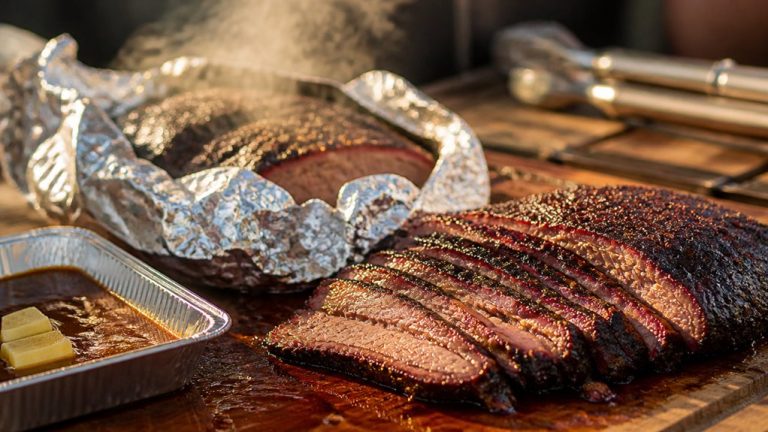
Wrapping ribs in foil with towels or placing them in a cooler can hold heat safely for up to 4 hours. This method preserves juiciness and texture, avoiding mushiness caused by overheating.
Sealed containers also lock in moisture, ensuring your ribs stay tender and flavorful as they rest.
Using a double layer wrapping technique can enhance insulation and moisture retention during extended holding periods.
| Method | Duration | Benefits |
|---|---|---|
| Foil + Towels | Up to 4 hours | Retains heat and moisture |
| Cooler with Lid | Up to 4 hours | Maintains steady temperature |
| Sealed Insulated Box | Up to 4 hours | Prevents drying, preserves texture |
| Warm Holding Drawer | 1-2 hours | Keeps ribs ready to serve |
| Thermal Bags | 2-3 hours | Portable, effective insulation |
Best Time and Method to Apply Rib Sauce
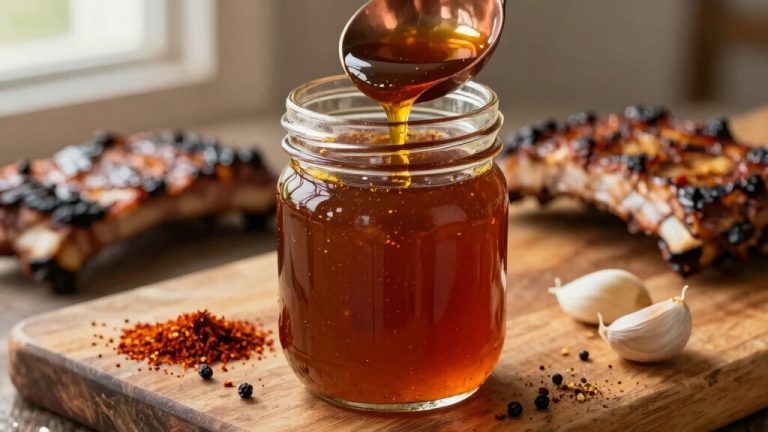
Apply rib sauce at just the right moment to maximize flavor and texture. The best time is during the resting phase, once ribs have cooled slightly from their initial high temperature.
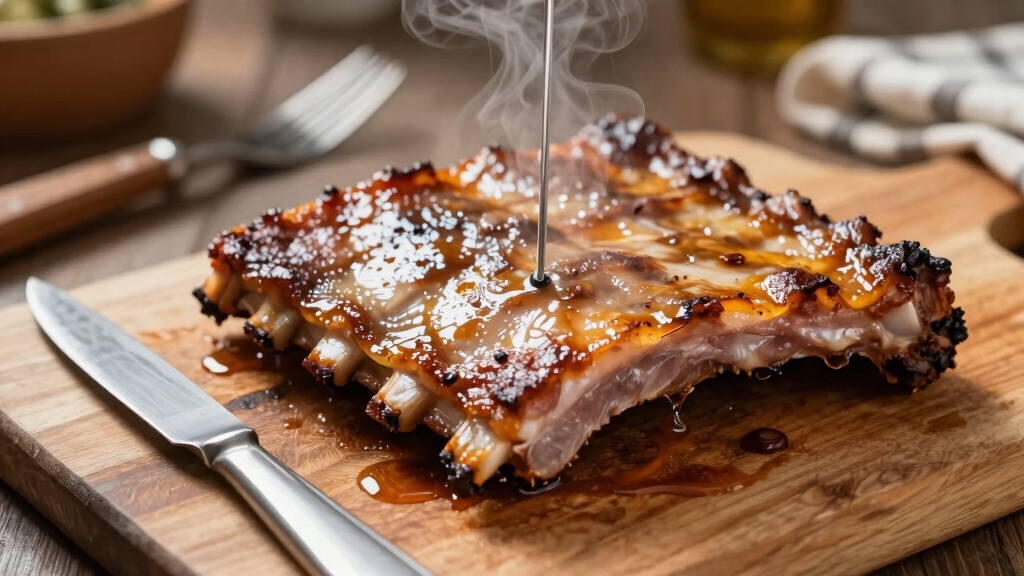
When you wait, the sauce “tacks up” as it cools to room temperature, creating an even, glossy glaze that clings beautifully to the meat. Applying sauce immediately after cooking risks it running off or diluting in the hot juices, diminishing both taste and visual appeal.
Use a brush to spread a thin, consistent layer, allowing the sauce to settle and penetrate the tender fibers. Whether you slather it on after smoking or just before resting, this method guarantees deeper flavor absorption and a stunning finish that invites everyone to dig in.
For best results, finish by brushing ribs with a brown sugar glaze and broiling briefly to caramelize into a sticky, glossy crust, enhancing both appearance and taste with caramelization techniques.
How to Slice Ribs for Best Presentation?
When you’re getting ready to slice those ribs, it’s best to let them cool down a bit first. Aim for the internal temperature to drop below 200°F. This little waiting period helps keep the meat nice and firm, so it doesn’t just fall apart on you. Additionally, resting ribs for about 10 minutes allows the juices to redistribute, enhancing tenderness and flavor.
Temperature Impact On Slicing
Although slicing ribs immediately after cooking might seem tempting, letting them cool to the right temperature markedly improves your results.
When ribs are too hot, above 200°F internally, the meat tends to shred and slide off the bone, making clean cuts challenging.
Allowing ribs to rest until the temperature drops to around 220-225°F helps the muscle fibers relax and juices redistribute.
This firms up the meat just enough to slice neatly. You’ll find that individual ribs separate more easily, preserving their shape and enhancing presentation.
This controlled cooling not only prevents messy shredding but also guarantees each slice holds its integrity, impressing guests with perfectly portioned, visually appealing ribs every time.
For best results, store ribs in shallow containers or cut into portions during cooling to preserve the bark quality and overall texture.
Maintaining Structural Integrity
Since the key to slicing ribs beautifully lies in preserving their structural integrity, you need to handle them with care once they’ve rested.
Let the ribs cool enough so the meat firms up without becoming tough. This balance prevents the meat from shredding or falling off the bone when you slice.
Use a sharp knife and follow the natural rib lines, slicing gently between bones to maintain each rib’s shape.
Avoid sawing motions that tear the meat; instead, use smooth, deliberate cuts.
This approach keeps the ribs intact and visually appealing, enhancing presentation on the plate.
Paying attention to temperature and precise slicing guarantees your ribs look as mouthwatering as they taste, impressing anyone lucky enough to dig in.
For best results, allow ribs to reach ambient temperature before slicing to preserve texture and prevent moisture loss.
Achieving Clean Rib Separation
Keeping the ribs firm yet tender sets the stage for clean separation that highlights each individual bone.
After resting, the meat cools slightly, preventing it from shredding or sliding off the bone when you slice. Use a sharp knife, cutting between the bones with smooth, deliberate strokes.
Avoid sawing motions that can tear the meat. Resting also lets the juices redistribute, making each rib moist and flavorful.
If ribs are cut too soon, the meat will be too hot and fragile, causing messy, uneven slices. Letting the internal temperature drop to around 220-225°F guarantees the ribs hold their shape beautifully.
This careful slicing approach not only enhances presentation but also showcases your cooking skill, making every rib a tempting, perfectly portioned piece.
What Happens to Ribs During Resting?
When you pull ribs off the smoker, they’re far from finished. During resting, the meat undergoes essential transformations that elevate both texture and flavor.
As the ribs cool, muscle fibers relax, allowing juices to redistribute evenly throughout the meat. This moisture reabsorption intensifies tenderness and prevents dry, tough bites.
The internal temperature continues to rise slightly, promoting carryover cooking that enhances doneness without overcooking. Resting also stabilizes the meat’s structure, making slicing easier and cleaner without shredding or falling off the bone.
Additionally, any sauce applied begins to tack up, improving adhesion and flavor balance. Skipping this step means losing these benefits, resulting in ribs that are less juicy, harder to slice, and lacking the full depth of smoky, succulent flavor you’re aiming for.
Using Insulated Containers to Extend Resting
Although resting ribs for 10-15 minutes is essential, you can extend this period substantially by using insulated containers designed to maintain warmth without overcooking.
Wrap your ribs tightly in foil, then nestle them in towels inside a cooler or insulated bag. This method traps heat, keeping internal temperatures steady around 220-225°F, which continues gentle carryover cooking.
By doing this, you preserve moisture, prevent premature cooling, and avoid the mushy texture that excessive heat causes. Insulated containers also lock in juices and flavors, allowing the meat fibers to relax fully and redistribute moisture evenly.
You can safely hold ribs this way for up to four hours, giving you flexibility without sacrificing tenderness or taste. It’s a game-changer for serving perfectly rested ribs at your own pace.
Frequently Asked Questions
Can Resting Times Vary by Rib Type, Like Spare Ribs vs. Baby Back Ribs?
Yes, resting times can vary between spare ribs and baby back ribs because of their thickness and size.
You’ll want to rest larger, meatier spare ribs a bit longer, around 15-20 minutes, to allow juices to redistribute fully.
Baby back ribs, being smaller and leaner, usually need about 10-15 minutes.
Adjust your resting time accordingly, keeping ribs warm in an insulated container to maintain tenderness and flavor without drying them out.
How Does Ambient Humidity Affect Rib Resting and Moisture Retention?
Ambient humidity plays a vital role in your ribs’ moisture retention during resting.
When humidity is high, it helps keep the meat’s surface moist, preventing excessive drying and preserving juiciness.
In low humidity, your ribs can lose moisture faster, risking a drier texture.
To combat this, you can wrap ribs in foil or use an insulated container with a damp towel.
These methods maintain moisture and guarantee your ribs stay tender and flavorful.
Is It Safe to Rest Ribs Overnight in the Refrigerator?
It’s safe to rest ribs overnight in the refrigerator if you wrap them tightly, chill promptly, and reheat properly.
You keep flavor locked in, maintain moisture, and prevent bacterial growth by storing ribs at the right temperature.
However, resting ribs at room temperature overnight isn’t safe.
When you reheat, do it gently to preserve tenderness and avoid drying out.
This method extends your enjoyment without sacrificing quality or safety.
Should Ribs Be Covered Loosely or Tightly During Resting?
You should cover ribs loosely during resting to prevent moisture buildup and sogginess.
Wrapping them tightly traps steam, making the bark soft and less appealing.
Instead, use foil tented over the ribs or place them in a shallow pan covered with a loose foil layer.
This method keeps ribs warm while allowing excess steam to escape, preserving that perfect crust and ensuring the meat stays tender and juicy for slicing and serving.
Can Resting Ribs Improve the Flavor of Dry Rubs Alone?
Yes, resting ribs can definitely improve the flavor of dry rubs alone. As the ribs rest, moisture redistributes and the meat fibers relax, allowing the dry rub’s spices to penetrate deeper and meld with the juices.
This enhances the overall taste, creating a more balanced and flavorful bite. Don’t rush it; letting the ribs rest guarantees the rub adheres better and intensifies, making every bite more delicious and satisfying.
Rest, Then Revel: The Secret to Spectacular Ribs
Now that you know the importance of letting your ribs rest, relish the rich rewards of resting right. Resting allows the juices to redistribute, resulting in tender, tantalizing taste that truly tantalizes your taste buds.
Remember, resting times vary by size, so be sure to set your timer thoughtfully. Keep your ribs warm with well-wrapped insulation and apply sauce at the perfect point for a savory, succulent finish. Resting isn’t just a step; it’s the secret to spectacular, satisfying ribs.