Flat Iron Steak vs Sirloin: Which Steak Offers Better Value?
If you want tender, juicy steak with a rich, buttery mouthfeel, the flat iron excels thanks to its abundant marbling and careful trimming of connective tissue.
It’s perfect for quick, high-heat cooking like grilling or searing. Sirloin, on the other hand, offers a leaner, firmer texture with a clean, beefier flavor that’s versatile across many recipes but risks drying out if overcooked.
Choosing between them depends on your flavor, texture, and cooking style priorities. There’s more to explore on these differences.
Key Takeaways
- Flat iron steak is more tender and well-marbled, offering a buttery, juicy texture close to filet mignon.
- Sirloin is leaner with a firmer, meatier chew and a cleaner beef flavor, suitable for those preferring less fat.
- Flat iron comes from the shoulder (top blade), while sirloin is from the lower back, influencing texture and fat content.
- Flat iron excels with quick, high-heat cooking methods like grilling and pan-searing for medium-rare doneness.
- Sirloin is versatile for grilling, stir-fry, and fajitas but requires careful cooking to prevent dryness.
Flat Iron Steak or Sirloin – Quick Comparison Table
| Feature | Flat Iron Steak | Sirloin Steak |
|---|---|---|
| Cut Location | Shoulder (Top Blade/Chuck) | Lower Back (Sirloin Section) |
| Tenderness | Very tender, second only to filet mignon | Moderately tender, firmer texture |
| Flavor | Rich, beefy, buttery flavor | Clean, classic beef flavor |
| Marbling | High marbling | Lower marbling |
| Juiciness | Very juicy | Moderately juicy |
| Texture | Soft and buttery | Firm and chewy |
| Fat Content | Higher | Lower |
| Best Cooking Methods | Grilling, pan-searing, broiling | Grilling, stir-frying, fajitas |
| Risk of Drying Out | Low | Higher if overcooked |
| Versatility | Best as a standalone steak | Suitable for many recipes |
| Price | Moderate value | Usually more affordable |
| Protein Content | High | High |
| Best For | Steak lovers seeking tenderness and flavor | People wanting a leaner steak |
| Main Advantage | Exceptional tenderness and juiciness | Lean, versatile, budget-friendly |
| Main Drawback | Higher fat content | Less tender than flat iron |
| Winner For Flavor | ✅ Flat Iron | — |
| Winner For Leanness | — | ✅ Sirloin |
| Winner For Tenderness | ✅ Flat Iron | — |
| Winner For Versatility | — | ✅ Sirloin |
Tenderness And Flavor: Flat Iron vs Sirloin

While both flat iron and sirloin steaks offer satisfying beef flavors, their tenderness sets them apart markedly.
When you bite into a flat iron, you’ll notice its buttery softness, often ranked just below filet mignon. This tenderness comes from expertly removing connective tissue during fabrication, leaving a fine-grained, delicate texture.
In contrast, sirloin has a firmer, chewier bite, reflecting its leaner makeup and muscle structure. As you savor flat iron, you’ll detect a rich, well-marbled juiciness that enhances its bold beefiness.
Sirloin delivers a cleaner, meatier flavor with less fat presence, offering a more straightforward, hearty taste.
Choosing between them hinges on whether you prefer the melt-in-your-mouth feel of flat iron or the satisfying chew and lean profile of sirloin.
Both cuts benefit from quick, high-heat cooking to preserve their tenderness and flavor.
Where Flat Iron And Sirloin Steaks Come From?
You know, flat iron steak comes from the top blade of the chuck, which is basically the shoulder area. It’s interesting because the muscle movement there creates some rich marbling, but it can also lead to a bit of toughness.
On the flip side, you’ve got sirloin steaks, which are from the lower back. They tend to be leaner and have less intramuscular fat.
The chuck’s top blade muscle is known for its robust beefy flavor, making flat iron steak popular for various cooking methods.
Cut Location Differences
Because the cut location directly shapes the steak’s texture and flavor, understanding where flat iron and sirloin steaks come from is essential for choosing the right one.
The flat iron comes from the top blade of the chuck, nestled in the shoulder area. This spot is known for tougher cuts but offers remarkable tenderness when properly separated.
In contrast, sirloin is sourced from the lower back, a region prized for leaner, firmer meat.
Here’s what you should note about their origins:
Flat iron is carved from the shoulder’s top blade, enhancing marbling and softness.
Sirloin covers a larger section, with top sirloin as the most familiar retail cut.
Shoulder cuts like flat iron have more intramuscular fat, boosting juiciness.
Sirloin’s location yields a leaner steak with a cleaner, meatier bite.
The shoulder clod, which includes the flat iron, tends to be leaner and firmer with dense muscles and more connective tissue, contributing to its unique texture and cooking needs, as detailed in the anatomical composition.
Shoulder vs Sirloin
The distinct origins of flat iron and sirloin steaks play a pivotal role in shaping their unique textures and flavors.
Flat iron steak comes from the top blade of the chuck, nestled in the shoulder area, where muscles work hard. Careful butchering removes connective tissue, yielding remarkable tenderness.
In contrast, sirloin steak hails from the lower back, a leaner section with a firmer texture and less marbling.
This anatomical difference means flat iron offers richer intramuscular fat and juiciness, while sirloin delivers a cleaner, meatier bite.
When you choose between these cuts, consider how the shoulder’s marbling enhances flavor and softness.
Meanwhile, the sirloin’s lean profile provides a versatile, steakier chew suited for varied cooking styles and dishes.
Additionally, cuts like the Teres Major from the shoulder clod offer tenderloin-like texture despite being from the shoulder area.
Marbling And Fat Content Differences
When comparing flat iron and sirloin steaks, you’ll notice flat iron consistently shows more marbling. This directly impacts both flavor and juiciness.
Flat iron steak’s abundant marbling enhances flavor and juiciness compared to leaner sirloin cuts.
This enhanced intramuscular fat creates a richer, more succulent eating experience. Sirloin, being leaner, offers a cleaner beef taste but less fat-driven richness.
Understanding these differences helps you select the cut that suits your preference for flavor depth or leaner meat.
Flat iron’s marbling distributes fat evenly, preserving moisture during cooking. Sirloin’s lower fat content makes it leaner but can dry out if overcooked.
Fat in flat iron enhances bold, beefy flavor and juiciness. Sirloin provides a firmer bite with a straightforward, meaty profile.
Choosing between them means balancing richness against leanness for your ideal steak experience. For leaner cuts like sirloin, careful temperature control is essential to avoid dryness, typically aiming to pull the meat at medium-rare temperatures for optimal juiciness.
Texture Profiles: Juicy Flat Iron Vs Lean Sirloin
Understanding the impact of marbling on flavor naturally leads to examining how it shapes the texture of these steaks. When you bite into a flat iron, its generous marbling delivers a juicy, tender experience that feels almost buttery. This fat melts during cooking, keeping each bite moist and soft.
In contrast, sirloin’s leaner profile offers a firmer, meatier chew, giving you a satisfying steakier texture but less succulence. The flat iron’s top blade origin means connective tissue has been removed, further enhancing tenderness. Sirloin’s lower back location results in a denser muscle structure.
If you prefer a steak that practically melts in your mouth, flat iron excels. If you enjoy a more robust, lean bite with firmer resistance, sirloin stands out. The difference in marbling and fat content directly influences the juiciness and tenderness experienced in each cut.
Best Cooking Methods For Flat Iron And Sirloin
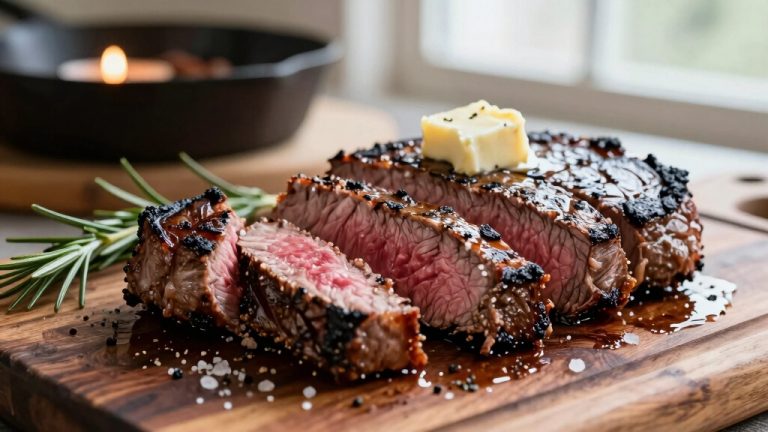
Master grilling, pan-searing, or broiling flat iron steak to highlight its tender texture and rich marbling. These cuts respond well to quick, high-heat cooking methods that lock in juiciness and flavor.
Sirloin, being leaner, thrives with attentive temperature control to avoid drying out while still benefiting from similar techniques.
Consider these tips for prime results:
Flat Iron: Sear on high heat for 3–4 minutes per side, then rest to retain moisture.
Sirloin: Use medium heat and monitor closely, aiming for medium-rare to medium doneness.
Broiling: Works well for both; keep steaks about 4–6 inches from heat for even cooking.
Skillet Cooking: Use cast iron with a bit of oil, ensuring a crisp crust without overcooking.
These methods bring out each cut’s best flavors and textures effectively. Using a cast iron skillet can enhance searing by providing consistent, intense heat that locks in juices and creates a flavorful crust.
Value And Versatility Compared
In comparing flat iron and sirloin steaks, you’ll find distinct advantages in both value and versatility that cater to different cooking goals and budgets.
Flat iron offers a premium flavor profile and tenderness at a competitive price. It’s ideal if you want richness without splurging.
Sirloin shines with its wide availability and adaptability across recipes. It’s perfect if you need a leaner option that works well in many dishes.
Both cuts provide valuable protein and essential micronutrients, making them excellent choices for a balanced diet with high protein content.
| Feature | Flat Iron | Sirloin |
|---|---|---|
| Price | Moderate, great value | Often less expensive |
| Flavor | Rich, beefy, well-marbled | Leaner, clean beef taste |
| Texture | Tender, juicy | Firmer, chewier |
| Cooking Options | Grill, pan, broil | Grill, stir-fry, fajitas |
| Versatility | Best for steaks | Broader applications |
Choosing Flat Iron Or Sirloin For Your Meal
When you’re trying to decide between flat iron and sirloin, think about how their unique flavors and textures can fit into your meal.
Flat iron has this amazing marbling that makes it super juicy and tender. It’s perfect for quick, high-heat cooking, like grilling or pan-searing.
On the other hand, sirloin is a bit leaner and has a firmer texture. It holds up really well when you’re grilling or throwing it into stir-fries.
Consider the importance of intramuscular marbling for juiciness and tenderness, a key factor in meat quality.
Flavor And Texture
Although both flat iron and sirloin steaks offer robust beef flavors, the differences in their texture and marbling can markedly shape your dining experience.
Flat iron delivers a juicy, tender bite thanks to its rich marbling and shoulder origin. Sirloin provides a leaner, firmer texture with a cleaner beef flavor.
When choosing between them, consider these points:
Flat iron’s abundant marbling enhances juiciness and a buttery mouthfeel.
Sirloin’s lean profile offers a steakier chew and less fat richness.
Flat iron ranks near filet mignon for tenderness, making it ideal if softness matters.
Sirloin’s firmer texture lends itself to hearty, satisfying bites with pronounced beefiness.
Your flavor and texture preference will guide which steak elevates your meal best.
For best results, seasoning with a kosher salt base can enhance the natural flavors of both cuts before cooking.
Cooking Method Suitability
Since cooking techniques directly impact a steak’s texture and flavor, choosing between flat iron and sirloin depends heavily on how you plan to prepare your meal.
If you’re grilling, pan-searing, or broiling, flat iron’s consistent thickness and marbling make it ideal. It cooks evenly and stays juicy, especially when aimed for medium-rare. Its tenderness suits quick, high-heat methods perfectly.
On the other hand, sirloin’s leaner profile calls for careful temperature control to avoid dryness. However, it shines in versatile dishes like stir-fries or fajitas where chewier texture complements the preparation.
If you want a robust, tender steak with reliable juiciness, flat iron is your go-to. But if you prefer a leaner, more traditional steak experience adaptable to various cooking styles, sirloin will serve you well.
Summary: Which Steak Should You Pick?
How do you decide between flat iron and sirloin steaks? It comes down to your priorities in tenderness, flavor, and cooking style.
Flat iron offers exceptional tenderness and rich marbling, making it ideal if you want a juicy, flavorful steak with a soft bite.
Sirloin, leaner and firmer, suits you if you prefer a meatier chew and versatile uses.
Consider these points:
Choose flat iron for buttery tenderness and bold, beefy flavor.
Opt for sirloin if you want a leaner cut with a cleaner, steakier profile.
Flat iron shines with quick, high-heat cooking, while sirloin needs careful temperature control to avoid dryness.
Price-wise, flat iron often delivers premium taste at a good value, whereas sirloin’s versatility fits many dishes.
Frequently Asked Questions
Can Flat Iron Steak Be Used in Slow Cooker Recipes?
Yes, you can use flat iron steak in slow cooker recipes, but it’s not the most common choice.
Since flat iron is naturally tender and well-marbled, slow cooking might break down its fibers excessively, turning it mushy.
You’ll want to cook it gently and avoid overcooking.
If you prefer a tender, juicy result with rich flavor, consider using shorter cooking times or searing before slow cooking to maintain texture and moisture.
How Long Should Flat Iron and Sirloin Steaks Rest After Cooking?
Don’t rush the process; you want to let those steaks rest about 5 to 10 minutes after cooking. This pause lets the juices redistribute, turning your flat iron or sirloin steak from good to melt-in-your-mouth perfection.
Flat iron, being tender and marbled, benefits from around 7 minutes. Sirloin, which is leaner, can use a solid 5 to 8 minutes. Skipping this step means losing flavor and moisture, so give it time to shine.
Are Flat Iron Steaks Suitable for Marinating Before Grilling?
Yes, you’ll find flat iron steaks excellent candidates for marinating before grilling. Their rich marbling and tenderness absorb marinades well, enhancing flavor without sacrificing texture.
Since they’re already tender, you don’t need long marination. About 30 minutes to 2 hours works perfectly. A marinade with acid, like citrus or vinegar, balances the beefy richness, while herbs and spices add complexity.
This prep helps lock in juiciness and intensifies the grilling experience.
What Are the Best Side Dishes to Pair With Flat Iron Steak?
To complement your flat iron steak’s juicy, beefy symphony, choose sides that balance richness with freshness.
Roasted garlic mashed potatoes offer creamy comfort, while grilled asparagus adds a crisp, earthy crunch.
A tangy chimichurri or peppery arugula salad cuts through the marbling’s buttery depth.
For a hearty touch, caramelized onions or sautéed mushrooms enhance umami complexity.
These pairings elevate your meal, creating a harmonious dance of flavors and textures.
How Do Flat Iron and Sirloin Steaks Compare in Nutritional Value?
You’ll find flat iron steak has slightly more fat and calories due to its higher marbling, making it richer in flavor and juicier.
Sirloin, being leaner, offers fewer calories and less saturated fat, ideal if you want a lean protein punch.
Both provide solid protein, iron, and B vitamins, but flat iron’s fat content adds more energy density.
Sirloin suits a lower-fat, nutrient-packed diet better.
Flat Iron vs. Sirloin: Choose the Steak That Matches Your Cravings
Choosing between flat iron and sirloin is like selecting the right key to unleash your meal’s potential. The flat iron, rich and tender, symbolizes indulgence and boldness, while the lean, versatile sirloin represents balance and restraint.
Both offer unique textures and flavors, so trust your palate’s compass. Whether you seek juicy depth or a leaner bite, your choice reflects not just taste but the experience you wish to savor at your table.