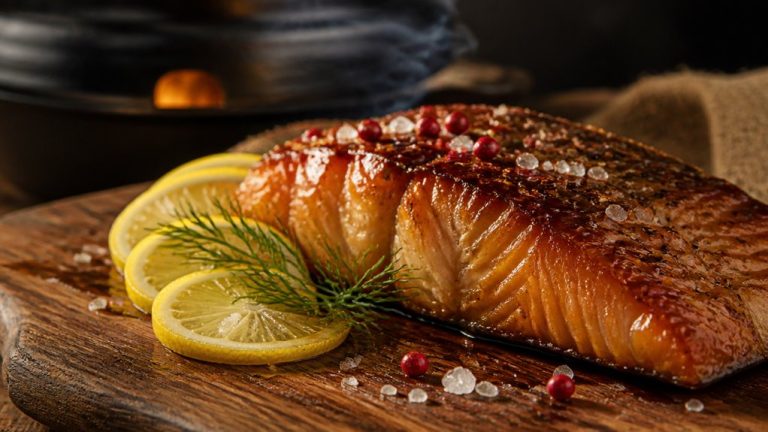
How to Smoke Cheddar: Expert Tips for Delicious Results
Choose medium-moisture cheddar aged 3–6 months with moderate firmness for optimal smoke absorption. Cut into 1-inch blocks, freeze briefly to dry surfaces, and space pieces 1 inch apart.
Set your smoker with fruitwood pellets, circulate smoke using a fan, and maintain 40°F–65°F to avoid melting. Smoke cheese for 1–2 hours, rotating regularly for uniform flavor.
After smoking, wrap in parchment and refrigerate to develop depth. Mastering these steps guarantees perfect smoked cheddar, with finer details to enhance your process.
Key Takeaways
- Choose medium-moisture (35–39%), moderately firm cheddar aged 3–6 months for optimal smoke absorption and texture stability.
- Cut cheddar into uniform ~1-inch blocks, freeze for 1 hour with 1-inch spacing to improve smoke adhesion and prevent melting.
- Use fruitwood pellets like apple or cherry, light pellets briefly then extinguish flame for steady, cool smoke circulation with fan and vent adjustments.
- Maintain cold-smoking temperature between 40°F and 65°F using ice pans and fan, smoking cheddar 1–2 hours with 90° rotation every 30 minutes.
- After smoking, wrap cheddar in parchment paper, refrigerate 24–48 hours for flavor balance, and avoid plastic to prevent moisture buildup.
How to Choose the Best Cheddar for Smoking?
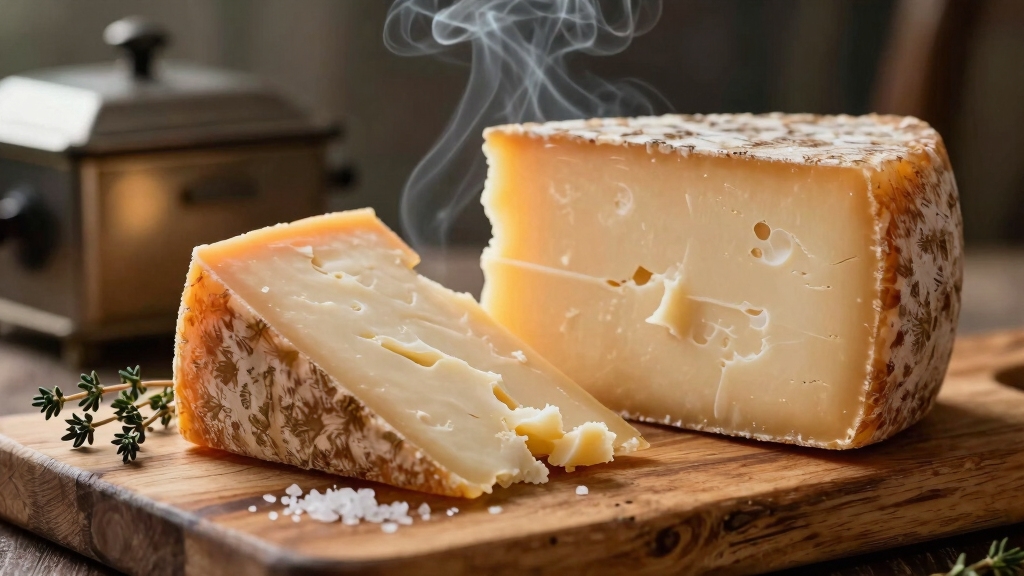
Selecting the best cheddar for smoking requires analyzing its moisture content, firmness, and aging profile to guarantee peak smoke absorption and structural integrity.
Choosing the ideal cheddar for smoking hinges on moisture, firmness, and aging for optimal flavor and texture.
You want a medium-moisture cheddar, typically 35-39% moisture, because too dry cheese cracks under smoke exposure, while overly moist cheese softens excessively.
Firmness should be moderate; overly crumbly cheddar risks disintegration during handling, while overly dense blocks inhibit smoke penetration.
Choose a cheddar aged between 3 to 6 months. This aging range balances flavor complexity and texture resilience, allowing the smoke to complement rather than overpower.
Avoid extra sharp or very young cheddar, as their extreme textures and flavors can distort smoke infusion.
For optimal preservation after smoking, store the cheddar in airtight containers to maintain quality and prevent contamination.
How to Cut and Prepare Cheddar Blocks for Smoking?
Start by cutting your cheddar into uniform blocks approximately 1 inch thick or into butter cube-sized pieces to guarantee peak smoke penetration. Remove any plastic wrapping before freezing the cheese for 1 hour. This cools the exterior, improving smoke adhesion and reducing melting risk.
Space pieces at least 1 inch apart on racks to maximize airflow. Optionally, brush lightly with maple syrup for enhanced smoke retention. For optimal results, maintain a cold smoking temperature below 80°F to infuse bold smoke flavor without melting the cheese.
| Step | Description | Purpose |
|---|---|---|
| Cut | 1-inch blocks/butter cubes | Uniform smoking and penetration |
| Unwrap | Remove plastic before freezing | Prevents moisture buildup |
| Freeze | 1 hour in freezer | Cools and dries surface |
| Space | 1-inch gap on racks | Guarantees proper airflow |
| Maple syrup | Light brush before smoking | Enhances smoke adhesion |
How to Set Up Your Smoker for Cold Smoking Cheddar?
Setting up your smoker for cold smoking cheddar is pretty straightforward!
First off, you’ll want to line the top rack with heat-safe mesh liners. This helps with airflow and keeps your cheese from sticking—nobody wants that!
Next, when it comes to pellets, think about using fruitwood, apple, or hickory. These options really bring out the flavor in the cheddar. You’ll want to fill your pellet tube about one-third to three-quarters full. This ensures you get that delicious smoke flavor just right.
Lastly, don’t forget to position the tube smoker near the fan on the bottom rack. Adjust those vents to about halfway open. This keeps the smoke flowing steadily without cranking up the temperature, which is exactly what you want for cold smoking.
Remember to place the tube on a non-flammable surface away from wind to prevent tipping or ember spread.
Happy smoking!
Preparing Smoker Racks
Arrange your smoker racks by lining the top rack with one or two heat-safe mesh perforated baking liners to guarantee even airflow and prevent cheese from sticking.
Position cheese pieces at least one inch apart to optimize smoke circulation and avoid moisture buildup.
Make sure the racks are securely placed to maintain stable spacing during smoking.
Use the bottom rack for smoke generation devices, such as pellet tubes, and include a thermal barrier or cold smoke plate to reduce heat reaching the cheese.
Place an ice pan beneath the racks to stabilize temperatures within the 40°F–65°F range.
Adjust vents to maintain proper airflow, balancing smoke density and temperature.
This setup maximizes cold smoke contact while preventing melting or uneven smoking, ensuring consistent flavor infusion throughout the cheddar blocks.
Monitoring with a precise digital thermometer is essential to maintain the ideal cold smoking temperature range and prevent food safety risks.
Selecting Pellet Types
Selecting the right pellet type directly influences the flavor profile and smoke quality you’ll achieve when cold smoking cheddar. Choose fruitwood pellets like apple or cherry for a mild, sweet smoke that complements cheddar’s sharpness without overpowering it.
Hickory pellets provide a stronger, more robust flavor but use sparingly to avoid bitterness. Make certain pellets are uniform in size and density for consistent burn rate and smoke output.
Avoid blends with artificial additives or fillers, as these can introduce unwanted flavors and compromise smoke purity. Fill your pellet smoker tube between one-third and three-quarters full to maintain steady smoldering.
The pellet type’s combustion temperature and resin content affect smoke density and chemical composition, directly impacting cheddar’s final taste and aroma. Select pellets with low moisture content to prevent erratic smoke generation.
For best results, always use food-grade hardwood pellets to ensure safe and consistent smoke quality.
Managing Smoke Flow
When setting up your smoker for cold smoking cheddar, controlling smoke flow is critical to achieving consistent flavor without overheating the cheese.
Start by filling the pellet tube 1/3 to 3/4 full with fruit or hardwood pellets and place it near the fan on the bottom rack. Ignite the pellets briefly to start smoke, then extinguish the flame to maintain a cool smoke environment.
Adjust vents to about halfway open, promoting steady smoke circulation without temperature spikes. Utilize the smoker fan alone to distribute smoke evenly and place ice pans beneath to absorb heat.
Position the cheese on the top rack above heat sources, spaced an inch apart. This precise management guarantees uniform smoke adhesion while maintaining ambient temperatures between 40°F and 65°F, preserving cheddar’s texture and flavor integrity.
Ensure the ambient sensor remains outside the cheese to monitor and maintain accurate ambient temperature during the cold smoking process.
How to Control Temperature During Cold Smoking?
Although maintaining consistent low temperatures is challenging, controlling the ambient temperature between 40°F and 65°F is vital for effective cold smoking of cheddar.
Consistently maintaining low temperatures between 40°F and 65°F is essential for successful cold smoking of cheddar.
You need to ensure the smoker fan circulates smoke without igniting the pellets, maintaining a steady airflow that prevents heat buildup.
Position your cheese on the top rack, away from the heat source, to avoid melting.
Placing ice in a metal pan beneath the cheese acts as a thermal buffer, absorbing excess heat and stabilizing the environment.
Adjust vents halfway, monitoring temperature closely with a reliable probe.
Openings too wide or too narrow can cause temperature fluctuations, so fine-tune them to maintain optimal conditions.
This precise temperature control preserves cheddar’s texture while allowing smoke to penetrate evenly.
Maintaining low temperatures during cold smoking helps maximize smoke compound deposition on the cheese surface for optimal flavor.
Best Wood Pellets for Smoking Cheddar
When you’re picking wood pellets for smoking cheddar, it’s important to choose ones that really enhance that creamy texture without overwhelming the cheese’s natural flavor.
You know, apple and other fruit-based pellets bring a nice, mild sweetness to the table. They can really elevate the taste without taking over.
On the other hand, if you’re in the mood for something bolder, hickory is a great option. It packs a stronger, smoky punch that can add depth to your cheddar.
Cherry wood pellets offer a mild, fruity smoke that complements cheddar’s flavor while adding a subtle sweetness and a gentle smoke characteristic.
Top Wood Pellet Choices
Picking the right wood pellets can make or break the flavor profile of your smoked cheddar. You’ll want to select pellets that produce clean, consistent smoke without overpowering the cheese’s natural taste.
Fruitwood pellets like apple and cherry are ideal. They generate mild, slightly sweet smoke, enhancing cheddar without masking it. Hickory pellets provide a stronger, more robust smoke but require careful use to avoid bitterness.
Avoid hardwood pellets like oak or mesquite unless you can precisely control smoke intensity. They tend to dominate the delicate cheese flavor. Additionally, make sure pellets are 100% natural, free of fillers or additives, to prevent off-flavors and residue buildup.
Using pellets with uniform size and moisture content guarantees steady smoldering, consistent smoke output, and efficient cold smoking in your pellet smoker setup. Because of its steady burn and moderate smoke release, hickory’s burn characteristics make it a reliable choice for maintaining flavor balance in smoked cheese.
Flavor Profiles Comparison
When selecting wood pellets for smoking cheddar, understanding their distinct flavor profiles is essential to achieving the desired taste balance. Each wood type imparts unique aromatic compounds that interact differently with cheddar’s fat and protein matrix.
- Apple: Offers mild, sweet smoke with fruity undertones, enhancing cheddar without overpowering.
- Hickory: Delivers strong, robust, meat-like smokiness, ideal for bold flavor preferences.
- Maple: Adds subtle sweetness and caramel notes, complementing cheddar’s creamy texture.
- Cherry: Provides a medium intensity, fruity smoke that deepens cheddar’s complexity without bitterness.
Choosing the right pellet depends on your flavor goal. Lighter woods suit delicate profiles, while intense woods suit aged or sharp cheddar.
Precise smoke control guarantees peak flavor integration without altering texture or causing melting. For a bolder, more intense smoke, mesquite pellets offer a distinctly intense, earthy flavor that can elevate the cheddar’s complexity when used carefully.
How to Light Your Smoker for Cold Smoking?
Begin by turning on the smoker fan without igniting the pellets to circulate air and prepare the environment for cold smoking.
Next, fill the pellet smoker tube one-third to three-quarters full with fruitwood pellets like apple or hickory.
Light the pellets in the tube until they catch fire, allowing them to burn for about one minute before extinguishing the flame to prevent heat buildup.
Confirm the flame has fully gone out, then monitor for steady, light smoke without heavy billowing.
Position the tube near the fan on the bottom rack to optimize smoke distribution.
Adjust vents and close the lid 75% to maintain controlled smoke intensity.
This setup guarantees consistent, low-temperature smoke critical for cold smoking cheddar without risking melting.
How Long to Cold Smoke Cheddar for Best Flavor?
Determining the ideal smoking duration directly influences the flavor intensity and quality of your cheddar. To optimize cold smoking, balance exposure time with smoke concentration and cheese thickness.
The perfect smoking time shapes the flavor depth and overall quality of your cheddar.
Follow these guidelines:
- Smoke cheddar for 1-2 hours, adjusting based on desired smokiness. Shorter for subtle, longer for pronounced flavor.
- Rotate cheese 90° every 30 minutes to guarantee uniform smoke penetration and prevent uneven flavor.
- Begin with 15 minutes of smoke at approximately 150°F, then switch off heat and continue cold smoking for up to 60 minutes.
- Maintain ambient temperature between 40°F-65°F using ice pans and fan circulation to avoid melting while maximizing smoke adherence.
This precise timing prevents overpowering bitterness and promotes a complex, well-integrated smoky profile.
Post-Smoking Care to Set Flavor
Although the smoking process imparts flavor, the true depth develops during post-smoking care. Once you remove the cheddar from the smoker, promptly wrap it in parchment or untreated butcher paper to guarantee moisture isn’t trapped and allow controlled air exchange.
Then, refrigerate the cheese for 24 to 48 hours. This resting period facilitates the smoke compounds’ diffusion throughout the cheese matrix, balancing intensity and reducing surface harshness. Maintaining consistent refrigeration temperature is critical to prevent melting or bacterial growth.
Avoid plastic wrap here, as it traps moisture and compromises texture. Additionally, keep cheese portions no larger than a quarter-pound stick to ensure even flavor setting. This precise post-smoking regimen stabilizes smoke flavor, enhances texture, and ultimately yields a refined, well-integrated smoked cheddar.
Common Mistakes to Avoid When Smoking Cheddar
Mastering the post-smoking phase sets the stage for a quality smoked cheddar, but overlooking key pitfalls during the smoking process can undermine your results.
Avoid these common mistakes to ensure success:
- Smoking at too high a temperature: Maintain 40°F-65°F ambient to prevent melting. Use ice pans and position cheese away from heat sources.
- Inadequate smoke circulation: Ensure fan operation without igniting pellets fully. Proper vent adjustment is vital for consistent smoke exposure.
- Improper cheese preparation: Don’t skip freezing blocks for 1 hour or spacing them 1 inch apart. This ensures optimal smoke penetration without surface moisture buildup.
- Over-smoking: Limit duration to 1-2 hours and rotate cheese every 30 minutes. This avoids overpowering bitterness and uneven flavor development.
Steering clear of these errors guarantees a technically sound and flavorful smoked cheddar.
Frequently Asked Questions
Can I Cold Smoke Cheddar Indoors Safely?
You can cold smoke cheddar indoors safely if you control smoke and ventilation rigorously.
Use a dedicated cold smoke generator or pellet tube smoker in a well-ventilated space, ideally with an exhaust fan to remove particulates and prevent carbon monoxide buildup.
Maintain ambient temperatures between 40°F-65°F.
Avoid open flames indoors and monitor smoke density to prevent excessive buildup.
Prioritize safety equipment like smoke detectors and carbon monoxide alarms during indoor smoking sessions.
How Does Humidity Affect Cold Smoking Cheddar?
Ever wondered why your smoked cheddar sometimes turns out soggy?
Humidity directly impacts cold smoking by influencing moisture levels on the cheese surface.
Too high humidity causes condensation, leading to poor smoke adhesion and potential bacterial growth.
Too low humidity dries the cheese excessively, hindering smoke absorption.
You need to maintain moderate humidity, around 60-70%, to optimize smoke penetration and guarantee a firm texture while preventing spoilage during cold smoking.
Is It Possible to Smoke Cheddar Without a Pellet Smoker?
Yes, you can smoke cheddar without a pellet smoker by using alternative cold smoking methods.
For instance, a handheld smoker or a smoke gun allows precise smoke application at controlled low temperatures.
You can also use a charcoal grill with indirect heat, placing a smoke box or foil pouch with wood chips near the airflow.
Controlling temperature between 40°F-65°F and maintaining smoke circulation is critical to avoid melting and guarantee proper smoke absorption.
Can Smoked Cheddar Be Frozen After Smoking?
Coincidentally, freezing smoked cheddar after smoking is possible, but you’ll want to do it carefully.
You should wrap the cheese tightly in parchment or butcher paper, then seal it in an airtight container or vacuum bag to prevent moisture loss and freezer burn.
Freezing may slightly alter texture, making it crumblier, so it’s best for cooking rather than slicing.
Thaw the cheese slowly in the fridge to preserve flavor and consistency.
What Are Alternative Sweeteners to Maple Syrup for Smoking?
You can substitute maple syrup with alternatives like honey, agave nectar, or molasses for brushing cheese before smoking.
These sweeteners promote smoke adhesion and moisture retention effectively.
Honey offers floral notes, agave provides a mild sweetness with low viscosity, and molasses imparts a robust, slightly bitter flavor.
Choose based on flavor profile compatibility and viscosity to guarantee even coating and peak smoke absorption during cold smoking.
Perfectly Smoked Cheddar Starts with Patience and Control
Smoking cheddar is a precise craft, where control over temperature and wood choice shapes flavor like a sculptor with clay.
By selecting quality cheese, prepping it correctly, and mastering cold smoking techniques, you’ll reveal complex smoky notes without melting the cheese.
Remember, patience is key; too much heat or time can ruin your efforts. Avoid common pitfalls by monitoring conditions closely, ensuring your smoked cheddar emerges perfectly balanced and flavorful every time.