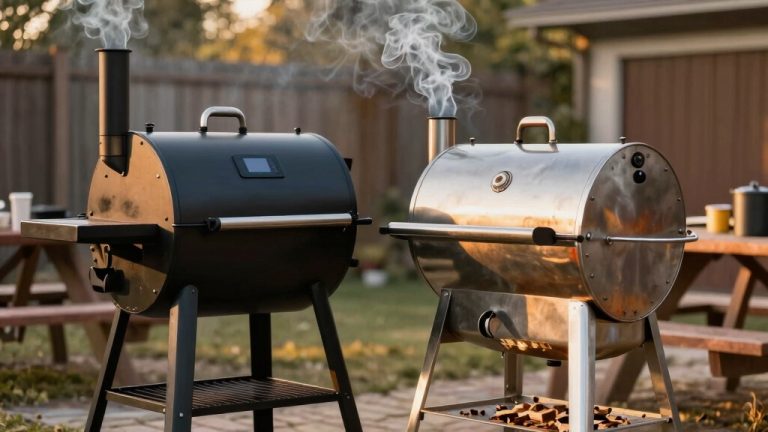
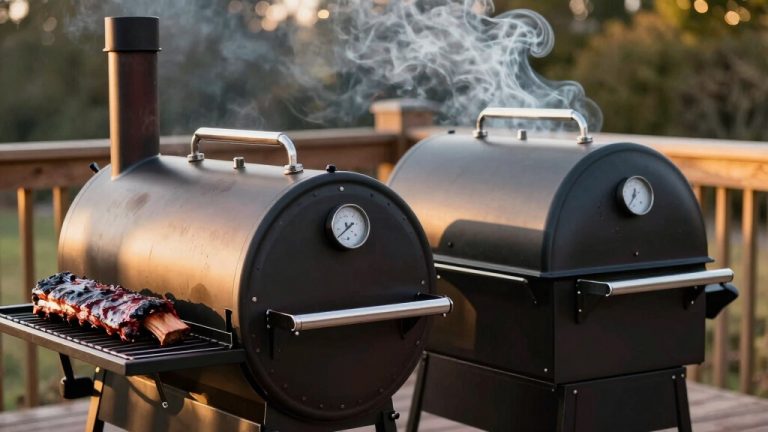
Pellet Smoker Vs Charcoal: Which One Is Better for BBQ?
If you want bold, intense searing and rich smoky flavors, a charcoal grill is your go-to for high heat and hands-on control.
Pellet smokers, on the other hand, offer easy temperature management with subtle, consistent smoke ideal for low-and-slow cooking and precise flavor profiles.
Charcoal demands more effort but rewards with deeper smoke complexity.
Pellet grills simplify the process with automation.
Keep exploring to uncover how each suits different cooking styles and maintenance needs.
Key Takeaways
- Charcoal grills offer intense, high-heat searing and bold smoky flavors with hands-on heat control.
- Pellet smokers provide consistent temperature control and automated operation for low-and-slow cooking.
- Charcoal produces thicker, more complex smoke that deeply penetrates meat, enhancing flavor intensity.
- Pellet smokers deliver milder, subtle smoke flavors influenced by wood pellet type for delicate infusion.
- Charcoal requires constant monitoring of vents and coals, while pellet smokers automate temperature and reduce flare-ups.
Pellet Smoker or Charcoal Grill: Best Option for BBQ Lovers
| Feature | Pellet Smoker | Charcoal Grill |
|---|---|---|
| Cooking Style | Low-and-slow smoking with automation | Traditional grilling and smoking |
| Smoke Flavor | Mild, subtle wood-fired flavor | Bold, rich smoky flavor |
| Heat Control | Digital temperature control | Manual airflow and coal management |
| Ease of Use | Beginner-friendly and automated | Requires hands-on experience |
| Temperature Consistency | Very stable and predictable | Can fluctuate without monitoring |
| High-Heat Searing | Moderate searing capability | Excellent for intense searing |
| Fuel Type | Wood pellets | Lump charcoal or briquettes |
| Fuel Efficiency | Efficient but requires electricity | Burns hotter and faster |
| Flavor Variety | Different pellet wood flavors available | Deep charcoal flavor with wood chunk options |
| Maintenance Needs | Requires cleaning auger, hopper, and fans | Simple ash and grate cleaning |
| Cooking Versatility | Smoking, roasting, baking, grilling | Grilling, smoking, searing |
| Smoke Intensity | Light and controlled smoke | Heavy and authentic smoke |
| Learning Curve | Easy for beginners | Steeper learning curve |
| Flare-Up Risk | Very low | Higher due to direct flame |
| Portability | Less portable because of electricity | More portable and simple |
| Weather Performance | Sensitive to power/weather issues | Better for outdoor rugged use |
| Upfront Cost | More expensive | More affordable |
| Long-Term Cost | Higher maintenance and pellet costs | Lower operating costs |
| Best For | Convenience and precision cooking | Traditional BBQ flavor and searing |
| Main Advantage | Automated cooking with stable temperatures | Superior smoky flavor and direct heat cooking |
Which Grill Should You Choose Based on Your Cooking Priorities?

When deciding between a pellet smoker and a charcoal grill, you should zero in on your cooking priorities to find the best fit.
If you want bold, rich, smoky flavors and high heat for searing, charcoal is your go-to. It burns hotter and faster, ideal for intense grilling and creating a deep, authentic smoke profile.
For bold smoky flavor and high-heat searing, charcoal delivers intense grilling and authentic smoke.
However, if you prefer consistent temperature control and ease of use without constant monitoring, a pellet smoker suits you better. It offers subtle wood-fired flavors that vary by pellet type, delivering gentle smoke infusion perfect for low-and-slow cooking.
Consider whether you prioritize hands-on heat management and versatility or convenience and precise temperature control to make an informed choice aligned with your grilling style.
Pellet smokers provide broader temperature ranges allowing for both smoking and searing, enhancing their versatility compared to charcoal grills.
How Do Pellet and Charcoal Grills Develop Smoke Flavor Differently?
Although both pellet and charcoal grills develop smoke flavor through burning wood, they do so in fundamentally different ways that affect the intensity and character of the smoke imparted to your food.
Charcoal grills rely on the natural combustion of hardwood lump charcoal, producing bold, rich, and deeply complex smoke flavors. This combustion creates higher heat and thicker smoke, which penetrates your food with intense, authentic smokiness.
In contrast, pellet grills burn compressed wood pellets with an automated feed system, generating lighter, more subtle smoke. This results in a gentler wood-fired flavor that infuses food delicately without overpowering it.
While charcoal’s smoke is robust and ideal for searing, pellet smoke offers consistent, controlled flavor that suits longer, low-and-slow cooking techniques. Pellet grills also feature automated pellet feeding that ensures steady heat and smoke levels for reliable cooking results.
What Impact Does Wood Type Have on Flavor in Pellet and Charcoal Grills?
The type of wood you choose plays a significant role in shaping the flavor profile of your smoked food, whether you’re using a pellet or charcoal grill.
With pellet grills, wood type directly influences the subtle, nuanced smoke flavor. Applewood pellets impart a mild, fruity sweetness, while hickory pellets deliver a stronger, slightly meat-like smokiness.
Oak pellets offer a balanced, versatile flavor.
In charcoal grilling, the hardwood charcoal itself primarily determines the intensity and depth of smoke, creating bold, rich flavors with complex undertones.
If you add wood chunks or chips, you can enhance or modify this profile, but the base charcoal flavor remains dominant. Understanding these differences lets you tailor your choice to the flavor intensity and complexity you want in your barbecue.
For example, using seasoned hardwoods like apple or cherry in your smoker can add mild, fruity notes that complement delicate proteins such as salmon.
Which Grill Offers Better Heat Control and Performance?
You’ll often find that charcoal grills reach higher temperatures faster than pellet grills, making them ideal for rapid searing and creating those coveted charred crusts on meats.
Charcoal’s ability to burn hotter gives you superior control over intense direct heat, perfect for searing steaks or burgers.
Meanwhile, pellet grills excel at maintaining consistent, steady temperatures, minimizing fluctuations and flare-ups, which is great for low-and-slow smoking.
While pellet grills automate temperature regulation through digital controls and pellet feeders, charcoal demands your hands-on management to keep temps steady.
Ultimately, if you prioritize quick heat spikes and versatile high-heat cooking, charcoal outperforms.
But if you want precise, stable temperature control with less active monitoring, pellet grills deliver consistent performance with ease.
Pellet quality, including factors like moisture optimization, plays a key role in ensuring steady combustion and smoke output in pellet grills.
How Can You Manage Temperature and Flare-Ups in Charcoal and Pellet Grills?
When it comes to managing temperature in charcoal grills, you’ll want to keep a close eye on the coals. It’s all about that constant heat, right? If you see a flare-up, don’t panic—just adjust the vents or shift the coals around. It’s all part of the process!
On the other hand, pellet grills have a bit of an advantage. They come equipped with digital systems that handle temperature control for you. The grill automatically feeds pellets as needed, which helps keep those pesky fluctuations at bay and prevents flare-ups.
To extend cooking time, you can also adjust the airflow and oxygen levels in your charcoal grill to control burn rate and heat consistency.
Charcoal Heat Control
Mastering temperature control on charcoal grills requires a hands-on approach. You’ll need to adjust airflow and charcoal placement to regulate heat effectively.
Start by manipulating the grill’s vents: opening them increases oxygen flow, raising the temperature, while closing them reduces heat. Arrange coals strategically; pile them for intense direct heat or spread them thin for lower, indirect heat.
To manage flare-ups, keep a spray bottle of water handy to quickly douse sudden flames caused by dripping fat. Adding charcoal mid-cook lets you maintain steady heat during long sessions.
Unlike pellet grills, charcoal demands constant monitoring and fine-tuning. However, it rewards you with superior heat intensity and authentic smoky flavor. With practice, you’ll gain precise control over both temperature and flare-ups for perfect grilling results every time. Using a mix of lump charcoal and briquettes can enhance temperature stability and overall cooking flexibility.
Pellet Grill Automation
While charcoal grills require constant attention to adjust airflow and manage heat, pellet grills handle temperature control with impressive automation. You simply set your desired temperature, and the pellet grill’s digital controller regulates the auger feeding pellets, igniting them with precision. This system maintains steady heat without manual airflow adjustments, providing consistent cooking results.
Here’s a comparison of temperature management features:
| Aspect | Charcoal Grill |
|---|---|
| Temperature Control | Manual airflow adjustments |
| Heat Consistency | Variable, requires monitoring |
| Automation | None |
| Fuel Feeding | Manual addition of charcoal |
| Temperature Range | High heat achievable |
With pellet grills, you avoid constant monitoring, as automation maintains your set temperature efficiently. The controller typically maintains temperatures within approximately ±15°F, ensuring stable cooking conditions even in varying environments with automated temperature control.
Managing Flare-Ups
Because charcoal grills burn with open flames and varied airflow, managing flare-ups requires vigilant attention to fuel placement and airflow adjustments to prevent sudden bursts of fire.
You need to arrange charcoal evenly, avoid overloading with fat-dripping foods directly over coals, and adjust vents to regulate oxygen flow.
Lowering vents reduces flames while increasing them stokes heat.
Keep a spray bottle of water handy to douse small flare-ups quickly without dropping the temperature drastically.
In contrast, pellet grills automate temperature control with consistent pellet feeding, virtually eliminating flare-ups.
You just set your desired temperature, and the grill’s auger and fan maintain steady heat without sudden flames, letting you focus on cooking.
Understanding these differences helps you manage temperature and flare-ups effectively on either grill type.
Using medium-sized lump charcoal can also help maintain steady heat and reduce flare-ups due to more consistent burning.
How Do Charcoal Grills Enhance Searing and Direct Heat Cooking?
When you fire up a charcoal grill, you really dive into the intense, high-temperature searing that creates a delicious, flavorful crust on your meats. It’s pretty amazing how quickly that happens! This direct heat not only boosts the flavor but also gives you some awesome control over your cooking zones.
Once you get the hang of balancing those hot and cooler spots, you can achieve that signature char and smoky depth that you just don’t find with pellet grills. There’s something special about that smoky flavor that really stands out, don’t you think? Maintaining a two-zone fire setup is key to managing searing and gentle finishing for perfectly cooked steaks.
Intense High-Temperature Searing
Mastering intense high-temperature searing on a charcoal grill releases a depth of flavor and texture that’s hard to replicate with other cooking methods.
When you fire up a charcoal grill, it quickly reaches scorching temperatures, perfect for locking in juices and creating a crisp crust.
Here’s how it enhances searing and direct heat cooking:
- Charcoal’s radiant heat reaches above 700°F, ideal for rapid Maillard reactions.
- Direct flame contact chars the surface, adding complex textures.
- You control heat zones by adjusting coals, enabling versatile searing intensity.
- Flare-ups from natural fats hitting hot coals create dynamic caramelization not achievable on pellets.
This precise heat management and raw combustion power let you achieve steaks and burgers with superior sear quality every time. Using lump charcoal is especially effective for achieving higher, faster searing heat.
Enhanced Flavor Development
Although it demands careful attention, charcoal grilling enhances flavor development during searing and direct heat cooking. It produces intense, complex smoke and radiant heat that penetrates meat deeply.
When you sear over hot charcoal, the natural hardwood combustion releases bold, rich smoke compounds. These infuse your food with authentic smoky aromas and flavors.
The radiant heat from charcoal creates a Maillard reaction more efficiently. This forms a flavorful crust that locks in juices.
This direct, high-temperature environment also encourages subtle caramelization and smoke absorption simultaneously. You won’t get this with milder pellet smoke.
Precise Heat Control
Because charcoal burns hotter and faster than pellets, it gives you unmatched control over searing temperatures and direct heat cooking.
This intense, direct heat lets you precisely manage the cooking surface for ideal crust formation.
When you use charcoal, you can:
- Quickly reach temperatures above 600°F, perfect for searing steaks.
- Adjust coals’ placement to create distinct heat zones for versatile cooking.
- Control airflow via vents, fine-tuning oxygen to regulate burn rate and temperature.
- Achieve rapid, intense heat that caramelizes meat surfaces, locking in juices and flavor.
This precise heat manipulation enhances Maillard reactions, creating the rich, smoky crust that charcoal grilling is known for.
Unlike pellets, charcoal demands your attention but rewards with superior searing performance and direct heat control.
What Cooking Styles Can You Do on Pellet vs Charcoal Grills?
Exploring the cooking styles available on pellet and charcoal grills reveals key differences in their versatility and strengths.
With a charcoal grill, you can sear steaks, grill burgers, smoke ribs, roast vegetables, and even bake. Its ability to reach high temperatures quickly provides intense direct heat.
Charcoal grills deliver intense direct heat, perfect for searing, smoking, roasting, and even baking.
It excels when you want bold, smoky flavors and crispy crusts. Pellet grills, on the other hand, shine in low-and-slow smoking and indirect grilling.
They deliver consistent, gentle smoke ideal for delicate foods. While pellet grills can grill and sear, their heat intensity rarely matches charcoal’s for high-heat applications. However, pellet grills offer more consistent temperature control, making them great for longer cooks where steady heat matters most.
Which Grill Is Easier for Beginners to Use: Pellet or Charcoal?
Mastering temperature control and managing heat intensity can present challenges depending on the grill type you choose.
If you’re new to grilling, a pellet grill typically offers an easier learning curve thanks to its automated pellet feeding and digital temperature controls. You can expect:
- Set-and-forget operation requiring minimal intervention
- Consistent, controlled temperatures without flare-ups
- Reduced need to monitor fuel levels or adjust airflow
- Simplified smoking process ideal for novices
In contrast, charcoal demands hands-on management, such as adjusting vents and monitoring coals, which can overwhelm beginners.
While charcoal offers superior searing and bold flavors, pellet grills let you focus on cooking without constant adjustments. This makes them more beginner-friendly for developing smoking skills with confidence.
How Much Does It Cost to Run Charcoal vs Pellet Grills?
When you consider running costs, charcoal grills usually come out ahead with their lower upfront price and more affordable long-term fuel expenses.
Lump charcoal is cheaper per cook and burns longer per pound than pellets, which need frequent refills.
Although pellet grills offer convenience, their fuel and maintenance costs add up over time. You’ll spend more replacing parts like augers and fans in pellet grills compared to charcoal models, which have fewer mechanical components.
| Cost Factor | Charcoal Grill | Pellet Grill |
|---|---|---|
| Initial Purchase | Lower ($100-$300) | Higher ($400-$1500) |
| Fuel Cost per Cook | Affordable, longer burn time | More expensive, frequent fill |
| Maintenance | Minimal, mostly grates | Higher, parts and cleaning |
What Are the Maintenance Needs and Durability of Pellet and Charcoal Grills?
When you decide to go with a pellet grill, you should know that you’ll be dealing with several mechanical parts, like augers and fans. These bits and pieces need regular cleaning to prevent jams, which can be a bit of a hassle.
On the other hand, if you opt for a charcoal grill, you’ll find it’s much simpler. With fewer components, your main tasks will just be cleaning the grates and removing ash.
Mechanical Parts Complexity
Although pellet grills offer convenience and automation, their mechanical complexity demands more attentive maintenance than charcoal grills. When using a pellet grill, you’ll need to care for several intricate parts to maintain reliable performance.
In contrast, charcoal grills keep things simple with mostly static components. Consider these key mechanical factors:
- Pellet grills rely on an auger system to feed pellets, which can jam without regular hopper cleaning.
- Electric fans regulate airflow in pellet smokers, requiring occasional inspection and replacement.
- The digital control board in pellet grills is sensitive to heat and moisture, potentially leading to costly repairs.
- Charcoal grills feature fewer moving parts, primarily just the grate, making them inherently more durable and easier to maintain.
Understanding these differences helps you anticipate the upkeep involved with each grill type.
Cleaning And Upkeep
Since pellet grills incorporate multiple mechanical parts and rely on electricity, you’ll need to perform regular cleaning and maintenance to guarantee longevity and consistent performance.
This means cleaning the hopper frequently to prevent pellet dust buildup, which can jam the auger and cause feeding issues. You’ll also want to inspect and clean the fans, burn pot, and drip tray to avoid grease fires and maintain efficient combustion.
On the other hand, charcoal grills have fewer components, making upkeep simpler and less frequent.
You primarily need to clean the grate and remove ash after each use.
Charcoal models don’t depend on electrical parts, so they’re generally more durable and less costly to maintain over time. However, both require routine cleaning to safeguard optimal flavor and safe operation.
Frequently Asked Questions
Can Pellet Grills Operate During Power Outages?
No, pellet grills can’t operate during power outages because they rely on electricity to power the auger, fans, and temperature controls.
Without power, the pellets won’t feed, and airflow stops, causing the grill to lose heat and smoke control.
If you expect outages, you’ll need a backup power source like a generator or choose a charcoal grill, which functions independently of electricity and keeps cooking even without power.
Are Pellet or Charcoal Grills Better for Outdoor Portability?
If you want to conquer the wild with ease, charcoal grills are your ultimate portable companion.
They’re lighter, don’t rely on electricity, and let you ignite rich smoky flavor anywhere, anytime.
Pellet grills, while consistent, need power and pellets, limiting your freedom.
You can throw a charcoal grill in your car, hike, or picnic without fuss.
How Do Weather Conditions Affect Pellet Vs Charcoal Grilling?
You’ll find weather impacts pellet and charcoal grilling differently.
Wind and cold can challenge pellet grills since their electric augers and fans struggle to maintain consistent heat, risking temperature drops.
Charcoal grills handle wind better if you shield them, as burning charcoal creates its own steady heat source.
Rain affects pellets more; moisture can clog hoppers, while charcoal is less sensitive.
What Safety Precautions Differ Between Pellet and Charcoal Grills?
Picture glowing embers flickering beneath your grill grate. That’s where your safety focus lies.
With charcoal, you’ll want to handle hot coals carefully, avoid flare-ups, and guarantee proper ventilation to prevent carbon monoxide buildup.
For pellet grills, you must watch for electrical hazards, keep the hopper clean to prevent jams, and ensure the auger mechanism functions smoothly.
Both need stable placement away from flammable materials, but charcoal demands more hands-on fire management.
Can I Use Flavored Pellets With Charcoal Grills?
You generally shouldn’t use flavored pellets directly in charcoal grills because they’re designed for pellet smokers with controlled feeding systems.
Tossing pellets on hot charcoal can cause uneven burning, excessive ash, and unpredictable smoke flavors.
Instead, stick to natural hardwood lump charcoal or add wood chunks for flavor.
If you want flavored smoke, adding specific wood chips or chunks to your charcoal fire provides better control and safer, consistent smoke profiles.
Choose the Grill That Matches Your Cooking Priorities
You want consistent heat, effortless control, and easy cleanup; choose a pellet grill. You prefer intense smoky flavor, hands-on fire management, and traditional grilling; go with charcoal. You seek convenience, precision, and versatility, or crave authentic, bold taste and classic techniques.
You value digital features, steady temps, and low maintenance, or relish primal fire skills, charred complexity, and tactile cooking. Your priorities shape your grill; know what matters most and grill with confidence.