How to Cook a Brisket on Charcoal Grill: Tips & Timing
Choose a well-marbled USDA Choice or Prime brisket with a firm, even fat cap and trim it to about 1/4 inch.
Generously season and let it rest wrapped overnight.
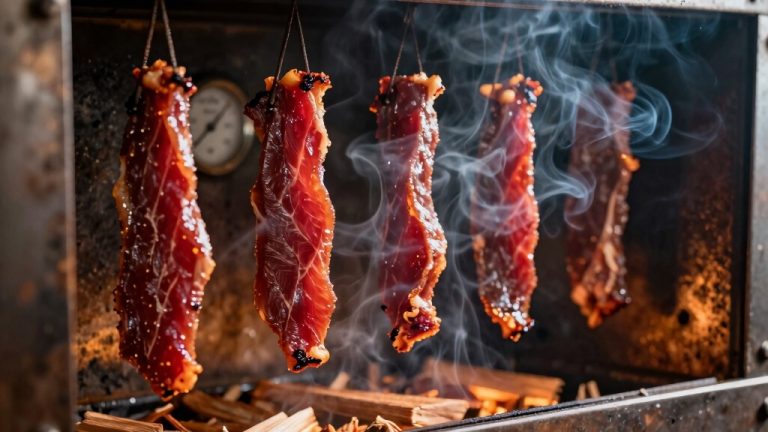
Set up your charcoal grill for indirect heat at 225–250°F using the snake method with wood chunks for smoke.
Grill fat-side up and wrap in foil during the stall around 150–170°F with broth added.
Finish cooking to 190–203°F.
Rest before slicing thinly across the grain for tender, juicy servings.
Explore next steps for perfect burnt ends and plating tips.
Key Takeaways
- Select a 10–20 pound USDA Choice or Prime brisket with good marbling and a 1/4-inch fat cap for optimal grilling results.
- Season brisket generously with rub, refrigerate wrapped overnight, and bring to room temperature before grilling.
- Set up a charcoal grill with indirect heat at 225–250°F using the snake method and place a water pan for moisture.
- Smoke brisket fat-side up, maintain steady temperature, wrap in foil at 150–170°F with beef broth, and continue cooking to 190–203°F.
- Rest the wrapped brisket 15–60 minutes before slicing thinly against the grain for tender, juicy servings.
Pick the Perfect Brisket for Charcoal Grilling

When selecting a brisket for charcoal grilling, you’ll want to choose a whole brisket weighing between 10 to 20 pounds with a fat cap at least a quarter-inch thick to guarantee moisture and flavor during the long cook.
Examine the fat cap carefully; it should be firm and evenly distributed to baste the meat as it renders.
Look for a brisket with good marbling, especially intramuscular fat, which helps retain juiciness and allows for more aggressive trimming later.
While the flat should be uniform in shape for even cooking, the point end can have more irregularities since you’ll separate them after cooking.
Choosing the right brisket upfront secures consistent tenderness and rich, beefy flavor that stands up beautifully to charcoal smoking.
For best results, consider selecting USDA Choice or Prime grades to ensure optimal marbling and tenderness.
Trim and Season Your Brisket for Best Flavor
Start by trimming the top flap and any excess fat from your brisket to guarantee even cooking and better smoke penetration. Aim to leave a fat cap about ¼-inch thick for ideal moisture and flavor.
Trim excess fat, leaving a ¼-inch fat cap for even cooking and optimal smoke flavor.
Shape the brisket uniformly, especially the point end, to ensure consistent heat exposure. Once trimmed, apply your rub generously, covering all surfaces to build a deep, savory crust.
For best results, wrap the seasoned brisket in foil and refrigerate it overnight, up to 24 hours, to let flavors fully develop. Before grilling, unwrap and let it come to room temperature for about an hour.
This step ensures even cooking and enhances smoke absorption, setting the stage for a perfectly tender, flavorful brisket. Consider halving the brisket by splitting along the fat seam to improve heat penetration and achieve more consistent cooking results.
Set Up Your Charcoal Grill for Low and Slow Cooking
Although setting up a charcoal grill for low and slow cooking requires patience, mastering this step is vital for developing the brisket’s rich, smoky flavor and tender texture.
You’ll want to create an indirect heat zone with a steady temperature of 225-250°F, ideal for long cooks.
Follow these steps:
- Light 10-16 charcoal briquettes and arrange two equal piles on opposite sides for a three-zone fire.
- Place a water pan or aluminum half pan between charcoal piles to maintain moisture and stabilize temperature.
- Use the snake method: arrange unlit briquettes in a semi-circle, lighting only the starting coals for a controlled burn.
- Position lid vents opposite the fire for proper airflow and temperature control.
This setup guarantees consistent heat and smoke penetration, essential for a perfect brisket. Mixing lump charcoal with briquettes can help balance heat control and burn time during your cook.
Smoke and Wrap Brisket to Beat the Stall
Maintaining consistent temperature while smoking your brisket is essential to developing that deep, smoky flavor and tender texture you’re aiming for.
Keep your grill steady at 225-250°F, adding mesquite or cherry wood chunks to enhance the aroma.
Smoke the brisket fat side up over the drip pan, ensuring you rotate it if the heat intensifies near one side.
When the internal temperature hits 150-170°F, it’s time to wrap your brisket tightly in foil or butcher paper.
Pour a splash of beef broth into the foil packet to maintain moisture and accelerate cooking through the stall, a phase where the brisket’s temperature plateaus due to evaporative cooling.
Wrapping traps heat and moisture, helping the meat push past the stall while preserving that rich bark you built.
Maintaining smoker humidity around 50–70% during the cook helps reduce evaporative cooling and supports a more efficient temperature rise.
Finish Cooking to Tender Perfection
Once your brisket hits that stall, it’s time to wrap it up! Grab some foil or butcher paper and snugly encase the brisket, adding a splash of beef broth to really lock in that moisture and amp up the flavor.
Keep your grill temperature steady between 225-250°F, and let the wrapped brisket cook until it reaches an internal temperature of 190°F or becomes fork-tender.
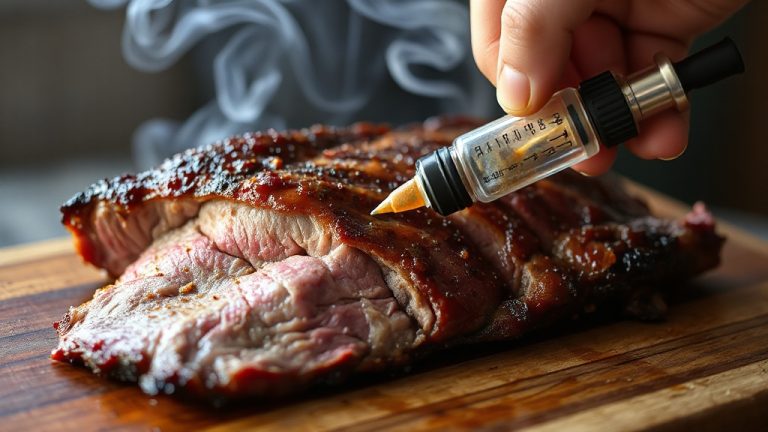
Oh, and don’t forget to use a probe thermometer! Stick it in the thickest part of the brisket to keep an eye on things.
This way, you can be sure it finishes with that perfect, melt-in-your-mouth texture you’re aiming for. Happy cooking!
For the best tenderness and juiciness, aim to pull the brisket around 203°F internal temperature, where collagen breakdown peaks for optimal results.
Wrapping Techniques
Seal your brisket tightly in foil or butcher paper as it approaches the stall around 150-170°F to lock in moisture and accelerate tenderization.
This wrapping method traps steam, preserving juiciness while pushing the meat through the stall efficiently. For best results:
- Lay the brisket on a large sheet of heavy-duty foil or butcher paper.
- Add a small splash of beef broth inside the foil to boost moisture and flavor.
- Wrap snugly, ensuring no gaps for steam to escape.
- Return the brisket to the grill, maintaining steady 225-250°F indirect heat.
Wrapping also softens the bark slightly but preserves enough crust for complex smoky flavor.
This technique helps you achieve that coveted fork-tender texture without drying out the brisket’s rich, beefy taste. Controlling smoker temperature between 225°F and 250°F is essential to promote bark formation while maintaining moisture.
Ideal Internal Temperature
How do you know when your brisket has reached the perfect balance of tenderness and flavor?
Target an internal temperature between 190°F and 200°F to ensure the collagen breaks down fully, rendering the meat fork-tender and juicy.
Use a reliable probe thermometer inserted into the thickest part of the flat to monitor closely.
Once wrapped, continue cooking through the stall until the thermometer reads about 195°F.
Then check tenderness with a probe or fork—it should slide in with little resistance.
Avoid pulling it too early; undercooked brisket will be tough and chewy.
After reaching the ideal temperature, rest the brisket wrapped for at least 30 minutes to allow juices to redistribute.
This enhances flavor and moistness.
This careful temperature control guarantees that each bite melts in your mouth.
For the most accurate results, insert the probe horizontally into the center of the flat’s thickest muscle, avoiding fat pockets and thin edges to ensure reliable core temperature readings.
Rest, Slice, and Serve Your Charcoal-Grilled Brisket
After you’ve brought your brisket to the desired tenderness, let it rest wrapped in foil for 15 to 60 minutes. This allows the juices to redistribute and the carryover heat to gently raise the internal temperature toward 200°F.
This step is essential for juicy, tender results. When ready to serve, follow these steps:
- Separate the flat from the point for easier slicing and serving.
- Slice the flat against the grain in thin, even cuts to maximize tenderness.
- Cube the point for burnt ends, season them again, and grill for 20-30 minutes to enhance flavor.
- Arrange slices and burnt ends on a platter, garnish, and serve immediately to enjoy the full depth of smoky richness.
For best results, maintain the brisket wrapped and insulated during resting to ensure moisture retention and flavor development.
Frequently Asked Questions
Can I Use Other Types of Wood Besides Mesquite or Cherry?
Yes, you can definitely use other woods besides mesquite or cherry to smoke your brisket.
Hickory offers a strong, meat-like flavor, while apple and pecan woods provide a milder, slightly sweet smoke.
Oak is a versatile choice, giving a steady, medium smoke flavor that pairs well with beef.
Experiment with blends for unique profiles, but avoid overly resinous woods like pine, as they can impart unpleasant flavors to your brisket.
How Do I Store Leftover Brisket Properly?
Imagine your leftover brisket as a precious relic. Treat it like royalty.
Wrap it tightly in foil or airtight containers to lock in that smoky flavor and moisture. Refrigerate within two hours, and consume within 3-4 days.
For longer life, freeze it in vacuum-sealed bags or heavy-duty foil. Slice before freezing to preserve texture.
When reheating, use low heat or steam to revive its tender, juicy glory without drying it out.
What Is the Best Way to Reheat Smoked Brisket?
The best way to reheat smoked brisket is low and slow to preserve moisture and flavor.
Wrap it tightly in foil with a splash of beef broth or its own juices. Heat in a 250°F oven for 20-30 minutes until warmed through, checking often.
Avoid microwaving; it dries out the meat. Rest briefly before slicing to lock in juices and maintain that tender, smoky richness you worked hard to achieve.
Can I Grill Brisket Without Wrapping It?
Yes, you can grill brisket without wrapping it, but be ready for a longer cook and a firmer bark.
Keeping it unwrapped lets smoke flavors deeply penetrate the meat, enhancing complexity.
Just maintain steady 225-250°F heat, add wood chunks regularly, and monitor moisture with a water pan.
Expect the stall to last longer, so patience is key.
Rest thoroughly afterward to lock in juices and achieve tender, flavorful results.
How Long Can Brisket Rest Before Slicing?
You can rest your brisket for 15 to 60 minutes before slicing. This resting period lets the juices redistribute, ensuring each bite stays tender and flavorful.
Keep it wrapped in foil to retain heat and moisture. Don’t rush this step; resting enhances texture and taste.
After resting, separate the flat and point. Slice the flat against the grain for tenderness and cube the point for burnt ends, maximizing every delicious part.
Where Patience Turns Brisket into Perfection
Now that you’ve mastered brisket on a charcoal grill, you see how low and slow heat, proper seasoning, and strategic wrapping work together like a well-tuned equation.
This method breaks down tough fibers into tender, flavorful bites. It transforms a simple cut into a smoky masterpiece, proving that patience and precision are the real secret ingredients.
Keep refining your technique, and every brisket will be a delicious visual and taste sensation that speaks for itself.