Pit Boss Pellets vs Traeger Pellets: When Smoke Settles
If you want consistent heat and clean, thin blue smoke, both Pit Boss and Traeger pellets deliver steady performance using 100% natural hardwood.
Traeger stands out with minimal dust and fine ash. Pit Boss offers more flavor variety and larger, cost-saving bags but with slightly higher dust.
Both burn smoothly in any pellet grill without major differences in ash buildup. Exploring these subtle contrasts can help you pick pellets tailored to your grilling style and budget.
Key Takeaways
- Both Pit Boss and Traeger pellets use 100% natural, food-grade hardwood for consistent heat and clean, thin blue smoke.
- Traeger pellets produce less dust in bags, while Pit Boss pellets have slightly more dust but similar ash levels during cooking.
- Pit Boss offers larger 40-pound bags and more wood flavor options, appealing to bulk buyers and flavor experimenters.
- Traeger pellets are sold only in 20-pound bags, emphasizing convenience, premium quality, and compatibility with Traeger grills.
- Pit Boss pellets are generally up to 50% cheaper and compatible with Traeger grills without sacrificing performance.
Pit Boss vs Traeger Pellets: Side-by-Side Comparison Table
| Feature | Pit Boss Pellets | Traeger Pellets |
|---|---|---|
| Wood Composition | 100% natural, food-grade hardwood | 100% natural, food-grade hardwood |
| Heat Consistency | Stable and reliable | Very consistent with refined control |
| Smoke Quality | Clean, thin blue smoke | Slightly more refined thin blue smoke |
| Ash Production | Low ash, comparable to Traeger | Low ash, fine and powdery |
| Dust Levels | Slightly higher dust in bags | Minimal dust, cleaner handling |
| Flavor Variety | Wide range of blends and wood types | Focus on classic pure hardwood flavors |
| Bag Sizes | 20 lb and 40 lb options | 20 lb bags only |
| Price | More budget-friendly, up to 50% cheaper | Premium pricing |
| Compatibility | Works with all pellet grills (including Traeger) | Works best with Traeger grills, but universal use |
| Storage Cleanliness | May require more cleaning due to dust | Cleaner storage with less residue |
| Best For | Budget buyers and flavor experimenters | Convenience seekers and premium users |
How Pit Boss and Traeger Pellets Compare in Heat and Smoke Performance?

When you fire up your pellet grill, the quality of the pellets directly affects how steady your heat and smoke output will be.
The quality of your pellets plays a crucial role in maintaining steady heat and smoke during grilling.
Both Pit Boss and Traeger pellets, made from 100% natural, food-grade hardwood, deliver consistent heat and steady temperature control.
You’ll notice Traeger pellets produce thin, blue smoke with minimal fluctuation, reflecting their refined moisture balance and over 20 years of pellet expertise.
Pit Boss pellets match Traeger closely in heat consistency and smoke quality, though they might generate slightly more dust in the bag.
Both brands optimize moisture content to minimize ash, so cleanup remains manageable.
When you compare their performance, you’ll find little difference in heat and smoke output. This lets you focus more on your grilling technique than worrying about pellet reliability.
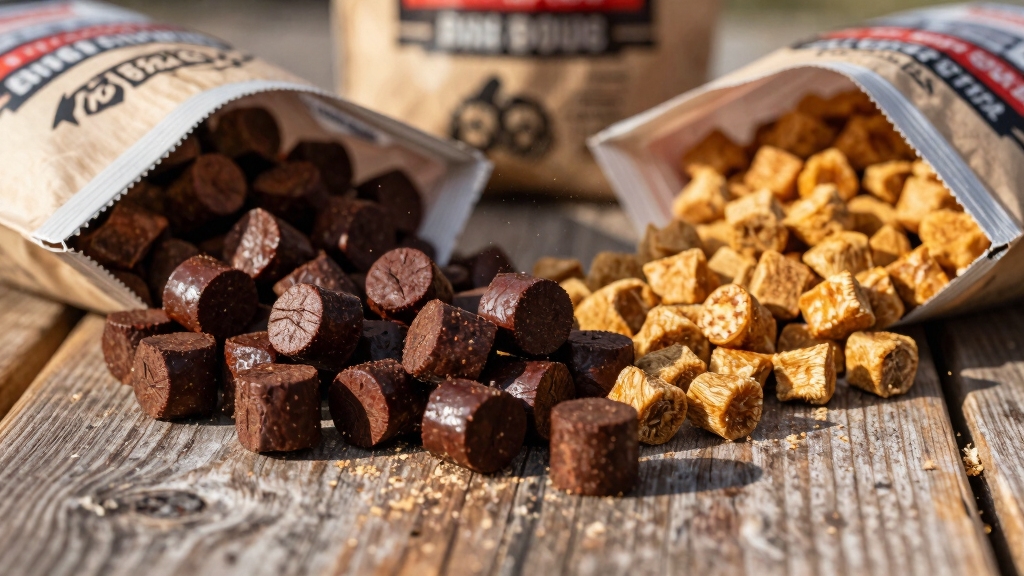
Additionally, using compressed hardwood pellets like bisquettes can further enhance smoke consistency and reduce ash buildup during cooking.
Which Pellet Brand Leaves Less Ash and Dust?
When you’re deciding between Pit Boss and Traeger pellets, you’ll find that both options produce pretty low ash due to their well-dried hardwood makeup. That’s a plus for anyone looking to keep their grill clean.
But here’s where Traeger really stands out: they create noticeably less dust in the bag. This means less mess for you to deal with and a lower chance of clogging up your grill. So, if you’re someone who prioritizes easy cleanup, that’s definitely something to consider.
In addition, pellet density can impact feed consistency and smoke output, so understanding differences like pellet quality can further help you make the best choice.
In the end, understanding these little differences can really help you choose the brand that fits your maintenance style best.
Ash Production Comparison
Consistently, both Traeger and Pit Boss pellets produce very low ash due to their optimized moisture content and high-quality hardwood composition.
When you use either brand, you’ll notice minimal residue left behind after cooking, which means less frequent cleaning for your grill.
Traeger’s pellets are crafted with over two decades of refinement, ensuring they burn evenly and leave a fine, powdery ash that doesn’t clog your grill’s components.
Pit Boss pellets, though slightly more dust-prone in storage, still deliver comparable ash outcomes during combustion.
Their hardwood makeup facilitates efficient burning, leaving behind similarly fine ash.
So, if ash production is your main concern, you can confidently choose either brand.
Both demonstrate excellent combustion efficiency that keeps ash to a minimum, enhancing your grilling experience.
This minimal ash production contributes to the consistent smoky flavors that pellet smokers are known for.
Dust Levels Analysis
Beyond ash production, the amount of dust in pellet bags also impacts your grilling experience by affecting both storage cleanliness and pellet feeding reliability.
When you compare Pit Boss and Traeger pellets, you’ll notice Traeger consistently produces less dust in their bags. This lower dust level means you’ll deal with less mess around your storage area and fewer clogs in your grill’s auger system.
Pit Boss pellets, while still maintaining low ash, generate slightly more dust, which could mean more frequent cleaning of your pellet hopper. Both brands use well-dried, natural hardwood, but Traeger’s meticulous production process results in finer pellet integrity, minimizing dust fallout.
If you want less hassle and cleaner handling, Traeger edges out Pit Boss in dust control, enhancing overall grilling convenience. Using pellets with automated feeding systems like augers ensures consistent combustion and reduces the impact of dust on grill performance.
What’s Inside Pit Boss and Traeger Pellets?
If you dig into what makes up Pit Boss and Traeger pellets, you’ll find both are crafted from 100% natural, food-grade hardwood sourced and manufactured right here in the USA.
Neither contains fillers, additives, or artificial flavorings, ensuring pure wood combustion and clean smoke.
Traeger, with over 20 years of experience, prides itself on a consistent moisture ratio that reduces ash and dust, producing thin blue smoke for steady heat.
Pit Boss matches this with similar hardwood purity and performance, though its bags tend to have slightly more dust.
Both brands optimize drying processes to maintain pellet integrity and efficient burning.
When you choose either, you’re relying on straightforward, quality hardwood pellets designed to deliver reliable grilling without unwanted substances or surprises inside.
Maintaining pellet quality by storing in a dry place is essential for consistent performance optimization during cooking.
Pit Boss vs Traeger: Wood Flavors and Bag Sizes
When you’re deciding between Pit Boss and Traeger pellets, there are some key differences to keep in mind. For starters, Pit Boss really stands out with its wide variety of wood flavors and blend options.
They’ve got something for just about every type of meat you might be grilling. On the other hand, Traeger sticks to the classic pure hardwood types, which many people appreciate for their simplicity.
Now, let’s talk about the bag sizes. Pit Boss offers those hefty 40-pound bags, which can be a real win if you’re grilling regularly and want to save some cash.
In contrast, Traeger’s 20-pound bags are definitely easier to handle, but they mightn’t be the best choice if you’re looking to stock up. Traeger grills also provide WiFIRE smart controls that enhance grilling precision when using their pellets.
Flavor Variety Options
Although both Pit Boss and Traeger pellets offer quality hardwood options, you’ll find a distinct difference in their flavor variety and packaging.
Pit Boss stands out with an extensive selection of wood flavors and blends, catering to different meats and taste profiles. You can choose from hickory, mesquite, cherry blends, and more, giving you flexibility to experiment.
Traeger, on the other hand, focuses primarily on pure hardwood types like oak, hickory, and maple, without flavor blends. This simplicity appeals if you prefer straightforward, consistent smoke flavor.
While both brands use 100% natural hardwood, Pit Boss’s wider flavor range lets you tailor your grilling experience more precisely. If variety and customization matter to you, Pit Boss offers broader options.
Traeger delivers reliable, classic hardwood flavors with no-frills consistency.
Both brands emphasize the use of food-grade hardwood pellets to ensure safe, efficient burning and consistent smoke quality.
Pellet Bag Sizes
Both Pit Boss and Traeger offer pellet bags designed to suit different user needs, but their packaging strategies vary markedly.
Traeger sticks to a standard 20-pound bag size, which makes handling and storage straightforward. This is especially helpful if you prefer smaller quantities or value convenience.
On the other hand, Pit Boss provides more flexibility, offering both 20-pound and larger 40-pound bags for certain wood flavors.
This larger option appeals if you’re looking to buy in bulk and save money, as Pit Boss pellets often come at a lower price per pound.
However, keep in mind that Pit Boss pellets tend to produce slightly more dust inside the bags, which may impact storage cleanliness.
Ultimately, your choice depends on whether you prioritize convenience or cost-efficiency in your pellet supply.
For optimal smoking results, using well-prepared fuel like properly soaked pellets can ensure steady, clean smoke and avoid off-flavors.
How Do Pit Boss and Traeger Pellets Compare on Price?
If you’re looking to balance quality with cost, understanding the price differences between Pit Boss and Traeger pellets is essential.
Traeger pellets come exclusively in 20-pound bags, which are easier to handle but limit bulk savings.
Pit Boss offers larger 40-pound bags, giving you potential discounts and cutting your cost per pound markedly.
They are often reported as up to 50% cheaper than Traeger.
Despite Traeger’s reputation as a premium product, its price point remains higher, partly due to smaller packaging and brand positioning.
Both brands maintain similar price per pound when compared directly.
However, Pit Boss’s larger bags and occasional lower prices make it more budget-friendly if you’re buying in volume.
Choosing between them depends on whether you prioritize convenience or overall cost savings.
For those who enjoy outdoor cooking, considering the total cooking area and fuel efficiency of your grill can further influence your pellet choice.
What Do Users Say About Pit Boss vs Traeger Pellets?
When choosing between Pit Boss and Traeger pellets, user feedback often highlights that the performance differences are minimal. Most grillers note similar heat consistency and smoke quality from both brands.
You’ll find that both produce steady temperatures and thin, blue smoke, which is key for clean flavor. Many users appreciate Pit Boss for its broader flavor variety and larger bag options.
However, some mention slightly more dust in the bags compared to Traeger. Traeger’s pellets are praised for their consistently low ash and dust levels, reinforcing their premium status.
For the best results, it is important to use food-grade hardwood pellets and avoid overpacking the tube to maintain optimal smoke flow and steady burning.
Can You Use Pit Boss Pellets in Traeger Grills?
Although Traeger grills are designed with their own pellets in mind, you can confidently use Pit Boss pellets in them without compromising performance.
Both brands use 100% natural, food-grade hardwood with no additives, ensuring clean burning and consistent heat.
Pit Boss pellets perform comparably to Traeger’s, maintaining steady temperatures and producing thin blue smoke ideal for flavor.
You might notice slightly more dust in Pit Boss bags, but that doesn’t affect grill operation or ash buildup, which remains low for both.
If you’re after variety and cost savings, Pit Boss offers more wood flavors and larger, cheaper bags.
Ultimately, using Pit Boss pellets in your Traeger grill delivers efficient, reliable grilling without sacrificing quality or flavor.
Frequently Asked Questions
Are Pit Boss and Traeger Pellets Environmentally Sustainable?
You can consider both Pit Boss and Traeger pellets environmentally sustainable since they’re made from 100% natural, food-grade hardwood without fillers or additives.
Their optimized moisture content reduces ash and dust, minimizing waste. Both companies produce pellets in the USA, supporting local resources.
While neither brand advertises specific eco-certifications, their focus on pure hardwood and clean combustion means you’re using a product that’s cleaner-burning and less polluting than many alternatives.
How Long Do Pit Boss and Traeger Pellets Typically Last in Storage?
You can typically store both pellets for about 6 to 12 months if you keep them in a cool, dry place.
Moisture is the enemy, so sealing them airtight will extend their shelf life.
Exposure to humidity causes pellets to crumble and lose efficiency.
If you rotate your stock and protect the bags from dampness, you’ll maintain consistent heat output and flavor during grilling sessions over many months.
Do Pit Boss or Traeger Pellets Affect Grill Warranty Coverage?
Back in the days of musketeers, brand loyalty was king, but today, your grill’s warranty usually won’t hinge solely on pellet brand choice.
Using either Pit Boss or Traeger pellets typically doesn’t void your warranty, as both meet quality standards.
However, always check your grill’s manual; some manufacturers specify approved pellets.
If you stray, warranty claims might get tricky. Staying within recommended guidelines guarantees your grill’s coverage stays intact and your grilling stays worry-free.
Can You Mix Different Pellet Brands in the Same Grill?
Yes, you can mix different pellet brands in the same grill, but it’s best to do so cautiously.
Mixing may alter the burn consistency or flavor profile slightly since each brand’s wood type and moisture content vary.
To maintain peak performance, try blending small amounts first and observe the temperature stability and smoke quality.
Avoid mixing pellets with different moisture levels or additives to prevent clogs and inconsistent heat during cooking.
What Is the Best Way to Store Wood Pellets to Maintain Quality?
To keep your wood pellets in prime condition, you’ll want to shield them from unwanted moisture’s subtle advances. Store them in a cool, dry place; think airtight bins or heavy-duty plastic containers with tight lids.
Avoid damp basements or areas prone to humidity spikes. Keeping pellets dry preserves their burn quality, reduces dust, and prevents crumbling. This ensures your grill performance stays consistent and your cleanup efforts remain light and easy.
Flavor Over Fame: Choosing Your Perfect Pellet Match
So, you’re stuck choosing between Pit Boss and Traeger pellets? Ironically, both deliver great heat and rich smoke, yet you’ll debate ash levels like a true pellet connoisseur.
Their wood flavors and prices balance out, making your decision less about quality and more about personal preference.
And yes, you can sneak Pit Boss pellets into your Traeger grill because in this pellet showdown, versatility wins hands down. Who knew BBQ could be this complex?