Can You Smoke a Frozen Turkey: Safe Method & Expert Tips
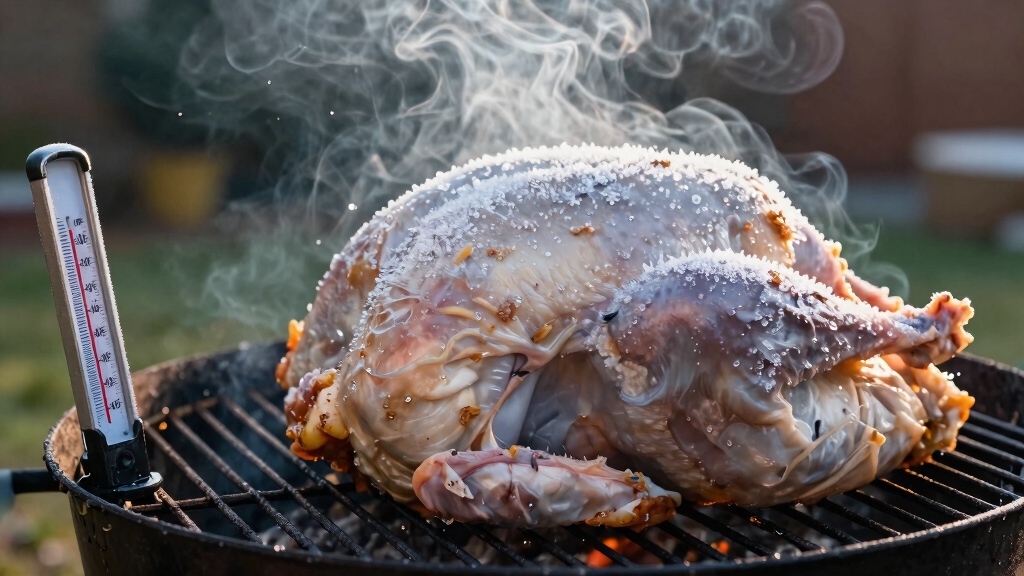
You shouldn’t smoke a frozen turkey because it increases the risk of foodborne illness by keeping the meat in the bacterial danger zone too long.
Uneven heat penetration can leave thick parts undercooked. Experts and authorities alike stress thawing fully before smoking to ensure the internal temperature reaches a safe 165°F.
Smoking frozen also doubles cook time and complicates temperature monitoring. If you want reliable safety and juiciness, understanding proper thawing and cooking techniques is essential.
Key Takeaways
- Smoking a frozen turkey is unsafe due to prolonged exposure in the bacterial danger zone (40–140°F), increasing foodborne illness risks.
- Experts and authorities recommend fully thawing the turkey in the refrigerator for 2–4 days before smoking for even, safe cooking.
- Smoking frozen turkey significantly extends cook time and risks undercooked centers while outer layers overcook and dry out.
- Proper internal temperature monitoring with a probe thermometer is difficult in frozen birds, complicating safe cooking verification.
- If time-constrained, oven roasting at 325°F from frozen is safer than low-temperature smoking without thawing.
Why Smoking Frozen Turkey Is Risky
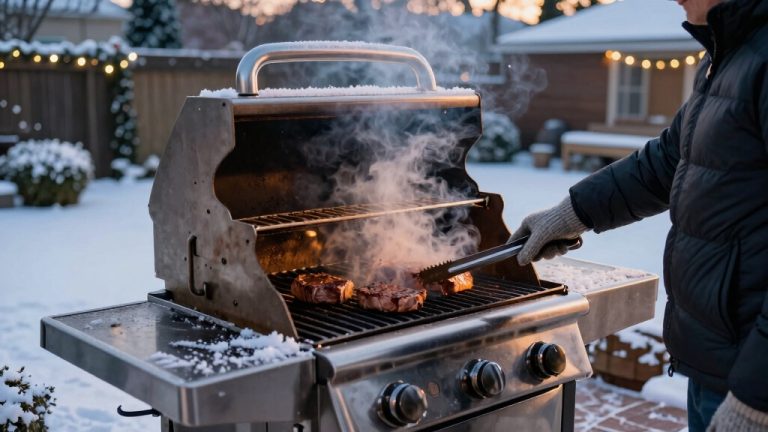
Although you might be tempted to smoke a turkey straight from the freezer, doing so poses significant food safety risks.
Smoking temperatures between 225°F and 275°F take too long to raise the internal turkey temperature above the USDA’s safe threshold of 165°F, especially starting from frozen.
This slow heating lets the meat linger in the danger zone (40-140°F) for over four hours, where bacteria multiply rapidly. This increases the risk of foodborne illness.
Additionally, inconsistent heat penetration during smoking can leave parts undercooked, particularly in thick areas like the thigh.
You also face practical challenges like difficulty inserting temperature probes.
Because of these factors, smoking a frozen turkey compromises safety and cooking reliability, making it a risky cooking method without proper thawing.
It is always safest to thaw your turkey fully first using a controlled method such as cold water thawing to avoid bacterial growth during cooking.
What Experts Really Think About Smoking Frozen Turkey
You really shouldn’t smoke a frozen turkey. Experts are pretty clear on this—it’s unsafe. The main issue is that it can cook unevenly, and that means some parts mightn’t reach the safe temperature. Plus, there’s the big concern about bacteria. When you smoke a turkey at low temperatures, it doesn’t get through the danger zone quickly enough, and that can lead to health risks. Proper thawing in the refrigerator is essential to keep the meat below 40°F and prevent bacterial growth before smoking.
Expert Warnings Against
When experts evaluate smoking a frozen turkey, they consistently warn against it due to the low temperatures involved in smoking that prevent the bird from reaching safe internal temperatures quickly enough.
ThermoWorks and Big Sur Smokehouse highlight that smoking at 225-275°F keeps the turkey in the bacterial danger zone too long, risking unsafe food.
Smoked BBQ Source points out the uneven cooking inherent in smoking from frozen, where outer layers overcook while the center lingers below 165°F.
Butterball and Honeysuckle White mandate full thawing to guarantee even heat penetration and safer, predictable cook times.
You’ll face practical challenges like extended cook duration and difficulty monitoring internal temperature.
Experts agree: thawing first remains essential to avoid unsafe, inconsistent results when smoking turkey.
Additionally, properly monitoring internal temperature with a reliable thermometer is critical to ensure the turkey reaches 165°F safely throughout.
Health Risks Highlighted
Experts don’t just warn against smoking a frozen turkey because of cooking difficulties. They emphasize serious health risks tied to bacterial growth.
When you smoke a frozen bird, the internal temperature rises too slowly, allowing bacteria to multiply in the danger zone (40-140°F). This increases your risk of foodborne illnesses like Salmonella poisoning, which can cause severe vomiting or even death.
You should be aware of these key health risks:
- Prolonged exposure to the danger zone encourages bacterial growth.
- Inconsistent heat leads to undercooked sections below 165°F.
- Smoking temps (225-275°F) don’t quickly kill pathogens.
- Difficulty in verifying safe internal temperature on frozen meat.
- USDA mandates full thawing to assure safety before cooking.
Avoid smoking frozen turkey to protect your health. Proper thawing in the fridge over 8–12 hours is recommended to prevent bacterial growth and maintain safety during cooking, as advised in safe thawing practices.
Safe Alternatives to Smoking Frozen Turkey
Exploring safe alternatives to smoking a frozen turkey guarantees both food safety and peak cooking results.
You should prioritize fully thawing your turkey in the refrigerator for 2-4 days before smoking to ensure even internal temperature rise and avoid dangerous bacterial growth in the 40-140°F danger zone.
If time is limited, oven roasting at 325°F directly from frozen is a safer option, as it heats the bird more uniformly and quickly.
This method helps achieve the USDA-recommended internal temperature of 165°F.
Some enthusiasts report success smoking partially frozen turkeys at higher smoker temperatures (300-350°F).
However, this requires vigilant temperature monitoring and extended cook times.
Always verify doneness with a reliable probe thermometer in the thickest thigh part.
Rest the turkey for 20 minutes post-cook to redistribute juices safely.
For best results and food safety, always allow the turkey to rest at room temperature for 30–45 minutes before cooking to promote even heating.
How Smoking a Frozen Turkey Changes Cooking Time
Although smoking a frozen turkey might seem convenient, it markedly extends the cooking time due to the need for the bird to thaw internally before reaching the safe 165°F temperature.
Smoking a frozen turkey significantly increases cooking time as the bird must thaw before reaching 165°F.
You’ll face slow heat penetration, causing uneven cooking and longer exposure in the danger zone. Expect the process to take considerably longer than thawed smoking, often doubling the usual time.
Key factors affecting cooking time include:
- Low smoker temperatures slow thawing and cooking.
- Outer layers may overcook while the center remains frozen.
- Difficulty in accurately monitoring internal temperature.
- Extended time increases risk of dry meat.
- Additional steps like spatchcocking may reduce time but require extra handling.
Plan accordingly to ensure food safety and quality when smoking a frozen turkey. It is generally safer to thaw the turkey first using recommended methods such as refrigerator thawing before smoking to minimize bacterial growth risks.
Real People’s Stories Smoking Frozen Turkey
Many home cooks have shared their firsthand experiences smoking frozen turkeys, offering valuable insights into the practical challenges and solutions involved.
You’ll find they often face extended cook times, sometimes doubling the usual duration, due to the slow thawing and heating process.
Several users report difficulty in accurately inserting probes, which complicates monitoring safe internal temperatures.
Some adapt by removing legs and wings early or spatchcocking mid-cook to promote even heat penetration.
Others raise smoker temperatures to 325°F to reduce cooking time while still achieving a tender result.
Despite these adjustments, many acknowledge risks like uneven cooking and dry meat.
Their stories highlight the importance of constant temperature monitoring and patience.
This underscores why professionals still recommend fully thawing before smoking for safety and quality.
Using a continuous probe thermometer is crucial to ensure the turkey reaches the recommended internal temperatures safely.
Tips for Smoking Turkey After Proper Thawing
Sure! Here’s a more conversational version of your text:
—
First things first, when it comes to thawing your turkey, it’s best to do it breast-up in the fridge. You’ll want to give it about 2 to 4 days for a nice, even thaw. This helps prevent any bacterial growth, which is super important.
Now, once your turkey is all thawed out, let’s talk about brining. This step is key if you want to keep that moisture locked in during the low and slow smoking process. Trust me, a good brine makes all the difference!
Oh, and don’t forget to add a water pan in your smoker. It helps maintain humidity, which is essential for keeping the meat tender and juicy throughout the cook. You’ll be glad you did!
Be sure to maintain a steady smoker temperature between 225–275°F to ensure even cooking and optimal juiciness.
Thawing Methods
Mastering proper thawing methods is essential for ensuring your smoked turkey cooks evenly and reaches safe internal temperatures without risking bacterial growth. Thawing prevents cold spots that prolong unsafe temperature exposure during smoking. You should always plan ahead and avoid shortcuts that compromise food safety.
Consider these thawing tips:
Thaw turkey breast-side up in the fridge for 2-4 days, allowing consistent temperature. Avoid room temperature thawing to prevent bacteria proliferation. Use a tray to catch drips and avoid cross-contamination.
For faster thawing, submerge sealed turkey in cold water, changing water every 30 minutes. Never thaw at temperatures above 40°F to stay out of the danger zone.
Following these methods guarantees safer, more efficient smoking and prevents uneven cooking risks. Always monitor the temperature during thawing with a calibrated thermometer to ensure the turkey stays below 40°F and minimize microbial risk.
Brining And Moisture
Enhancing moisture retention through brining plays a vital role in preventing dryness during the extended low-heat smoking process.
When you brine your thawed turkey, you increase its ability to absorb and retain water, which counters the drying effects of prolonged exposure to smoker heat.
Use a salt-based brine with added sugar and aromatics to promote muscle fiber relaxation and enhance flavor penetration.
Maintain brining duration between 8 to 24 hours to optimize moisture without oversaturation.
Before smoking, rinse and pat dry the bird to avoid excess surface moisture, which can impede browning.
Additionally, placing a water pan inside your smoker helps maintain humidity, further reducing moisture loss.
This combined strategy guarantees a juicier, more tender turkey despite the challenges posed by slow smoking.
For best results, ensure the turkey is fully submerged in a properly chilled brine throughout the process to achieve even curing and flavor infusion with minimal risk of overbrining and toughening of the flesh, a key principle of safe brining.
How to Check Turkey’s Internal Temperature Safely
Accurately checking a turkey’s internal temperature requires inserting a reliable meat thermometer into the thickest part of the thigh, avoiding contact with bone to guarantee an exact reading.
You’ll want to make certain the probe reaches the center of the muscle where heat penetration is slowest. Here’s what to keep in mind:
Use a digital instant-read thermometer for quick, precise results.
Insert the probe deep enough without touching bone to avoid false highs.
Check multiple spots: thigh, breast, and thickest part of the stuffing if applicable.
Confirm the temperature hits at least 165°F to ensure safety.
Avoid relying on color or juices as indicators; only temperature confirms doneness.
Following these steps helps you prevent undercooking, which is critical when smoking turkey, especially from frozen or partially thawed states.
Keeping Smoked Turkey Moist After Thawing
Consistently keeping smoked turkey moist after thawing requires understanding how moisture escapes during the smoking process and taking deliberate steps to retain it.
You need to control temperature carefully, maintaining a smoker range of 225-275°F to prevent drying out. Use a water pan inside the smoker to add humidity, which reduces surface moisture loss.
Brining the turkey before smoking is vital; it helps the meat retain juices by altering protein structure. Monitor internal temperature precisely, pulling the turkey at 160-165°F to avoid overcooking.
After smoking, rest the turkey for 20 minutes to allow juices to redistribute evenly. Avoid cutting immediately, as this causes moisture to escape rapidly.
These methods collectively guarantee you achieve a juicy, flavorful smoked turkey after thawing.
Frequently Asked Questions
What Type of Wood Pairs Best With Turkey for Smoking?
For smoking turkey, you’ll want wood that complements its mild flavor without overpowering it.
Fruitwoods like apple, cherry, or peach add subtle sweetness and a light, fruity aroma.
Hickory and maple offer a richer, slightly stronger smoke but still pair well if used sparingly.
Avoid heavy woods like mesquite, which can overwhelm turkey’s delicate taste.
Experiment with blends to find your perfect balance of smoky, sweet, and savory notes.
Can You Smoke a Turkey Breast Separately From the Whole Bird?
Yes, you can smoke a turkey breast separately from the whole bird.
Doing so allows you to control cooking times more precisely since breasts cook faster than whole turkeys.
Make sure to monitor internal temperature carefully, aiming for 165°F in the thickest part to guarantee safety.
Separate breasts also benefit from brining and using a water pan to maintain moisture, preventing dryness during smoking at lower temperatures.
How Long Should Smoked Turkey Rest Before Carving?
Don’t jump the gun; let your smoked turkey rest for at least 20 minutes before carving.
This pause lets the juices redistribute evenly throughout the meat, ensuring every bite stays moist and flavorful.
Carving too soon causes the flavorful juices to run out, leaving you with dry slices.
Tent the turkey loosely with foil during resting to retain heat without steaming.
This simple step boosts tenderness and enhances your overall eating experience.
What Is the Best Way to Store Leftover Smoked Turkey?
The best way to store leftover smoked turkey is to carve it within two hours of cooking, then refrigerate it promptly.
Use airtight containers or tightly wrap the meat in foil or plastic wrap to prevent moisture loss and contamination.
Store the turkey in the fridge at or below 40°F, and consume it within three days for safety and quality.
Reheat leftovers to 165°F before eating to guarantee safety.
Are Electric Smokers Suitable for Smoking Turkey?
Yes, electric smokers are suitable for smoking turkey because they provide consistent temperature control, essential for evenly cooking poultry.
You can easily maintain the ideal range of 225-275°F, ensuring the turkey reaches a safe internal temperature of 165°F.
Electric smokers also offer convenience with automated heating elements and smoke generation, allowing you to focus on monitoring without frequent adjustments.
Just remember to use a reliable probe thermometer to avoid undercooking or drying out the meat.
Don’t Let a Frozen Shortcut Ruin Your Smoked Turkey
So, you’re tempted to slap that frozen turkey straight on the smoker, huh? Sure, why not risk uneven cooking, bacterial roulette, and a ruined feast?
Experts don’t recommend it, and neither should you. Instead, thaw properly, measure temps meticulously, and keep your bird juicy.
Smoking frozen might sound like a shortcut, but it’s really just a recipe for disaster. Trust me, patience and precision make the perfect smoked turkey, not reckless freezing.