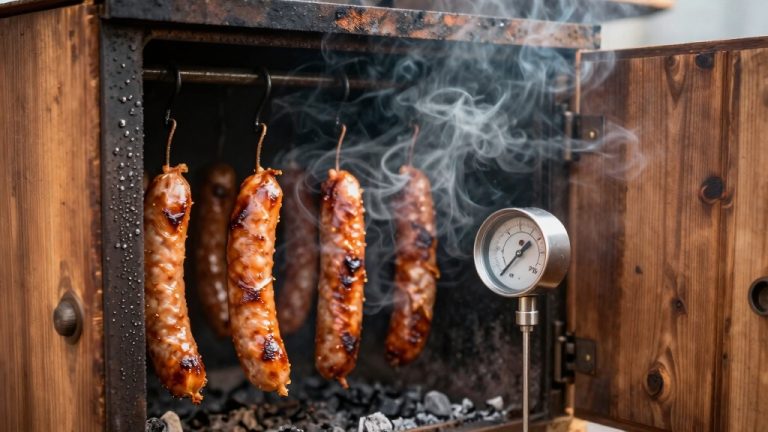
Bradley Smoker Smoked Turkey Recipe for Perfect Results
You’ll love smoking your turkey with a Bradley Smoker’s precise 225°F control and unique bisquette system offering flavors like applewood and sage.
Start by brining overnight to lock in moisture, then season with butter, oil, herbs, and aromatics.
Smoke low-and-slow until the internal temp hits 165°F–180°F, finishing with higher heat for crispy skin.
Rest before carving to keep it juicy and safe.
Explore these steps to master flavorful, succulent smoked turkey every time.
Key Takeaways
- Preheat the Bradley Smoker to 225°F and use applewood or sage bisquettes for a balanced smoky flavor.
- Brine the turkey overnight in a salt-sugar solution, rinse, dry thoroughly, and air-dry uncovered in the fridge for crisp skin.
- Apply oil or melted butter, season generously with dry rub, and stuff the cavity with herbs, garlic, and citrus for deep flavor.
- Smoke the turkey low-and-slow at 225°F until internal temperature reaches 165°F–180°F, then raise heat to 300°F for crisp skin.
- Rest the smoked turkey 15–30 minutes tented with foil before carving to allow juices to redistribute and ensure moist meat.
Quick Bradley Smoker Turkey Recipe Table
| Recipe Detail | Information |
|---|---|
| Main Term | Bradley Smoker Smoked Turkey Recipe |
| Recipe Type | Smoked Turkey / Holiday Main Dish |
| Smoker Temperature | 225°F for low-and-slow smoking |
| Turkey Preparation | Brine overnight, rinse, pat dry, and air-dry uncovered in the refrigerator |
| Brine | Salt and sugar solution; ideally brine for 24 hours |
| Best Bisquettes | Applewood, sage, or pecan |
| Seasoning | Butter or oil, dry rub, herbs, garlic, onion, and citrus |
| Aromatics | Rosemary, thyme, sage, garlic, onion, lemon, or orange |
| Smoking Time | About 3–8 hours, depending on turkey size |
| Up to 12 lb Turkey | About 3–4 hours |
| 12–18 lb Turkey | About 5–6 hours |
| 18+ lb Turkey | About 7–8 hours |
| Target Internal Temperature | Breast at least 165°F; thigh around 170–180°F |
| Finishing Temperature | Raise smoker to around 300°F or higher for crispy skin |
| High-Heat Finish | About 10–15 minutes |
| Resting Time | 15–30 minutes, loosely tented with foil |
| Food Safety | Keep brine and turkey at or below 40°F; refrigerate leftovers within 2 hours |
| Leftover Storage | Refrigerate 3–4 days or freeze up to 4 months |
| Best Side Dishes | Mashed potatoes, cranberry sauce, roasted root vegetables, green beans, salad, cornbread, or dinner rolls |
Why Smoke Your Turkey With a Bradley Smoker?

Discover why smoking your turkey with a Bradley Smoker elevates your holiday meal to a whole new level.
This smoker offers precise temperature control, maintaining a steady 225°F for that perfect low-and-slow cook. It ensures tender, juicy meat every time.
You get consistent, smoky flavor thanks to the patented bisquette system. This system uses wood chips like applewood, pecan, or sage to infuse your bird with rich, natural aromas.
The design lets you easily manage smoke intensity without guesswork, so you can focus on prepping your turkey.
Plus, the even heat distribution means your turkey cooks thoroughly and safely. It will hit that ideal 165°F to 180°F internal temperature.
Using a Bradley Smoker takes the guesswork out of smoking, turning your turkey into a delicious centerpiece guaranteed to impress.
The CleanSmoke technology also reduces ash and creosote buildup, making cleanup easier and your turkey’s flavor cleaner.
How to Brine Your Turkey for Perfect Flavor?
Once your Bradley Smoker is ready to deliver that perfect low-and-slow cook, the next step is preparing your turkey to soak up all those rich smoky flavors.
Start by dissolving salt and sugar in hot water, then cool the brine completely before submerging your turkey.
Make sure it’s fully immersed and refrigerate it for at least overnight, ideally 24 hours.
This process locks in moisture and infuses subtle seasoning deep into the meat.
After brining, rinse the bird under cold water and pat it dry thoroughly.
This helps achieve crispier skin during smoking.
Removing giblets and neck before brining is essential, especially if you plan to use them for gravy.
Maintaining the brine and meat at or below 40°F for safety ensures proper preservation during the brining process.
Prepping Your Turkey: Cleaning, Drying, and Seasoning
Rinsing your turkey thoroughly under cold water and patting it dry with paper towels guarantees a clean surface that’s ready to absorb seasoning and develop crispy skin.
After brining and rinsing, let your turkey air-dry uncovered in the refrigerator for at least two hours. This step tightens the skin, which helps it crisp up beautifully during smoking.
When it comes to seasoning, focus on these key actions:
- Apply a thin layer of oil or melted butter to lock in moisture and help spices adhere.
- Generously sprinkle your chosen dry rub or herb blend over the entire bird, including inside the cavity.
- Stuff the cavity with aromatics like garlic, onion, and herbs to infuse deeper flavor as it smokes.
These prepping steps set the foundation for a perfectly smoky, flavorful turkey. It is also important to elevate the turkey on a rack during smoking to ensure even heat and smoke circulation around the bird.
Picking the Best Bisquettes and Wood Flavors
Choosing the right bisquettes and wood flavors plays a pivotal role in defining your smoked turkey’s aroma and taste.
You’ll want to select bisquettes that complement the mild flavor of turkey without overpowering it. Applewood bisquettes offer a sweet, fruity smoke that enhances the bird’s natural juiciness.
Pecan bisquettes provide a richer, nutty undertone. Sage bisquettes add an earthy, herbal note that pairs beautifully with traditional seasoning.
Fruit woods like applewood are especially popular because they impart a subtle sweetness and light smokiness that won’t mask your turkey’s brined depth.
When you pick your bisquettes, think about the flavor profile you want—balanced, savory, or slightly sweet—to make your smoked turkey truly memorable. For optimal results, avoid using woods like pine due to their high resin content which can produce unpleasant flavors and hazardous smoke, as explained in the wood pellet selection guidelines.
Setting Up Your Bradley Smoker at 225°F
Before you start smoking your turkey, you’ll need to preheat your Bradley smoker to a steady 225°F. This is the ideal temperature for low-and-slow cooking that guarantees tender, juicy meat.
Begin by plugging in your smoker and turning it on. Allow it to reach the desired temperature before adding your bird.
Next, load the flavor bisquettes that complement turkey, like sage or applewood, into the smoke generator.
Finally, make sure your water pan is filled. This helps maintain moisture inside the smoker, preventing your turkey from drying out.
- Set the smoker’s thermostat precisely to 225°F for consistent heat.
- Insert your chosen bisquettes to fill the chamber with rich, aromatic smoke.
- Fill the water pan to create a humid cooking environment.
Maintaining a consistent temperature helps ensure even cooking and proper smoke absorption throughout the smoking process.
This setup lays the foundation for perfect smoking.
Low and Slow Smoking: Timing and Temperature Tips
Once your Bradley smoker is steady at 225°F and filled with aromatic bisquettes, it’s time to focus on the smoking process itself.
Low and slow smoking guarantees your turkey cooks evenly, absorbing rich, smoky flavors while staying tender and juicy. Plan for 3 to 8 hours, depending on bird size, keeping the temperature consistent. Use a reliable meat thermometer to monitor internal temperature, aiming for 165°F to 180°F in the thickest part. Avoid opening the smoker lid frequently to maintain heat consistency and smoke integrity throughout the process.
| Bird Weight (lbs) | Estimated Time (hrs) | Target Temp (°F) |
|---|---|---|
| Up to 12 | 3 – 4 | 165 |
| 12 – 18 | 5 – 6 | 170 |
| 18+ | 7 – 8 | 180 |
| All | Maintain 225°F | Monitor closely |
Stay patient; this method rewards you with perfectly smoked turkey every time.
Finishing Your Turkey: When and How to Raise Heat
When your turkey gets close to that safe internal temperature range of 160°F to 165°F, it’s time to crank up the heat on the smoker. This little boost helps finish cooking quickly while locking in all that delicious moisture. Apply high heat (above 300°F) for 10–15 minutes to intensify browning, especially on the skin side, ensuring a crispy, flavorful finish with high-heat finishing.
Timing Heat Increase
Mastering the timing of your smoker’s heat increase can make all the difference in achieving a perfectly cooked smoked turkey.
You want to start low and slow at around 225°F, allowing the bird to absorb rich smoky flavors and develop tender meat.
Then, when the turkey nears doneness, raise the heat to finish it off quickly, crisping the skin and sealing in juices.
To nail the timing, follow these steps:
- Smoke the turkey at 225°F until it’s about 10–15°F below your target temperature.
- Increase the heat to the smoker’s maximum setting to develop a golden-brown, crispy exterior.
- Monitor the internal temperature closely, removing the bird once it reaches your desired doneness.
This method balances flavor, texture, and safety perfectly. Smoking at higher temperatures like 300°F can significantly reduce cook time while promoting crispier skin and effective fat rendering.
Target Temperature Goals
Knowing the right moment to raise your smoker’s heat hinges on understanding your target internal temperature. For turkey, the safe temperature usually ranges between 165°F and 180°F, depending on the cut and recipe.
Monitoring the thickest part of the thigh or breast helps you decide when to finish with higher heat, speeding up the final cook while locking in juices. Here’s a quick guide:
| Turkey Part | Safe Temp (°F) | Finish Temp (°F) |
|---|---|---|
| Breast | 165 | 170 |
| Thigh | 170 | 180 |
| Whole Bird | 170 | 180 |
Once you hit your target, raise the smoker heat to seal in flavor and crisp the skin without drying out the meat. Always use a meat thermometer to verify the internal temperature accurately and ensure food safety.
Adding Flavor With Butter, Oil, and Aromatics
Enhance your smoked turkey’s flavor by incorporating butter, oil, and aromatic ingredients both inside and out.
Start by gently slipping softened butter under the skin, which bastes the meat as it melts, locking in moisture and richness.
Next, rub the exterior with a light coat of oil; canola or olive oil works well to help the skin crisp beautifully and hold seasonings.
Finally, don’t forget the aromatics inside the cavity; add a mix of fresh herbs like rosemary, thyme, and sage, quartered onions and garlic cloves, and citrus slices such as lemon or orange.
These infuse your turkey with subtle, savory scents, creating a layered, mouthwatering experience once smoked to perfection.
For best results, be sure to bring the turkey to room temperature before cooking to ensure even heating and optimal flavor absorption.
Checking Internal Temperature for Safe Doneness
When you’re cooking a turkey, it’s super important to check its internal temperature to ensure it’s safely cooked. You’ll want to aim for a range between 165°F and 180°F, depending on which cut you’re working with.
To get the most accurate reading, grab a reliable meat thermometer and insert it into the thickest part of the thigh, just be careful not to touch the bone! This way, you can avoid any risk of undercooking while keeping that meat juicy and tender.
Taking these simple steps really makes a difference, don’t you think? Happy cooking!
Target Temperature Guidelines
Although smoking times can vary depending on your turkey’s size and smoker settings, you must rely on internal temperature to guarantee safe doneness. This guarantees your smoked turkey is juicy and safe to serve.
Aim for these target temperatures:
- 165°F for the turkey breast. This is the minimum safe temperature to avoid dryness yet ensure safety.
- 170°F to 180°F for the thickest part of the thigh. This range helps break down connective tissue for tender, flavorful dark meat.
- 165°F to 170°F for legs and wings, balancing safety and texture perfectly.
Use these guidelines as your cooking compass. When the thickest parts reach their targets, your turkey is safe, succulent, and ready to rest before carving.
Temperature Measurement Tips
Knowing the target temperatures for different parts of your turkey sets the stage, but accurately checking those temperatures during cooking is just as important.
Use a reliable instant-read thermometer to measure the thickest part of the breast and the thigh, avoiding bones for an accurate read.
Insert the probe gently and wait a few seconds until the temperature stabilizes. Remember, turkey breast should hit at least 165°F, while the thigh can go up to 170°F to 180°F for safe doneness.
Check multiple spots since heat distribution varies. Avoid opening the smoker too often, as it drops temperature, but don’t hesitate to verify internal temps near the end of cooking.
Let the turkey rest after removing it. Carryover heat will raise the temperature slightly, ensuring juicy, safe meat.
Resting, Carving, and Food Safety After Smoking
Allowing the smoked turkey to rest after cooking lets the juices redistribute, resulting in a moister, more flavorful bird.
Once your turkey reaches the target internal temperature, usually 165°F to 170°F, remove it from the smoker. Let it rest for 15 to 30 minutes.
During this time, carry out these steps:
- Tent the bird loosely with foil to retain warmth without steaming the skin.
- Use a sharp carving knife to slice, starting with the legs and wings, then the breast.
- Serve promptly or refrigerate leftovers within two hours to prevent bacterial growth.
Resting enhances food safety by allowing the temperature to even out. Following these steps guarantees you enjoy tender, juicy turkey with peace of mind.
Frequently Asked Questions
Can I Smoke a Turkey Without Brining It First?
Yes, you can smoke a turkey without brining it first, but keep in mind it might turn out less juicy and flavorful.
Brining helps the meat retain moisture and enhances taste. So skipping it means you’ll want to baste often or use a flavorful rub to compensate.
Also, monitor the internal temperature closely to avoid drying out the bird. Smoking low and slow still works great; just expect a different texture and flavor profile.
What Is the Best Way to Store Leftover Smoked Turkey?
Think of your leftover smoked turkey as a treasure chest. You want to keep it safe and fresh.
Store it in airtight containers or tightly wrapped in foil or plastic wrap to lock in moisture and flavor.
Refrigerate leftovers within two hours of cooking and keep them chilled at or below 40°F.
Consume within 3 to 4 days, or freeze for up to 4 months to preserve that smoky goodness for future meals.
How Do I Clean My Bradley Smoker After Cooking?
To clean your Bradley smoker after cooking, start by unplugging it and letting it cool completely.
Remove and discard used bisquettes and clean the drip tray to avoid grease buildup.
Wipe down the interior walls with a damp cloth.
Avoid harsh chemicals to protect the heating elements.
Clean racks with warm, soapy water and dry thoroughly.
Regular cleaning keeps your smoker running smoothly and guarantees great flavor every time you smoke.
Can I Smoke a Frozen Turkey or Should It Be Thawed?
Imagine trying to bake a cake with frozen batter. It just won’t cook evenly.
The same goes for turkey: you should always thaw it before smoking. Smoking a frozen turkey can lead to uneven cooking and food safety risks.
Thaw your bird fully, usually in the fridge for a day or two, to ensure it smokes evenly and reaches the right internal temperature.
This will help deliver juicy, flavorful results without any health hazards.
What Side Dishes Pair Well With Smoked Turkey?
You’ll want sides that complement the rich, smoky flavor of your turkey.
Think creamy mashed potatoes, tangy cranberry sauce, and roasted root vegetables like carrots and sweet potatoes.
A fresh green bean almondine or a crisp garden salad adds balance.
Don’t forget warm cornbread or buttery dinner rolls to soak up the juices.
These dishes create a delicious, well-rounded meal that highlights your smoked turkey perfectly.
Final Thoughts on Smoking Turkey in a Bradley Smoker
So, you’ve mastered smoking your turkey with the Bradley smoker. Who knew low and slow could be this thrilling?
While you waited patiently (or impatiently) for that perfect 225°F magic, your kitchen probably looked like a smokehouse exploded.
But hey, the juicy, flavorful bird you’re about to carve makes every minute worth it. Just remember, the real challenge isn’t smoking the turkey; it’s resisting the urge to eat it all before dinner!