Bradley Smoker Beef Brisket Recipe: Step-by-Step Guide
Trim your brisket leaving a ¼-inch fat cap and apply a mustard-based rub with Montreal seasoning and spices.
Preheat your Bradley Smoker to 220–250°F, using hickory or mesquite bisquettes for balanced smoke. Start slow at 220°F.
Insert your probe in the flat muscle, wrap at 160–165°F, then raise heat to 275°F to tenderize. Smoke until 203–204°F for perfect doneness.
Rest wrapped for 60–90 minutes, then slice against the grain. Here’s how to master every step for flawless results.
Key Takeaways
- Trim brisket leaving a 1/4-inch fat cap and apply a mustard or olive oil base before generously seasoning with a balanced dry rub.
- Preheat Bradley Smoker to 220–250°F, starting at 220°F for 2–3 hours for slow smoke absorption before raising temperature after wrapping.
- Use mesquite and hickory bisquettes for a balanced, robust smoke flavor, blending woods to avoid bitterness and ensure consistent smoke flow.
- Insert the temperature probe horizontally into the flat muscle, aiming for 195–204°F internal temperature and probe-tender texture for doneness.
- Wrap brisket at 160–165°F in foil and towel, increase smoker to 275°F, spritz hourly, then rest 60–90 minutes before slicing against the grain.
Bradley Smoker Beef Brisket Recipe Table
| Recipe Element | Details |
|---|---|
| Main Term | Bradley Smoker Beef Brisket Recipe |
| Recipe Type | Smoked Beef Brisket |
| Cuisine | American BBQ / Texas BBQ |
| Difficulty Level | Intermediate to Advanced |
| Prep Time | 30–45 minutes |
| Cook Time | 8.5–10 hours |
| Resting Time | 60–90 minutes |
| Total Time | Approximately 10–12 hours |
| Main Protein | Beef brisket |
| Brisket Preparation | Trimmed with ¼-inch fat cap |
| Cooking Method | Low-and-slow smoking |
| Smoker Type | Bradley Electric Smoker |
| Initial Smoker Temperature | 220°F |
| Cooking Temperature Range | 220–250°F |
| Wrapped Cooking Temperature | 275°F |
| Target Internal Temperature | 203–204°F |
| Wrap Temperature Stage | 160–165°F |
| Wood Bisquette Options | Mesquite, hickory, oak, cherry |
| Recommended Smoke Flavor | Bold, rich, smoky |
| Main Seasonings | Montreal seasoning, paprika, garlic powder |
| Optional Heat Addition | Cayenne pepper |
| Binder Used | Yellow mustard or olive oil |
| Spritz Liquid | Apple cider vinegar |
| Wrapping Method | Heavy-duty foil and towel |
| Texture Goal | Tender, juicy, probe-tender |
| Best Bark Texture | Deep mahogany crust |
| Probe Placement | Thickest part of the flat muscle |
| Best Slicing Method | Slice against the grain |
| Resting Method | Wrapped in cooler or insulated container |
| Best Side Dishes | Coleslaw, baked beans, cornbread |
| Flavor Profile | Smoky, savory, peppery, rich |
| Fuel System | Automatic Bradley bisquette feed |
| Best Wood Blend | Hickory with mesquite accent |
| Weather Impact Tip | Cold weather may increase smoking time |
| Pro Tip | Keep smoker temperature stable for even smoke penetration and tenderness |
Trimming and Seasoning Your Brisket

Start by trimming your brisket to guarantee peak smoke penetration and even cooking. Leave about a quarter-inch fat cap on the flat side to protect the meat without hindering smoke absorption.
Remove any thick, hard fat and silver skin, as these won’t render down and can block seasoning. Next, apply a light coating of yellow mustard or olive oil to help your rub adhere evenly.
Prepare a dry rub with tested salt levels, combining spices like Montreal steak seasoning, paprika, garlic powder, chili powder, and a hint of cayenne for balanced heat. Apply the rub generously, ensuring every surface is covered.
This meticulous trimming and seasoning step sets the foundation for a tender, flavorful brisket that absorbs smoke and seasoning uniformly throughout the cook. For best results, insert the temperature probe horizontally into the thickest part of the flat muscle to monitor internal doneness accurately and avoid dry, tough slices by probing the center mass.
Getting Your Bradley Smoker Ready
Alright, let’s get your Bradley Smoker ready! First things first, you’ll want to preheat it to a nice steady temperature between 220 and 250°F. This is super important for creating those ideal cooking conditions.
Next up, you’ll need to pick your wood. I recommend going with mesquite or hickory bisquettes. They really pack a punch when it comes to smoke flavor, and they provide that strong, consistent smoke that makes everything taste amazing.
And don’t forget about your smoker’s temperature control! It’s key to keeping things stable throughout the long cooking process. You’ve got this! The Bisquette system will automatically advance the bisquettes at set intervals to maintain a steady smoke flow without manual feeding.
Preheat Temperature Range
Before placing your brisket in the Bradley Smoker, you’ll want to preheat it to a stable temperature between 220 and 250°F (104-121°C). Maintaining this range guarantees peak smoke penetration and gradual cooking, which is vital for tender, flavorful brisket.
Set your smoker to the lower end, around 220°F, for the initial smoking phase. This allows the meat to absorb smoke slowly without drying out. The electric Bradley Smoker offers precise temperature control, so wait until it fully stabilizes before adding the brisket.
Avoid fluctuations by keeping the lid closed during preheating. Once the smoker reaches your set temperature and holds steady, you can confidently begin the smoking process. This ensures an ideal environment for consistent heat distribution and smoke infusion throughout the cook.
Maintaining smoker temperatures between 225°F and 250°F supports both smoke ring formation and bark development for optimal flavor.
Bisquette Wood Selection
Choosing the right bisquette wood is essential to achieving the authentic smoke flavor your brisket deserves. For a true Texas-style brisket, use mesquite bisquettes, which impart a bold, intense smokiness that complements the beef’s richness.
If you prefer a slightly milder, yet still robust flavor, hickory bisquettes are an excellent alternative. Your Bradley Smoker’s bisquette system guarantees consistent smoke delivery throughout the cooking process, so selecting quality wood is vital.
Avoid milder woods that won’t provide the depth and character needed for brisket. Always use fresh, properly stored bisquettes to maintain consistent smoke quality. Mesquite’s high lignin content drives rapid combustion, producing the intense, earthy smoke that defines its bold flavor.
Smoker Temperature Control
Although preparing your brisket is vital, making certain your Bradley Smoker maintains the correct temperature is equally important for a perfect cook.
Preheat your smoker to 220-250°F (104-121°C) before placing the brisket inside to establish a stable cooking environment.
During the initial smoking phase, keep the temperature steady at around 220°F for 2-3 hours.
Once you wrap the brisket, raise the heat to 275°F (135°C) to accelerate cooking.
The electric Bradley Smoker’s consistent temperature control helps maintain these precise settings throughout the process.
Monitor internal temperatures carefully to ensure even cooking, aiming for a total cook time of 8.5 to 9+ hours depending on brisket size.
Precision in temperature control guarantees tender, flavorful brisket with ideal smoke penetration and texture.
Electric smokers excel at precise low-temp control which is ideal for delicate low-and-slow cooking like brisket.
Selecting Wood Bisquettes for Bradley Smoker Flavor
When you’re picking wood bisquettes for your Bradley Smoker, it’s all about the flavor profiles that each wood brings to the table.
For instance, mesquite gives you that bold, intense smoke that’s just perfect if you’re going for an authentic Texas-style brisket. It’s got that kick that really stands out!
On the other hand, hickory offers a slightly milder flavor, but it’s still pretty robust. It’s a great choice if you want something a bit less overwhelming but still packed with that smoky goodness.
Cherry wood, meanwhile, provides a mild, fruity smoke with a subtly sweet finish that enhances beef without overpowering it, making it ideal for a balanced smoking experience.
Wood Flavor Profiles
How does the type of wood bisquette affect the flavor of your smoked brisket? The wood you select directly influences the depth and character of smoke infused in your meat.
Mesquite bisquettes deliver an intense, bold flavor typical of Texas-style brisket. Hickory offers a strong yet slightly sweeter smoke profile. Choosing the right wood bisquette helps tailor your brisket’s flavor to your preference.
Oak bisquettes provide a medium smoky taste that is balanced and versatile, making them an excellent choice for those seeking a moderate flavor.
This ensures consistent smoke throughout the cook using the Bradley Smoker’s bisquette system.
| Wood Type | Flavor Profile |
|---|---|
| Mesquite | Bold, intense, earthy |
| Hickory | Strong, sweet, smoky |
| Apple | Mild, fruity, subtle |
| Cherry | Sweet, rich, vibrant |
Select wood bisquettes that complement your desired smoke intensity and flavor complexity precisely.
Smoke Intensity Options
Since the wood bisquettes you select directly control the smoke intensity, choosing the right type is essential to achieving your desired brisket flavor with a Bradley Smoker.
Mesquite bisquettes deliver a bold, intense smoke that creates an authentic Texas-style profile, perfect if you want a pronounced smoky punch.
Hickory bisquettes offer a strong but slightly milder smokiness, providing complexity without overpowering the meat.
If you prefer a subtler smoke, consider blending bisquettes or using milder woods.
However, Bradley’s system excels with mesquite and hickory for consistent, robust flavor.
Remember, the bisquette system guarantees even smoke distribution throughout the cook, so your choice directly impacts depth and aroma.
Select bisquettes based on your smoke intensity preference to masterfully tailor your brisket’s final taste.
For optimal results, using hickory as a base wood and mesquite as an accent can help balance flavor and prevent bitterness during smoking, a key smoking technique.
Smoking Your Brisket: Managing Temperature and Timing
Although maintaining a steady temperature can be challenging, you’ll achieve the best brisket results by preheating your Bradley Smoker to a consistent 220-250°F (104-121°C) before placing the meat inside.
Start with the smoker at the lower end of this range to allow the brisket to absorb smoke gently.
Monitor internal temperature frequently to guarantee even cooking and avoid hot spots.
Remember, total smoking time ranges from 8.5 to 9+ hours depending on size and temperature stability.
Visualize this process:
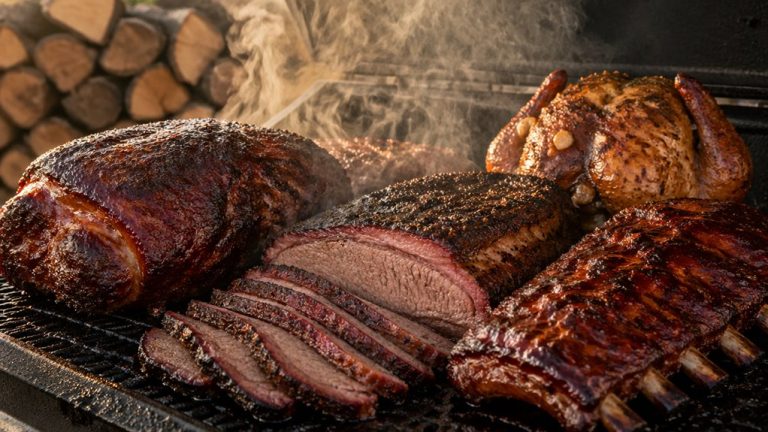
- Brisket slowly darkening as smoke envelops it, developing a deep bark.
- Temperature gauge steady, fluctuating minimally within the target range.
- Periodic gentle smoke wafting from the smoker’s vent, signaling consistent combustion.
Mastering this balance guarantees evenly cooked, flavorful brisket every time.
For optimal tenderness, target an internal temperature around 205°F to ensure full collagen breakdown.
Wrapping Your Brisket to Achieve Tenderness
Once your brisket reaches an internal temperature of 160-165°F (71-73°C), it’s time to wrap it to lock in moisture and accelerate the tenderizing process.
Use heavy-duty aluminum foil to double-wrap the brisket tightly, guaranteeing no steam escapes. This method traps heat and moisture, effectively braising the meat during the next cooking phase.
After foil, wrap the brisket in a towel to enhance heat retention, maintaining a steady cooking environment. Increase the smoker temperature to around 275°F (135°C) to expedite tenderizing while wrapped.
During this phase, spritz the brisket hourly with apple cider vinegar to prevent drying. Monitor internal temperature at multiple points to ensure even cooking.
This wrapping step typically lasts 2.5 to 3 hours and transforms the brisket’s texture to tender perfection. Wrapping at this stage also helps to push the meat through the stall temperature range, reducing overall cook time and improving juiciness.
How to Tell When Your Brisket Is Done?
Knowing when your brisket is done hinges on accurately gauging its internal temperature and texture. Use a reliable meat thermometer to check multiple points, aiming for a consistent 195-204°F (90-96°C) range.
Knowing your brisket is done means checking its internal temperature and texture accurately.
At this stage, the meat should feel probe-tender but not mushy.
Visualize doneness with these indicators:
- The thermometer slides in and out with minimal resistance, indicating proper tenderness.
- The internal temperature holds steady near 203-204°F, signaling collagen breakdown.
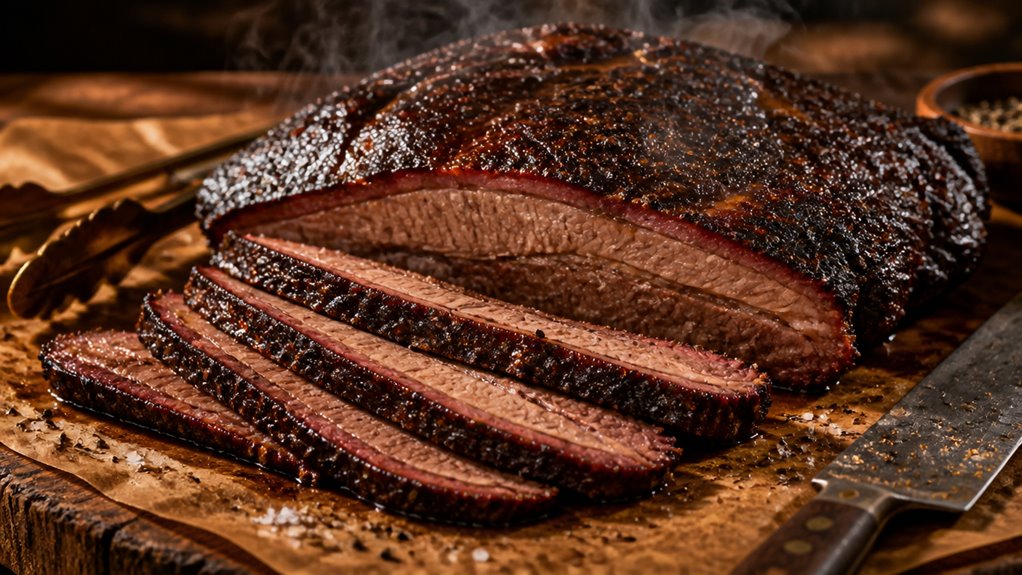
- The brisket’s surface shows a deep mahogany bark, firm yet yielding under gentle pressure.
Avoid relying solely on time; brisket size and consistency affect cooking duration. Trust temperature and texture to guarantee perfectly smoked, tender results.
Resting and Serving Your Smoked Brisket
Allowing your smoked brisket to rest properly is essential for locking in juices and achieving peak tenderness. Once you remove the brisket from the smoker, wrap it tightly in foil. Then cover it with a towel and place it in a cooler.
This insulated environment maintains heat while allowing carryover cooking to finish gently. Rest your brisket for at least 60 to 90 minutes. This redistribution of juices prevents them from spilling out when sliced.
When ready, slice against the grain to guarantee maximum tenderness and moisture retention. Serve immediately to showcase the brisket’s rich texture and smoky flavor. Proper resting and precise slicing transform your smoked brisket from good to exceptional.
Frequently Asked Questions
Can I Use Other Types of Wood Bisquettes Besides Mesquite or Hickory?
Yes, you can use other wood bisquettes besides mesquite or hickory in your Bradley Smoker.
Woods like apple, cherry, or pecan offer milder, sweeter smoke flavors, which can complement brisket differently.
Just be aware these woods produce less intense smokiness than mesquite or hickory.
Choose based on your flavor preference.
Remember that the bisquette system guarantees consistent smoke delivery regardless of wood type, so you’ll maintain steady cooking performance.
How Do I Clean and Maintain My Bradley Smoker After Cooking?
You should clean your Bradley Smoker after every use to keep it functioning well.
Start by unplugging and letting it cool completely.
Remove and empty the ashtray and grease tray, then wash them with warm, soapy water.
Wipe the interior with a damp cloth to remove residue but avoid harsh chemicals.
Clean the bisquette tray gently and check the smoke generator for buildup.
Regular maintenance guarantees consistent temperature control and extends your smoker’s lifespan.
What Is the Best Way to Slice Brisket Against the Grain?
You absolutely must slice brisket against the grain to avoid chewing on rubbery leather!
Identify the muscle fibers running lengthwise, then cut perpendicular to them in thin, even slices about ¼ inch thick.
Use a sharp slicing knife to make certain clean cuts without shredding the meat.
This technique guarantees maximum tenderness and flavor with every bite, turning your brisket into the succulent masterpiece it deserves to be.
Can I Smoke Brisket Without Wrapping It in Foil?
Yes, you can smoke brisket without wrapping it in foil, but expect a longer cook time and a firmer bark.
Wrapping helps retain moisture and speeds up cooking once the brisket hits 160-165°F. Without foil, you’ll need to monitor closely to prevent drying.
Spritz frequently with apple cider vinegar to maintain juiciness. Be prepared for a chewier texture and a more pronounced smoky crust if you skip wrapping.
How Do Weather Conditions Affect Smoking Times and Temperatures?
You might think weather barely matters, but it actually impacts smoking times and temperatures markedly.
Cold or windy conditions cause your smoker to lose heat faster, forcing you to increase fuel or adjust settings to maintain consistency.
High humidity can slow the evaporation process, slightly extending cooking times.
Always monitor your smoker’s internal temperature closely and anticipate longer cook times in chilly or damp weather to make certain your brisket cooks evenly and stays tender.
Smoking Brisket Is a Craft Built on Patience and Precision
Think of smoking brisket like crafting a masterpiece. Each step, from trimming to resting, shapes its final form.
Your Bradley smoker is the artist’s brush. Wood bisquettes are the palette, and your careful temperature control is the steady hand.
When you wrap and rest the brisket, you’re sealing in the story of patience and precision.
Follow these steps faithfully, and you’ll serve a brisket that’s not just food but a tribute to your skill and dedication.