Smoked Corned Beef Brisket Recipe: Pitmaster Tips for Juicy Results
Choose a pre-brined corned beef brisket and soak it in cold water to reduce excess salt. Rinse, trim fat to a thin cap, and pat dry.
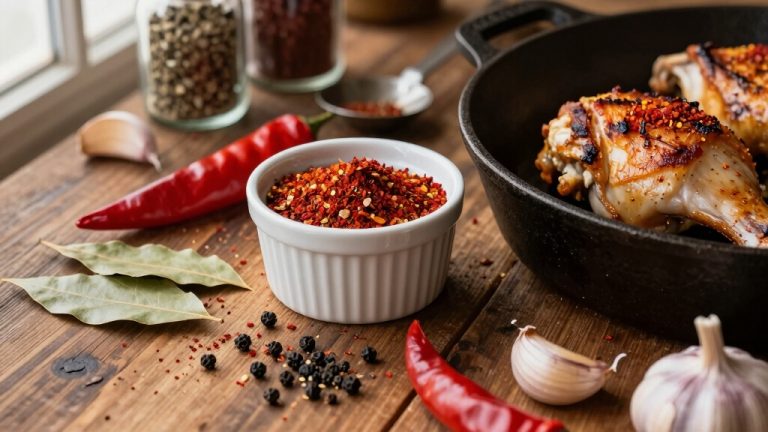
Apply a balanced dry rub with paprika, black pepper, garlic, and mustard powders using a mustard binder for flavor and crust.
Smoke at 225°F with hickory or fruitwoods until 160–165°F. Then wrap and braise at low heat to 200–210°F for tenderness.
Rest before slicing thinly against the grain. Here’s how to perfect every step.
Key Takeaways
- Soak pre-brined corned beef in cold water 1–3 hours, changing water regularly to reduce excess salt while preserving flavor and texture.
- Apply a dry rub of paprika, black pepper, garlic, mustard, coriander, and onion powders with a mustard binder for balanced flavor and crust.
- Smoke brisket at a steady 225°F using hickory or fruitwoods until internal temperature reaches 160–165°F, about 2–5 hours, for optimal smoke absorption.
- Wrap brisket with braising liquid and spices once at 160–165°F, then braise at low heat until 200–210°F for 3–6 hours for tenderness.
- Rest wrapped brisket 30 minutes to two hours, then slice thinly against the grain for juicy, tender servings.
Smoked Corned Beef Brisket Cooking Guide Table
| Recipe Detail | Information |
|---|---|
| Main Term | Smoked Corned Beef Brisket Recipe |
| Recipe Type | Smoked Beef Recipe |
| Cuisine | American BBQ |
| Difficulty Level | Intermediate |
| Prep Time | 20 Minutes (+ 1–3 Hours Soaking) |
| Cook Time | 6–10 Hours |
| Total Time | 8–13 Hours |
| Servings | 8–10 Servings |
| Main Ingredient | Corned Beef Brisket |
| Cooking Method | Low & Slow Smoking |
| Smoker Temperature | 225°F |
| Wrapping Temperature | 160–165°F |
| Finished Temperature | 200–210°F |
| Resting Time | 30–120 Minutes |
| Recommended Wood | Hickory, Apple, Cherry, Pecan |
| Binder | Yellow Mustard |
| Dry Rub Ingredients | Paprika, Black Pepper, Garlic Powder, Onion Powder, Mustard Powder, Coriander |
| Braising Liquid | Beef Broth, Guinness or Dark Beer |
| Flavor Profile | Smoky, Savory, Peppery, Tender |
| Best Side Dishes | Coleslaw, Potato Salad, Baked Beans, Rye Bread |
| Best Uses for Leftovers | Sandwiches, Hash, Reuben, Tacos |
| Storage | Refrigerate in Airtight Container |
| Refrigerator Life | 3–4 Days |
| Freezer Life | Up to 3 Months |
| Best Slicing Method | Thinly Against the Grain |
| Recommended Equipment | Smoker, Meat Thermometer, Foil, Sharp Slicing Knife |
Select and Prepare Corned Beef Brisket (Rinse, Trim, Soak)

Start by selecting an uncooked corned beef brisket that includes its original brining package to guarantee authentic flavor.
Begin with a raw corned beef brisket in its original brine for genuine, rich flavor.
Once you remove the brisket from the package, rinse it thoroughly under cold running water to eliminate excess brine and surface residue.
Next, trim any excess fat, leaving a thin, even fat cap intact. This preserves moisture and enhances tenderness during cooking.
Pat the brisket dry with paper towels to make certain that any seasoning or rub adheres properly and smoke penetrates effectively.
If you want to reduce saltiness without compromising texture, soak the brisket in cold water for 2 to 4 hours, changing the water every 30 to 60 minutes.
These preparation steps are essential to achieve a balanced, flavorful smoked corned beef brisket.
For best results, if you plan to freeze the brisket before cooking, ensure it is vacuum-sealed and frozen promptly at 0°F (-18°C) or lower to maintain quality and safety.
Manage Saltiness: Brining and Soaking Corned Beef
After preparing your brisket by rinsing, trimming, and drying, the next step is to guarantee its saltiness through proper brining and soaking.
Commercial corned beef comes pre-brined, but soaking it in cold water for 1 to 3 hours helps leach excess salt without sacrificing flavor. For homemade brisket, a custom brine with pink curing salt, spices, and aromatics infuses complex taste over 4 to 10 days.
To manage saltiness effectively, follow these key steps:
- Soak in fresh, cold water, changing the water every 30–60 minutes to draw out excess salt evenly.
- Adjust soak time depending on your salt tolerance; longer soaking reduces salt but can dilute flavor.
- Always keep the brisket refrigerated during soaking to guarantee food safety and maintain texture.
Maintaining the soak and meat temperature at or below 40°F refrigeration is essential to prevent bacterial growth during this process.
This balance preserves taste while preventing overpowering saltiness.
Build the Perfect Dry Rub for Corned Beef
To kick things off, let’s talk about the spices you’ll need. You’ll want to mix together some paprika, black pepper, garlic powder, and mustard powder. These staples come together to create a dry rub that really enhances the brisket’s rich flavor.
It’s all about finding that sweet spot—balancing heat and aromatic notes without drowning out the meat’s natural taste.
When it’s time to apply the rub, make sure you pat it evenly over all sides of the brisket. This helps ensure a consistent crust and allows for peak smoke absorption.
You want every bite to be packed with flavor! Be sure to cool the meat to room temperature on a wire rack before applying the rub to reduce condensation and improve seasoning adherence, which aligns with best pre-freeze handling practices.
Essential Rub Ingredients
Crafting the perfect dry rub for corned beef demands a careful balance of spices that complement the meat’s rich, brined flavor without overpowering it. Your rub should enhance the brisket’s savory depth while adding a subtle kick and aromatic complexity.
Focus on these essential ingredients:
- Black pepper and coriander provide sharp, earthy notes that cut through the saltiness.
- Paprika and mustard powder add warmth and a gentle sweetness that enrich smoke penetration.
- Garlic and onion powders bring savory umami undertones that deepen flavor without masking the brisket’s character.
Apply the rub evenly and pat it down to make certain each bite bursts with balanced, layered taste. This foundation sets the stage for a perfectly smoked corned beef brisket. For best results, apply the rub at least 30 minutes before cooking to allow salt and sugar interaction with the meat proteins.
Balancing Spice Flavors
When balancing spice flavors for your dry rub, you’ll want to take into account how each component interacts with the brisket’s natural saltiness and smokiness.
Aim for a harmonious blend where pungent black pepper and aromatic coriander seeds complement the savory brine without overpowering it.
Incorporate paprika for mild sweetness and depth, while mustard powder adds sharpness that cuts through richness.
Garlic and onion powders provide a foundational savoriness, enhancing complexity.
If you prefer heat, introduce cayenne or red pepper flakes sparingly to avoid clashing with the meat’s subtle smoky notes.
Remember, your rub should enhance, not mask, the brisket’s character.
Measure precisely, taste often, and adjust to achieve a balanced, layered flavor profile that elevates the smoked corned beef experience.
For best results, use a mustard binder to help your rub adhere evenly and develop a flavorful crust during smoking.
Applying Rub Techniques
Although selecting the right spices is crucial, how you apply the rub to your corned beef brisket determines how well those flavors penetrate the meat and form a flavorful crust.
Start by patting the brisket dry to make sure the rub adheres properly. Then, evenly sprinkle your dry rub blend—paprika, black pepper, garlic, coriander, and a touch of mustard powder—over all sides.
Remember, don’t massage the rub in; instead, gently pat it down to preserve the meat’s texture.
Follow these steps for maximum impact:
- Dry the brisket thoroughly to enhance rub adhesion and smoke penetration.
- Apply the rub evenly, covering every surface without rubbing it in.
- Let the brisket rest briefly to allow the spices to meld before smoking.
Using a mustard binder before applying your rub can improve adhesion and help develop a crisp, flavorful bark.
Master these techniques, and your smoked corned beef will boast a perfect bark and rich flavor.
Smoke Corned Beef: Temperature, Wood, and Timing
When smoking corned beef, it’s important to keep your smoking temperature steady between 190 and 250 °F. Ideally, you want to aim for around 225 °F. This helps ensure that the meat cooks evenly and absorbs the maximum amount of smoke flavor.
Now, let’s talk about wood. Choosing the right type is key! Hickory is a classic choice, but you might also want to consider fruitwoods or even a mix of hickory with sweeter woods. This combo can give your brisket a nice, balanced flavor without being too overpowering.
As for timing, you should plan on smoking for about 2 to 5 hours. You’re looking for an internal temperature of 160–165 °F. This will help you achieve that tender, flavorful meat we all love. Happy smoking!
Keep in mind that brisket’s high connective tissue and fat cap help it withstand prolonged smoking without drying out, making it ideal for low and slow cooking.
Ideal Smoking Temperature
Mastering the ideal smoking temperature is essential to achieving a tender, flavorful corned beef brisket with a well-formed bark and a delicate smoke ring.
You want to maintain your smoker between 190–250 °F, with 225 °F as the sweet spot for guaranteed smoke absorption and connective tissue breakdown.
Follow these key points for perfect temperature control:
- Keep your smoker steady at 225 °F to balance smoke flavor without drying the meat.
- Monitor internal brisket temperature; aim for 160–165 °F during the initial smoke phase to develop bark and smoke ring.
- After wrapping, increase internal temperature to 200–210 °F to fully tenderize through collagen breakdown.
Controlling temperature precisely secures your brisket emerges juicy, tender, and packed with that classic smoky aroma. Maintaining smoker humidity between 50–70% during the cook also helps reduce evaporative cooling and supports a more consistent temperature rise.
Best Wood Choices
Selecting the right wood for smoking corned beef brisket profoundly influences its flavor profile and aroma. You want woods that complement the brisket’s salty, beefy character without overpowering it.
Hickory provides a strong, savory smoke, ideal for traditional bold flavors. Fruitwoods like apple or cherry impart a subtle sweetness and mild aroma, enhancing the meat’s natural taste. Blending hickory with fruitwood balances intensity and adds complexity.
| Wood Type | Flavor Profile |
|---|---|
| Hickory | Strong, smoky |
| Apple | Mild, sweet, fruity |
| Cherry | Sweet, rich, slightly tart |
| Pecan | Nutty, sweet, medium |
Choose woods based on your flavor preference. Avoid overpowering hardwoods to keep the brisket’s delicate brine intact. Maple wood, with its mild, sweet smoke, can be blended with stronger woods like hickory to add subtle caramelized notes and balance the overall flavor.
Smoking Duration Guidelines
While smoking corned beef brisket, maintaining an ideal temperature between 190 and 250 °F is essential to achieve tender, flavorful results.
The smoking duration depends on weight, thickness, and your target internal temperature. Typically, you’ll smoke until the brisket reaches 160–165 °F, which takes 2 to 5 hours.
Then, wrap and braise it until it hits 200–210 °F, adding 3 to 6 hours more.
Follow these guidelines to perfect your timing:
- Smoke unwrapped until 160–165 °F for a rich smoke ring and bark formation.
- Wrap brisket tightly and continue cooking until 200–210 °F for collagen breakdown.
- Rest brisket for at least 30 minutes to redistribute juices and enhance tenderness.
Maintaining smoker humidity around 50–70% helps reduce evaporative cooling and supports a steady temperature rise during cooking.
Precision in timing guarantees succulent, melt-in-your-mouth smoked corned beef every time.
Wrap and Braise Corned Beef for Tenderness
Wrapping and braising the corned beef brisket after the initial smoke phase transforms it into a tender, flavorful centerpiece.
Once the internal temperature hits 160–165 °F, tightly wrap the brisket in double foil or place it in a covered pan.
Add a braising liquid, such as beef stock, Guinness combined with spices like bay leaf, cloves, and mustard powder, to infuse moisture and deepen flavor.
Return the wrapped brisket to the smoker or oven, maintaining low heat until it reaches 200–210 °F.
This slow braising breaks down collagen and connective tissues, softening the meat to a juicy, sliceable texture.
Monitor the temperature carefully; braising usually takes 3–6 hours depending on thickness.
This step is essential to elevate smoked corned beef from firm to melt-in-your-mouth perfection.
Rest and Slice Corned Beef Brisket
After reaching the desired internal temperature, you’ll want to let the brisket rest for at least 30 minutes, ideally up to two hours.
Allow the brisket to rest 30 minutes to two hours for optimal juiciness and tenderness.
This vital step allows the juices to redistribute evenly and the muscle fibers to relax, ensuring every bite remains moist and tender.
When you’re ready to slice, follow these guidelines to maximize flavor and texture:
- Keep the brisket wrapped in foil and a towel during resting to retain heat and moisture.
- Slice thinly, about 1/8 to 1/4 inch thick, cutting perpendicular to the grain for best tenderness.
- Serve immediately or refrigerate leftovers for versatile uses like sandwiches or hash.
Frequently Asked Questions
Can I Use Fresh Brisket Instead of Pre-Brined Corned Beef?
You can use fresh brisket instead of pre-brined corned beef, but you’ll need to brine it yourself to achieve that signature flavor and tenderness.
Prepare a curing brine with pink curing salt, spices, and aromatics. Soak the brisket for several days in the refrigerator.
This step is essential to develop the traditional corned beef taste and texture. Skipping it will result in a less flavorful, less tender outcome.
What Is the Best Way to Store Leftover Smoked Corned Beef?
The best way to store leftover smoked corned beef is to wrap it tightly in foil or plastic wrap.
Then place it in an airtight container. Refrigerate promptly and consume within 3 to 4 days for peak freshness.
For longer storage, freeze the brisket in a heavy-duty freezer bag or vacuum-sealed package.
Thaw it slowly in the refrigerator before reheating to maintain moisture and tenderness.
How Do I Reheat Smoked Corned Beef Without Drying It Out?
To gently awaken your smoked corned beef without robbing it of moisture, reheat it low and slow.
Wrap it tightly in foil with a splash of beef broth or water to keep it cozy.
Warm it in a 250°F oven for 20-30 minutes until just heated through.
Avoid the microwave; it’s a moisture thief.
This careful approach preserves tender juiciness and rich flavor, ensuring each bite feels like a warm embrace.
Are There Vegetarian Alternatives to Smoked Corned Beef Brisket?
Yes, you can find vegetarian alternatives to smoked corned beef brisket, like smoked seitan or jackfruit.
Both absorb smoky, savory flavors well. You can season seitan with spices similar to corned beef and smoke or bake it for texture.
Jackfruit mimics shredded meat and takes on marinades beautifully. Experiment with liquid smoke, soy sauce, and traditional spices to create that distinctive corned beef taste without animal products.
Can I Smoke Corned Beef Without a Smoker Using an Oven?
You can’t replicate true smoke without a smoker, but you can mimic it using your oven.
Start by seasoning your corned beef well and adding a smoky element, like smoked paprika or liquid smoke, to the rub or braising liquid.
Cook low and slow at around 225°F, wrapped tightly to retain moisture.
While it won’t have that deep smoky bark, you’ll achieve tender, flavorful meat with a subtle smoky hint.
From Corned Beef to Pastrami-Style Brisket: Smoking Tips and Techniques
You start with a briny, salty brisket, bold and intense. After smoking it low and slow, that sharpness softens into deep, smoky richness.
Wrapping and braising transform tough fibers into tender, juicy perfection. As you rest and slice, the contrast between the brisket’s rustic origins and its refined finish becomes clear.
This smoked corned beef isn’t just a meal; it’s a masterful balance of bold flavor and delicate texture, ready to impress every time.