How to Dispose of Charcoal: Easy & Eco-Friendly Methods
You should always wait at least 48 hours after grilling to let charcoal ash cool completely before handling or disposal to avoid fire hazards and burns.
Use a metal scoop to transfer cooled ash into a sealed, metal container stored outdoors away from flammable materials.
Once fully cooled and wrapped in foil, you can discard ash safely in your regular trash bin.
Taking these steps prevents fires and injury. Explore ways to handle, repurpose, and dispose of charcoal safely for best practices.
Key Takeaways
- Allow charcoal ash to cool completely for at least 48 hours before handling or disposal to avoid fire hazards.
- Transfer cooled ash using a metal scoop into a sealed metal container stored outdoors away from flammable materials.
- Wrap fully cooled ash in aluminum foil to contain dust and place it in a non-combustible trash bin for regular disposal.
- Never dispose of lighter fluid in regular trash; take it to a hazardous waste collection center for safe disposal.
- Avoid using plastic or combustible containers for ash storage to prevent fire risks and spontaneous combustion.
Charcoal Ash Cooling Time Before Disposal

Before you handle or dispose of charcoal ash, you need to let it cool completely, which takes about 48 hours.
Always allow charcoal ash to cool fully for about 48 hours before handling or disposal.
Charcoal ash can reach temperatures up to 500°F immediately after use, posing a significant fire hazard.
Handling or disposing of ash too soon risks burns, melting garbage cans, or igniting fires in waste vehicles.
Waiting at least 48 hours guarantees the ash has lost all residual heat, preventing spontaneous combustion.
Avoid disturbing ash immediately after grilling to protect yourself and your property.
This cooling period is critical because even seemingly cool ash can harbor hot embers.
Proper disposal also involves ensuring ash is free of toxins by avoiding ash from treated charcoal.
How to Safely Handle and Store Cooled Charcoal Ash?
Once charcoal ash has cooled completely over the recommended 48-hour period, you can safely move on to handling and storing it.
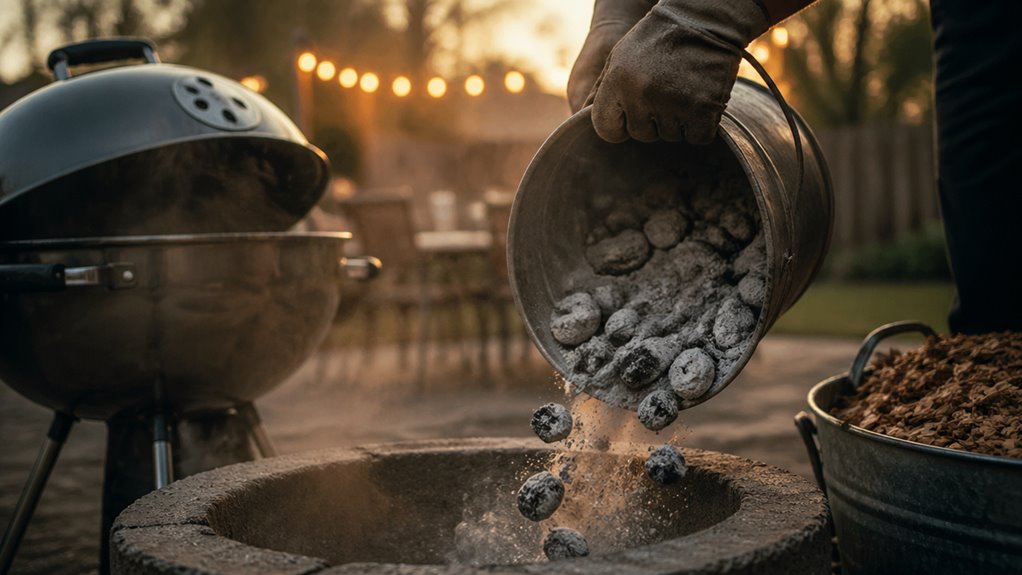
First, use a metal scoop or shovel to transfer the ash to a metal container with a tight-fitting lid.
Avoid plastic or combustible containers to prevent fire risks.
Store the container outdoors, away from flammable materials and sheltered from rain to keep the ash dry.
Make sure the container remains sealed to prevent ash dust from spreading and to avoid any chance of spontaneous ignition.
Keep this metal container near your grill area for convenient collection after each use.
Following these steps reduces fire hazards and prepares the ash for its next stage, whether disposal or repurposing.
Proper storage and stacking of materials like ash and firewood is essential to minimize fire hazards and maintain safety.
Safe Charcoal Ash Disposal Methods for Household Trash
When disposing of charcoal ash in household trash, make sure it has fully cooled for at least 48 hours to eliminate fire risks.
Allow charcoal ash to cool completely for 48 hours before disposal to prevent fire hazards.
Hot ash can reach temperatures over 500°F, risking fires or melting bins if discarded prematurely.
Once cooled, follow these safe disposal methods:
- Wrap the ash in aluminum foil to contain any residual particles and prevent dust.
- Store ash in an airtight metal container to avoid spontaneous relighting before disposal.
- Place the wrapped or contained ash in a non-combustible rubbish bin for regular trash collection.
These steps reduce hazards linked to burning or smoldering ash in your household waste.
This ensures safety for both your property and waste management services.
Avoid disposing of ash while still warm to prevent accidental fires.
For best results, ensure ash is fully ashed over with a light gray coating before handling or disposal.
How to Use Charcoal Ash Safely in Your Garden and Soil?
Properly cooled and handled charcoal ash doesn’t just require safe disposal; it can also benefit your garden and soil. You can sprinkle additive-free ash around plants to provide nutrients or mix it with water as a natural fertilizer. Avoid using ash from briquettes containing chemicals. Incorporate unused charcoal into compost to boost carbon content. Charcoal ash’s potash content also deters lice and mites near chicken coops. To ensure safety and effectiveness, always confirm that the ash is fully cooled and free from any treated or painted wood residues before use, as recommended in wood seasoning safety.
| Use Case | Method | Benefit |
|---|---|---|
| Nutrient Boost | Sprinkle around plants | Adds potassium and minerals |
| Pest Control | Mix ash with hydrated lime spray | Deters lice and mites |
| Compost Enrichment | Add charcoal pieces to compost | Increases carbon content |
| Soil Amendment | Dilute ash in water for soil | Enhances soil pH and fertility |
Use these practices responsibly for safe, effective gardening.
Using Charcoal Ash and Charcoal for Odor Control at Home
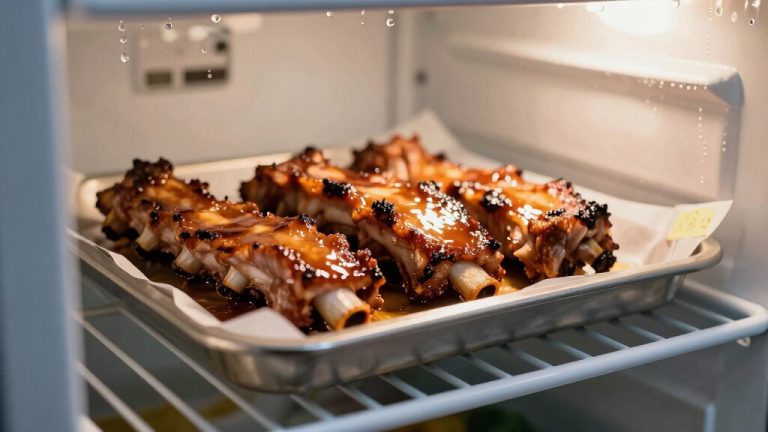
You know, if you’re dealing with funky smells in your fridge, a simple trick is to toss some unused charcoal pieces into a perforated bag.
It really helps absorb those odors naturally—pretty neat, right?
And if your shoes are starting to smell a bit off, try wrapping some charcoal in a cloth or even an old sock.
It’s amazing how well it can tackle those unpleasant scents!
Plus, charcoal isn’t just for your fridge and shoes.
It works wonders as a natural deodorizer in enclosed spaces too.
So, you can improve your air quality without any harsh chemicals.
How great is that?
Using sustainably sourced, additive-free charcoal ensures safer air quality when used for odor control environmental impact.
Refrigerator Odor Reduction
Frequently overlooked, charcoal and charcoal ash offer effective natural solutions for reducing odors in your refrigerator. Their porous structure absorbs moisture and traps odor-causing molecules, making them safer and chemical-free alternatives to commercial deodorizers.
To use charcoal for odor control, follow these steps:
- Place several pieces of unused natural charcoal in a perforated bag or breathable container and set it on a refrigerator shelf.
- Allow charcoal ash to cool completely for at least 48 hours before handling. Then wrap it in aluminum foil and place it inside the fridge to absorb smells.
- Replace charcoal or ash every 1–2 months to maintain effectiveness and prevent moisture buildup.
For best results, ensure the charcoal used is free from chemical contaminants such as lighter fluid to avoid introducing off-odors into your refrigerator.
Shoe Deodorizing Tips
Charcoal consistently proves effective at neutralizing odors in shoes by absorbing moisture and trapping odor-causing particles.
To use it, place small pieces of unused charcoal or charcoal ash wrapped in a breathable cloth or sock inside your shoes overnight.
This setup draws out dampness and odors without introducing moisture, reducing bacteria growth that causes stink.
Avoid using ash immediately after grilling; make certain it’s fully cooled for at least 48 hours to prevent burns or fire risk.
Charcoal’s porous nature makes it ideal for long-term odor control, outperforming many commercial deodorizers.
Regularly replacing the charcoal or ash keeps your shoes fresh and dry.
Remember to use additive-free charcoal to avoid chemical residues.
This simple method leverages charcoal’s natural adsorption capabilities to maintain shoe hygiene safely and effectively.
For best results, use only charcoal types designed for clean burning and consistent heat, as improper fuels can leave residues. charcoal fuel characteristics
Natural Deodorizer Uses
How can natural materials help keep your home smelling fresh without harsh chemicals? Charcoal and its ash are effective, non-toxic deodorizers that absorb odors naturally.
You can repurpose cooled charcoal ash and unused charcoal to control unwanted smells safely and efficiently.
Try these methods:
- Place unused charcoal pieces in a perforated bag inside your refrigerator to neutralize food odors.
- Wrap small charcoal chunks in a cloth or old sock and insert them into shoes to absorb sweat smells.
- Use charcoal in enclosed spaces like closets or storage bins to maintain freshness without artificial sprays.
These approaches rely on charcoal’s porous structure, which traps odor molecules. This provides a chemical-free solution for odor control around your home.
For safe disposal, always ensure charcoal ash is completely cooled and wrapped in aluminum foil before discarding to avoid fire hazards.
Why Never to Throw Lighter Fluid in the Trash?
You definitely shouldn’t throw lighter fluid in the trash. It’s actually considered household hazardous waste, and that can lead to some serious environmental issues.
When it’s improperly disposed of, it can contaminate both soil and water, which is harmful to ecosystems and can even affect human health.
So, what should you do instead? Make sure to keep any leftover fluid in its original container. That way, you can easily take it to a hazardous waste facility for safe disposal.
Proper hazardous waste disposal helps prevent contamination and protects public safety.
It’s a small step that makes a big difference!
Hazardous Waste Classification
Because lighter fluid contains toxic chemicals, disposing of it in regular trash poses serious environmental and safety risks.
It’s classified as household hazardous waste, so you must handle it carefully to prevent harm.
Throwing lighter fluid in the trash can lead to fires, chemical leaks, and exposure to harmful substances.
Here’s what you should do:
- Store leftover lighter fluid in its original container with a secure lid to avoid leaks.
- Take it to a designated hazardous waste collection center or facility for safe disposal.
- Never pour it down drains, on soil, or into regular trash bins to prevent contamination and accidents.
Following these steps guarantees you protect both your safety and the environment from hazardous chemical risks.
Improper disposal can also contribute to fire hazards in residential areas, so always follow recommended guidelines.
Environmental Contamination Risks
Although lighter fluid seems harmless once discarded, it poses significant environmental contamination risks when thrown in the trash. The fluid contains volatile organic compounds (VOCs) and petroleum-based chemicals that can seep into soil and groundwater, contaminating ecosystems and drinking water supplies.
When lighter fluid leaks from garbage bins, it can harm microorganisms essential for soil health. It can also disrupt aquatic life if it reaches water bodies. Additionally, its flammable nature increases the risk of fires in waste collection vehicles and landfills.
Improper disposal releases toxic fumes that degrade air quality and pose health risks. Because of these dangers, you must never discard lighter fluid with regular household waste. Treat it as hazardous waste, storing it safely to prevent leaks and environmental damage until you can deliver it to a proper hazardous waste facility.
Proper Disposal Methods
Since lighter fluid contains volatile organic compounds and petroleum-based chemicals, disposing of it improperly can cause significant environmental and safety hazards.
You should never throw leftover lighter fluid in the trash because it risks fires, soil contamination, and toxic exposure.
Instead, follow these proper disposal methods:
- Store unused lighter fluid securely in its original container to prevent leaks or spills.
- Take the fluid to a designated household hazardous waste collection center or hazardous waste facility.
- Avoid pouring lighter fluid down drains, onto soil, or into compost, as it harms ecosystems and water sources.
Tips to Prevent Charcoal Waste and Fire Hazards
Regularly following best practices can greatly reduce charcoal waste and minimize fire hazards during and after grilling.
Use a minimum 2-inch charcoal layer to avoid excess ash and guarantee complete burning.
Never grill near flammable materials like dry grass or wooden fences.
Keep a metal container by your grill to safely collect cooled ash for disposal.
Always wait 48 hours after grilling before handling ash to prevent burns or fires.
| Risk Factor | Prevention Tip |
|---|---|
| Fire from hot ash | Wait 48 hours before disposal |
| Excess waste | Use minimal charcoal layer |
| Accidental ignition | Store ash in metal container |
These steps protect your home and environment while saving resources effectively.
Effective Ways to Repurpose Leftover Charcoal Before Disposal
Repurposing leftover charcoal before disposal not only reduces waste but also adds value to your garden and household.
Instead of discarding unused charcoal, you can use it effectively to benefit plants and control odors.
Here are three practical ways to repurpose charcoal:
1. Enhance Compost and Soil:
Add a handful of unused charcoal to your compost pile to boost carbon content.
This improves soil health and nutrient retention.
2. Natural Pest Control:
Mix charcoal ash with hydrated lime and water to create a pest-repelling spray for plants.
This mixture helps deter lice and mites naturally.
3. Odor Absorption:
Place charcoal pieces in a perforated bag inside refrigerators or shoes.
This will help neutralize unpleasant odors.
Frequently Asked Questions
Can I Dispose of Charcoal Ash in Compost Without Cooling It First?
No, you shouldn’t dispose of charcoal ash in compost without cooling it first.
Hot ash can reach temperatures around 500°F, which risks spontaneous combustion and fire hazards.
Always wait at least 48 hours for the ash to cool completely before handling or adding it to compost.
This guarantees safety and prevents damage to your compost heap, garden, or waste containers.
Proper cooling is essential to avoid burns and fire risks.
Is It Safe to Flush Lighter Fluid Down the Sink?
No, you shouldn’t flush lighter fluid down the sink. It’s classified as household hazardous waste for a good reason.
Pouring it down drains harms the environmentsand contaminates water systems. Instead, store leftover lighter fluid in its original container and take it to a hazardous waste collection center.
Avoid using it altogether if you can, since it poses toxicity risks and environmental harm. This ensures safer handling and disposal practices.
How Do I Clean My Grill After Using Charcoal?
After grilling with charcoal, wait at least 48 hours for the ashes to cool completely.
Use a grill brush to scrub the grates thoroughly, removing food residue and soot.
Empty cooled ash into a metal container, avoiding immediate handling to prevent burns.
Wash grates with warm, soapy water, then rinse and dry.
Regular cleaning extends your grill’s life and guarantees safe, tasty meals every time you cook.
Can Chemical Briquette Ash Be Used in the Garden?
You shouldn’t use chemical briquette ash in your garden because it often contains additives and chemicals harmful to plants and soil health.
Instead, stick to ash from natural wood charcoal, which provides beneficial nutrients without toxic residues.
Using chemical briquette ash risks contaminating your soil and harming beneficial microorganisms.
To keep your garden safe and thriving, always opt for additive-free charcoal ash when adding nutrients or pest deterrents.
What Containers Are Best for Long-Term Charcoal Storage?
Think of airtight metal containers as a fortress protecting your charcoal’s quality.
For long-term storage, you want a metal container with a tight seal to keep moisture and air out. This prevents spontaneous relighting or degradation.
Store your charcoal in a cool, dry place, ideally near your grill for convenience.
Avoid plastic or cardboard, as they’re vulnerable to moisture and damage, compromising your charcoal’s effectiveness over time.
Handle with Care: The Final Step in Responsible Fire Use
Just like the careful tending of Prometheus’s fire, you must handle charcoal ash with patience and respect.
Let it cool thoroughly before disposal and store it safely. Explore eco-friendly uses like enriching your garden or controlling odors.
Avoid hazardous shortcuts like tossing lighter fluid in the trash. By doing so, you not only protect your home but also honor the ancient element of fire responsibly, turning waste into a valuable resource.