Smoke Chicken Breast Up or Down: Which Side Is Better?
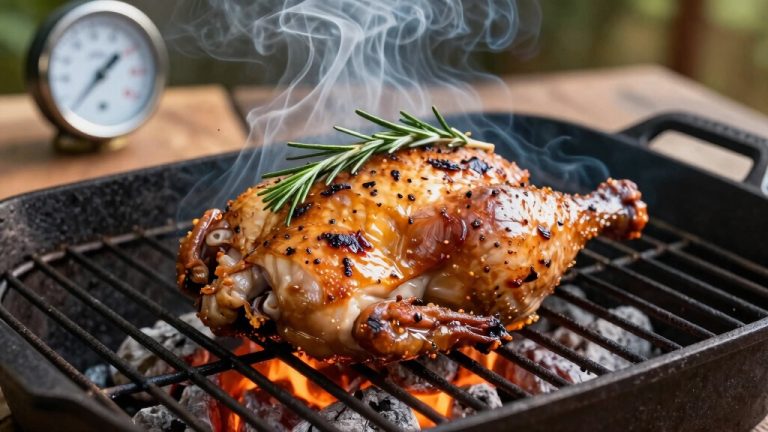
You should smoke chicken breast breast side up when using a bottom-heat or indirect heat smoker. This placement promotes even skin browning and juicy meat by allowing rendered fat to baste the skin.
However, if your smoker applies heat from above, placing the breast side down shields the lean meat from direct radiant heat, preserving moisture.
Managing temperature between 225°F and 275°F with careful flipping near the end optimizes juiciness and crispness. The nuances of heat direction and smoker type shape the best approach.
Key Takeaways
- Smoke chicken breast skin side up on indirect heat for even cooking, moisture retention, and crispy skin.
- Use breast side down if your smoker has top heat to protect lean meat from direct radiant heat.
- Flipping breast side down early then skin side up near the end balances moisture and skin crispness.
- Skin side up allows rendered fat to baste the skin, promoting even browning and crisp texture.
- Always monitor internal temperature, aiming for 150°F to 165°F to ensure juiciness and safety.
Best Way to Smoke Chicken Breast: Breast Side Up

When smoking chicken breast, you’ll most often get the best results by placing it breast side up on indirect heat. This orientation positions the breast away from the smoker’s hottest areas, reducing the risk of overcooking lean meat.
Place chicken breast side up on indirect heat to avoid overcooking and ensure even smoking results.
You’ll also promote more even skin browning since rendered fat can flow over the skin surface rather than pooling against the grate. Most smoking guides recommend this setup for its balance of moisture retention and skin texture.
By maintaining indirect heat, you control internal temperature rise, targeting 150°F to 165°F for safe doneness. Placing the breast skin side up supports crisping during the final stages, making it the preferred method unless your smoker’s heat source demands reversal.
This precise placement optimizes both cooking consistency and finished quality. Monitoring internal temperature carefully ensures the chicken is juicy and safe to eat without overcooking.
How Smoker Heat Direction Affects Breast Placement?
Although most smokers direct heat from below, you’ll need to adjust chicken breast placement if your smoker’s heat source comes from above.
Typically, placing the breast side up keeps the meat away from the highest heat zone, promoting even browning and moisture retention. However, top-down heat requires flipping the orientation to breast side down to shield the lean meat from direct radiant heat.
Consider these key adjustments:
Bottom heat smokers: Position breast side up for peak skin crisping and indirect heat exposure.
Top heat smokers: Place breast side down to avoid overcooking the breast surface.
Hybrid or adjustable smokers: Modify placement based on heat source location to balance moisture retention and skin texture.
Understanding heat direction guarantees you adapt breast placement to maintain juiciness and achieve desirable skin quality. Maintaining a consistent smoker temperature within the ideal range is crucial to ensure even cooking and optimal smoke absorption regardless of heat direction.
When to Smoke Chicken Breast Breast Side Down?
Adjusting the chicken breast’s orientation based on heat direction sets the stage for choosing breast side down smoking in specific scenarios. Opt for breast side down when direct radiant heat risks overcooking the lean breast meat or when moisture retention is critical early in the cook.
This orientation shields the breast from intense heat, reducing drying. Often, you’ll flip the breast later to finish skin crisping.
| Scenario | Benefit | Timing |
|---|---|---|
| Direct radiant heat | Protects breast meat | Start of cook |
| Moisture retention | Juices directed inward | Start of cook |
| Later skin crisping | Flip after smoking | Near end |
| Smoker with overhead heat | Breast faces down | Entire cook |
| Equipment-specific | Method-dependent | Variable |
Choose breast side down thoughtfully, balancing heat, moisture, and skin texture goals. Maintaining a steady low temperature of 225–250°F during this phase helps ensure even cooking and smoke absorption while protecting the breast meat from drying out, as detailed in the smoking technique.
Skin Side Up vs. Down for Smoking Chicken Breast: Which Crisps Better?
When it comes to smoking chicken breast, getting that perfectly crispy skin is key, right? So, how you position the breast really matters.
If you place it skin side up, you’re promoting even fat rendering. Plus, it helps prevent moisture from pooling on the grate, which is great for enhancing that crispiness you crave.
Now, if you decide to go skin side down, you might keep the chicken a bit moister. But here’s the catch: you often lose out on that nice, crispy texture. So, if crispy skin is your goal, skin side up is definitely the way to go! Maintaining a steady smoker temperature between 225–250°F also plays a crucial role in achieving that perfect texture.
Skin Crispness Factors
Typically, smoking chicken breast skin side up produces a crispier texture because the rendered fat can evenly coat the surface rather than pooling against the grate.
This orientation promotes uniform browning and prevents the skin from sticking or steaming, which would hinder crispness. When you smoke skin side down, fat tends to accumulate unevenly, reducing the dry heat exposure needed for crisping.
Key factors influencing skin crispness include:
Fat distribution: Skin side up allows fat to render and spread evenly, enhancing crispness.
Heat exposure: Indirect heat benefits skin side up by avoiding direct contact with hot surfaces, reducing burning risk.
Smoke flow: Proper airflow around the skin side up surface ensures moisture evaporates efficiently, supporting texture development.
Choosing skin side up guarantees these elements for superior crispness. Additionally, maintaining stable humidity during smoking helps prevent moisture buildup on the skin, allowing it to crisp properly.
Orientation Impact
Although both skin side up and skin side down orientations can be used when smoking chicken breast, skin side up consistently produces a crispier texture. This is due to more effective fat rendering and evaporation.
This position allows fat to flow over the skin surface instead of pooling, enhancing browning. Skin side down can help retain moisture early but often requires flipping to finish crisping.
| Orientation | Impact on Crispness |
|---|---|
| Skin Side Up | Superior fat rendering, consistent crisping |
| Skin Side Down | Moisture retention, less initial crispness |
| Flipping Method | Combines moisture protection and skin texture |
| Smoker Design | Heat direction may mandate orientation |
Choose orientation based on your smoker setup and crispness priority. Maintaining the chicken skin-side up during smoking promotes even moisture evaporation and prevents soggy skin.
Does Flipping Chicken Breast Help Keep It Juicy?
Flipping chicken breast while smoking can really make a difference in keeping it juicy. You see, when you flip it, you’re helping to redistribute those delicious juices and manage how much heat the chicken is exposed to.
Now, timing is key here. It’s usually best to flip it toward the end of the cooking process. This way, you can maintain that juicy goodness while also giving the skin a chance to crisp up without drying out the meat.
Of course, knowing when and how to flip depends a lot on your smoker’s heat source and what kind of moisture-to-texture balance you’re aiming for. So, keep an eye on it, and you’ll be golden! Using a reliable thermometer can help you monitor internal temperature accurately to avoid overcooking.
Flipping Impact On Moisture
Flipping chicken breast during smoking frequently plays a crucial role in moisture retention by balancing exposure between the skin and the meat.
When you flip, you redistribute rendered juices and moderate direct heat impact.
This can reduce moisture loss in the lean breast meat.
Flipping isn’t just about heat distribution; it also influences how fat renders and coats the surface, affecting juiciness.
Consider these key points:
Starting breast side down protects lean meat early, directing juices inward.
Flipping later promotes even cooking and helps skin crisp without drying the meat.
Maintaining indirect heat and monitoring internal temperature work alongside flipping to lock in moisture.
Additionally, lightly spritzing the chicken during smoking can help maintain surface moisture for enhanced juiciness and flavor development.
Timing For Best Juiciness
Often, timing your flip during smoking directly influences how well the chicken breast retains its juiciness. Starting breast side down can shield the lean meat from early drying by directing juices inward.
Flipping too late risks drying the surface, while flipping too early may prevent effective skin crisping. The best flip typically occurs near the end of the cook, once the internal temperature approaches 150°F to 155°F, allowing you to finish skin crisping without sacrificing moisture.
Accurate temperature monitoring in the thickest part is critical to avoid overcooking. Additionally, flipping works best when combined with indirect heat and controlled smoker temperatures.
Ultimately, precise flip timing balances moisture retention and texture, enhancing juiciness without compromising safe doneness or desired skin quality. Maintaining internal temperature at or above 155°F during smoking with proper hold times is essential for food safety while optimizing juiciness.
Ideal Internal Temperatures for Perfect Smoked Chicken Breast
Although temperature control is just as vital as breast orientation, you should aim for an internal temperature between 150°F and 165°F in the thickest part of the chicken breast. This guarantees safe doneness and peak juiciness. Staying within this range balances microbial safety with moisture retention, preventing overcooking that dries out the lean meat.
Use an instant-read thermometer inserted centrally to monitor progress precisely. Key temperature considerations include:
150°F: Early target to lock in moisture before finishing.
155°F: Common finish temperature for ideal texture and safety.
165°F: USDA-recommended safe internal temperature ensuring pathogen elimination.
Maintaining a slow, steady temperature rise helps maximize moisture retention and flavor development during smoking.
Using Water Pans and Temperature Control for Juicier Chicken
Maintaining stable smoker temperatures and incorporating water pans directly influence chicken breast juiciness during smoking. Water pans add humidity to the cooking environment, which slows moisture loss from the lean breast meat by reducing evaporation.
Stable smoker temps and water pans preserve chicken breast juiciness by reducing moisture loss during smoking.
This humidity buffer helps maintain a consistent internal temperature, preventing the breast from drying out prematurely. You’ll want to keep smoker temps in a moderate range, typically 225°F to 275°F, to guarantee gradual cooking and better moisture retention.
Fluctuations above this range accelerate protein tightening and juice expulsion. Using a water pan strategically placed under indirect heat zones creates a stable microclimate, optimizing moisture levels around the chicken.
You should also monitor internal temperatures precisely, aiming for 150°F to 165°F, to balance safety with juiciness. This helps avoid overcooking that dries the breast.
How to Position Spatchcocked Chicken Breast for Smoking?
Positioning spatchcocked chicken breast skin side up during smoking optimizes even heat exposure and promotes consistent skin crisping. This orientation keeps the breast away from the hottest part of the smoker, allowing rendered fat to baste the skin and prevent sticking.
When you place the chicken skin side up, you ensure uniform cooking and better texture without flipping. Consider these key points:
Skin side up maximizes indirect heat exposure, reducing the risk of drying out lean breast meat.
Rendered fat flows over the skin, aiding in crispness and preventing pooling beneath the chicken.
Maintaining this position simplifies monitoring internal temperature and achieving a safe, even cook.
Stick to skin side up unless your smoker’s heat source or moisture strategy demands an alternate approach.
Choosing the Right Breast Orientation for Your Smoker Setup
When selecting the breast orientation for smoking chicken, consider your smoker’s heat source and cooking goals to optimize moisture retention and skin crispness. Typically, breast side up suits indirect, bottom heat sources, promoting even skin browning and avoiding direct heat exposure.
If heat originates above, breast side down can shield the meat. Starting breast side down retains moisture but usually requires flipping to crisp skin later.
| Orientation | Advantage | When to Use |
|---|---|---|
| Breast Side Up | Even skin crispness | Indirect/bottom heat |
| Breast Side Down | Moisture retention | Overhead heat or direct heat |
| Skin Side Up | Best skin texture | When skin crispness is key |
Choose orientation based on heat direction, moisture goals, and crispness preference. Ensure precise temperature control for favorable results.
Frequently Asked Questions
What Wood Types Pair Best With Smoked Chicken Breast?
You’ll want to use mild fruitwoods like apple, cherry, or pecan for smoked chicken breast, as they impart subtle sweetness without overpowering the lean meat.
Hickory and mesquite deliver stronger, more intense smoke flavors but risk masking chicken’s natural taste if overused.
Oak offers a balanced medium smoke profile, making it versatile.
Choose wood based on your desired flavor intensity, and maintain consistent smoke for even, controlled infusion during cooking.
How Long Does It Typically Take to Smoke Chicken Breast?
You’d think smoking chicken breast takes forever, but it typically takes about 1.5 to 2 hours at 225°F to 250°F.
This timing guarantees the meat reaches a safe internal temperature of 165°F without drying out.
Precise temperature control and indirect heat are essential throughout.
Use a reliable meat thermometer in the thickest part to avoid overcooking.
Can You Smoke Chicken Breast Without Skin?
Yes, you can smoke chicken breast without skin, but be aware it’s leaner and more prone to drying out. To maintain moisture, smoke at lower temperatures and consider using a water pan or brining beforehand.
Without skin, you lose the natural fat barrier that helps retain juiciness and crispness. Monitor internal temperature closely, aiming for 150°F to 160°F. Then rest the meat to let juices redistribute before slicing.
Should Chicken Breast Be Brined Before Smoking?
You might want to give your chicken breast a little spa treatment before smoking by brining it.
Brining enhances moisture retention through osmosis, preventing dryness during the long smoking process.
Using a solution of salt and water, sometimes with sugar or aromatics, helps the meat stay juicy and tender.
Precision matters; brine for about 1 to 2 hours to avoid oversaturation, ensuring balanced flavor and prime texture after smoking.
How Do You Safely Store Leftover Smoked Chicken Breast?
To safely store leftover smoked chicken breast, cool it to room temperature within two hours after cooking.
Then, place it in an airtight container or wrap it tightly in aluminum foil or plastic wrap.
Refrigerate at or below 40°F (4°C) and consume within 3-4 days.
For longer storage, freeze the chicken in a sealed package at 0°F (-18°C) or lower.
Use within 2-6 months to maintain quality and safety.
Should You Smoke Chicken Breast Side Up or Down?
When smoking chicken breast, placing it breast side up is usually your best bet, letting heat gently wrap around the meat like a warm hug.
Skin side up crisps the exterior, while flipping can help retain juiciness, but timing is key.
Always monitor internal temperature precisely, aiming for 165°F.
Use water pans and control heat for consistent results.
Tailor breast orientation to your smoker’s design to masterfully balance texture, flavor, and moisture every time.