Smoking Turkey Tips: How to Get Juicy, Flavorful Results
Start by patting your turkey dry and letting it air-dry uncovered in the fridge to guarantee crisp skin. Use a dry brine or light oil coat for flavor and browning, avoiding heavy sauces before smoking.
Maintain a steady smoker temperature between 225°F and 275°F and monitor internal temps closely. Pull the breast around 160°F for carryover cooking.
Plan cooking time by weight and rest the bird properly before carving. These steps set the foundation for perfectly smoked, juicy turkey with crispy skin.
Key Takeaways
- Pat turkey dry and dry-brine overnight for crisp skin and enhanced flavor without added moisture.
- Maintain smoker temperature between 225°F and 275°F for even cooking and optimal smoke absorption.
- Pull turkey breast at 158–160°F and thighs at 175–180°F for perfect doneness and juiciness.
- Use a reliable thermometer and avoid bone contact for accurate internal temperature readings.
- Rest the turkey loosely tented with foil for 30–45 minutes to allow carryover cooking and retain moisture.
How to Prepare Your Turkey for Smoking?

Before you fire up your smoker, properly preparing your turkey is essential to achieving the best flavor and texture.
Start by patting the turkey dry with paper towels to remove surface moisture, which helps the skin crisp during smoking.
Pat your turkey dry with paper towels to remove moisture and ensure crisp, flavorful skin when smoking.
For even better skin texture, dry the turkey uncovered in your refrigerator for several hours or overnight.
Next, apply a light coating of oil or fat to promote browning and prevent sticking.
Season your turkey thoroughly; consider a dry brine or rub to enhance moisture retention and flavor without adding excess surface moisture.
Avoid heavy basting during the cooking process, as it can hinder skin development.
Finally, make certain your turkey is at room temperature before placing it in the smoker to encourage even cooking from the start.
Plan an extra hour buffer and monitor internal temperatures with a continuous probe thermometer rather than relying solely on time.
Choosing the Best Smoking Temperature for Turkey
When you’re smoking a turkey, you’ll want to keep your smoker temperature between 225°F and 275°F. This range gives you that sweet spot for smoke flavor and cooking time. If you push it up to around 350°F at the end, you can really get that skin nice and crispy, which is always a crowd-pleaser!
Now, if you go lower with the temperature, you’ll get better smoke penetration, but keep in mind it’ll take longer to cook. On the flip side, higher temps can speed up the process and improve the texture of the meat. So, it’s all about finding that balance that works for you.
And don’t forget—managing a steady heat is super important. You want to avoid any uneven cooking, ensuring your turkey comes out just right every time. Happy smoking!
For optimal results, maintain a steady smoking temperature around 225–250°F for even cooking and moisture retention.
Ideal Temperature Ranges
Although smoking turkey at lower temperatures like 225°F enhances smoke absorption and flavor depth, maintaining a stable range between 225°F and 275°F typically delivers the best balance of cook time and texture.
You want consistent heat to avoid extended cooking times or uneven doneness. Smoking closer to 225°F increases cook duration; plan about 30-40 minutes per pound, while 275°F shortens it to 15-25 minutes per pound.
If you prefer crisper skin, you can finish hotter, but keep the main smoking phase steady within this ideal range. Use a reliable thermometer to monitor internal temperature carefully, targeting 165°F for safety.
Prioritize steady heat over chasing higher temps, as temperature swings can compromise both moisture and texture in your finished turkey. Using water pans to add humidity can help stabilize temperature and improve smoke penetration during the smoking process.
Temperature Impact On Cooking
Selecting the right smoking temperature directly influences your turkey’s cooking time, texture, and flavor profile. Aim for a stable range between 225°F and 275°F to balance smoke flavor with efficient cooking.
Lower temps like 225°F enhance smoke absorption but increase cook time. Expect about 30 to 40 minutes per pound. If you want crispier skin, finish at 350°F or higher to brown and tighten the exterior.
Avoid temperature swings to maintain consistent heat and predictable results. Always rely on internal temperature, not time alone. Pull the breast around 160°F to allow carryover cooking to 165°F, and finish thighs at 175°F to 180°F.
Proper temperature control guarantees juicy meat, well-rendered skin, and a flavorful, safe turkey every time. For safe reheating, ensure the turkey reaches at least 165°F internal temperature to prevent undercooking and maintain quality.
Planning Smoking Time by Turkey Weight
When you’re planning your smoking time, it’s a good idea to start by calculating about 25 to 40 minutes per pound. This can vary a bit based on how hot your smoker is running.
If you’ve got it cranked up, just keep in mind that things will cook faster, but you’ll need to watch it closely to make sure the meat doesn’t dry out.
Oh, and if you happen to be smoking at a high altitude, don’t forget to factor in an extra 10 to 15 minutes per pound. This little adjustment helps ensure your turkey cooks safely and thoroughly. Happy smoking!
Maintaining a consistent smoker temperature is key to achieving tender, flavorful results throughout the smoking process.
Cooking Time Per Pound
Plan your smoking time carefully by calculating it based on the turkey’s weight and your chosen smoker temperature. Typically, smoking at 225°F to 250°F requires about 30 to 40 minutes per pound.
Increasing the temperature to 275°F shortens this to 15 to 25 minutes per pound. Use the table below to estimate your cook time:
| Smoker Temp (°F) | Time Per Pound (min) | Total Time for 12 lbs (hrs) |
|---|---|---|
| 225 | 35 | 7 |
| 250 | 30 | 6 |
| 275 | 20 | 4 |
| 300 | 18 | 3.6 |
| 325 | 15 | 3 |
Always monitor internal temperature to ensure safe and juicy results, aiming for the recommended internal temperatures specific to poultry. This guide helps you plan your smoking window precisely.
Temperature Impact On Time
Because smoking temperature directly influences cooking duration, adjusting your smoker’s heat is essential for accurate time management.
You’ll find that lower temperatures extend the cooking time but enhance smoke flavor. Higher temps reduce total time and improve skin texture.
To plan your smoking time based on turkey weight, consider these guidelines:
- At 225°F, budget 30 to 40 minutes per pound for thorough, slow cooking.
- At 250°F to 275°F, expect 15 to 25 minutes per pound, balancing flavor and speed.
- Use a reliable instant-read thermometer to confirm doneness, focusing on internal temperature rather than clock time.
Maintain stable heat throughout to avoid unpredictable cooking times. Adjust your schedule accordingly for best results.
Slow smoking in a traditional brick smokehouse promotes even smoke circulation and consistent heat, which is key for developing rich flavor and moisture retention.
Altitude Adjustments Needed
Adjusting cooking time based on altitude can make a significant difference in how your smoked turkey turns out.
At elevations above 5,000 feet, the lower air pressure reduces the boiling point of water. This slows heat transfer and extends cooking time.
You’ll want to add about 10 to 15 minutes per pound to your usual smoking schedule. For example, if you normally plan 30 minutes per pound at 225°F, expect closer to 40 minutes per pound.
Always monitor your turkey’s internal temperature rather than relying solely on time. Use a reliable instant-read thermometer to check the thickest part of the breast and thigh.
Ensure you reach the USDA’s safe minimum of 165°F. Adjusting for altitude helps you avoid undercooked meat and keeps your turkey moist and tender.
In cold weather conditions, it’s also important to manage heat retention carefully to maintain consistent smoker temperatures throughout the extended cooking time.
Checking Internal Temperatures for Safe Doneness
When you’re smoking a turkey, checking the internal temperature is the most reliable way to guarantee safe doneness and avoid undercooking or drying out the meat.
Use a reliable instant-read thermometer to measure the thickest part of the breast and thigh, avoiding bone contact for accuracy.
Follow these steps for safe, juicy results:
- Aim for 160°F in the breast, anticipating carryover heat will bring it to 165°F during resting.
- Check the thighs separately, targeting 175°F to 180°F for tenderness.
- Monitor temperature late in the cook to prevent overshooting and tent with foil if the skin browns too fast.
Accurate temperature checks make certain safety and ideal texture every time. Remember to pull the turkey breasts at 158–160°F to allow for the crucial carryover cooking that finishes the cooking during resting.
How to Brine and Season Your Turkey?
Brining and seasoning your turkey enhances flavor and moisture retention, setting the foundation for a juicy, well-balanced smoked bird.
Begin by choosing between wet or dry brining. Wet brining involves soaking the turkey in a saltwater solution for 12 to 24 hours, while dry brining means rubbing salt and seasonings directly on the skin and letting it rest in the fridge overnight.
Both methods increase moisture retention and improve texture. Use kosher salt as your base, adding aromatics like garlic, herbs, and pepper for depth.
After brining, pat the skin dry thoroughly to promote crisping during smoking. Apply a balanced seasoning blend or a light oil coat to support even browning.
Avoid heavy sauces or wet rubs before smoking to prevent soggy skin and uneven flavor penetration. Incorporating cooking spray before applying dry rub helps the seasoning adhere better and locks in juiciness.
Controlling Smoke Flavor and Skin Moisture While Smoking
Proper seasoning and brining set the stage. Managing smoke flavor and skin moisture during the cook will make or break your turkey’s final texture and taste.
To control these factors effectively, focus on three key strategies:
- Maintain a stable smoker temperature between 225°F and 275°F. This guarantees clean smoke flavor without bitterness and avoids temperature swings that can cause uneven cooking and off-flavors.
- Dry the turkey skin thoroughly before smoking. Refrigerating it uncovered for several hours removes surface moisture, promoting a crisp, non-rubbery skin.
- Apply a light coat of oil or fat before smoking to enhance browning. Tent the turkey with foil if the skin browns too quickly to prevent burning while preserving moisture.
Resting and Carving Your Turkey After Smoking
Allowing your smoked turkey to rest after cooking is essential for locking in juices and achieving peak tenderness.
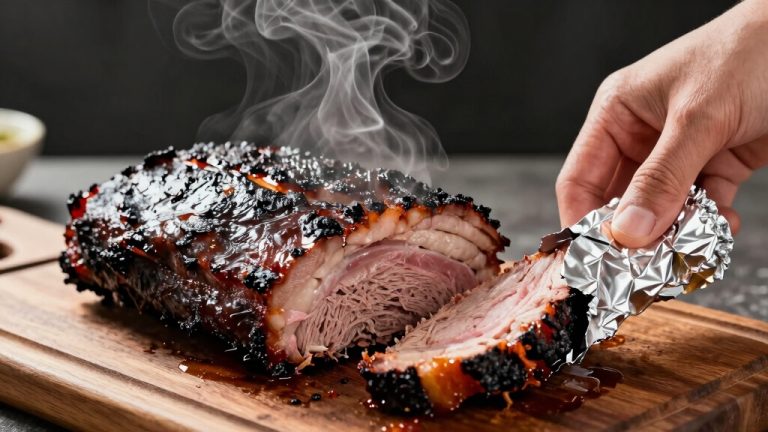
Once you pull the bird from the smoker, tent it loosely with foil and let it rest for at least 30 to 45 minutes.
This resting period lets carryover cooking finish the turkey without drying it out, especially the breast meat.
To avoid overcooking, consider removing the breast earlier and shielding it during rest.
When carving, use a sharp knife and slice against the grain to maximize tenderness.
Start with the legs and thighs, then move to the breast, preserving moisture in each cut.
Proper resting and careful carving make certain your smoked turkey maintains its juicy texture and delivers an impressive eating experience.
Frequently Asked Questions
What Type of Wood Pellets Provide the Best Flavor for Turkey?
You’ll get the best flavor for turkey using mild fruitwoods like apple or cherry pellets. They add a sweet, subtle smoke without overpowering the meat.
Hickory or pecan pellets work well if you want a richer, slightly stronger taste. Use them sparingly to avoid bitterness.
Mixing fruitwoods with a small amount of hardwood pellets often balances flavor perfectly. Always choose clean-burning, high-quality pellets for consistent, delicious results.
Can I Smoke a Frozen Turkey Safely Without Thawing First?
You shouldn’t smoke a frozen turkey without thawing it first. Cooking frozen poultry leads to uneven heat distribution, increasing the risk of bacterial growth and undercooked meat.
Always thaw your turkey completely, preferably in the refrigerator for several days, before smoking. This guarantees safe, even cooking and better smoke absorption.
Use a reliable thermometer to check internal temperatures, aiming for 165°F in the breast for safe consumption.
How Do Altitude Changes Affect Smoking Turkey Besides Time Adjustments?
Altitude affects more than cook time; as you go higher, air pressure drops, which lowers boiling points and can impact moisture evaporation and smoke penetration.
You might notice your turkey dries out faster or doesn’t brown as evenly. You’ll need to monitor both temperature and humidity closely, possibly adjusting your smoker’s settings to maintain stable heat and moisture.
Using a reliable thermometer becomes even more critical to avoid undercooking or drying out your bird.
Is It Better to Smoke Turkey With the Skin on or Off?
You should smoke your turkey with the skin on. The skin acts as a protective barrier, helping retain moisture and flavor during the long smoking process.
It also crisps nicely when you finish the cook at a higher temperature. Removing the skin exposes the meat, risking dryness and less appealing texture.
For best results, dry the skin well beforehand and apply a light oil to encourage even browning and a delicious, crispy finish.
What Are Common Troubleshooting Tips for Uneven Cooking in a Smoker?
Uneven cooking is a thorn in your side, but you can tame it by ensuring stable smoker temperatures. Avoid wild swings.
Position your bird away from direct heat and rotate it periodically to promote even heat distribution.
Use a reliable instant-read thermometer to monitor multiple spots, especially thick areas.
Also, avoid overcrowding the smoker, which blocks airflow.
Finally, tent parts that cook faster with foil to prevent overcooking while others catch up.
Final Tips for Juicy and Flavorful Smoked Turkey
You absolutely can’t afford to skip these smoking tips if you want turkey that’s nothing short of legendary.
Mastering prep, temperature, and timing isn’t just helpful—it’s essential to avoid a disaster on your plate.
When you nail brining, seasoning, and smoke control, your turkey will practically melt in your mouth, leaving guests begging for your secret.
Follow these steps meticulously, and you’ll serve a smoked turkey so perfect, it’ll redefine your holiday feast forever.