Substitute for Shishito Peppers: Easy Swaps You Already Have
If you need a substitute for shishito peppers, try padrón, friggitelli, or banana peppers for a similar mild heat and blistering texture.
Cubanelle and Anaheim peppers also work well, offering subtle sweetness with a gentle kick. For a low-heat swap, bell or Italian sweet peppers bring crunch and sweetness.
Hotter options like jalapeños can be toned down by deseeding. Explore these options to find the perfect match for your dish’s flavor and heat profile.
Key Takeaways
- Padrón peppers are the closest 1:1 substitute, matching shishito’s mild heat and blistering texture.
- Friggitelli and banana peppers offer similar mild heat and tender skin, suitable for roasting or raw use.
- Anaheim and Cubanelle peppers provide mild heat with subtle sweetness and work well in cooked dishes.
- For zero or low heat, use bell peppers or Italian sweet peppers as mild, sweet alternatives.
- To reduce heat from hotter peppers like jalapeños, halve the amount and remove seeds and membranes.
Top One-to-One Shishito Pepper Substitutes by Flavor and Heat

Which peppers can truly match the unique mild heat and delicate texture of shishito peppers?
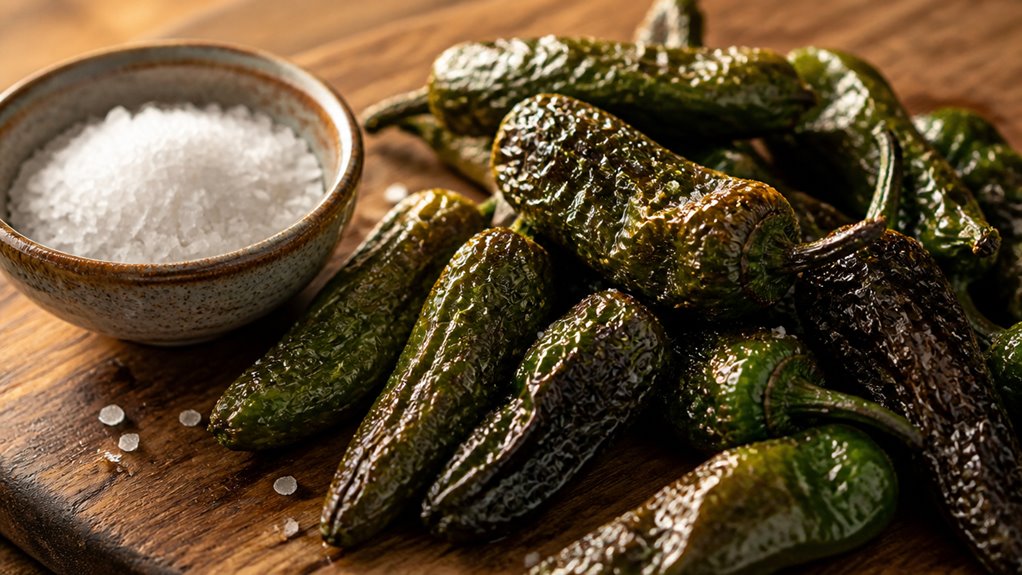
Padrón peppers stand out as the closest one-to-one substitute, sharing a similar mild heat range of 500–2,500 Scoville units and a tender, thin skin that blisters beautifully when grilled or roasted.
Padrón peppers offer a perfect match with mild heat and tender skin that crisps up when grilled.
You can swap them directly in recipes without altering quantities, making them ideal for tapas or appetizers where shishitos shine.
Other excellent alternatives include banana and Friggitelli peppers, which offer comparable mild heat and texture, maintaining the delicate bite when prepared similarly.
Cubanelle and Anaheim peppers also share a mild heat profile but can be slightly spicier, so consider your heat tolerance.
These peppers let you replicate the essential characteristics of shishitos with minimal adjustment, preserving flavor and mouthfeel.
For consistent results when cooking these pepper substitutes, consider using a vertical smoker to maintain steady temperatures and gentle heat distribution.
Mild, Sweet Peppers Ideal for Raw and Cooked Dishes
While peppers like Padrón and Friggitelli closely mimic shishitos in heat and texture, sometimes you need options that bring mild sweetness and crispness without any heat at all.
Bell peppers, especially green ones, are perfect. They offer a crunchy texture and zero Scoville heat units, making them ideal for raw salads or cooked dishes.
Banana peppers provide a subtle tangy sweetness with barely noticeable heat, working well in roasting or pickling.
Italian sweet peppers also fit the bill, delivering tender flesh and gentle sweetness that complements a variety of preparations.
These mild, sweet peppers maintain a fresh, crisp bite whether eaten raw or cooked, giving you versatile substitutes that preserve the essence of your dish without introducing unwanted heat or bitterness.
For best flavor results, it is important to measure spices accurately when seasoning peppers or any dish to achieve balanced flavor.
Peppers With Similar Heat Levels to Replace Shishitos
Peppers with a heat level similar to shishitos offer a balanced spice that enhances your dishes without overwhelming them.
Padrón peppers are your best bet, matching shishitos closely in flavor, texture, and heat, generally mild with occasional hot bursts around 500–2,500 SHU. You can swap them 1:1 and achieve comparable results when blistered or grilled.
Friggitelli peppers also make an excellent substitute, bringing a sweet, mild heat and a similar tender skin ideal for antipasti or tapas.
Anaheim peppers, with their mild heat and slightly earthy flavor, work well for roasting or stuffing. Deseeding helps control their heat.
Cubanelle peppers offer a mild sweetness with a touch of warmth, making them another reliable alternative when you want to maintain that subtle kick without overpowering your dish.
For a complementary smoky depth in your recipes, consider adding elements inspired by low-and-slow smoking techniques used in Chicago barbecue traditions.
Adjusting Hotter Peppers to Match Shishito’s Mild Heat
Because hotter peppers like jalapeños and serranos pack considerably more heat than shishitos, you’ll need to adjust their quantity and preparation to avoid overpowering your dish.
Start by halving the amount you use, since jalapeños range from 2,500 to 8,000 Scoville units and serranos reach 10,000 to 23,000.
Remove seeds and membranes, as these contain most of the capsaicin, which helps temper the heat closer to shishito’s mild profile.
You can also slice the peppers thinner to distribute heat more evenly.
Fresno peppers, slightly hotter than shishitos, can be used 1:1 but also benefit from deseeding for balanced flavor.
These adjustments let you enjoy the flavor complexity of hotter peppers without sacrificing the subtle, approachable heat that makes shishitos unique.
When handling hotter peppers, it’s advisable to wear gloves to avoid capsaicin burns to protect your skin during preparation.
Regional and Specialty Peppers as Shishito Pepper Alternatives
If you want to explore alternatives beyond the typical range of mild to moderately hot peppers, regional and specialty varieties offer unique flavors and textures that can stand in for shishito peppers.
Friggitelli peppers, mild and slightly sweet, blister beautifully like shishitos. They’re ideal for antipasti.
Thai Prik Num peppers bring a similar mild heat and work well whole in recipes requiring a subtle kick.
Italian sweet peppers, available in red or yellow, add a gentle sweetness and crisp texture, perfect for both raw and cooked dishes.
Hatch green chilis, commonly roasted in Southwestern U.S. cuisine, provide a smoky, mildly spicy profile that complements stews and salsas.
These choices expand your options, letting you tailor heat and flavor while maintaining the characteristic tender bite and versatility of shishito peppers. For best results, consider smoking these peppers at a low temperature to develop a deep smoky aroma and balanced flavor with a leathery texture.
Frequently Asked Questions
How Should Shishito Peppers Be Stored to Maintain Freshness?
You should store shishito peppers in the refrigerator to keep them fresh.
Place them in a paper bag or wrap them loosely in a paper towel, then put them in the vegetable crisper drawer.
Avoid sealing them in plastic bags, as excess moisture causes spoilage.
Use them within a week for the best texture and flavor.
If you need longer storage, consider freezing blanched peppers to maintain their quality.
Can Shishito Peppers Be Frozen for Later Use?
Freezing shishito peppers is like pausing summer’s gentle warmth in time.
You can freeze them to keep their mild, smoky flavor intact for later use.
First, wash and dry thoroughly, then either freeze whole or sliced in an airtight bag.
Remember, their texture softens after freezing, so they’re best suited for cooked dishes rather than fresh salads.
This method preserves their essence, letting you enjoy their unique taste anytime.
What Are the Best Cooking Methods for Shishito Peppers?
You’ll get the best flavor by blistering shishito peppers in a hot skillet or on a grill. Just toss them with a bit of oil and cook over high heat until the skins char and bubble, about 5 minutes.
Roasting in the oven at 425°F also works well for a smoky taste. Serve them whole with a sprinkle of sea salt and a squeeze of citrus for a simple, delicious appetizer.
Are Shishito Peppers Safe for People With Nightshade Allergies?
You shouldn’t eat shishito peppers if you have a nightshade allergy. Shishitos belong to the nightshade family, which includes peppers, tomatoes, and eggplants.
Consuming them can trigger allergic reactions ranging from mild itching to severe symptoms. If you’re sensitive or allergic to nightshades, it’s best to avoid shishitos entirely to prevent any adverse effects.
Always consult your healthcare provider for personalized advice.
How Can I Reduce Bitterness in Shishito Peppers When Cooking?
To reduce bitterness in shishito peppers when cooking, start by tossing them with a bit of oil and salt before roasting or grilling.
Cooking them over medium-high heat until the skins blister evenly enhances their natural sweetness and balances bitterness.
Adding a squeeze of fresh citrus juice, like lemon or lime, right after cooking brightens flavors and cuts bitterness.
Avoid overcooking, which can intensify bitterness, and opt for fresh, firm peppers for the best taste.
The Complete Guide to Shishito Pepper Alternatives
When you can’t find shishito peppers, don’t fret—you have plenty of flavorful options. Mild, sweet peppers like padrón or cubanelle offer similar taste and texture, while jalapeños can be tamed to match shishito’s gentle heat.
Regional gems like fresnos also bring unique flair to your dish. Just like a knight trading swords for a crossbow, swapping peppers lets you keep your culinary quest exciting and perfectly balanced every time.