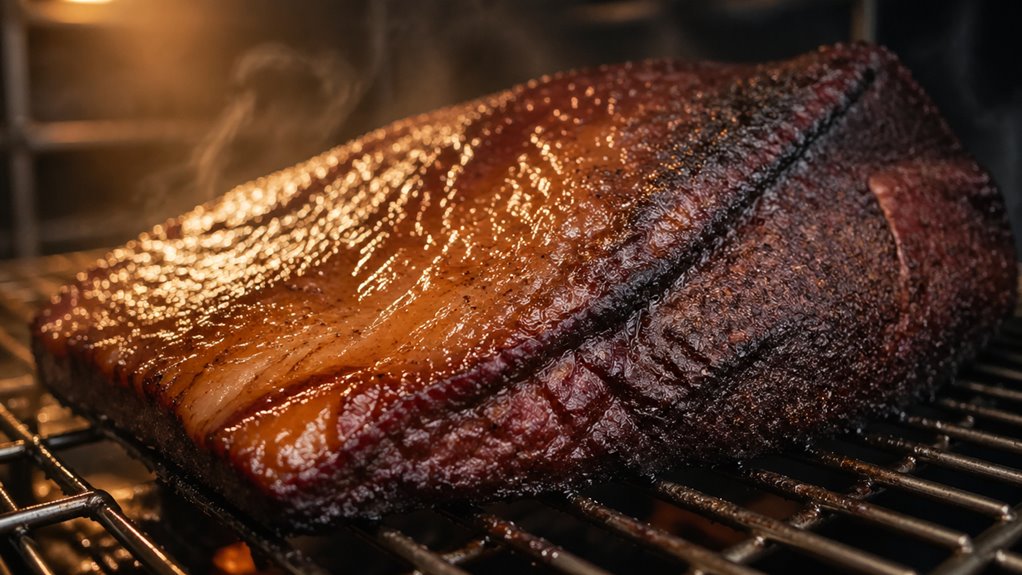
Smoke a Brisket Fat Side up or Down: Experts Recommend
You smoke a brisket fat side down to get a more pronounced smoke ring, a deeper bark, and better meat grain visibility for slicing.
This method maximizes flavor complexity and presentation, especially in competitions. Fat side up insulates the meat and promotes even cooking but can dull bark and hide the grain.
While fat side down poses handling challenges like rack sticking, it delivers superior control over texture and appearance. There’s more to master about how each choice shapes your brisket’s final result.
Key Takeaways
- Smoking brisket fat-side down exposes the meat directly to smoke, enhancing smoke ring and bark development for better flavor and appearance.
- Fat-side up insulates the meat, slowing heat fluctuations and protecting internal juices without basting the meat.
- Competition smokers often prefer fat-side down for optimal bark and presentation, while traditional Texas style favors fat-side up.
- Fat rendering occurs slowly regardless of orientation; temperature control and airflow are more critical than fat side choice.
- Fat-side down can cause sticking and handling challenges, requiring careful monitoring during cooking and removal from the smoker.
How Fat-Side-Down Enhances Smoke Ring and Bark
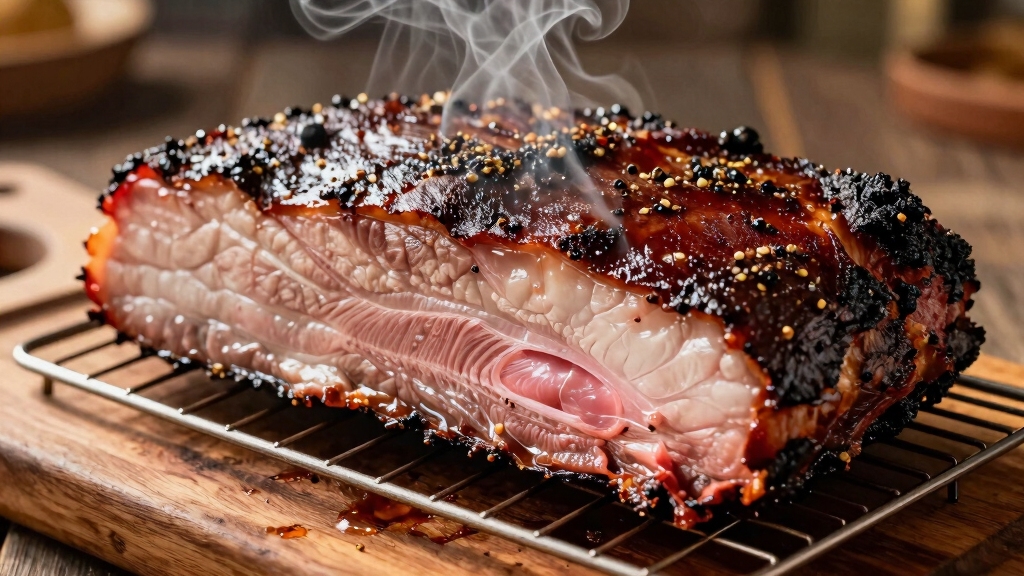
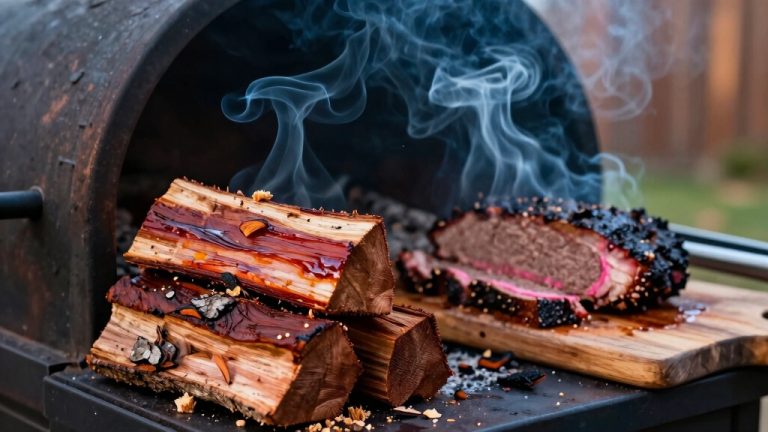
When you smoke a brisket fat-side down, you encourage a more pronounced smoke ring to develop. The meat side is directly exposed to the smoke, allowing better penetration of nitrogen dioxide that reacts with myoglobin to create that prized pink layer.
Smoking brisket fat-side down enhances smoke ring formation by exposing meat directly to smoke’s flavorful compounds.
This exposure also promotes a superior bark formation. With the meat side facing up, the surface dries evenly, enabling the Maillard reaction to develop a deep, crispy crust.
You’ll notice that the bark forms more uniformly, as it’s not obscured or dampened by fat. Plus, with no direct contact with grill grates, you avoid uneven marks that could disrupt the bark’s texture.
This method grants you control over both visual appeal and flavor complexity, critical in competition or serious smoking sessions.
For the most accurate internal temperature and perfect doneness, be sure to insert a probe horizontally into the thickest part of the flat muscle, avoiding fat pockets and edges to get a reliable core temperature reading.
How Fat-Side-Up Affects Moisture and Heat Barrier
When you smoke brisket fat-side up, the fat cap really serves as a heat barrier rather than a source of moisture. You see, there’s this chemical separation between oil and water that plays a big role here. So, you won’t actually see rendered fat soaking into the meat.
That’s mainly because the connective tissue in the fat cap blocks moisture from getting in. It’s kind of like a protective shield! This setup does a great job at keeping the meat safe from direct heat while ensuring its internal juices stay intact. So, it’s a win-win for flavor and texture!
Choosing a brisket with a proper fat cap ensures this protective function works effectively during smoking.
Fat Cap As Heat Barrier
Although many assume that placing the fat cap side up bastes the brisket by dripping fat into the meat, the reality is that the fat primarily acts as a heat barrier rather than a moisture source.
When you smoke fat-side-up, the thick layer of fat insulates the meat from direct heat. This slows down temperature fluctuations and protects the brisket from drying out.
This barrier helps maintain even cooking, especially during long smokes, by absorbing and distributing heat gradually. You’ll notice the fat renders slowly, shielding the lean muscle fibers beneath without markedly penetrating them.
This heat buffering effect lets you focus on consistent temperature control, knowing the fat cap is working to prevent overcooking while preserving the brisket’s internal moisture indirectly, rather than basting it directly.
Additionally, managing smoker temperature and humidity effectively complements the fat cap’s insulating role to reduce evaporative cooling and prevent the brisket stall.
Oil and Water Separation
Understanding how fat interacts with meat on a molecular level clarifies why fat-side-up doesn’t deliver moisture as many expect. Fat is oil-based, and meat contains water; these two resist mixing.
When you smoke brisket fat-side-up, the fat cap melts and renders but doesn’t penetrate the meat’s water-rich fibers. Instead, it forms a heat barrier, protecting the brisket without adding moisture.
| Element | Effect on Brisket |
|---|---|
| Fat Cap (Oil) | Renders but separates |
| Meat (Water) | Retains inherent moisture |
| Fat-Side-Up | Heat barrier, no moisture |
| Fat Rendering | Melts off, doesn’t hydrate |
| Moisture Transfer | Blocked by oil-water divide |
This separation means moisture stays inside the meat, unaffected by the fat cap’s melting. The optimal tenderness and juiciness occur when the brisket is pulled at around 203°F internal temperature, allowing for peak collagen breakdown without sacrificing moisture retention.
Connective Tissue Impact
Since the fat cap contains dense connective tissue, it acts as a robust barrier that limits moisture penetration into the meat beneath.
When you smoke brisket fat-side-up, this connective tissue helps shield the meat from direct heat, preserving its internal juiciness without allowing rendered fat to seep in.
You might expect the melting fat to baste the meat, but due to the chemical incompatibility between fat and water, it doesn’t add moisture.
Instead, the fat cap primarily serves as a heat buffer, slowing heat transfer and protecting the brisket from drying out.
Understanding this impact lets you control how your meat cooks. Fat-side-up offers a steady heat barrier but doesn’t contribute to internal moisture, so managing your smoker’s temperature remains critical for the best results.
Additionally, maintaining consistent smoker temperature is essential to ensure even cooking and optimal moisture retention throughout the brisket.
Traditional Texas BBQ vs. Competition Fat Side Orientation
When you smoke a brisket Texas-style, you usually keep that fat cap up. It’s all about protecting the meat and sticking to tradition. But here’s where it gets interesting: in competition, a lot of pitmasters flip it fat-side down or even meat-side up. Why? They want to maximize that smoke ring and get a killer bark going. Wrapping the brisket during the stall can help maintain moisture and tenderness while still allowing for bark development depending on the material used, such as butcher paper or foil.
Texas Style Fat-Up
Choosing to smoke your brisket fat-side up aligns with the time-honored traditions of Texas barbecue.
The fat cap serves mainly as a protective barrier against heat rather than a source of moisture.
When you follow this method, you honor the classic Texas approach that prioritizes even cooking and a robust bark.
The fat shields the meat from direct heat, emphasizing patience and respect for the meat’s natural flavors.
The fat cap insulates the brisket, preventing drying and scorching during long cooks.
Traditional joints favor fat-up for consistent, slow rendering that enhances texture.
You’ll notice a deep, rich bark forming, emblematic of authentic Texas barbecue craftsmanship.
After cooking, proper resting and wrapping techniques help maintain the brisket’s temperature and moisture, preserving the bark and juiciness.
Competition Meat-Side Down
Flip your perspective on brisket smoking by placing the meat side down. This method is favored in competitive barbecue circles for its strategic advantages.
This orientation enhances smoke ring development, producing the prized pink ribbon judges admire, though it doesn’t affect flavor. With the meat side exposed to dry heat, you’ll get superior bark formation—crispy, deep mahogany, and visually striking.
It also avoids uneven crust caused by grill grate contact. Plus, fat-side-down lets you monitor bark progress and makes slicing easier by revealing the meat grain clearly, improving presentation in competition turn-in boxes.
Although traditional Texas BBQ sticks with fat-side up, competition pros prioritize appearance and smoke penetration. They accept challenges like fat sticking to racks.
If you want to impress judges, meat-side down is a proven technique to master. Maintaining balanced airflow during smoking helps develop a stable, flavorful bark on the meat side.
How Fat Side Choice Impacts Slicing and Presentation?
Since slicing a brisket neatly across the grain determines its final presentation quality, the orientation of the fat side plays a critical role.
Slicing brisket neatly across the grain is key, making fat-side orientation crucial for presentation quality.
When you smoke fat-side down, the meat grain becomes more visible, making it easier to identify and slice properly.
Conversely, fat-side up can obscure grain direction, complicating your cutting process and potentially diminishing the visual appeal of each slice.
Consider these factors to optimize slicing and presentation:
- Grain visibility: Fat-side down exposes the meat surface, allowing precise, consistent slices.
- Slicing ease: Clear grain direction helps you cut against the grain, enhancing tenderness.
- Presentation quality: Uniform slices with visible grain improve the platter’s professional look.
Choosing the right fat orientation directly impacts your brisket’s final appearance and mouthfeel. Additionally, placing the brisket fat side down helps to lock in moisture during the smoking process, contributing to a juicier result.
Practical Challenges of Smoking Fat-Side-Down
Although smoking brisket fat-side down offers advantages in smoke ring development and presentation, it also introduces practical challenges you need to take into account.
One key issue is the fat cap’s tendency to stick to smoker racks or grill grates, making it harder to remove the brisket cleanly without tearing the bark or meat.
This adhesion complicates handling but also cleanup afterward. Additionally, fat-side-down positioning means you must carefully monitor the fat’s rendering to avoid flare-ups that can char the meat.
You’ll also find that the fat layer, while acting as a heat barrier, doesn’t baste the meat as once thought.
Maintaining a steady 225–250°F heat is essential to manage these challenges effectively during the cook.
How to Choose Your Fat Side for Flavor and Appearance?
When deciding whether to smoke your brisket fat-side up or down, you’ll want to weigh how each choice impacts both flavor and visual appeal.
Choosing to smoke brisket fat-side up or down affects both taste and appearance.
Although rendered fat doesn’t penetrate the meat to add moisture, it acts as a heat barrier, subtly influencing texture.
Visually, fat-side-down exposes the meat side, promoting better bark formation and a pronounced smoke ring, which adds to presentation quality.
Consider these factors to choose your fat side:
Flavor and texture: Fat-side-up insulates meat, while fat-side-down enhances bark crispness.
Appearance: Fat-side-down reveals a rich bark and clearer grain for slicing.
Practicality: Fat-side-down can cause sticking, while fat-side-up may reduce smoke absorption.
Select based on whether you prioritize traditional flavor, visual appeal, or ease of cooking.
Frequently Asked Questions
What Type of Wood Pairs Best With Brisket for Smoking?
You’ll find that oak and hickory are your best bets when smoking brisket.
Oak offers a steady, medium smoke that complements brisket’s rich flavor without overpowering it.
Hickory gives a stronger, slightly sweet smoke that enhances the meat’s depth.
Mesquite is bold but use sparingly to avoid bitterness.
Experiment with a blend of oak and hickory for balanced smokiness that really brings out brisket’s savory, tender qualities.
How Long Should I Rest Brisket After Smoking?
Rest your brisket for at least an hour. Yes, you’ll have to wait after all that effort.
This essential step lets juices redistribute, ensuring every bite is juicy and tender instead of a dry disappointment.
Wrap it in foil or butcher paper, then place it in a cooler or warm spot to maintain temperature.
Skipping this means you’ll lose moisture, and all your smoking magic won’t save a rushed, tough brisket.
Can I Smoke Brisket in a Gas Grill Instead of a Smoker?
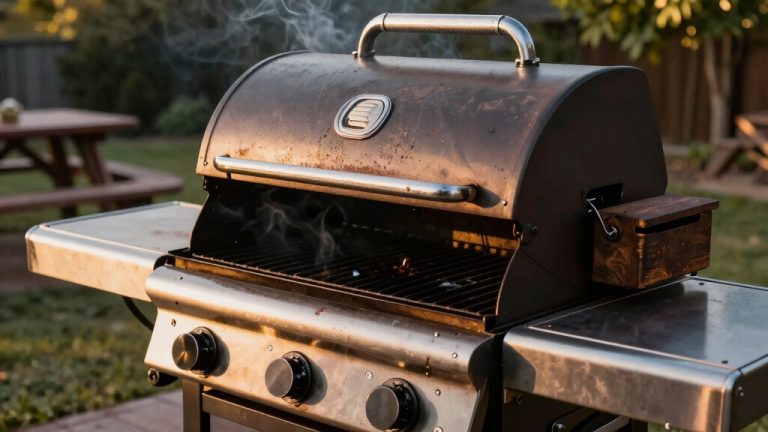
Yes, you can smoke brisket in a gas grill with some adjustments.
Use a smoker box or foil pouch filled with wood chips to generate smoke.
Set your grill to indirect heat by turning on burners on one side only, placing the brisket on the opposite side.
Maintain a steady low temperature around 225-250°F, and monitor wood chip replenishment for consistent smoke.
This setup mimics a smoker, delivering flavorful, tender brisket.
What Internal Temperature Indicates Brisket Is Done?
You’ll know your brisket is done when the internal temperature reaches about 195°F to 205°F.
Within this range, collagen breaks down, making the meat tender and juicy. Use a reliable meat thermometer to check.
Don’t rush it; lower temps yield tougher brisket. Aim for around 203°F for peak tenderness, but feel the meat.
If it’s probe-tender and slightly springy, you’re good to go. Rest it before slicing.
Should I Wrap Brisket During Smoking or Leave It Unwrapped?
Wrapping brisket during smoking is like putting on a raincoat. It locks in moisture and speeds up cooking.
You should wrap it once the bark sets, around 160-170°F, to prevent it from drying out. Leaving it unwrapped develops a thicker bark and deeper smoke flavor but risks dryness.
Choose wrapping if you want tender juiciness and a faster finish. Go unwrapped for that classic crust and intense smoke complexity.
Fat Side Up or Down? Master the Choice, Master the Brisket
When smoking brisket, choosing fat side up or down can change the entire outcome. Did you know that 70% of pitmasters prefer fat side down to protect the meat from direct heat? This enhances that coveted smoke ring and bark.
You’ve got to weigh the benefits. Fat side up locks in moisture, while fat side down shields the brisket and improves presentation. Trust your experience, but remember, mastering this choice sharpens your BBQ game like nothing else.
One Comment