How to Season Wood: Properly for Burning & Woodworking
To season wood effectively, cut logs slightly shorter than your stove’s firebox. Then split them into wedges no thicker than six inches to speed drying.
Stack the wood elevated off the ground in a well-ventilated spot. Use a crisscross pattern for airflow and leave gaps between pieces.
Cover only the top to protect from rain while keeping the sides open. Allow 6 to 18 months depending on wood type.
Check moisture is below 20% before burning. You can also explore how to optimize wood storage and moisture testing for the best results.
Key Takeaways
- Cut and split wood into uniform pieces no larger than six inches to increase surface area and speed drying.
- Stack wood elevated on pallets with gaps, using crisscross patterns to maximize airflow and prevent moisture buildup.
- Cover the top of the woodpile with a tarp or shed roof, leaving sides open to maintain ventilation.
- Season wood for 6–18 months depending on type; softwoods dry faster, hardwoods require longer seasoning times.
- Use a moisture meter to ensure wood reaches 15–20% moisture content before burning for safe, efficient heating.
How to Cut and Split Wood for Faster Seasoning?
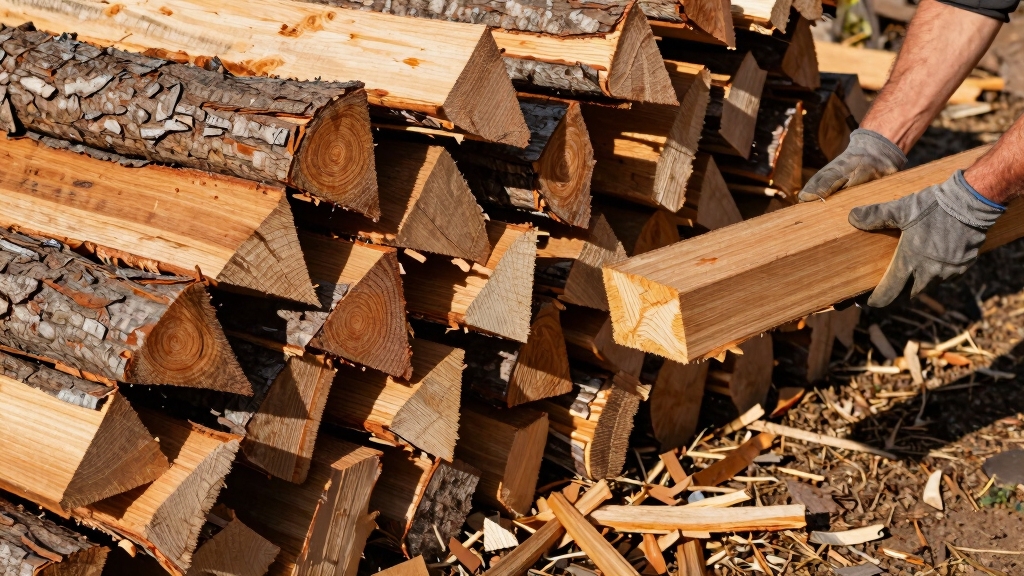
Start by cutting your wood into lengths that suit your fireplace or wood stove, typically around 16 inches.
Once cut, focus on splitting the wood immediately.
Large rounds dry slowly, especially in the center, so splitting increases surface area and speeds seasoning.
Aim to split pieces no larger than six-inch wedges, as smaller pieces dry faster and fit better in your stove.
Use a sharp axe or splitting maul, striking along natural cracks or the grain to make splitting easier.
Vary the sizes slightly to maximize airflow when stacking later.
Avoid leaving large, unsplit rounds, as they retain moisture and prolong drying.
Proper splitting can reduce drying time by increasing surface area and airflow to the wood.
Cutting Wood to the Right Length for Your Stove
Before you dive into cutting, it’s a good idea to measure the interior length of your stove or fireplace. This way, you can figure out the best wood size for your needs.
Generally, most stoves accommodate logs that are about 16 inches long. But hey, double-checking your specific dimensions is always smart to ensure a perfect fit!
And here’s a little tip: cutting the wood to the right length before you split it can really help with seasoning and storage.
It makes everything a lot more efficient!
For storing wood properly during seasoning, using breathable materials like butcher paper can help maintain the right moisture balance.
Ideal Wood Length
Choosing the ideal wood length is vital to guarantee your firewood fits efficiently in your stove or fireplace.
Most wood stoves and fireplaces perform best with logs cut to about 16 inches. Sticking to this standard length ensures easy loading and optimal burning without wasting space.
When preparing your wood:
- Measure your stove’s firebox to confirm maximum log length.
- Cut wood slightly shorter than the firebox to allow airflow and prevent jams.
- Keep uniform lengths for consistent stacking and seasoning.
- Remember, splitting wood into wedges no larger than six inches thick aids drying and fits most stoves.
Also, using properly seasoned wood with the right moisture content improves burning efficiency and reduces smoke, which is crucial for maintaining a clean and safe fire environment, as explained in moisture management.
Measuring Before Cutting
Once you’ve determined the ideal length for your firewood, the next step is to measure accurately to guarantee every log fits your stove or fireplace perfectly.
Use a tape measure or ruler to mark each log before cutting, typically around 16 inches for most wood stoves.
Make sure your measuring tool is straight and aligned with the log’s length for precision.
Mark with a pencil or chalk to create clear cut lines.
Avoid guessing or eyeballing the length, as uneven pieces can cause inefficient burning or stove damage.
Measuring before cutting also saves time by preventing unnecessary adjustments later.
Taking this careful step makes certain uniform logs that split evenly, season properly, and fit your stove, optimizing both drying and burning performance.
It is important to ensure the wood is dried to the correct moisture content to achieve optimal burning efficiency and safety, as improper seasoning can lead to increased smoke and creosote buildup, which may pose a fire hazard, so understanding wood moisture levels is crucial.
Best Ways to Stack Wood for Maximum Airflow
Stacking wood properly plays a crucial role in maximizing airflow, which speeds up the seasoning process and guarantees your firewood dries evenly.
To optimize airflow, follow these key stacking practices:
- Elevate the Stack: Place wood on pallets or rails to keep it off the ground, preventing moisture absorption and promoting air circulation underneath.
- Leave Gaps: Stack wood with small gaps between pieces, avoiding tightly packed ends to allow air to flow through the pile.
- Alternate Patterns: Use crisscross or alternating rows to create natural channels for air to move freely around each log.
- Split Side Down: Position split surfaces downward to expose porous wood fibers, accelerating drying by letting air pass through more easily.
Applying these methods guarantees your wood seasons efficiently, reducing drying time and improving burn quality. Proper insulation and wrapping techniques, similar to those used in moisture retention during brisket resting, can also help maintain optimal conditions for seasoning wood.
Where and How to Store Seasoned Wood Outdoors?
When you’re storing seasoned wood outdoors, it’s a good idea to stack it off the ground. You can use pallets or rails for this; it helps keep moisture away and allows air to circulate around the wood.
Next up, covering the top is essential. You can throw a tarp over it or use a woodshed roof to shield it from rain. Just make sure the sides are left open so that there’s continuous airflow.
Oh, and when you’re stacking the wood, try using an alternating pattern. This means leaving some gaps between pieces. It not only helps with drying efficiency but also makes it easier to grab a piece when you need it!
Additionally, ensuring proper airflow helps prevent moisture weakening that can cause wood to deteriorate or develop mold.
Ideal Stacking Techniques
For ideal seasoning, place your firewood outdoors in a location that’s well-ventilated, elevated off the ground, and protected from direct rain or snow.
Proper stacking promotes airflow and prevents moisture buildup, accelerating drying.
Follow these stacking techniques:
- Use pallets or rails to keep wood at least 6 inches above ground, avoiding ground moisture.
- Stack wood with gaps between pieces to maximize air circulation.
- Place split sides downward to enhance airflow and faster drying.
- Alternate stacking patterns, such as crisscross or row stacking, to maintain stability and allow easy access for adding or removing wood.
Proper drying and storage conditions are essential to prevent moisture buildup, which can affect wood quality and combustion efficiency.
Weather Protection Strategies
Once you’ve arranged your firewood to maximize airflow and keep it off the ground, the next step is to protect it from weather elements without restricting ventilation.
Cover the top of your wood stack with a tarp or a flat metal roof. Ensure it extends just enough to shield from rain and snow but leaves the sides open.
This open-side strategy allows air to circulate freely, which is essential for drying. Avoid wrapping the entire stack in plastic or covering the sides, as trapped moisture will slow seasoning and increase rot risk.
Position your stack away from buildings to reduce dampness and improve airflow. Secure covers with weights to prevent displacement during wind.
Maintain easy access for rotating seasoned wood with fresh logs. Managing humidity levels around the wood stack is crucial to avoid excess moisture that can hinder seasoning and promote decay.
Protecting Wood From Weather for Better Drying
To make certain your wood dries efficiently, you need to shield it from rain and snow while allowing ample airflow. Protecting your wood from moisture prevents rewetting, which slows seasoning and encourages rot.
To achieve this balance, follow these key steps:
- Cover the top of your woodpile with a tarp or a sloped woodshed roof to keep precipitation off.
- Leave the sides of the stack open, avoiding any covering that would trap moisture and restrict air movement.
- Elevate the stack on pallets or rails to prevent ground moisture absorption.
- Use a flat metal sheet weighted down over the stack’s top, ensuring it’s open on all sides for ventilation.
This approach maximizes drying efficiency by combining weather protection with continuous airflow. Using well-seasoned, low-moisture wood and controlling humidity levels further enhances drying quality and smoke flavor absorption.
How Long Different Types of Firewood Take to Season?
Understanding how long different types of firewood take to season is essential for planning your wood supply effectively.
Softwoods like pine and fir typically need about six months to dry adequately.
Softwoods such as pine and fir generally require around six months to season properly.
Hardwoods such as maple or ash require at least 12 months.
Denser hardwoods like oak can take up to 18 months or more, especially if the pieces are large or not well split.
To speed up the process, always split wood into smaller pieces, no larger than six-inch wedges, and stack it with plenty of airflow.
Cutting wood in early spring means it should be ready by the following fall.
However, giving hardwoods a full year guarantees peak dryness.
Adjust your seasoning time based on wood type and climate for the best results in burning efficiency.
Observing changes in the bark’s texture and color can also help indicate the wood’s readiness for use.
How to Check Firewood Moisture Content Before Burning?
Although seasoned wood looks ready to burn, you can’t rely on appearance alone to gauge its moisture content. Proper moisture levels guarantee efficient burning and protect your stove or fireplace from damage.
To accurately check moisture content, follow these steps:
- Use a hand-held moisture meter to measure wood moisture; aim for 15-20% or less for safe burning.
- Test multiple pieces from different parts of the stack to get a representative reading.
- Avoid using freshly cut wood, which typically has 60-80% moisture, as it produces creosote and smoke.
- Store your readings and monitor drying progress; wood above 35% moisture can harm your heating unit.
Regularly checking moisture content helps you burn wood safely and efficiently throughout the season.
Signs Your Firewood Is Properly Seasoned
When you tap seasoned firewood, it should produce a hollow sound that signals low moisture content and readiness for burning.
You’ll notice the wood’s color has faded, becoming paler compared to fresh cuts.
Check the ends; properly dried wood often shows cracks from moisture loss.
You’ll also feel the difference; seasoned wood is markedly lighter than green wood due to reduced water weight.
These signs confirm that the wood has reached the ideal moisture content, typically below 20%.
Avoid burning wood that lacks these indicators, as it can damage your stove and produce excess creosote.
Using these practical cues alongside a moisture meter guarantees your firewood is properly seasoned and safe for efficient burning.
How Seasoned Wood Improves Your Fire’s Heat and Safety?
Recognizing the signs of properly seasoned wood means you’re ready to enjoy a fire that burns hotter and cleaner. Seasoned wood improves your fire’s heat output and safety by reducing moisture content. This allows for more efficient combustion.
Properly seasoned wood ensures a hotter, cleaner fire with improved heat and safer burning.
Here’s why it matters:
- Higher heat production: Dry wood generates more BTUs, warming your space effectively.
- Less smoke and creosote: Properly dried wood burns cleaner, minimizing harmful buildup in chimneys.
- Easier ignition: Seasoned wood lights quickly, making fire-starting hassle-free.
- Safer operation: Reduced moisture lowers the risk of dangerous flare-ups and chimney fires.
Frequently Asked Questions
Can I Season Wood Indoors Safely During Winter?
You can season wood indoors during winter, but it requires careful attention to airflow and moisture control.
Keep the wood split into smaller pieces and stacked loosely to promote drying. Use a well-ventilated area with a dehumidifier or fan to reduce moisture buildup.
Avoid stacking wood directly on the floor; use pallets or racks. Monitor moisture content with a meter to ensure proper seasoning and prevent mold or rot indoors.
What Tools Are Best for Splitting Extremely Hard Wood?
You might expect a simple axe to handle hard wood, but a heavy-duty splitting maul or a hydraulic log splitter will deliver far better results.
The maul’s weight and wedge shape let you drive deep splits. Hydraulic splitters provide consistent force with less effort.
Pair these with a sturdy chopping block and protective gear. This combination guarantees you tackle tough hardwood efficiently, safely turning large rounds into manageable pieces for seasoning.
How Does Wood Species Affect Smoke Smell When Burning?
Wood species greatly affect the smoke smell when you burn them.
Hardwoods like oak produce a mild, pleasant aroma, while softwoods such as pine release a sharper, resinous scent due to sap content.
Birch gives off a sweet, clean smell.
If you prefer less smoke odor, choose dry, well-seasoned hardwoods.
Unseasoned or resinous woods create stronger, often unpleasant smells and more creosote buildup in your chimney.
Can Treated or Painted Wood Ever Be Safely Seasoned?
You shouldn’t season treated or painted wood for burning.
These coatings contain chemicals that release toxic fumes when heated, posing serious health risks and damaging your stove or fireplace.
Even if you dry it thoroughly, the harmful compounds won’t disappear.
Instead, only use untreated, natural wood for firewood.
If you want safe, clean-burning firewood, avoid any painted or chemically treated pieces entirely.
What Pests or Insects Affect Seasoning Firewood Outdoors?
When you stack your firewood, beware of unwelcome guests like termites, carpenter ants, and bark beetles. They’re tiny invaders tunneling through your drying treasure.
These pests feast on the wood’s moisture and can compromise its quality. To keep them at bay, stack wood off the ground, ensure good airflow, and avoid piling near infested trees.
Regularly inspect your pile and remove any visibly damaged or insect-ridden pieces promptly to protect your seasoned wood.
Turn Raw Logs into Radiant Heat with Proper Seasoning
Seasoning your wood is like preparing a fine wine. It takes patience and the right conditions. By cutting, stacking, and storing it properly, you let nature’s breath dry out the moisture. This process transforms raw logs into fiery gems.
When your firewood’s seasoned, it burns hotter, cleaner, and safer. You get warmth without the fuss.
Follow these steps carefully, and you’ll have a reliable, efficient fire that dances brightly through every chilly night.