Can You Smoke a Turkey in an Aluminum Pan: Perfect Smoking Tips
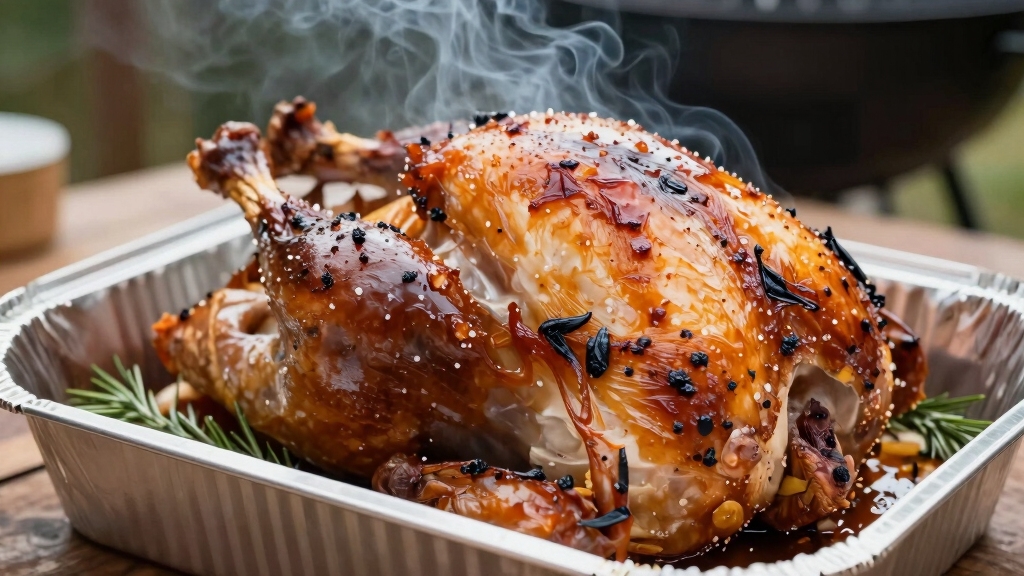
You shouldn’t smoke a turkey directly in an aluminum pan because it disrupts airflow and inhibits even heat distribution. This can cause uneven cooking and compromised flavor.
Instead, use aluminum pans as drip collectors placed beneath or opposite the turkey. Elevate them to avoid direct contact, which prevents flare-ups and gathers flavorful drippings.
Proper pan placement also helps stabilize smoker temperature. For the best results with your turkey and detailed tips on positioning, temperature control, and cooking techniques, there’s more to explore.
Key Takeaways
- Smoking a turkey directly in an aluminum pan disrupts airflow and causes uneven cooking and flavor development.
- Aluminum pans are best used as drip collectors beneath the turkey, not as primary cooking surfaces.
- Elevate the turkey above the pan to allow proper heat and smoke circulation around the bird.
- Position the pan away from direct heat to prevent temperature spikes and flare-ups.
- Use a pan large enough to catch all drippings, enhancing gravy flavor and reducing waste.
Why You Shouldn’t Smoke a Turkey Directly in an Aluminum Pan?

Although it might seem convenient, placing your turkey directly in an aluminum pan disrupts airflow and inhibits even heat distribution. These factors are crucial for proper smoking.
When the turkey sits flat in the pan, heat and smoke can’t circulate evenly around the meat. This leads to uneven cooking and compromised flavor development.
Aluminum pans are designed to catch drippings, not to serve as cooking surfaces. Relying on them in that way reduces the smoker’s efficiency.
Instead, position your turkey on a grate or roasting rack to elevate it. This allows smoke to envelop the bird fully.
This setup promotes consistent temperature exposure and better smoke penetration. These are essential factors supported by both culinary science and practical smoking guidelines.
Additionally, continuous monitoring is important because moisture and temperature fluctuations can affect cooking time and flavor when smoking in less-than-ideal conditions like rain or high humidity, as detailed in precaution guides.
How to Use Aluminum Pans for Drip Collection When Smoking Turkey?
While placing the turkey directly in an aluminum pan hampers airflow and cooking quality, using the pan correctly enhances your smoking process.
Proper use of an aluminum pan boosts your turkey smoking without restricting airflow or cooking quality.
Position a large aluminum pan beneath the turkey on a lower rack or opposite side to catch drippings efficiently. This setup prevents flare-ups and collects valuable juices for gravy.
Follow these steps for prime drip collection:
- Choose a pan large enough to capture drippings from all surfaces.
- Elevate the pan below the turkey, avoiding direct contact.
- Monitor for flare-ups caused by fat hitting heat sources.
- Use collected drippings promptly to enhance flavor and reduce waste.
For best results, consider using a foil wrapping technique to help retain moisture in the turkey while it smokes.
Where to Place Water Pans for Best Results in Your Smoker?
When it comes to smoking, positioning your water pans just right can make a world of difference. For the best results, try placing one or two water pans on the lower rack. Just fill them about an inch deep and keep them away from direct heat. This setup helps maintain humidity inside your smoker, which is crucial.
You’ll notice that having those water pans stabilizes temperature fluctuations. Plus, it enhances smoke penetration, giving your turkey that delicious moisture and flavor we all love. So, don’t underestimate the power of proper placement! It’s all about ensuring consistent heat and preventing drying out—key factors for successful smoking. Happy smoking!
To achieve the ideal cooking environment, it’s important to maintain a steady temperature between 225–250°F throughout the smoking process.
Optimal Water Pan Placement
When placing water pans in your smoker, positioning them on the lower rack away from direct heat optimizes moisture retention and temperature regulation.
This setup maintains a steady humidity level, which is vital for preventing turkey dryness and guaranteeing even smoke penetration.
To maximize effectiveness, follow these steps:
- Place one or two pans filled with about 1 inch of water on the lower rack to avoid direct flame contact.
- Make sure pans are large enough to collect drippings, preventing flare-ups and promoting consistent airflow.
- Position pans strategically based on your smoker’s airflow pattern to maintain temperature stability between 225-275°F.
- Monitor water levels periodically, replenishing as needed to sustain humidity throughout the smoking process.
This methodical placement enhances both moisture control and temperature consistency for prime turkey smoking results. Maintaining temperature stability is key to ensuring food safety and optimal cooking results.
Benefits of Water Pans
Water pans consistently play a crucial role in maintaining moisture and regulating temperature inside your smoker.
By placing one or two aluminum pans filled with about an inch of water on the lower rack, away from direct heat, you create a humid environment that prevents turkey dryness and promotes smoke penetration.
The evaporating water absorbs heat fluctuations, stabilizing the smoker’s internal temperature, typically between 225-275°F, which is essential for even cooking.
Positioning pans properly also reduces flare-ups by catching drippings indirectly.
Multiple pans can accommodate different smoker designs and airflow patterns, ensuring consistent humidity levels throughout.
Using water pans strategically improves cooking reliability and meat quality, making them indispensable despite aluminum pans not being suitable vessels for direct turkey placement.
After each use, be sure to remove ash and moisture promptly from water pans to prevent odors, mold, and mildew formation.
Why Elevate Your Turkey on a Rack or Grate for Even Smoking?
Elevating your turkey on a rack or grate enhances airflow, guaranteeing smoke and heat circulate evenly around the entire bird.
Placing the turkey directly in an aluminum pan restricts airflow, causing uneven cooking. By raising the bird, you allow smoke to envelop all surfaces, which is critical for consistent flavor and doneness.
Consider these key points:
- Airflow improves heat distribution, preventing hot or cold spots.
- Smoke penetration is maximized, promoting uniform flavor absorption.
- Drippings fall into the pan below, avoiding flare-ups and burnt fat.
- Elevation on racks or grates supports indirect cooking, protecting delicate meat from direct heat.
This method is evidence-based for peak smoking results and guarantees your turkey cooks evenly without drying or undercooking. Maintaining a steady smoker temperature between 225°F and 250°F further ensures even cooking and optimal smoke absorption.
Maintaining Stable Smoker Temperatures for Juicy Turkey
To get that juicy turkey you’ve been dreaming of, it’s super important to keep your smoker’s temperature between 225-275°F. This range helps ensure even cooking and keeps your turkey from drying out.
One great tip is to use water pans inside the smoker. They add humidity, which not only stabilizes any temperature fluctuations but also enhances how your turkey absorbs the smoke flavor.
And don’t forget to keep an eye on things with an ambient thermometer placed near the bird. This little gadget will help you maintain a steady heat, making sure your turkey turns out perfectly juicy!
Additionally, using insulation techniques around your smoker can significantly reduce heat loss and help maintain consistent temperatures during cold weather cooking.
Temperature Control Techniques
Although maintaining a consistent smoker temperature between 225-275°F can be challenging, it’s essential for ensuring your turkey remains juicy and cooks evenly.
To achieve this, focus on precise temperature control techniques:
- Use an ambient temperature thermometer placed near the turkey on the grate to monitor heat accurately.
- Position the aluminum drip pan away from direct heat to avoid temperature spikes caused by flare-ups.
- Close the smoker lid immediately after placing the turkey to prevent heat loss and fluctuations.
- Adjust smoker vents gradually to fine-tune airflow and maintain steady combustion without sudden changes.
Following these evidence-based steps helps stabilize the cooking environment, preventing drying or uneven cooking.
Consistent temperature control is critical for delivering tender, flavorful turkey with ideal smoke infusion.
Humidity’s Role in Smoking
Maintaining humidity inside the smoker plays a crucial role in achieving a juicy turkey by regulating temperature fluctuations and enhancing smoke absorption.
You can add one or two aluminum pans filled with about an inch of water on the lower rack, away from direct heat.
This water evaporates, increasing moisture in the smoking chamber, which prevents the turkey from drying out during the long cook.
Additionally, stable humidity stabilizes your smoker’s internal temperature, keeping it within the prime 225-275°F range.
This consistency guarantees even cooking and better smoke penetration.
Without adequate humidity, temperature spikes can dry the meat and impair smoke flavor absorption.
Consequently, using water pans is an evidence-backed strategy to maintain stable smoker conditions and produce tender, flavorful turkey.
Maintaining surface moisture also helps enhance the development of a flavorful smoke ring and improves overall texture during smoking.
Best Turkey Positioning on Grates for Even Cooking
When placing your turkey on the smoker grate, positioning it breast-side up guarantees even heat exposure to the thickest part of the bird, promoting uniform cooking.
Proper placement ensures indirect heat circulation, preventing uneven cooking or burning. Avoid trussing so white and dark meat reach their ideal temperatures independently.
Follow these four key positioning guidelines:
- Place the turkey on an elevated grate or roasting rack to allow smoke to circulate fully.
- Position the bird away from direct heat sources for consistent, slow cooking.
- Use a digital probe thermometer near the breast to monitor internal temperature accurately.
- Rotate the turkey 180 degrees after one hour to expose all sides equally to heat.
This method optimizes smoke penetration and temperature stability for thorough, even cooking.
For the most accurate cooking results, ensure your probe is inserted into the thickest part of the meat, avoiding fat pockets and bone, to measure true internal temperature.
How to Manage Turkey Rotation and Foil Wrapping to Prevent Burning?
Rotating your turkey 180 degrees after the first hour guarantees even heat exposure on all sides. This is critical for consistent cooking and prevents hot spots that cause burning.
Immediately after rotating, wrap the wing tips with aluminum foil to shield them from direct heat. They tend to burn quickly.
To help retain moisture and avoid dryness, consider covering the turkey loosely with nonstick-sprayed foil during cooking.
| Time (hr) | Action | Purpose |
|---|---|---|
| 0 | Place turkey on grate | Maximize smoke circulation |
| 1 | Rotate 180° | Ensure even cooking |
| 1 | Wrap wing tips in foil | Prevent wing tip burning |
| 2+ | Periodic checks | Maintain consistent heat and foil integrity |
This method balances airflow and heat distribution. It reduces burnt areas while preserving moisture and texture.
How to Monitor Internal Temperature for Perfect Turkey Doneness?
Tracking the internal temperature of your turkey is essential to guarantee it reaches safe consumption levels while retaining peak texture. Use a digital probe thermometer inserted into the thickest part of the breast to monitor doneness accurately.
Aim for 159-160°F in the breast and 170-175°F in the thigh for ideal safety and texture. Remember, carry-over cooking will raise the temperature slightly after removal from the smoker.
- Insert the thermometer away from bone to avoid false readings.
- Check temperature periodically without leaving the smoker lid open long.
- Target different temperatures for white and dark meat to maintain juiciness.
- Remove the turkey promptly once target temps are reached to prevent overcooking.
This method guarantees your smoked turkey is both safe and succulently tender.
Common Aluminum Pan Mistakes When Smoking Turkey
Although aluminum pans are essential tools in the smoking process, misusing them can undermine your turkey’s flavor and texture. A common error is placing the turkey directly in the pan, which restricts airflow and disrupts even heat distribution.
Instead, use the pan solely for drip collection beneath the grate. Another mistake is neglecting water pan placement, which helps maintain humidity and temperature stability. Finally, using a pan too small causes drippings to spill, risking flare-ups.
| Mistake | Impact | Correct Usage |
|---|---|---|
| Direct pan placement | Uneven cooking, poor smoke | Place turkey on rack, pan below |
| No water pan | Dry meat, temp fluctuations | Use water pan on lower rack |
| Small pan size | Drip overflow, flare-ups | Use large pan to catch all drips |
Frequently Asked Questions
Can I Reuse Aluminum Pans After Smoking Turkey?
You can reuse aluminum pans after smoking a turkey if they’re structurally intact and free from excessive grease buildup. Rinse them thoroughly to remove drippings and residue to prevent off-flavors or contamination.
However, repeated exposure to high temperatures may weaken the pan, causing warping or loss of integrity. For best results, inspect each pan before reuse and consider replacing them when they show signs of wear or damage to maintain food safety and cooking efficiency.
What Size Aluminum Pan Is Best for Smoking a Turkey?
Think of the ideal aluminum pan as a stage, generously sized to catch every juicy performance.
You want a pan large enough to extend beyond the turkey’s edges, capturing drippings from all sides without crowding.
Typically, a 14×18-inch pan fits a standard 12-16 pound bird perfectly.
This allows ample space for runoff and prevents flare-ups, ensuring your turkey cooks evenly with optimal smoke circulation and moisture retention.
Are Disposable Aluminum Pans Safe for Smoking Meat?
Yes, disposable aluminum pans are safe for smoking meat when used correctly.
You should never place meat directly in the pan, as it restricts airflow and heat distribution. Instead, use the pan to catch drippings below the meat on a grate or rack.
Make sure the pan is large enough and positioned away from direct heat to prevent warping or burning. This method maintains smoke circulation and temperature stability for best results.
Can Foil Pans Affect the Flavor of Smoked Turkey?
You might picture a crisp, smoky turkey sitting atop a foil pan, but foil pans can subtly dull that smoky flavor.
While they’re great for catching drippings, foil pans restrict smoke circulation around the bird, which limits flavor infusion.
Using a grate above a large drip pan lets smoke surround the turkey evenly, enhancing taste.
How Do I Clean Aluminum Pans After Smoking Turkey?
To clean aluminum pans after smoking turkey, start by soaking them in warm, soapy water to loosen drippings.
Use a non-abrasive sponge or cloth to avoid scratching the surface.
For stubborn residue, apply a paste of baking soda and water, then gently scrub.
Rinse thoroughly with hot water and dry immediately to prevent oxidation.
Avoid harsh chemicals or steel wool, as they can damage the aluminum’s integrity and affect future use.
Smoke It Right: The Simple Secrets to a Perfect Turkey
You shouldn’t smoke a turkey directly in an aluminum pan; instead, use it to catch drippings. You should elevate your turkey on a rack for even heat distribution.
Place water pans strategically to maintain moisture and stable temperatures. Monitor internal temperature closely to ensure doneness.
By following these proven steps, you’ll avoid common mistakes, achieve consistent results, and enjoy a juicy, perfectly smoked turkey every time.