Is Beef Brisket the Same as Corned Beef Brisket: Quick Guide
Beef brisket and corned beef brisket aren’t the same.
Brisket is a raw, unseasoned cut from the cow’s lower chest, needing slow, low-temperature smoking or roasting to become tender.
Corned beef brisket starts as the same cut but is cured in a salt-nitrite brine with pickling spices for days. This process pre-tenders and colors the meat pink.
Each requires different cooking methods and offers distinct flavors and textures. Understanding these differences will clarify your best choice and preparation approach.
Key Takeaways
- Beef brisket is a raw cut from the cow’s lower chest, requiring slow cooking or smoking to become tender.
- Corned beef brisket is brisket that has been cured in a salt-nitrite brine with pickling spices for several days.
- Corned beef develops a pinkish-red color and pre-tenderized texture due to the curing process, unlike raw brisket.
- Brisket offers a smoky, robust flavor from slow smoking, while corned beef has a salty, tangy, and spiced taste from curing.
- Cooking methods differ: brisket is slow-smoked for 8–12 hours; corned beef is gently simmered for about 2–3 hours after curing.
Brisket vs. Corned Beef Brisket: What’s the Difference?

While both brisket and corned beef brisket originate from the same cut of beef, the lower chest of the cow, they differ fundamentally in preparation and flavor.
Brisket is a raw, unprocessed cut that requires slow cooking or smoking to tenderize, developing deep, smoky, savory flavors.
Corned beef brisket, by contrast, undergoes a curing process involving multi-day salt brining with spices like peppercorns, mustard seeds, and bay leaves.
This curing infuses the meat with a distinct salty, tangy, and umami profile and yields a characteristic pinkish-red color from curing agents.
Where brisket relies on cooking technique for texture, corned beef pre-tenderizes in the brine.
Therefore, despite their common origin, the two become chemically and organoleptically distinct products by the end of preparation.
To achieve the best results, brisket can be cut and trimmed along the fat seam to separate the flat and point muscles for tailored cooking and improved flavor development through precise cooking times.
When to Choose Brisket or Corned Beef Brisket?
Because brisket and corned beef brisket differ markedly in preparation, flavor, and texture, choosing between them depends on your desired culinary outcome and cooking method.
Opt for brisket when you want a smoky, robust flavor requiring long, slow cooking. Choose corned beef brisket if you prefer a tender, pre-cured, salty, and spiced profile suited for quicker simmering or boiling.
| Feature | Brisket | Corned Beef Brisket |
|---|---|---|
| Preparation | Raw, seasoned before cooking | Pre-cured in salt brine |
| Flavor | Smoky, beef-forward | Salty, tangy, spiced |
| Cooking Time | 8–12 hours smoking | 2–3 hours simmering |
| Texture | Firm, bark exterior | Tender, moist, distinct grain |
Selecting a brisket cut with appropriate marbling and fat distribution can significantly enhance tenderness and juiciness when smoked.
Match your choice to cooking technique and flavor preference for best results.
How Corned Beef Brisket Is Cured and Prepared vs. Raw Brisket?
Raw brisket is typically seasoned before cooking. It really relies on heat and smoke to bring out that rich flavor and tenderness we all love.
On the flip side, corned beef brisket goes through a whole different process. It’s cured in a salt-and-spice brine for several days, which usually includes things like peppercorns, mustard seeds, and bay leaves. This not only infuses the meat with a savory complexity but also helps preserve it. The curing process often involves the use of curing salt containing sodium nitrite, which inhibits bacterial growth and helps maintain the meat’s characteristic pink color.
Curing Process Differences
Although both start from the same cut of meat, corned beef brisket undergoes an extensive curing process that raw brisket does not.
You cure corned beef brisket by immersing it in a salt brine infused with nitrites and pickling spices like peppercorns, mustard seeds, and bay leaves for several days.
This brining not only preserves the meat but also imparts a distinctive pink color and a complex savory flavor profile.
In contrast, raw brisket is unprocessed beyond basic trimming and seasoning; it relies solely on cooking techniques for flavor and texture development.
The curing process chemically alters muscle fibers in corned beef, enhancing tenderness before cooking, while raw brisket remains structurally intact until heat breaks down connective tissue during extended cooking.
These curing differences fundamentally separate the two products in both preparation and outcome.
When cooking raw brisket, it is important to insert the temperature probe into the thickest part of the flat to accurately monitor internal doneness and avoid dryness.
Preparation Techniques Overview
Moving beyond the curing differences, understanding how corned beef brisket and raw brisket are prepared clarifies their distinct culinary profiles. Corned beef brisket undergoes a rigorous multi-day brining process, soaking in a salt-and-spice solution that initiates protein breakdown and flavor infusion.
This curing primes the meat for simmering, typically two to three hours, yielding a tender, moist product with a characteristic pink hue from the nitrites. Conversely, raw brisket requires no prior curing. You’ll season it simply, often just salt and pepper, before applying slow cooking methods like smoking or barbecuing.
This extended heat exposure, sometimes up to 12 hours at low temperatures, gradually breaks down connective tissue, creating a robust, smoky crust and tender interior without chemical preservation. The preparation techniques fundamentally shape each meat’s texture, moisture, and flavor. Proper cooling and storage, such as cooling to room temperature, are essential to preserve the quality of cooked brisket before freezing or further use.
Seasoning and Brining Details
When curing corned beef brisket, the meat soaks in a meticulously balanced brine composed of rock salt, sodium nitrite, and a blend of pickling spices such as peppercorns, mustard seeds, coriander, bay leaves, and cloves.
This brine chemically preserves the meat, preventing bacterial growth while imparting distinctive savory and tangy flavors. Sodium nitrite is critical; it maintains the brisket’s characteristic pink hue and inhibits spoilage.
In contrast, raw brisket requires no such brining. You simply season it with salt and pepper before cooking.
The absence of curing agents means brisket relies on slow cooking or smoking to tenderize and develop flavor.
Proper handling and seasoning before cooking are essential to avoid off-flavors and ensure tenderness, such as trimming excess fat and controlling temperature during cooking to prevent toughness and bitterness, as described in cooking techniques.
Cooking Times and Techniques for Brisket and Corned Beef
When it comes to cooking brisket, you really have to plan ahead.
It can take a solid eight to twelve hours at low temperatures to break down all that connective tissue. But trust me, the end result is totally worth the wait!
On the other hand, corned beef is a bit quicker.
You’re looking at about one hour per pound, and it’s typically simmered gently after brining. This method really helps to keep all that moisture and flavor locked in.
So, understanding these different techniques is key.
It ensures you get the best texture and taste out of each dish!
For best results, remember to freeze brisket promptly after purchase or preparation to preserve its quality before cooking.
Brisket Cooking Duration
Although brisket and corned beef both originate from similar cuts, their cooking durations and techniques differ markedly due to their preparation methods. You’ll cook uncured brisket low and slow, usually 8 to 12 hours at 225°F to reach an internal temperature of 195-205°F for tender results. Corned beef, already cured, requires less time, typically simmered 2 to 3 hours after soaking.
| Meat Type | Cooking Method | Duration per Pound |
|---|---|---|
| Brisket | Smoking at 225°F | 1 to 1.5 hours |
| Corned Beef | Simmering in pickling spices | ~1 hour |
| Brisket Flat | Oven roasting or smoking | 3.5 to 12 hours total |
Understanding these differences makes certain you tailor your cooking approach for peak texture and flavor. Maintaining a steady smoker temperature between 225°F and 250°F is crucial for achieving the best tenderness and flavor in brisket.
Corned Beef Preparation
Mastering corned beef preparation means understanding its curing and cooking nuances, especially when starting with brisket.
You begin by soaking the brisket in a salt-nitrite brine infused with pickling spices: peppercorns, mustard seeds, coriander, bay leaves, and cloves for several days.
This curing process pre-tenderizes the meat and imparts its characteristic pink hue.
When ready to cook, simmer the corned beef in the brine or fresh water for about one hour per pound, typically two to three hours total, until it easily shreds or slices.
Unlike brisket, which requires long smoking at low temperatures, corned beef demands gentle, moist heat to maintain moisture and texture.
Precise temperature control and timing guarantee the meat is tender but not overcooked, preserving the savory, salty, and tangy flavor profile unique to corned beef.
For best results, ensure proper thawing of the brisket in the refrigerator at safe temperatures before cooking to maintain quality and safety.
Flavor, Texture, and Appearance Differences
When comparing flavor, texture, and appearance, you’ll notice corned beef delivers a salty, tangy, and subtly sweet profile infused by its curing spices.
Brisket offers a robust, smoky, and savory taste developed through slow smoking and seasoning.
Corned beef’s pinkish-red hue results from salt-nitrite curing agents, contrasting with brisket’s natural deep red or purple-gray color.
Texturally, corned beef pre-tenderizes during brining, emerging moist and easily shredded or sliced.
Brisket requires prolonged low-temperature cooking to break down connective tissue and develop a smoky bark exterior.
The curing spices impart visible seasoning on corned beef’s surface, unlike the smooth, unseasoned brisket prior to cooking.
These distinctions create two fundamentally different eating experiences despite originating from the same cut.
Additionally, brisket’s texture and flavor can vary significantly depending on whether it is served chopped or sliced, reflecting differences in fat content and cooking methods.
Tips for Selecting Brisket or Corned Beef Brisket for Your Meal
Understanding the distinct flavor and texture profiles between brisket and corned beef brisket helps you make an informed choice tailored to your culinary goals.
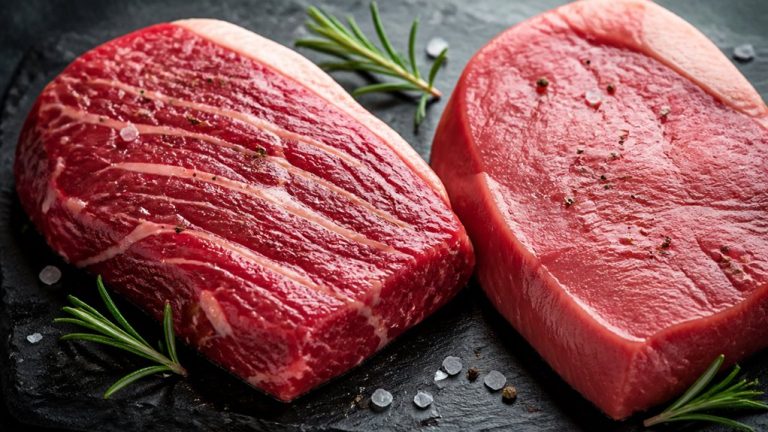
When selecting brisket, look for a well-marbled cut with a firm texture and deep red color, ensuring it’s fresh and unseasoned.
For corned beef brisket, choose cuts with a bright pinkish-red hue and visible curing spices on the surface, indicating proper brining.
Consider your cooking method: brisket suits long, slow smoking to develop a smoky bark, while corned beef requires simmering to preserve moisture and tenderness.
Also, verify the cut’s weight and thickness, as these affect cooking time and outcome.
Selecting based on these technical factors guarantees your meal achieves the desired flavor and texture precision.
Frequently Asked Questions
Can Corned Beef Brisket Be Frozen Before or After Cooking?
You can freeze corned beef brisket both before and after cooking.
Before freezing, make certain it’s properly brined and tightly sealed in airtight packaging to prevent freezer burn.
After cooking, let it cool completely, then wrap it well in foil or plastic wrap and place it in a freezer-safe container or bag.
Frozen corned beef maintains quality for up to 2-3 months. Thaw it slowly in the refrigerator for best texture and flavor retention.
What Are Common Side Dishes Served With Corned Beef Brisket?
You’ll often serve corned beef brisket with classic sides like boiled cabbage, roasted or mashed potatoes, and carrots. These vegetables complement the brisket’s salty, tangy flavor.
You might also include mustard or horseradish sauces to enhance the taste. For a more traditional meal, pair it with Irish soda bread or sautéed greens.
These sides balance texture and flavor, creating a well-rounded, satisfying dish that highlights the corned beef’s unique cured profile.
Is Corned Beef Brisket Safe for People on Low-Sodium Diets?
If you’re on a low-sodium diet, eating corned beef brisket is like inviting a salt tsunami into your system.
The curing process soaks the meat in a heavy salt brine, making it extremely high in sodium.
Technically, it’s not safe to consume regularly if you need to limit salt intake.
You should opt for fresh brisket instead and control seasoning yourself to keep sodium levels in check.
How Long Can Cooked Brisket or Corned Beef Brisket Be Stored?
You can store cooked brisket or corned beef brisket safely in the refrigerator for 3 to 4 days. Keep it in an airtight container to maintain moisture and prevent contamination.
If you want to keep it longer, freeze it for up to 2 to 3 months. When reheating, make sure the internal temperature reaches 165°F (74°C) to eliminate bacteria and preserve food safety.
Always check for off odors or textures before consuming.
Can Brisket or Corned Beef Brisket Be Used in Sandwiches?
You might think brisket or corned beef brisket won’t hold up well in sandwiches, but they’re perfect choices.
Brisket’s tender, smoky texture holds together nicely. Corned beef brisket’s cured, moist fibers slice cleanly for easy layering.
Both provide robust, distinct flavors—smoky or tangy—that elevate sandwich profiles.
Just slice brisket thin against the grain and corned beef as preferred. Then pile with your favorite condiments for a satisfying, technically sound sandwich.
Brisket or Corned Beef? Make the Choice That Defines Your Flavor
When deciding between brisket and corned beef brisket, remember that while both share the same noble cut, their journeys diverge through curing and preparation.
Corned beef brings a seasoned sophistication, subtly transforming texture and flavor, whereas raw brisket offers a canvas for your culinary creativity.
Understanding these nuances guarantees you select the ideal choice, elevating your dish with informed precision and refined taste. Choose wisely, and your meal will speak volumes.