3 2 1 Method for Brisket: Tender & Juicy BBQ Results
You can’t just follow the 3-2-1 method for brisket and expect perfect results because brisket’s uneven fat and muscle cook at different rates. This can risk dryness or undercooking.
Instead, you need to monitor internal temperatures closely, especially around the critical 165°F stall. Wrap at the right time to lock in moisture.
Target around 203°F for tender juiciness, and use probe feel for doneness. Keep going, and you’ll discover expert tips to master timing and wrapping for flawless brisket.
Key Takeaways
- The 3-2-1 method was originally designed for meat ribs, not brisket, and may cause uneven cooking due to brisket’s varying thickness.
- Brisket’s lean flat and fatty point cook at different rates, risking dry flat or undercooked point using fixed 3-2-1 timing.
- Wrapping brisket during the stall (around 165°F) helps retain moisture and accelerates cooking; timing is crucial for optimal bark and juiciness.
- Maintaining a stable smoker temperature (~225°F) reduces prolonged stall caused by evaporative cooling.
- Monitoring internal temperature and tenderness is better than relying solely on 3-2-1 timing for perfectly cooked brisket.
Problems With the 3-2-1 Method for Brisket

Although the 3-2-1 method works well for meat ribs, you’ll quickly run into problems applying it to brisket because of the cut’s uneven density and thickness.
Brisket’s lean flat and fatty point cook at different rates, so rigid time phases cause the flat to dry out while the point remains underdone.
The method also ignores the pivotal stall around 165°F, leading you to wrap too early or too late, which either steams the bark or dries the meat.
Unlike ribs, brisket lacks bones to retain moisture, making timing and temperature control essential.
If you rely solely on the 3-2-1 schedule, you risk sacrificing tenderness and flavor.
To master brisket, you need to adjust for its unique structure rather than blindly following a rib-centric formula.
For best results, monitor the internal temperature carefully and wrap the brisket during the stall phase to lock in moisture and ensure tenderness.
How Brisket’s Structure Changes Cooking Times?
Because brisket consists of distinct muscles with varying thickness and fat content, its structure directly impacts how long each section needs to cook.
Brisket’s unique muscle makeup and fat distribution dictate precise cooking times for each section.
The point, rich in fat and marbling, demands more time to render properly, while the leaner flat cooks faster and risks drying out if left too long.
You can’t rely on a fixed timetable like the 3-2-1 method because it ignores this variability.
Instead, you need to monitor internal temperatures and tenderness, adjusting your approach accordingly.
Understanding these differences lets you tailor your cook to achieve uniform doneness with juicy, tender meat throughout.
Overlooking brisket’s complex anatomy leads to uneven results, with parts overcooked or underdone.
Embracing its structure empowers you to master brisket smoking with precision and confidence.
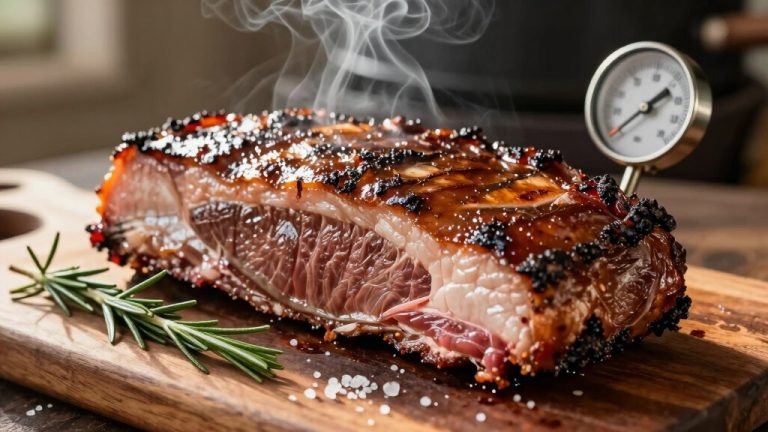
For best results, aim to pull the brisket around 203°F internal temperature when probe tenderness feels like room-temperature butter to optimize collagen breakdown and juiciness.
Expert Tips on Timing and Wrapping Brisket
When you time your brisket cook by internal temperature instead of a rigid schedule, you gain control over the final texture and juiciness.
Wrap your brisket once it hits the stall around 165°F to speed through without steaming the bark. Use butcher paper for a firmer crust or foil for more moisture retention. Don’t wrap too early or too long.
Monitor internal temp, not just clock time, and check tenderness with a probe.
Maintaining a stable smoker temperature around 225°F helps ensure consistent heat input and prevents prolonging the stall due to excessive evaporative cooling.
| Phase | Temp Range (°F) | Wrapping Material |
|---|---|---|
| Initial Smoke | 100-165 | Unwrapped |
| Wrap Stage | 165-195 | Butcher Paper/Foil |
| Final Set | 195-205 | Unwrapped |
This approach respects brisket’s uneven density and ensures moist, tender results every time.
Adapting the 3-2-1 Method for Smaller Brisket Cuts
While timing and wrapping based on internal temperature offers the best control for larger briskets, smaller cuts present an opportunity to apply simplified, time-based methods like the 3-2-1 technique with better consistency.
When working with briskets around 3 to 3.5 pounds, you can adapt the method to maintain tenderness without overcooking. Here’s how to tailor it effectively:
Smoke fat-side down for 3 hours, stabilizing temperature and rotating often.
Wrap tightly in foil for 2 hours, rotating every 30 minutes to retain moisture.
Unwrap for 1 hour to firm up the bark and enhance smoke flavor.
Rest the brisket at least 30 minutes before slicing for juice redistribution.
This approach respects smaller brisket’s unique structure, balancing bark development and internal moisture with time-tested simplicity. Wrapping with foil during the stall helps to trap moisture and accelerate cooking by reducing the stall duration, which is essential for achieving optimal tenderness in a shorter time stall effect.
Achieving Tender Brisket: Focus on Temperature and Tenderness
Although mastering brisket smoking can feel intimidating, focusing on internal temperature and tenderness will transform your results far more than rigid timing ever could.
Instead of blindly following the 3-2-1 phases, you need to monitor your brisket’s internal temp closely, aiming for that sweet spot between 200°F and 205°F.
Use a probe to check for feel; the brisket should yield with just the right resistance, signaling collagen breakdown and perfect tenderness.
Don’t rush the stall phase. Wrapping when the temperature stalls around 165°F helps push through without sacrificing bark quality.
For best results, insert your probe horizontally into the thickest part of the flat muscle to ensure an accurate core temperature reading.
Frequently Asked Questions
What Is the Origin of the 3-2-1 Method?
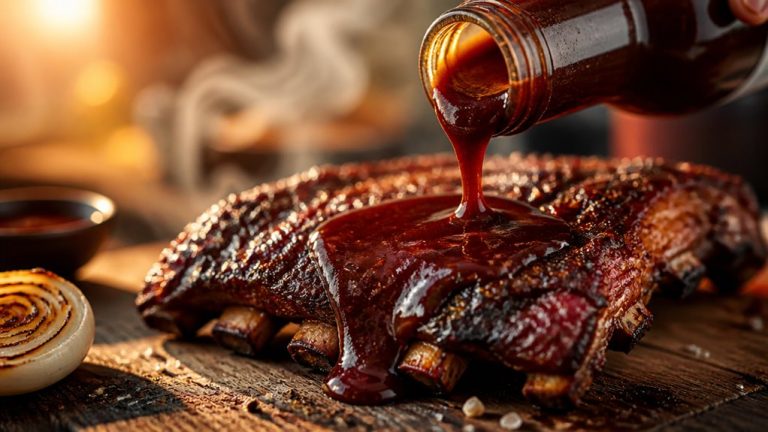
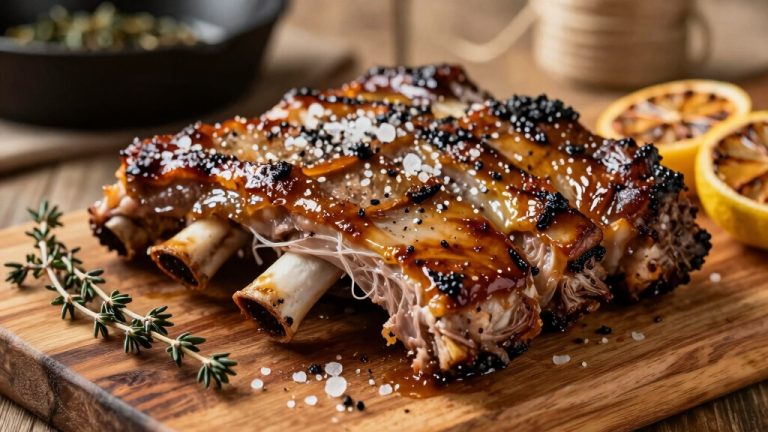
The 3-2-1 method originated as a foolproof way to smoke meat ribs, like spares or baby backs, which have uniform thickness and bone structure.
It breaks cooking into three phases: 3 hours unwrapped, 2 hours wrapped, and 1 hour unwrapped with sauce to guarantee tender, moist ribs every time.
When you use this technique, you rely on timing and wrapping to lock in flavor and texture, making it a staple in BBQ communities.
Can the 3-2-1 Method Be Used for Other Meats Besides Brisket?
Yes, you can use the 3-2-1 method for meat ribs, especially spares or baby backs, where it truly shines.
Its timed phases lock in moisture and flavor, making ribs tender and consistent.
However, when applying it to other meats, like brisket or larger cuts, you need to adjust for thickness, muscle density, and stall timing.
Stick to it for ribs, but tailor your approach for anything different to avoid dry or uneven results.
Why Does the 3-2-1 Method Include Wrapping Meat During Cooking?
Wrapping meat during cooking acts like a protective cloak, sealing in moisture and tenderness.
You do this to trap steam, speeding up cooking while preventing dryness.
It helps break down connective tissue faster, making the meat succulent and juicy.
By controlling the environment inside the wrap, you balance bark formation with internal softness, crucial for that melt-in-your-mouth texture you crave.
Without wrapping, you risk tough, dried-out meat that lacks depth.
How Does Wrapping Affect the Bark and Moisture of Smoked Meat?
Wrapping locks in moisture, which helps keep your smoked meat juicy and tender by preventing excessive evaporation.
However, it softens the bark, turning that crispy crust into a steamed, softer layer.
You’ll want to unwrap meat near the end to let the bark firm back up and develop flavor.
Balancing wrapping time is essential. You keep moisture without sacrificing the texture and deep smoky flavor of a great bark.
What Smoker Temperature Is Recommended for the 3-2-1 Method?
Picture your smoker glowing steadily at about 225°F. That’s your target temperature for the 3-2-1 method.
This low-and-slow heat lets the smoke deeply penetrate, tenderizing meat while preserving moisture. Maintaining 225°F guarantees consistent cooking during each phase: unwrapped, wrapped, then sauced.
If your temperature strays, you risk drying or uneven cooking. So, keep your smoker steady, and you’ll nail that balance between flavor, texture, and bark every time.
Perfect Brisket Requires Precision, Patience, and Proper Technique
You’ve seen how the 3-2-1 method isn’t a one-size-fits-all solution for brisket. Like a master clockmaker tuning a pocket watch, you need precision and patience. Adjust time and wrapping based on your brisket’s unique structure.
Focus on internal temperature and tenderness rather than rigid timing. When you do, you’ll unveil that perfect, melt-in-your-mouth brisket every time. This approach proves you’re not just following a recipe; you’re crafting smoked meat art.