Smoked Duck Breast Recipe: Juicy, Crispy & Easy Smoker Guide
Start by scoring the skin and lightly pricking the meat to help brine absorb flavor. Brine 2 to 12 hours in a cooled mix of salt, sugar, and herbs. Rinse and dry thoroughly for crisp skin.
Smoke at 200–225°F using cherry or apple wood until the internal temp hits 125–130°F. Finish with a high-heat sear skin-side down until crisp.
Rest before slicing against the grain for juicy, tender duck. Explore precise tips to perfect every step.
Key Takeaways
- Score duck skin in a crosshatch pattern and prick the meat side to enhance seasoning and brine absorption.
- Brine duck breast 2–12 hours in a cooled wet brine with salt, sugar, and herbs, then rinse and pat dry.
- Smoke duck at 200–225°F using mild woods like cherry or apple until internal temperature reaches 125–130°F for medium-rare.
- Sear skin-side down in a hot cast iron pan (450°F) for 2–7 minutes until crispy, then rest 5–15 minutes before slicing.
- Slice on a bias about 1/4 inch thick and serve with complementary sauces like cherry reduction or hoisin for balanced flavor.
Smoked Duck Breast Cooking Time & Temperature Table
| Recipe Detail | Information |
|---|---|
| Recipe Name | Smoked Duck Breast Recipe |
| Author | Cleo Ellis |
| Published Date | May 25, 2026 |
| Main Ingredient | Duck Breast |
| Cooking Method | Smoking + Searing |
| Smoker Temperature | 200°F–225°F |
| Target Internal Temp | 125°F–130°F |
| Wood Types | Cherry, Apple, Oak, Hickory |
| Prep Time | 15 Minutes |
| Brining Time | 2–12 Hours |
| Smoking Time | 1.5–2 Hours |
| Resting Time | 5–15 Minutes |
| Recommended Doneness | Medium-Rare |
| Best Flavor Pairings | Cherry Reduction, Hoisin Sauce |
| Skin Preparation | Crosshatch Scoring |
| Best Pan for Searing | Cast Iron Skillet |
| Difficulty Level | Easy to Intermediate |
| Best Served With | Roasted Vegetables, Rice, Salad |
| Main Benefit | Juicy Meat With Crispy Skin |
| Recipe Style | BBQ / Smoked Poultry |
Prepare Duck Breast for Smoking

Begin by scoring the skin of the duck breast in a crosshatch pattern, taking care not to cut into the meat. This allows fat to render evenly during cooking.
Score the duck breast skin in a crosshatch to ensure even fat rendering and perfect cooking.
Next, trim any excess skin, fat, and connective tissue to prevent uneven cooking and flare-ups in the smoker. Lightly prick the meat side with a fork or skewer to help seasonings penetrate and later aid in brining if you choose to brine.
After any rinsing or brining, always pat the breast dry thoroughly. Moisture on the surface compromises skin crispness.
Finally, apply your preferred rub, salt, pepper, or a light coat of oil to enhance flavor and promote even browning during smoking. Proper prep sets the stage for perfectly smoked duck breast.
Allow the surface to dry to form a pellicle for improved smoke absorption, which enhances the final smoky flavor and texture.
Brine Duck Breast for Flavor and Texture
Enhancing the flavor and texture of duck breast starts with properly brining the meat. Begin by preparing a wet brine with salt, sugar, or even maple syrup and herbs to balance savory and sweet notes.
Make certain the brine is completely cooled before submerging the duck to avoid partial cooking. Brine the breast for 2 to 12 hours, depending on your timing and desired intensity.
Before brining, score the skin in a crosshatch pattern and prick the meat side lightly to help the brine penetrate. After brining, rinse the duck thoroughly and pat it dry to promote even cooking and crisp skin.
Proper brining guarantees juicy, flavorful meat with enhanced texture, setting a solid foundation for smoking. For best results, ensure the duck is fully thawed before brining to promote even flavor absorption and safe cooking.
Choose Wood and Set Smoker Temperature for Duck Breast
When it comes to smoking duck breast, you’ll want to pick some mild woods to really enhance that rich flavor. Cherry, apple, or oak are fantastic choices. They add a nice touch without overwhelming the taste of the duck.
Now, let’s talk about the smoker temperature. Aim for somewhere between 200°F and 225°F. This range is perfect for even cooking and allows the duck to absorb that lovely smoky flavor.
When you’re ready to get started, make sure to place the duck breast skin side up over indirect heat. This will help render the fat nicely and keep the temperature consistent. Happy smoking!
Using maple wood can also add a mild, sweet smoke with subtle caramelized notes that complement duck without overpowering it.
Best Wood Types
The aroma of hickory, cherry, apple, or oak wood can transform your smoked duck breast by imparting distinct, complementary flavors. Choose your wood based on the flavor intensity you want.
Hickory delivers a strong, smoky taste, while cherry and apple offer sweeter, milder notes. Oak strikes a balanced, robust profile without overpowering the meat. Using the right wood sets the foundation for your smoking process. Oak is especially favored for its medium smoky taste that enhances poultry without overwhelming its natural flavor.
| Wood Type | Flavor Profile |
|---|---|
| Hickory | Bold, smoky, slightly meat-like |
| Cherry | Sweet, fruity, mild |
| Apple | Light, sweet, subtle |
| Oak | Medium, rich, versatile |
Select wood that matches your taste preference to enhance the natural richness of duck breast effectively.
Ideal Smoker Temperatures
Set your smoker to a steady temperature between 200°F and 225°F to achieve perfectly smoked duck breast. This range allows the meat to cook slowly, absorbing smoky flavors while rendering fat and retaining juiciness.
Preheat your smoker before placing the duck to maintain consistent heat. Choose woods that complement the rich flavor of duck:
Hickory for a bold, robust smoke, cherry for a mild, sweet undertone, or apple for a light, fruity aroma.
Maintain indirect heat to prevent flare-ups and uneven cooking. Keeping the temperature steady guarantees the duck breast cooks evenly, reaching the ideal internal temperature without drying out.
Avoid fluctuating heat to preserve texture and flavor. This controlled environment sets the foundation for a beautifully smoked duck breast ready for finishing.
Cherry wood’s mild, sweet smoke enhances the natural flavor and adds a rich mahogany color without overpowering the duck.
Placement And Heat Management
When managing heat for smoking duck breast, you’ll want to maintain a steady temperature between 200°F and 225°F to ensure even cooking and ideal smoke absorption.
Set your smoker to indirect heat and preheat it thoroughly before placing the duck. Position the breasts skin side up on the grate or rack to allow fat to render without flare-ups.
Choose mild woods like apple, cherry, or oak for a subtle, complementary smoke flavor. Use hickory if you prefer something stronger.
Keep a close eye on your temperature with a reliable thermometer to avoid fluctuations that can dry out the meat.
Proper heat management guarantees the duck cooks evenly, rendering the fat and infusing that signature smoky aroma into the breast perfectly.
In cold weather, consider using insulation techniques to retain heat and maintain consistent smoker temperatures throughout the cooking process.
Smoke Duck Breast: Timing and Internal Temperature Guide
When you’re ready to smoke your duck breast, keep that temperature steady between 200°F and 225°F. This range not only helps with even cooking but also allows for the best flavor absorption.
Now, as for the internal temperature, you’re aiming for around 125-130°F before you sear it. This will give you that perfect medium-rare doneness.
Just make sure to keep an eye on those temperatures; it really does make a difference. You’ll end up with juicy, tender meat and a fantastic smoky finish!
For best results, avoid opening the lid too often to maintain steady heat and smoke concentration.
Optimal Smoking Temperatures
Although smoking temperatures can vary, maintaining a consistent range between 200°F and 225°F guarantees even cooking and peak flavor development for duck breast. This temperature band gently renders fat while imparting rich smoke aromas without drying the meat.
Before you start, preheat your smoker to stabilize the heat. Place the duck breast skin side up on racks or grates using indirect heat.
Keep these key points in mind:
Use hardwoods like hickory, cherry, apple, or oak for balanced smoke flavor. Avoid spikes above 225°F to prevent toughening the meat and uneven cooking. Maintain steady airflow and temperature for uniform smoke exposure. Smoking at low temperatures extends the smoke absorption window, allowing deeper smoke flavor penetration.
Target Internal Temperatures
Achieving the perfect smoked duck breast hinges on monitoring its internal temperature closely throughout the cooking process. Aim to smoke your duck breast until it reaches 125-130°F for a medium-rare finish before searing.
After searing, the internal temperature should rise to 135-140°F, delivering a tender, juicy texture. If you prefer medium doneness, target 145-147°F. For duck-ham style preparation, a longer brine and a final temperature of 160°F are ideal.
Keep a reliable instant-read thermometer handy and insert it into the thickest part of the breast, avoiding bone. Remember, USDA recommends 165°F for poultry safety, but many chefs find lower temperatures better for flavor and texture.
Let the breast rest after searing to allow juices to redistribute before slicing. For safety, ensure the internal temperature of the duck reaches at least 165°F during processing to reduce pathogen risk.
Sear Duck Breast for Crispy Skin
Frequently, the key to crispy duck breast skin lies in the searing process. After smoking, preheat a cast iron pan over high heat, aiming for around 450°F.
Place the duck breast skin-side down, pressing lightly for even contact. Sear for 2 to 7 minutes until the skin crisps and renders fat. Discard excess fat as it accumulates.
To achieve perfect searing:
Use a hot, dry pan without oil, relying on duck fat.
Avoid flipping too soon; let the skin fully crisp.
Monitor the internal temperature; it should rise to 135-140°F for medium-rare.
This method locks in flavor and texture, producing a beautifully crispy, golden skin that complements the smoky meat beneath. For best results, maintain stable temperature control during smoking to ensure even cooking before searing.
Rest and Slice Smoked Duck Breast
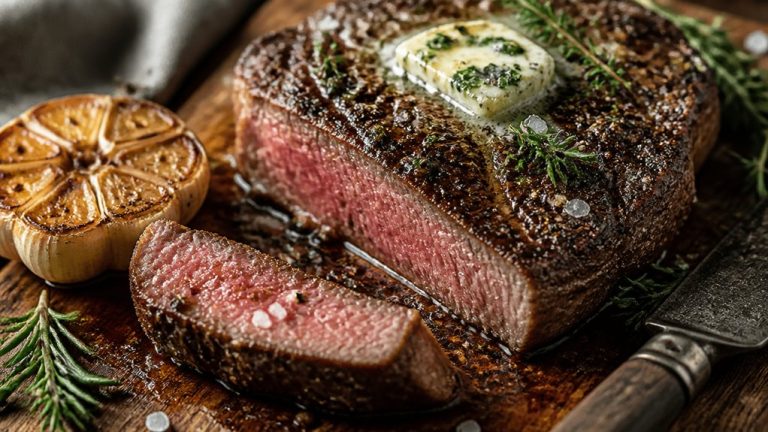
Let your smoked duck breast rest for 5 to 15 minutes after searing to allow the juices to redistribute evenly throughout the meat. This resting period is essential to prevent the juices from spilling out when you slice, ensuring a moist, tender bite.
Use a sharp knife to slice the breast on a bias, cutting against the grain to maximize tenderness. Aim for slices about ¼ inch thick to balance texture and presentation.
Avoid cutting too thin, which can dry out the meat, or too thick, which can feel dense. Resting and precise slicing highlight the duck’s smoky flavor and silky texture, making your preparation both visually appealing and flavorful without losing precious juices.
Serve Smoked Duck Breast With Sauces and Pairings
Once you’ve rested and sliced your smoked duck breast, pairing it with the right sauces and accompaniments enhances its rich, smoky flavor.
Choose sauces that balance the duck’s fattiness and complement its savory notes. Consider these options:
- Cherry or blackberry reduction: Adds a sweet-tart contrast that cuts through the richness.
- Hoisin or plum sauce: Brings an Asian-inspired sweet-savory depth.
- Mustard-based sauce: Offers a sharp, tangy bite to brighten the palate.
For sides, think roasted root vegetables, creamy mashed potatoes, or a crisp arugula salad with citrus vinaigrette.
These pairings create a harmonious balance of textures and flavors, elevating your smoked duck breast into a memorable dish. Serve immediately to enjoy the full spectrum of taste and aroma.
Frequently Asked Questions
Can I Smoke Duck Breast Without Scoring the Skin First?
Yes, you can smoke duck breast without scoring the skin first, but scoring helps render fat more evenly and crisps the skin better.
If you skip scoring, expect less crispiness and potentially uneven cooking.
To achieve the best texture and flavor, it’s wise to score the skin in a crosshatch pattern without cutting into the meat.
This step enhances fat release and improves the final result.
How Do I Store Leftover Smoked Duck Breast Safely?
You should let the smoked duck breast cool completely before storing it.
Wrap it tightly in plastic wrap or place it in an airtight container to prevent moisture loss and contamination.
Store it in the refrigerator and consume within 3 to 4 days.
For longer storage, freeze the wrapped duck breast; it’ll keep well for up to 2 months.
Thaw it safely in the fridge before reheating or serving cold.
What Is the Best Way to Reheat Smoked Duck Breast?
The best way to reheat smoked duck breast is gently in a low oven at 275°F for about 10-15 minutes to warm it without drying out.
Alternatively, reheat in a skillet over medium-low heat, skin side down, to crisp the skin while keeping the meat tender.
Avoid high heat or microwaving, which can toughen the meat.
Always let the duck rest briefly after reheating for juicy, flavorful results.
Can I Use Frozen Duck Breast for Smoking?
Yes, you can use frozen duck breast for smoking, but you need to thaw it completely first.
Thaw it slowly in the refrigerator for 24-48 hours to maintain texture and safety. Avoid thawing at room temperature to prevent bacterial growth.
Once thawed, pat the breast dry and follow your usual preparation steps like scoring, brining, and applying a rub before smoking. This guarantees even cooking and peak flavor.
How Does the Type of Duck Affect Smoking Time and Flavor?
Think of each duck breed as a unique canvas, influencing your smoking masterpiece.
Larger, fattier ducks like Muscovy require longer smoking times to render fat and achieve tender meat.
Leaner breeds like Pekin cook faster but risk drying out.
Flavor varies too; wild or heritage ducks offer richer, gamey notes, while farmed ducks are milder.
Adjust your time and wood choice accordingly to highlight each duck’s distinct character and texture perfectly.
Conclusion
So, you’ve smoked your duck breast to juicy perfection, seared that skin until it’s irresistibly crispy, and rested it just right.
Now you wonder why you didn’t do this sooner. Ironically, the secret to gourmet duck isn’t a secret at all; it’s just patience, precision, and a little smoke.
Now, slice it up, serve with your favorite sauce, and enjoy impressing everyone with what you thought was “too much work.”