Are Flies Attracted to Smoke: What You Need to Know
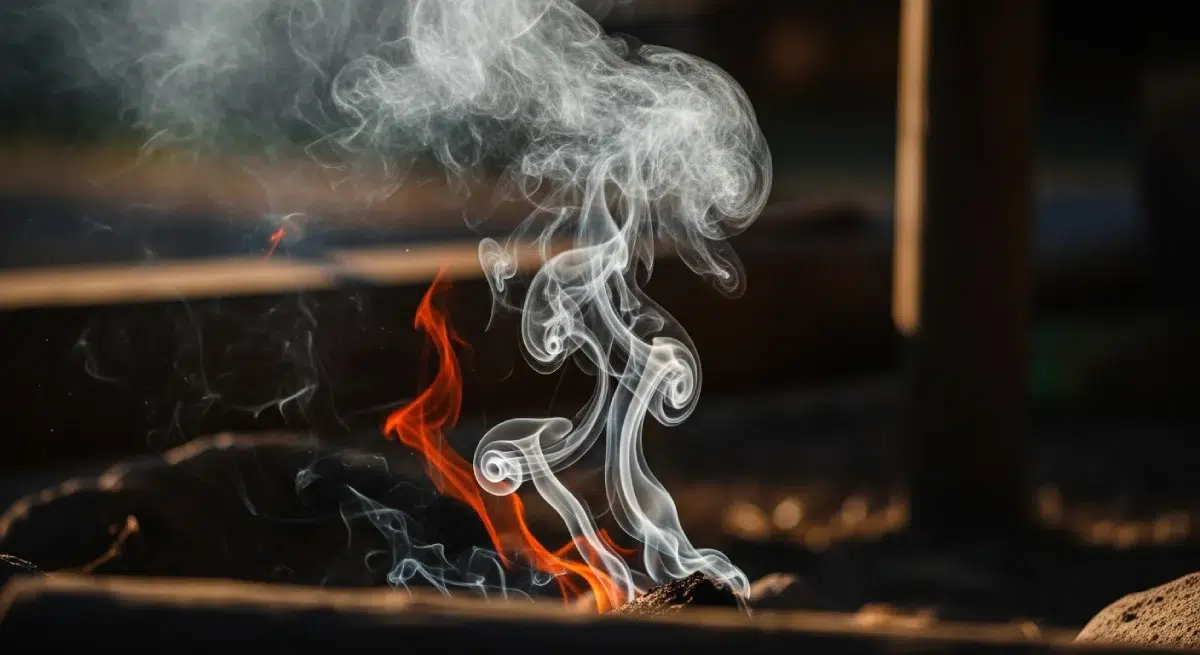
You’re attracted to smoke because certain flies, like Microsania australis, actively locate smoke plumes using combined chemical and infrared cues.
These signals, including carbon dioxide and heat, guide them to freshly burned habitats ideal for feeding and reproduction.
This behavior is an evolutionary adaptation, not random attraction, enabling flies to exploit post-fire environments efficiently.
Understanding the sensory systems and ecological roles of these pyrophilous flies reveals how smoke shapes their survival strategies.
Key Takeaways
- Certain flies, especially pyrophilous species like Microsania australis, are evolutionarily adapted to be attracted to smoke from fires.
- Flies detect smoke through chemical cues like carbon dioxide and volatile organic compounds emitted by smoldering wood.
- Combined infrared radiation and chemical signals activate neurological pathways, triggering flies to swarm within smoke plumes.
- Attraction to smoke helps flies locate freshly burned habitats for reproduction and resource exploitation.
- This behavior is a targeted evolutionary strategy, not random, enabling rapid colonization of fire-altered environments.
What Does It Mean When Flies Are Attracted to Smoke?
Attraction to smoke in flies often signals pyrophilous behavior, an evolutionary adaptation allowing certain species to exploit post-fire environments.
When you observe flies drawn to smoke, you’re witnessing their response to specific chemical cues and infrared radiation produced by fires.
These flies possess sensory mechanisms detecting smoke components and heat, guiding them to freshly burned areas.
This behavior facilitates reproduction and resource utilization in habitats temporarily altered by fire, where competition diminishes and food sources become accessible.
You should understand that pyrophilous flies rarely inhabit unburned sites, emphasizing their ecological specialization.
Their aggregation in smoke plumes represents a targeted evolutionary strategy rather than random attraction.
Recognizing this helps clarify the adaptive significance behind their smoke responsiveness within fire-affected ecosystems.
Similarly, in cooking, controlling smoke source and humidity is essential for achieving desired outcomes like bark formation on ribs.
Which Fly Species Show Pyrophilous Behavior?
Identifying fly species that exhibit pyrophilous behavior reveals a specialized group adapted to fire-affected ecosystems.
You’ll find that Microsania australis, endemic to Australia, swarms within smoke plumes from smouldering wood.
Similarly, Hypocerides nearcticus frequently appears low above burned soil, engaging in copulation.
These flies rely on smoke and CO2 cues, marking freshly burned habitats vital for reproduction.
| Species | Behavior |
|---|---|
| Microsania australis | Swarms in wood smoke |
| Hypocerides nearcticus | Swarms near burned soil |
| Other Microsania spp. | Aggregates in various smoke plumes |
| Phoridae family | Pyrophilous swarming observed |
Understanding these species highlights their ecological roles and adaptations to post-fire environments.
How Do Pyrophilous Flies Find Burned Habitats?
Pyrophilous flies locate freshly burned habitats by detecting specific environmental cues produced during and after fires.
You’ll find that these flies primarily respond to chemical signals like carbon dioxide released by combustion and volatile organic compounds emitted from smoldering wood.
Additionally, heat signatures from the fire act as important indicators guiding their movement.
These cues allow them to identify recently burned areas suitable for reproduction and feeding.
You can observe species such as Microsania australis aggregating within smoke plumes shortly after fires, exploiting the unique post-burn environment.
By integrating olfactory and thermal information, pyrophilous flies efficiently navigate complex landscapes, ensuring they colonize most favorable habitats rapidly.
This targeted behavior underscores their ecological specialization and dependence on fire-related environmental changes.
What Sensors Help Microsania Flies Detect Smoke and Heat?
Microsania flies have some pretty fascinating sensors that help them pick up on environmental cues like smoke and heat. For starters, they’ve got these specialized infrared radiation receptors that enable them to sense heat coming from smoldering wood. Isn’t that cool?
On top of that, they also have chemical sensors that can detect smoke compounds. This ability actually guides their behavior, especially when it comes to aggregating in areas that have been burned. So, in a way, these tiny flies are pretty adept at navigating their surroundings!
Infrared Radiation Detection
Although smoke and heat signals are often subtle, Microsania flies possess specialized sensors that detect both infrared radiation and chemical components of smoke.
These sensors allow them to locate smouldering wood and freshly burned areas efficiently. The infrared receptors respond to wavelengths emitted by heat sources, guiding the flies toward fire-affected zones.
Understanding these sensors’ characteristics helps clarify how Microsania flies exhibit pyrophilous behavior.
| Sensor Type | Detection Range | Functional Role |
|---|---|---|
| Infrared Photoreceptors | 700–1400 nm wavelength | Detect heat from smouldering |
| Thermoreceptors | Ambient temperature | Sense temperature gradients |
| Mechanoreceptors | Airflow changes | Detect smoke plume movement |
These combined inputs enable precise orientation toward fire-related cues. However, it is important to note that smoke from certain woods, especially resinous pine, produces chemical compounds that may affect the sensory experience around fires.
Chemical Sensing Mechanisms
Since infrared detection alone isn’t sufficient for locating fire-affected areas, Microsania flies rely on specialized chemosensory receptors to identify chemical components in smoke.
These sensors detect volatile organic compounds and gases such as carbon dioxide, which are abundant in smoke plumes from smouldering wood.
The flies’ antennae are equipped with olfactory sensilla that respond selectively to these chemical cues, enabling precise localization of smoke sources.
This chemosensory input complements infrared radiation detection, allowing Microsania flies to navigate complex environments influenced by fire.
By integrating multiple sensory modalities, these flies efficiently identify recently burned habitats ideal for reproduction.
Understanding these chemical sensing mechanisms reveals how pyrophilous insects exploit fire cues for ecological advantage.
This highlights the evolutionary adaptation of Microsania flies to fire-prone ecosystems.
How Do Smoke Plumes Trigger Swarming in Smoke-Flies?
Smoke plumes draw in smoke-flies by activating specialized sensory mechanisms that detect both infrared radiation and chemical cues emitted during combustion.
Flies like Microsania australis use infrared-sensitive organs to locate heat sources, guiding them toward smouldering wood.
Simultaneously, olfactory receptors identify volatile compounds within smoke, signaling a favorable environment for reproduction.
When these stimuli combine, they trigger neurological pathways that induce swarming behavior, causing flies to aggregate within the plume.
This swarm formation enhances mating opportunities and guarantees offspring development in recently burned areas.
By responding to precise thermal and chemical signatures, smoke-flies effectively exploit fire-affected habitats.
Understanding this dual sensory activation clarifies how smoke plumes act as ecological signals, orchestrating the characteristic swarming behavior of pyrophilous fly species.
Similar to how changes in bark color can indicate environmental stress in trees, the flies’ response to smoke plumes highlights the importance of sensory cues in ecological adaptation.
Why Is CO2 a Key Signal for Fire-Adapted Flies?
Sure! Here’s a more conversational version of the text:
You know, CO2 is actually a pretty reliable sign that there’s a fire nearby. It’s a consistent byproduct of combustion, after all. Fire-adapted flies have this cool ability to pick up on elevated CO2 levels in their surroundings thanks to their specialized olfactory receptors.
This nifty sensory mechanism helps them find recently burned areas, which are crucial for their reproduction and survival. It’s fascinating how nature has equipped these flies to thrive in such challenging conditions!
CO2 as Fire Cue
The detection of carbon dioxide (CO2) serves as a critical environmental cue for fire-adapted flies, guiding them toward freshly burned habitats.
When a fire occurs, large amounts of CO2 are released, signaling suitable conditions for pyrophilous species to reproduce and thrive.
These flies, such as Microsania australis, rely on elevated CO2 levels to identify recently burned areas where competition is minimal and resources like decaying wood are abundant.
This cue helps them quickly locate ideal sites for mating and oviposition.
Because CO2 disperses from fire zones, it acts as an efficient long-range signal, enabling flies to aggregate in smoke plumes.
Consequently, CO2 detection is essential for their survival and reproductive success in fire-prone ecosystems.
Olfactory Detection Mechanisms
Fire-adapted flies detect CO2 through specialized olfactory receptors that allow them to pinpoint freshly burned habitats efficiently. You rely on these receptors to sense elevated CO2 levels, a reliable indicator of recent fire activity where resources for reproduction are ideal.
This detection mechanism offers several advantages:
- Selective Attraction: CO2 signals guide you directly to smoldering wood or ash, ensuring efficient habitat selection.
- Early Detection: You identify fires shortly after ignition when competition is minimal.
- Reproductive Success: Locating freshly burned areas increases chances of offspring survival.
- Energy Efficiency: Olfactory cues reduce unnecessary exploration, conserving energy.
Thus, CO2 serves as an essential olfactory cue, enabling fire-adapted flies to exploit post-fire environments effectively.
How Does Tobacco Smoke Affect Fly Physiology and Behavior?
Although tobacco smoke primarily poses health risks to humans, it also markedly impacts fly physiology and behavior. When you expose adult Drosophila to cigarette smoke, you observe an increased heart rate and altered calcium dynamics within cardiac cells.
Nicotine, a key tobacco component, replicates these effects by accelerating heartbeats, reducing calcium transient amplitude, and shortening relaxation time. These physiological changes depend on the alpha-7 acetylcholine receptor subunit, as its knockdown prevents heart rate elevation following smoke exposure.
Behaviorally, flies respond to tobacco smoke with altered activity patterns, although mortality rates remain unaffected in short-term exposures. This evidence indicates that tobacco smoke compounds directly affect fly cardiac function and locomotion, likely through neurochemical pathways modulating heart and muscle physiology.
How Does Marijuana Vapor Change Fly Heart and Movement?
Nicotine’s influence on fly cardiac function highlights how inhaled substances can modulate physiological processes in Drosophila.
Nicotine’s effects reveal how inhaled compounds alter heart function in fruit flies.
Similarly, marijuana vapor affects fly heart and movement without reducing lifespan.
When you expose flies to vaporized cannabinoids delivered via their tracheal system, you’ll notice specific cardiac and behavioral changes.
Key observations include:
- Altered cardiac function characterized by changes in heart rate and rhythm.
- Flies exhibit increased activity, often crowding near vial tops.
- Vaporization at 188°C effectively transfers cannabinoids to the hemolymph.
- Synthetic cannabinoids can restore impaired locomotion in toxin-exposed flies.
These findings demonstrate that marijuana vapor impacts Drosophila physiology through respiratory uptake, modifying cardiac and movement patterns in measurable ways.
Why Do Some Flies Prefer Cannabis Over Other Plants?
Attracting flies to certain plants often depends on the emission of volatile compounds. Cannabis sativa stands out for its unique chemical profile.
You’ll find that cannabis releases a diverse array of terpenes and other volatiles, totaling around 68 compounds. These effectively lure insects such as phlebotomine sand flies.
These flies prefer cannabis over native flora, likely due to the strong olfactory cues emitted by these compounds. They signal a reliable sugar source.
When you analyze plant sugar sequences from sand flies across continents, cannabis consistently appears as a favored resource despite its relative scarcity.
This preference suggests that the chemical signature of cannabis plays a critical role in its attractiveness. It facilitates energy acquisition for these flies by offering accessible plant sugars, which are essential for their survival and reproductive success.
How Do Different Insect Groups Respond to Smoke and Fire?
When you observe insect behaviour around fire-affected areas, you’ll find that various groups respond distinctively to smoke and heat. Pyrophilous insects, such as Microsania flies, use smoke and infrared cues to locate freshly burned habitats for reproduction.
Other groups exhibit varied reactions:
- Pyrophilous flies swarm smoke plumes, using CO2 as an olfactory marker to find breeding sites.
- Beetles, wasps, and moths also show aggregation near fires, exploiting fire-altered environments.
- Tobacco smoke affects Drosophila physiology, increasing heart rate via nicotine interactions.
- Sand flies prefer volatile compounds from Cannabis sativa, demonstrating plant preference unrelated to fire.
These responses highlight diverse sensory adaptations to smoke and fire, essential for survival and reproduction in fire-prone ecosystems.
Frequently Asked Questions
Can Flies Suffer Health Problems From Prolonged Smoke Exposure?
Yes, flies can suffer health problems from prolonged smoke exposure. For example, adult Drosophila exposed to cigarette smoke experience increased heart rates and disrupted calcium dynamics, indicating physiological stress.
Nicotine alone mimics these effects, altering cardiac function.
While some flies show pyrophilous attraction to smoke, chronic exposure to toxic smoke compounds can impair their cardiovascular health, affecting survival and behavior.
You should consider smoke’s harmful impact on insect physiology during studies.
Do Pyrophilous Flies Contribute to Post-Fire Ecosystem Recovery?
Like tiny firefighters drawn to the blaze, pyrophilous flies play a subtle but essential role in post-fire ecosystems.
You’ll find them swarming freshly burned areas, aiding nutrient cycling by breaking down charred organic matter. Their reproductive activities stimulate microbial communities, accelerating soil recovery.
How Do Fly Mating Behaviors Change After Bushfires?
After bushfires, you’ll notice that certain pyrophilous flies, like Hypocerides nearcticus, increase mating activity within burned areas.
They swarm low above scorched wood or soil, engaging frequently in copulation.
This behavior likely capitalizes on the post-fire environment, where reduced competition and abundant resources favor reproduction.
Are There Any Predators Attracted to Pyrophilous Fly Swarms?
You should know that pyrophilous fly swarms, like those of Microsania species, often attract predators such as predatory beetles and spiders.
These predators capitalize on the dense insect aggregations. Studies indicate that these predators increase their foraging efficiency by up to 40% near burn sites.
So, if you observe fly swarms after fires, you’ll likely find specialized predators exploiting this temporary abundance.
This demonstrates a complex post-fire ecological interaction.
Can Smoke Attraction Be Used to Control Pest Fly Populations?
You can potentially use smoke attraction to control certain pest fly populations, especially pyrophilous species like Microsania.
These flies aggregate in smoke plumes, which could be exploited to lure and trap them.
However, effectiveness depends on species-specific responses and environmental factors.
You’ll need targeted strategies combining smoke cues with trapping mechanisms.
Consider non-target effects and ecological impacts before implementing such control methods widely.
Smoke Signals & Survival: Inside the World of Pyrophilous Flies
You’ll find flies fascinated by fire are far from fickle; pyrophilous species specifically seek smoky signals to find fresh habitats.
Smoke sensors in Microsania flies swiftly spot heat and haze, sparking swarming behavior. Tobacco and marijuana vapors distinctly disturb fly physiology and patterns, proving varied volatile effects.
Understanding these unique, nuanced responses helps you grasp how different insect groups detect and decide their dance around smoke and smoldering settings.