How Long to Brine Fish: Expert Tips for Better Taste
You should brine fish based on its type, thickness, and brine concentration. Generally, a 5% mild brine suits most fish, with times ranging from 15 minutes for delicate trout to 40 minutes for dense swordfish.
Thicker pieces need longer times, but avoid exceeding recommended durations to prevent mushiness. For smoking, extend brining to 3–12 hours depending on fish density.
Proper refrigeration and patting dry afterwards help preserve texture and flavor. Understanding these factors guarantees ideal results and guides your process further.
Key Takeaways
- Most fish benefit from a 5% brine for 15–40 minutes, adjusted by thickness and density.
- Salmon typically requires 35 minutes to 2 hours in a mild brine, longer for smoking (6–8 hours).
- Thinner flaky fillets need shorter brining (~45 minutes), while denser cuts may require up to 4 hours.
- Stronger brines (10%) shorten brining time but risk over-salting; rinse fish after quick strong soaks.
- Always refrigerate fish while brining and pat dry afterward for best texture and flavor results.
Which Brine Concentration Is Best for Your Fish?
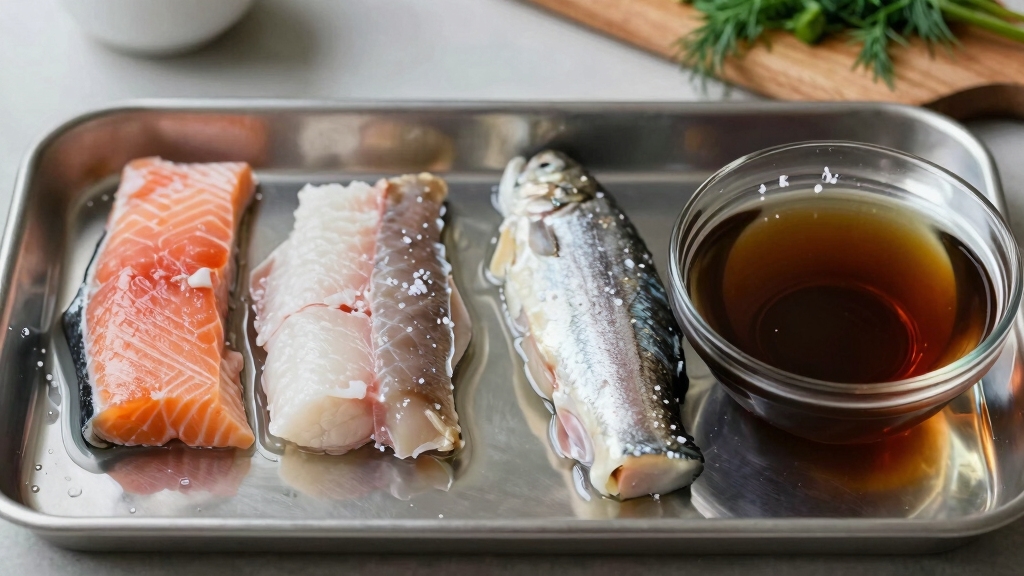
When choosing a brine concentration, consider both the fish type and desired texture. Salt levels directly affect the brining duration and outcome.
A 5% mild brine suits most fish, requiring 15 to 40 minutes depending on density. Delicate trout or shrimp need about 15 minutes, while dense swordfish steaks require closer to 40.
For salmon, a 10% medium brine allows a quick 10-minute soak, preventing mushiness while firming exterior proteins rapidly. Stronger brines shorten required time but risk over-salting and texture breakdown if prolonged.
You’ll want to maintain salt-to-water ratios accurately, such as 1 tablespoon salt per 2 cups water, to guarantee consistent results.
Adjusting concentration based on fish type and texture expectations optimizes flavor and prevents common brining issues like excessive saltiness or spongy flesh.
It is also important to use non-reactive containers during brining to avoid unwanted chemical reactions and ensure even flavor absorption.
How to Adjust Brining Time Based on Fish Thickness?
Because the thickness of your fish directly influences how deeply the brine penetrates, you need to tailor brining times accordingly to guarantee ideal flavor and texture.
Fish thickness determines brining time, ensuring perfect flavor and texture every time.
For fillets around one inch thick, brine between 45 minutes and 4 hours depending on density. Thinner flaky fillets require shorter times near 45 minutes, while denser cuts lean toward 4 hours.
Firm fish like salmon typically benefit from 1 to 2 hours in a standard brine. Exceeding 6 hours risks excessive salt absorption and mushiness.
Delicate fish demand shorter soaks, no more than 1.5 hours, to prevent structural breakdown. If your fish is thicker than an inch, increase brining time proportionally but avoid surpassing maximum recommended durations.
This helps maintain balanced saltiness and flesh integrity. Always refrigerate while brining to guarantee safety and consistency.
For optimal preservation after brining, it is important to vacuum-seal smoked salmon before freezing to maintain texture and prevent freezer burn.
Recommended Brining Times for Different Fish Types
Adjusting brining times based on fish thickness sets a solid foundation, but different species also demand tailored durations to optimize flavor and texture.
Delicate fish like trout require shorter soaks to prevent mushiness, while denser fish like swordfish tolerate longer brining for full seasoning.
For example, salmon benefits from 35 minutes in a 5% brine, balancing salt uptake without toughening the flesh.
| Fish Type | Brine Concentration | Recommended Time |
|---|---|---|
| Delicate (Trout) | 5% mild | 15 minutes |
| Flaky (Bass) | 5% mild | 20 minutes |
| Meaty (Salmon) | 5% mild | 35 minutes |
| Dense (Swordfish) | 5% mild | 40 minutes |
Tailor brine time precisely to species for ideal results. Using kosher salt ensures even curing and avoids off-flavors during the brining process.
How to Adjust Brine Time When Smoking Fish?
When you’re smoking fish, you’ll want to think about brine time. A good starting point is at least 3 hours, but if you really want that flavor to soak in, aim for 8 to 12 hours. Just keep an eye on the saltiness—you don’t want it to get too salty!
It’s also important to adjust your brine concentration. If you’re using a stronger solution, remember that shorter soaks are better. This way, you can avoid mushiness and that overwhelming salty taste.
And don’t forget to pat your fish dry after brining! This little step helps the smoke stick better and keeps the texture just right. Happy smoking!
For safe smoking, ensure the internal temperature reaches at least 165°F during processing to reduce pathogen risk.
Optimal Smoking Brine Duration
If you plan to smoke fish, you should extend the brining time beyond typical soaking durations to guarantee adequate flavor penetration and texture development.
Smoking requires deeper salt infusion, so aim for at least 3 hours, with 8 to 12 hours preferred depending on fish type and thickness.
| Fish Type | Recommended Brine Time | Notes |
|---|---|---|
| Salmon | 6-8 hours | Avoid over-brining to prevent mushiness |
| Meaty Fish | 8-12 hours | Assures firm texture and flavor depth |
| Delicate Fish | 3-6 hours | Shorter times to maintain structure |
Adjust times based on brine strength and thickness. Pat dry after brining to improve smoke adhesion and final texture.
Preventing Over-Brining Effects
Because smoking fish requires extended brining times to deepen flavor and texture, you need to carefully monitor the duration to prevent over-brining.
Excessive time, especially beyond 8 hours in strong brine, breaks down flesh and creates a mushy, overly salty product.
To adjust brine time effectively:
- Use a milder brine concentration (around 5%) for longer smokes to reduce protein breakdown.
- Limit brining time to 6-8 hours for dense fish to avoid spongy texture.
- Pat dry thoroughly post-brine to enhance smoke adhesion and prevent excess moisture.
- Rinse fish after quick, stronger soaks (like 10% brine) to eliminate surface salt buildup.
Maintaining consistent temperature control during smoking further helps preserve the fish’s texture and flavor throughout the process.
How Preparation Steps Affect Brining Time and Outcome?
Proper preparation directly influences both the duration and effectiveness of brining fish. You must dissolve salt and sugar completely in warm water to guarantee uniform salt concentration, which controls osmosis rates and prevents uneven curing.
Fully submerging the fish and covering it while refrigerating maintains a consistent temperature, vital for predictable brining times and flavor absorption.
Patting the fish dry after brining removes excess surface moisture, improving cooking texture and smoke adhesion if smoking. For raw preparations, an initial dry salting of about two hours before liquid brining can shorten brining time by drawing out moisture and enhancing salt penetration.
If you use a quick 10% brine soak, rinsing afterward prevents excessive saltiness. These steps optimize brine uptake, ensuring desired texture and flavor without risking mushiness or uneven seasoning.
When smoking fish after brining, maintaining a low and consistent temperature helps achieve balanced smoke infusion and enhances overall flavor.
What Happens If You Brine Fish Too Long?
Understanding how preparation affects brining time helps you avoid the common pitfall of leaving fish in the brine too long. Over-brining can severely compromise texture and flavor, so you need to monitor time carefully.
Proper preparation ensures you don’t over-brine, preserving the fish’s ideal texture and flavor.
Here’s what happens if you exceed recommended durations:
- Excess Saltiness: Prolonged brining causes fish to absorb too much salt, making it unpalatable.
- Mushy Texture: Extended exposure breaks down muscle proteins, resulting in a spongy, pickle-like consistency.
- Protein Release: Over-brined salmon releases albumin, creating a white film on the surface.
- Flavor Imbalance: The delicate natural taste gets overwhelmed by salt, masking subtle fish flavors.
To achieve optimal results, it is important to follow the correct brine times and ratios for your fish’s thickness and type.
How to Tell When Fish Is Perfectly Brined?
When brining fish, you’ll know it’s perfectly done by observing a firm yet tender texture that has absorbed just enough salt to enhance flavor without overwhelming it.
You’ll notice the fish feels slightly resilient to the touch but not tough or rubbery.
The surface should appear moist but not slimy or overly wet, indicating balanced salt penetration.
Over-brined fish becomes mushy or excessively salty; under-brined fish tastes bland and lacks improved texture.
For example, a 5% brine for 20–40 minutes suits most fillets, while quick soaks in stronger brines require shorter times.
Use timing guidelines based on fish type and thickness, then rely on tactile cues to confirm readiness.
Always pat dry after brining for best cooking results.
Proper refrigeration during brining preserves freshness and texture, ensuring optimal results with wet and dry brines.
Frequently Asked Questions
Can I Reuse Brine for Multiple Batches of Fish?
You can reuse brine for multiple fish batches, but only if you monitor salt concentration and hygiene closely. Each batch reduces salt levels and adds proteins, risking contamination and off-flavors.
To reuse safely, strain brine, refrigerate it, and limit reuse to 1-2 times. Adjust salt if diluted. Avoid reusing brine for delicate or raw preparations to prevent spoilage.
Prioritize fresh brine for best flavor and safety.
What Is the Best Container for Brining Fish?
You’ll want to use a non-reactive container like glass, food-grade plastic, or stainless steel for brining fish.
Avoid metal containers prone to rust or imparting flavors.
Glass jars or ceramic crocks are ideal because they don’t interact chemically with the brine.
Plastic bins, if BPA-free, offer convenience for larger batches.
This choice preserves the fish’s taste and guarantees the brine’s integrity, much like a Victorian apothecary’s precise instruments guaranteed pure remedies.
Should I Brine Fish With Skin on or Off?
You should brine fish with the skin on whenever possible. The skin acts as a protective barrier, helping the brine penetrate evenly without breaking down the delicate flesh.
It also preserves moisture and texture during brining. Removing the skin can cause the fish to become overly salty and mushy faster.
However, if you prefer skinless fillets, reduce brining time to avoid excessive salt absorption and texture loss.
How Does Temperature Affect Brining Time?
Wondering why temperature matters when you brine fish? Cooler temps slow salt absorption, so you’ll need to brine longer to achieve the same effect.
That’s why you should always refrigerate your brine. Keeping fish at 40°F (4°C) guarantees safety and controlled curing.
If you brine at room temperature, salt penetrates faster but risks spoilage and mushiness.
Can I Brine Frozen Fish Directly Without Thawing?
You shouldn’t brine frozen fish directly without thawing because the brine can’t penetrate ice crystals effectively.
Thawing first guarantees the fish absorbs the brine evenly, preventing uneven seasoning and texture issues.
Thaw your fish fully in the refrigerator before submerging it in the brine.
This step maintains proper brining times and avoids a mushy or unevenly salted result, which happens when brining frozen fish straight from the freezer.
Finding the Perfect Brine Balance for Delicious Fish
Now that you know how brine concentration, fish thickness, and preparation affect timing, are you ready to perfect your brining technique?
Remember, too long can ruin texture, while too short won’t enhance flavor. Adjust based on fish type and cooking method for the best results.
By following these evidence-based guidelines, you’ll consistently achieve that ideal balance—juicy, flavorful fish every time. So, how will you tailor your next brine for peak taste?