What Temp Is Cold Smoke: Ideal Cold Smoking Temperature Guide
You keep cold smoking temperatures between 50°F and 60°F to guarantee smoke penetrates food without cooking it or encouraging harmful bacteria.
This range balances flavor development and safety, preserving texture while minimizing risks.
Maintaining precise control with tools like digital thermometers and adjustable vents is key, especially in varying humidity and ambient conditions.
Staying within this temperature window helps you achieve peak smoke infusion and food quality.
Explore further to understand how environment and technique impact your cold smoking success.
Key Takeaways
- Cold smoking typically occurs between 50°F and 86°F (10°C to 30°C), with an ideal range of 50°F to 60°F for best results.
- Maintaining 50°F to 60°F prevents cooking the food while allowing smoke to penetrate safely.
- Temperatures above 90°F risk cooking the food and increasing harmful bacterial growth.
- Precise temperature control is essential to keep the smoker within the cold smoking range.
- Keeping humidity around 60–70% aids smoke absorption and prevents surface drying during cold smoking.
What Is the Cold Smoking Temperature Range?
Although cold smoking doesn’t cook food, you need to maintain a specific temperature range to guarantee safety and effective smoke infusion.
Cold smoking requires precise temperature control to ensure safety and achieve the perfect smoky flavor.
Generally, cold smoking occurs between 50°F and 86°F (10°C to 30°C). This allows smoke to penetrate without raising the internal temperature enough to cook the product.
For best results, staying between 50°F and 60°F is ideal, especially for meats, cheeses, and nuts. This minimizes bacterial growth.
Temperatures above 90°F risk cooking the food and promoting harmful bacteria. You must monitor conditions closely with reliable thermometers and adjust airflow, humidity, or cooling methods to maintain consistent temperatures.
This precise control guarantees both flavor development and food safety during the cold smoking process.
It is important to avoid using pine wood for cold smoking, as its resinous smoke can produce harsh flavors and harmful compounds.
Why Keep Cold Smoking Between 50°F and 60°F?
When you keep cold smoking between 50°F and 60°F, you create the ideal environment to infuse smoke flavors without cooking the food or encouraging bacterial growth.
This temperature range carefully balances flavor development and food safety, preventing heat-induced cooking and minimizing bacterial risks. Staying within these limits guarantees peak smoke absorption while maintaining the food’s texture and integrity. Proper temperature management is essential to ensure consistent results and prevent heat fluctuations that could compromise safety or flavor.
| Benefit | Reason |
|---|---|
| Flavor infusion | Smoke penetrates fully |
| Food safety | Limits bacterial growth |
| Texture preservation | Avoids cooking or drying out |
| Consistent results | Controls temperature precisely |
What Tools Help You Maintain Cold Smoking Temperature?
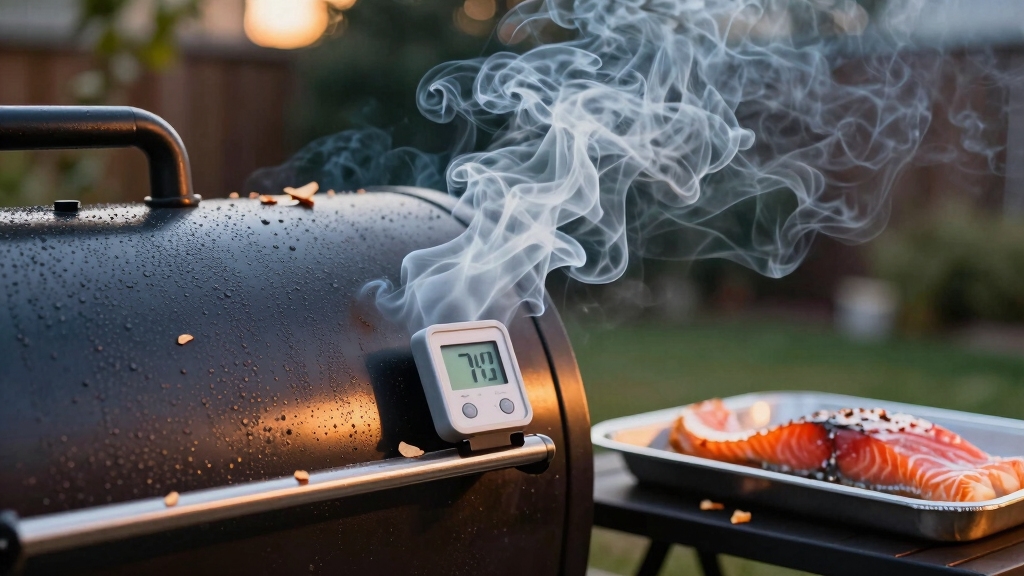
Maintaining the ideal cold smoking temperature between 50°F and 60°F demands reliable tools to monitor and control the environment accurately.
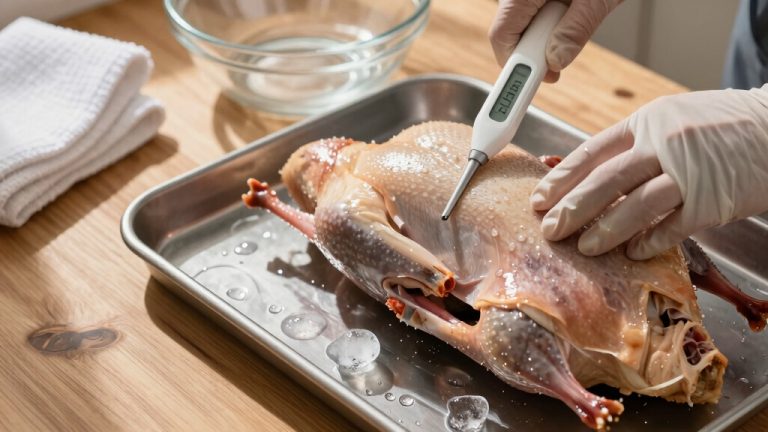
You’ll need a precise digital thermometer or temperature probe to track internal smoker temperature continuously. A smoker with adjustable vents or dampers lets you regulate airflow, essential for stabilizing temperature without overheating.
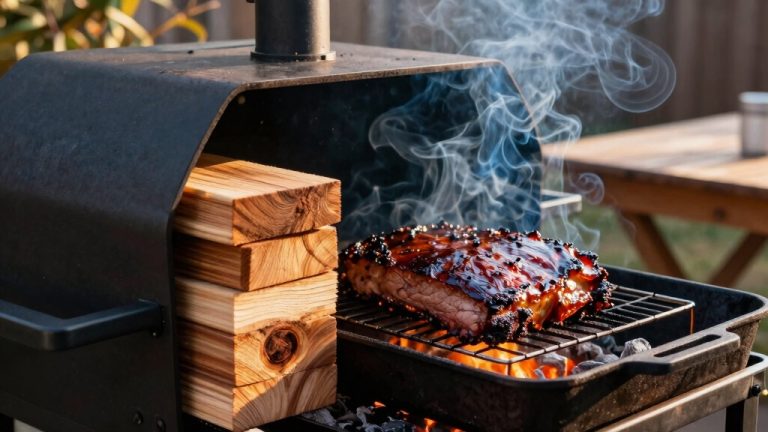
Incorporating a pellet tube smoke generator can produce steady smoke while minimizing heat spikes. To further control heat, placing ice or frozen water trays inside the smoker helps absorb excess warmth, especially in pellet smokers.
Additionally, using an insulated smoking chamber or shade prevents external temperature fluctuations from affecting your process. By combining these tools, you maintain a consistent cold smoke environment, ensuring safety and peak smoke flavor without risking bacterial growth or inadvertent cooking.
Regular cleaning and maintenance of your smoker, including removing ash and moisture, also help prevent odors and ensure accurate temperature control for cold smoking. This important practice is part of preventing mold and rust inside the smoker.
How Do Humidity and Environment Affect Cold Smoking Temperature?
Controlling humidity and environmental conditions plays a crucial role in achieving the ideal cold smoking temperature.
You’ll want to maintain 60-70% relative humidity to prevent your food’s surface from drying out too quickly. This helps ensure proper smoke absorption.
Environmental factors like ambient temperature matter too. Cooler months with outside temperatures below 80°F (27°C) make it easier to keep your smoker within the 50°F to 60°F (10°C to 15°C) cold smoking range.
Adjusting airflow helps regulate both temperature and humidity. This ensures steady, clean smoke without overheating.
Using insulation or ice inside your smoker can counteract warmer conditions. Positioning food away from heat sources prevents temperature spikes.
Monitoring these factors precisely keeps your cold smoking consistent and effective.
Additionally, protecting your smoker with waterproof covers helps maintain stable conditions by preventing moisture intrusion during cold smoking.
How Does Temperature Affect Safety and Flavor in Cold Smoking?
Because cold smoking relies on low temperatures to infuse flavor without cooking, you must keep the heat below 90°F (32°C) to prevent bacterial growth and guarantee food safety.
Maintaining temperatures between 50°F and 80°F (10°C to 27°C) is critical. This range minimizes bacterial proliferation while allowing smoke to penetrate effectively.
If temperatures rise into the 40°F to 140°F (4°C to 60°C) danger zone without prior curing, you risk foodborne illness.
Flavor development depends on steady, controlled temperatures. Too low slows smoke absorption, while too high cooks the product and alters flavor profiles.
You should monitor temperature continuously with reliable thermometers and adjust airflow or use ice to stabilize conditions.
Using properly seasoned wood like oak can enhance smoke quality and contribute to safer and more flavorful cold smoking results.
Frequently Asked Questions
What Types of Wood Chips Are Best for Cold Smoking Different Foods?
For cold smoking, choose hardwood chips like oak, hickory, or mesquite to enhance meats with robust flavors.
For poultry, opt for milder fruitwoods such as apple or cherry to impart a subtle, sweet smoke.
Avoid softwoods like pine or cedar since they release harmful chemicals.
Using the right wood chips guarantees you get clean smoke profiles that complement your food’s natural taste without overpowering it.
How Long Should I Cold Smoke Poultry Versus Red Meat?
Wondering how long to cold smoke poultry versus red meat?
You should cold smoke poultry for about 1 to 6 hours, depending on size.
Red meats like meat or sausages require 3 to 20 hours.
Remember, longer smoking deepens flavor but demands prior curing for safety.
Always monitor your process closely to avoid over-smoking or bacterial risks.
Adjust times based on your flavor goals and food thickness.
Can Ice Be Used to Control Temperature in Pellet Smokers?
Yes, you can use ice in pellet smokers to help control the temperature, especially during cold smoking.
Placing ice on a baking sheet inside the smoker lowers the ambient heat, preventing temperatures from rising above safe cold-smoking levels.
This method aids in maintaining the ideal 50°F to 60°F range, ensuring smoke infusion without cooking or bacterial growth.
Just monitor temperatures closely with a reliable thermometer for consistent results.
Why Is Curing Important Before Cold Smoking Raw Meats?
Curing is essential because it reduces bacterial growth, especially in the 40°F to 140°F danger zone where pathogens thrive.
You’ll want to salt or cure raw meats before cold smoking to inhibit harmful bacteria like Clostridium botulinum.
Since cold smoking keeps temperatures below 90°F, curing adds an indispensable safety barrier.
Without it, you risk foodborne illness despite the flavor benefits cold smoking provides.
Always prioritize curing for safe, tasty results.
How Does Airflow Impact Smoke Quality During Cold Smoking?
Airflow directly impacts smoke quality during cold smoking by controlling smoke density and temperature.
If you allow too much airflow, smoke dissipates quickly, reducing flavor penetration.
Too little airflow causes thick, dirty smoke, leading to bitter, harsh flavors.
You need a clean, steady flow to maintain consistent smoke composition and avoid creosote buildup.
Adjusting vents and monitoring humidity helps you optimize smoke quality for balanced, flavorful results.
Keep It Cool for the Best Cold Smoking Results
When cold smoking, you want to keep things comfortably cool—between 50°F and 60°F—to gently infuse flavor without cooking your food.
Staying within this “goldilocks zone” guarantees safety and preserves that delicate smoky essence. Use reliable tools and mind the humidity to avoid unwelcome surprises.
By mastering these subtle temperature nuances, you’re not just cold smoking; you’re crafting a culinary experience that’s both safe and sensational.