How Long Does Bbq Last in the Fridge: Safe Storage Guide
You should refrigerate your BBQ leftovers within two hours. Sooner if it’s hot outside, to keep them safe.
Once stored properly in airtight containers and kept at 40°F or below, most BBQ meats like pulled meat, ribs, brisket, chicken, and sausage will last about 3 to 4 days.
Avoid keeping them longer to prevent bacterial growth and spoilage. If you want to learn more about safe handling, storage tips, and reheating methods, there’s plenty to explore.
Key Takeaways
- BBQ meats last about 3 to 4 days when stored properly in the refrigerator at 40°F or below.
- Refrigerate BBQ leftovers within two hours of cooking, or within one hour if ambient temperature exceeds 90°F.
- Use airtight containers or vacuum-sealed bags to maintain moisture and prevent spoilage during refrigeration.
- Label each container with the date and type of meat to track freshness and avoid consuming spoiled food.
- Avoid keeping BBQ meats beyond the 3 to 4 day guideline to minimize risk of foodborne illness.
Safe Cooling Practices Before Refrigerating BBQ
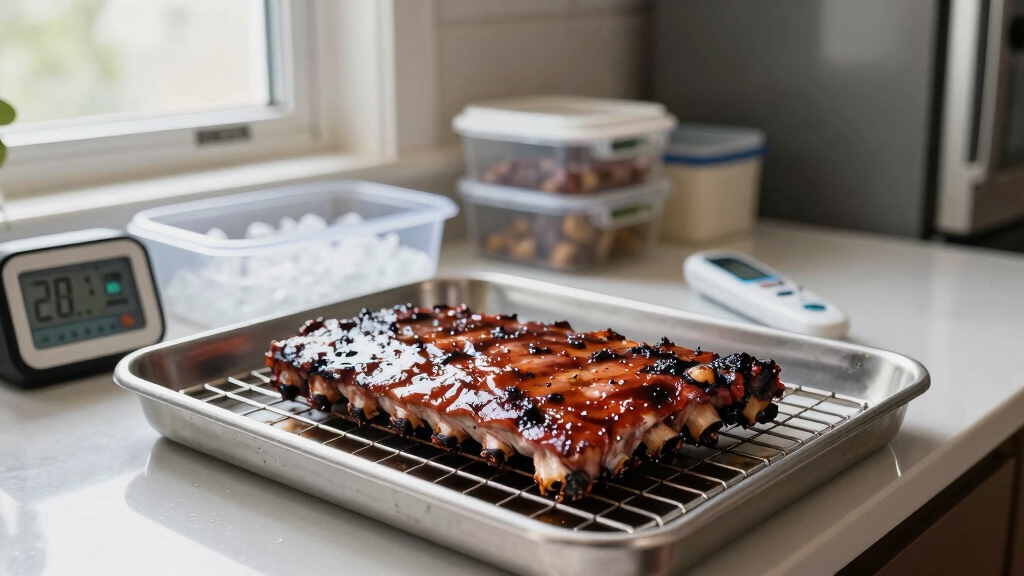
Before you refrigerate your BBQ leftovers, make sure they cool down quickly to reduce bacterial growth.
Cool BBQ leftovers quickly before refrigerating to keep bacteria growth at bay.
Leaving meat out at room temperature for more than two hours increases the risk of harmful bacteria multiplying.
If the ambient temperature is above 90°F, you need to refrigerate within one hour.
The danger zone between 40°F and 140°F is where bacteria thrive most rapidly, so minimizing time spent there’s critical.
To speed cooling, divide large portions into smaller containers and avoid stacking them while hot.
Use shallow, airtight containers to preserve moisture and prevent contamination.
Cool smoked meat rapidly to ≤40°F (4°C) within two hours using blast chillers or ice baths to prevent bacterial growth.
Fridge Storage Times for BBQ Leftovers by Meat Type
When you store BBQ leftovers in the fridge, it’s essential to keep them no longer than 3 to 4 days to guarantee safety and quality. This guideline applies to all common BBQ meats like pulled meat, ribs, brisket, chicken, and sausage.
Each of these meats can spoil quickly if left longer, even under refrigeration at 40°F or below. To minimize risk, refrigerate leftovers promptly, ideally within two hours of cooking or one hour if it’s hot outside. Proper storage in airtight containers or tightly wrapped foil helps maintain freshness and prevent cross-contamination.
Best Containers and Tips for Storing BBQ Leftovers
Although storing BBQ leftovers properly can seem straightforward, choosing the right containers and methods is essential to preserving flavor and preventing contamination.
Use airtight containers or vacuum-sealed bags to lock in moisture and avoid exposure to air, which can dry out your BBQ.
Divide large portions into smaller containers to cool evenly and quickly, minimizing time in the danger zone where bacteria multiply.
Also, store meat with its drippings or broth to maintain juiciness.
Here are tips to keep your BBQ safe and tasty:
Use containers that seal tightly to prevent spills and contamination.
Label each container with the date and type of meat for easy tracking.
Refrigerate leftovers within two hours (one hour if hot outside) to limit bacterial growth.
These precautions help keep your BBQ flavorful and safe to eat.
For longer preservation, consider freezing leftovers in airtight, freezer-safe containers to maintain quality and flavor.
Freezer Storage Times for BBQ Leftovers
You know, freezing your BBQ leftovers is a great way to make them last longer. Just keep in mind that different meats have their own safe storage times. For instance, brisket is good for up to 3 months, but sausage? That one’s best used within 1 to 2 months.
When you’re ready to freeze, just pop your BBQ into airtight or vacuum-sealed containers. This helps keep the flavor intact and stops that pesky freezer burn from ruining your meal.
Oh, and don’t forget to label each package with the date and what’s inside. It makes it so much easier to keep track and ensures you don’t accidentally eat something that’s gone bad later on!
For best results, make sure to cool your BBQ to room temperature before freezing to prevent ice crystal formation and preserve texture.
Freezer Duration By Meat
Freezing your BBQ leftovers locks in flavor and extends their shelf life, but each type of meat has its own recommended freezer duration to maintain quality and safety.
Knowing these limits helps you avoid wasted food and potential health risks.
For example, brisket keeps well for up to 3 months in the freezer, while pulled meat and ribs stay good for 2 to 3 months.
Chicken lasts about 2 months, and sausage should be used within 1 to 2 months to prevent spoilage.
Imagine savoring that perfect brisket months later, still juicy and tender.
Think of the relief knowing your ribs are safe after freezing.
Picture the disappointment of freezer burn when sausage overstays.
Stick to recommended times to keep your BBQ delicious and safe.
Proper packaging and rapid freezing are essential to prevent freezer burn and maintain the best texture and flavor.
Proper Freezing Techniques
To maximize the quality and safety of your BBQ leftovers in the freezer, proper freezing techniques play a key role.
Freeze your BBQ promptly within two hours of cooking to prevent bacterial growth. Use airtight containers or vacuum-sealed bags to avoid moisture loss and freezer burn.
Label packages with the date and type of meat for easy tracking. Divide large portions into smaller servings to freeze and thaw evenly.
| BBQ Type | Freezing Time | Packaging Tips |
|---|---|---|
| Brisket | Up to 3 months | Vacuum-seal or airtight |
| Pulled meat | 2–3 months | Use plastic bags |
| Chicken | Up to 2 months | Store with drippings |
Following these steps preserves flavor, texture, and safety. This ensures your BBQ tastes fresh when reheated. Maintaining freezer temperatures at or below 0°F helps slow bacterial growth and preserve best quality storage.
Labeling and Organizing BBQ Leftovers for Safety and Convenience
Hey there! When it comes to BBQ leftovers, it’s super important to label them with the date. This way, you can easily keep track of how long they’ve been hanging out in your fridge or freezer.
Also, a little tip: try organizing your leftovers by meat type. It makes everything so much easier and helps you avoid any mix-ups. Plus, it ensures you use up your food before it goes bad. Trust me, these simple steps can really help you stay safe and cut down on waste!
Remember to store your BBQ leftovers in the fridge at or below 40°F to slow bacterial growth and maintain food safety.
Effective Date Labeling
Start by clearly labeling all your BBQ leftovers with the date they were stored. This simple step helps you track freshness and prevents foodborne illnesses. Without proper date labeling, you risk eating spoiled meat or wasting good food out of uncertainty. Use waterproof markers or pre-printed labels for durability.
Remember to protect your loved ones by avoiding accidental consumption of expired BBQ. Save money by confidently consuming leftovers before they go bad. Reduce stress by quickly identifying what’s safe to eat.
Label each container immediately after storing, so you don’t forget the date. This habit guarantees you use your BBQ within the safe 3–4 days refrigeration window, maintaining both flavor and safety. Effective date labeling is your best defense against guesswork and food safety risks.
For longer storage, consider freezing leftovers promptly to extend their usability and preserve quality while minimizing spoilage risks with proper freezing techniques.
Organizing By Meat Type
Once your BBQ leftovers are clearly dated, sorting them by meat type becomes the next step in keeping your fridge organized and safe.
Separate pulled meat, ribs, brisket, chicken, and sausage into distinct containers or bags. Label each with the meat type and date to track freshness easily.
Storing meats individually prevents cross-contamination and helps you quickly identify what needs to be eaten first. Use airtight containers or vacuum-sealed bags to maintain moisture and prevent spoilage.
Remember, all BBQ meats last about 3–4 days refrigerated at 40°F or below. Divide large portions into smaller ones to cool evenly and safely.
Proper organization improves convenience and reduces the risk of foodborne illness by ensuring you consume leftovers before they spoil. Always reheat BBQ meats to a safe internal temperature of 165°F (74°C) to prevent foodborne illness.
How to Reheat BBQ Safely?
Heating up leftover BBQ requires careful attention to temperature to guarantee safety.
You should always reheat your BBQ until it reaches an internal temperature of 165°F to kill any harmful bacteria.
Use a reliable food thermometer to check, since appearance alone can be misleading.
Avoid reheating multiple times, as repeated warming increases the risk of contamination.
To reheat your BBQ safely and enjoyably:
Use a microwave or oven with even heat distribution to warm thoroughly.
Add moisture like broth or sauce to keep the meat juicy and flavorful.
Heat smaller portions to ensure the center reaches the proper temperature quickly.
Following these steps protects your health and preserves the delicious taste of your BBQ leftovers.
For best results, consider using an oven method at 350°F to ensure even heating and maintain moisture.
Frequently Asked Questions
Can BBQ Leftovers Be Refrozen After Thawing?
You can refreeze BBQ leftovers after thawing only if you thawed them in the fridge and they’ve stayed below 40°F.
Don’t refreeze if the meat sat out at room temperature or was thawed by other methods, as bacteria could have grown.
Always check for any off smells or textures before refreezing.
How Does Marinating Affect BBQ Storage Time?
Marinating doesn’t notably extend your BBQ’s fridge storage time. You should still refrigerate leftovers within two hours and consume them within 3–4 days, regardless of marinade use.
However, acidic marinades can slightly tenderize meat, which might make it spoil faster if left too long. Always store marinated BBQ in airtight containers and label it with the date.
When reheating, make certain it reaches 165°F to kill any harmful bacteria.
Is It Safe to Store BBQ With Sauces Already Applied?
Yes, you can store BBQ with sauces already applied, but it’s best to refrigerate it promptly in airtight containers.
Sauces, especially sugary or vinegar-based ones, can speed up spoilage if left out too long.
To keep your BBQ safe, cool it quickly and avoid leaving it in the “danger zone” between 40°F and 140°F.
Reheat leftovers to at least 165°F before eating to kill harmful bacteria.
Can Freezing Change the Texture of BBQ Meats?
Freezing BBQ meats is like putting a delicate flower in a frosty glass. While it preserves, it can change the texture.
You’ll notice some dryness or toughness because ice crystals disrupt the meat’s fibers. To minimize this, freeze quickly in airtight containers or vacuum-sealed bags and avoid refreezing.
When you thaw and reheat, expect a slight change, but proper methods keep your BBQ tasty and safe to enjoy.
What Signs Indicate Spoiled BBQ Besides Smell?
Besides a bad smell, watch for slimy or sticky texture on your BBQ. That’s a key sign of spoilage.
Discoloration like gray or green patches also indicates it’s gone bad. If you notice any mold growth or an off taste when reheated, don’t eat it.
Always check these signs carefully, since appearance and odor can sometimes be subtle. Harmful bacteria may still be present.
When in doubt, throw it out.
Protect the Flavor: Proper BBQ Storage and Reheating Tips
To keep your BBQ fresh and fabulous, follow safe storage steps strictly. Cool your cooked cuts carefully before chilling to curb bacteria build-up.
Store your savory slices in sealed, sturdy containers, and label leftovers clearly for quick identification. Remember, refrigerate ribs, brisket, and chicken promptly, and freeze extras for future feasts.
When reheating, do so thoroughly to ensure safety. By practicing proper preservation, you protect your palate and prevent pesky foodborne problems. Stay smart, stay safe!