Why Do People Put Mustard on Ribs: Does It Really Help?
You put mustard on ribs because it creates a thin, tacky layer that helps dry rubs stick evenly. This prevents clumps and sliding during cooking.
Its acidity gently tenderizes by breaking down tough proteins and connective tissue. This enhances texture without overpowering flavor.
Mustard also promotes better bark formation by trapping rub particles and moisture. This improves smoke adhesion and juiciness.
Using yellow mustard offers a neutral taste and ideal consistency for this purpose. Explore further to understand its full benefits and application tips.
Key Takeaways
- Mustard acts as a binder, creating a tacky surface that helps dry rubs stick evenly to ribs for consistent flavor.
- It forms a thin, even layer that prevents rub clumping and sliding off moist meat during handling and cooking.
- The acidity in mustard tenderizes ribs by breaking down connective tissue and muscle fibers, improving texture and juiciness.
- Mustard dries during cooking to help form a flavorful, textured bark by trapping rub particles and enhancing caramelization.
- Its mild flavor mostly disappears after smoking, ensuring it doesn’t overpower the BBQ rub or smoke flavors.
How Mustard Helps Dry Rubs Stick to Ribs?

Applying mustard to ribs creates a tacky surface that helps dry rubs adhere firmly to the meat. When you apply a thin, even layer of mustard, it acts as a binder, preventing seasonings from sliding off the smooth, moist surface.
This “glue” effect is essential, especially for lean cuts like meat ribs, which naturally resist spice adhesion. You want to avoid thick coatings because excess moisture can cause rubs to clump or wash away during handling and cooking.
The mustard’s consistency is ideal—it sticks without being greasy or runny, ensuring an even distribution of seasoning. By using mustard as a binder, you secure the rub in place, setting the stage for a consistent flavor profile throughout the cooking process and improved crust development later on.
Using a mustard binder is a key step to help develop a crisp, flavorful bark by enhancing rub adhesion and texture.
How Mustard Helps Build Great Bark on Ribs?
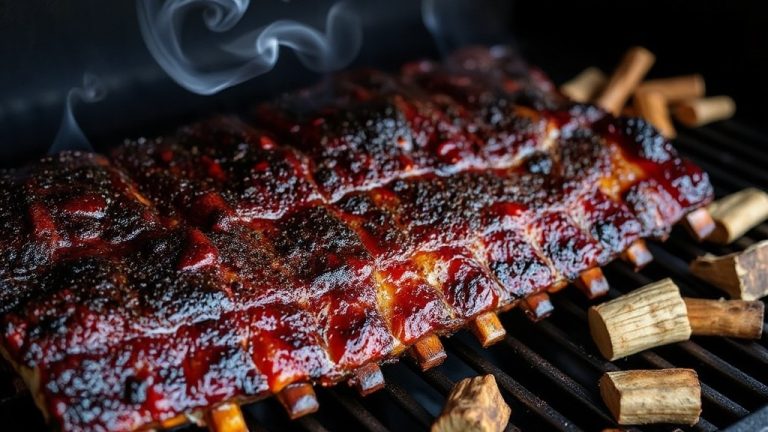
You’ll notice that mustard plays a crucial role in developing the bark on ribs by creating a dry surface for the rub to adhere to and caramelize during cooking.
As mustard dries, it helps form a flavorful crust by trapping rub particles and allowing sugars and acids to caramelize evenly.
This results in a textured, crunchy bark that enhances both flavor and appearance.
| Mustard Role | Bark Benefit | Effect on Ribs |
|---|---|---|
| Binder for rub | Even seasoning crust | Enhanced caramelization |
| Dries during cooking | Crust texture develops | Traps meat juices |
| Sugars caramelize | Flavor depth increased | Balanced bark formation |
Using mustard this way guarantees a consistent, tasty bark that improves your ribs’ overall quality. Additionally, mustard’s antioxidant activity helps preserve meat quality during cooking and storage.
How the Acidity in Mustard Tenderizes Ribs?
You know, the acidity in mustard really works wonders when it comes to tenderizing ribs. It actually breaks down those tough muscle fibers, making the meat much more tender. Pretty cool, right?
And let’s not forget about the vinegar in mustard! It plays a crucial role by softening the connective tissue on the surface of the meat. This little chemical reaction goes a long way in reducing chewiness, which definitely improves the overall texture before you even start cooking. Isn’t that neat?
Additionally, mustard acts as a functional additive in rubs, helping to improve moisture retention and texture during cooking.
Acid Breakdown of Fibers
Harnessing the natural acidity in mustard plays a crucial role in tenderizing ribs by breaking down tough muscle fibers and connective tissues.
When you apply mustard, its acidic components penetrate the meat’s surface, initiating a chemical reaction that weakens protein structures responsible for toughness.
This acid-induced breakdown softens collagen and muscle fibers, making the ribs more tender even before cooking begins.
By disrupting these fibers, mustard improves the texture and chewability, creating a more enjoyable eating experience.
The acid doesn’t just add flavor; it actively modifies the meat’s physical structure, ensuring a pronounced tenderizing effect.
Understanding this mechanism helps you appreciate why mustard isn’t merely a flavor enhancer, but a functional ingredient that transforms the rib’s texture from tough to succulent.
Additionally, when combined with proper cooking techniques like wrapping ribs at the right internal temperature, the tenderizing effect is enhanced through accelerated collagen breakdown in a moist environment, further improving juiciness and tenderness. This synergy between mustard’s acidity and the wrapping temperature window creates perfectly tender ribs.
Vinegar’s Tenderizing Role
Although often overlooked, the vinegar in mustard plays a pivotal role in tenderizing ribs by breaking down muscle proteins and connective tissues. When you apply mustard, the acidity starts penetrating the meat’s surface, altering protein structures and improving texture. This process enhances tenderness without compromising the meat’s integrity.
Here’s how vinegar’s acidity works to tenderize ribs:
- It denatures muscle proteins, making fibers less rigid and easier to chew.
- It initiates mild protein breakdown, improving moisture retention and juiciness.
- It slightly softens outer meat layers, preparing them to absorb flavors and smoke better.
Using mustard as a binder before applying the dry rub also helps the spices adhere better and promotes flavor absorption during the seasoning process.
Softening Tough Connective Tissue
Building on how vinegar’s acidity begins to alter muscle proteins, it also plays a key role in breaking down the tougher connective tissues found in ribs.
When you apply mustard, the acidic vinegar penetrates collagen and elastin, softening these fibrous structures. This tenderization reduces chewiness, making ribs more enjoyable.
The acid’s effect improves texture by loosening tightly bound fibers without overcooking. To understand this, consider the following breakdown:
| Tissue Type | Acid Sensitivity | Result of Acid Exposure |
|---|---|---|
| Collagen | High | Converts to gelatin |
| Elastin | Moderate | Partial softening |
| Muscle fibers | Moderate | Protein alteration |
| Connective membranes | High | Breakdown and softening |
| Fat cells | Low | Minimal effect |
This process is similar to how moderate, steady cooking temperatures help preserve moisture and tenderness in meat by preventing overcoagulation of proteins.
How Mustard Keeps Ribs Moist During Cooking?
Retaining moisture during cooking is crucial for tender, juicy ribs, and mustard plays a key role in this process. When you apply mustard before seasoning, it adds surface moisture that helps keep the ribs from drying out during long cooking times.
This moisture also enhances smoke absorption, which improves flavor complexity. Additionally, mustard acts as a binder, locking in rubs and preventing seasoning loss that could expose meat to drying.
Here’s how mustard helps you keep ribs moist:
- It forms a thin, tacky layer that retains surface moisture throughout cooking.
- The moisture barrier slows evaporation, preserving juiciness inside the meat.
- Mustard’s binder properties help the rub cling, protecting the meat’s surface from direct heat exposure.
Using mustard strategically guarantees your ribs stay tender and flavorful. Applying mustard before a balanced dry rub promotes better rub adhesion and bark development for a flavorful crust.
Why Yellow Mustard Is the Preferred Choice for Ribs?
You know why yellow mustard is such a popular choice for ribs? It’s all about that neutral flavor. It won’t overpower your meat, allowing the BBQ rub to really shine through.
And let’s talk about consistency. Yellow mustard has that perfect texture that acts like a great binder. It holds the seasonings in place without dripping or sliding off, which is exactly what you want when you’re grilling.
Plus, it’s super easy to find and won’t break the bank. That makes it a go-to for any cook, whether you’re a pro or just starting out.
Additionally, using a seasoning blend with the right balance of spices enhances the flavor absorption when mustard is used as a binder.
Neutral Flavor Profile
Although mustard primarily serves as a binder for rubs, its flavor impact on ribs is minimal. This is why yellow mustard stands out as the preferred choice. When you use yellow mustard, you ensure the seasoning adheres well without altering the final taste appreciably.
Its mild tang disappears after the long cooking process, leaving the ribs’ natural flavors to shine through.
Here’s why yellow mustard’s neutral profile works best:
- It maximizes rub adhesion without overpowering the meat’s flavor.
- Its tangy notes mellow out during smoking, avoiding unwanted sharpness.
- It avoids the strong, sometimes spicy flavors found in other mustard varieties, keeping the focus on the BBQ rub and smoke.
You get a perfect balance of binding and subtlety with yellow mustard. Additionally, using a vinegar-based mop sauce during cooking can complement mustard’s binding effect by maintaining moisture and layering flavors without overpowering the meat.
Optimal Binder Consistency
Yellow mustard offers an optimal binder consistency. It’s thick enough to create a tacky surface that holds dry rubs firmly without dripping or pooling. This glue effect guarantees even seasoning adhesion, vital for lean, smooth ribs. It prevents rubs from sliding off during handling or cooking.
Applying a thin, uniform layer just before seasoning maximizes this effect without making the surface greasy or risking burning. As the mustard dries during smoking, it fosters the formation of a flavorful bark by locking in spices and moisture.
This balance of thickness and spreadability is why yellow mustard remains the preferred binder for ribs. Additionally, using dry seasonings instead of wet marinades helps avoid sogginess and promotes crisp textures in the final product.
Wide Accessibility
Among the many reasons yellow mustard stands out as the preferred binder for ribs, its wide accessibility plays a pivotal role.
When you’re preparing ribs, you want an ingredient that’s easy to find, affordable, and reliable. Yellow mustard fits these criteria perfectly.
Here’s why it’s your go-to option:
1. Availability
You can find yellow mustard in nearly every grocery store, making it convenient for spontaneous BBQ sessions.
2. Cost Efficiency
It’s inexpensive, so using a few tablespoons per rack won’t break the bank.
3. Ideal Consistency
Yellow mustard’s texture is sticky enough to hold rubs firmly without dripping or sliding off.
This combination of accessibility, affordability, and functional texture makes yellow mustard the preferred binder for ribs among both casual cooks and BBQ enthusiasts.
How Much Mustard to Use for Perfect Rib Seasoning?
Applying the right amount of mustard is essential to achieving perfect rib seasoning without overpowering the meat or compromising bark development.
You should apply a thin, even layer, about one tablespoon per pound of ribs is ideal. This quantity guarantees the mustard acts effectively as a binder, helping the dry rub adhere uniformly without creating a greasy or heavy coating.
Too much mustard risks burning during cooking and can hinder bark formation, while too little may cause the rub to slide off. Spread the mustard evenly right before applying your rub to maximize adhesion and moisture retention.
What Mustard Contributes to Rib Flavor: And What It Doesn’t?
When you use mustard as a binder on ribs, it primarily serves to hold the dry rub in place rather than imparting a strong flavor of its own. Mustard’s tangy taste largely dissipates during the long smoking process, leaving the focus on the BBQ rub’s spices and the meat’s natural flavor.
Here’s what mustard actually contributes:
- Adhesion: It creates a tacky surface that helps the rub stick firmly, ensuring even seasoning coverage.
- Bark Development: As mustard dries, it aids in forming a flavorful crust by locking in rub and moisture.
- Tenderization: The vinegar’s acidity helps break down meat fibers, improving texture without overpowering flavor.
In short, mustard enhances texture and seasoning retention but doesn’t add a pronounced mustard taste to your ribs.
Myths About Mustard on Ribs, Busted
Although mustard is a common BBQ binder, several misconceptions about its use on ribs persist.
You might think mustard adds a strong flavor, but it actually disappears during cooking, leaving the rub and smoke to define the taste.
Another myth is that mustard makes ribs soggy; in reality, a thin layer dries during cooking, aiding bark formation without greasiness.
Some believe mustard is used for tenderizing alone, but its acid content only slightly breaks down proteins. It primarily functions as a seasoning adhesive.
Mustard’s role isn’t to soak the meat but to retain surface moisture and help smoke absorption.
Understanding these facts guarantees you use mustard strategically, enhancing texture and appearance without compromising flavor or moisture.
Frequently Asked Questions
Can Mustard Be Used as a Binder for Other Meats Besides Ribs?
Yes, you can use mustard as a binder for other meats besides ribs. It effectively helps dry rubs stick to various cuts like chicken, meat shoulder, or brisket.
Mustard’s acidity tenderizes tougher meats while aiding moisture retention and bark formation during cooking. Just apply a thin, even layer before seasoning to avoid burning or overpowering flavors.
Its neutral taste guarantees it won’t interfere with your meat’s natural profile.
Does Mustard Affect the Cooking Time of Ribs?
Mustard doesn’t appreciably affect the cooking time of ribs, though it can influence surface moisture.
Studies show that a thin mustard layer helps retain moisture, which may slightly prolong cooking by preventing drying.
However, the difference is minimal, usually just a few minutes.
The acid in mustard tenderizes meat but doesn’t accelerate heat penetration.
What Type of Mustard Is Best for Beginners to Use on Ribs?
You should start with yellow mustard for ribs, especially if you’re new to BBQ. It has a mild, neutral flavor that won’t overpower your rub or final taste.
Yellow mustard’s consistency is perfect. It’s sticky enough to hold seasonings without being too runny or thick. This balance makes it easy to apply evenly and helps develop a good bark.
Plus, it’s widely available and affordable, making it a practical choice for beginners.
Can Mustard Be Combined With Other Binders for Ribs?
Yes, you can combine mustard with other binders for ribs.
Studies show that using a binder increases rub adhesion by up to 40%, so blending mustard with options like olive oil or mayonnaise can enhance moisture retention and flavor absorption.
Just keep mustard as the primary binder for its acidity and drying properties.
Use secondary binders sparingly to avoid greasy surfaces.
This precise balance optimizes bark formation and tenderization.
How Long Before Cooking Should Mustard Be Applied to Ribs?
You should apply mustard to ribs just before adding your dry rub, typically within 15 minutes prior to cooking.
This timing guarantees the mustard acts effectively as a binder without drying out prematurely. Applying it too early can cause the mustard to dry excessively, reducing adhesion.
Applying it too late risks uneven seasoning. A thin, even layer right before the rub maximizes seasoning retention and helps develop a flavorful crust during cooking.
The Secret to Juicier, More Flavorful Ribs
You might think mustard will overpower your ribs, but it actually acts as a subtle binder for rubs and enhances moisture without masking flavors.
Picture it as a thin, invisible layer that locks in spices and juices, creating a tender, flavorful bark. Using just a light coat of yellow mustard guarantees your ribs stay juicy and well-seasoned.
So, don’t skip this step. It’s a simple trick that transforms your ribs from good to great.