Smoking Beef Tips: How to Get Tender, Juicy Results
When smoking beef tips, choose tender cuts like sirloin or round with good marbling and a deep red color. Trim excess fat but leave a thin layer for moisture.
Apply a balanced dry rub and let it rest before smoking at 225–250°F. Maintain steady heat and humidity with a water pan.
Monitor internal temperature closely, aiming for 125–130°F for medium rare. Rest the meat before slicing against the grain for maximum tenderness.
The following steps will enhance your technique and flavor results.
Key Takeaways
- Select tender cuts like sirloin or round with visible marbling and Choice grade or higher for flavorful, juicy beef tips.
- Trim excess fat, pat dry, apply a balanced dry rub, and let beef tips rest 15–30 minutes before smoking.
- Maintain smoker temperature between 225–250°F using hardwoods like oak or hickory for optimal smoke absorption and tenderness.
- Monitor internal temperature closely, wrap in foil around 160°F stall, and target 125–130°F for medium rare doneness.
- Rest smoked beef tips 5–10 minutes, slice against the grain, and serve with complementary acidic or starchy sides.
Choosing the Best Beef Cuts for Smoking

When choosing the best beef cuts for smoking, you’ll want to focus on tender sections like sirloin and round that perform well in smaller, bite-sized pieces.
Look for beef with good marbling, as intramuscular fat enhances flavor and juiciness during smoking.
Choose beef with ample marbling to boost flavor and maintain juiciness throughout smoking.
Select fresh meat exhibiting a deep red color and a slightly slick surface; avoid cuts that appear dull, wet, or have heavy browning.
Off smells indicate spoilage and should be avoided.
Also, make certain your beef is fully thawed before smoking to promote even cooking.
By prioritizing quality cuts with appropriate marbling and freshness, you’ll optimize tenderness and flavor in your smoked beef tips.
This creates a superior end product that benefits from consistent heat penetration and moisture retention throughout the smoking process.
For the best results, consider choosing cuts graded Choice or higher, which offer the ideal balance of marbling and tenderness for smoking.
Preparing and Seasoning Beef Tips
When you’re getting ready to prepare beef tips, the first thing you want to do is choose cuts that have good marbling. Sirloin or round cuts are great options because they really help keep the beef juicy and flavorful when you smoke them.
Next up, you’ll want to trim off any excess hard fat or silver skin. But don’t go overboard! It’s a good idea to leave a thin layer of fat on there; it helps keep the meat moist during cooking.
Now, let’s talk seasoning. A simple dry rub works wonders—mix together some salt, black pepper, garlic powder, and brown sugar. Once you’ve applied the rub, let the beef tips rest for a bit. This will really help the seasoning stick and enhance the flavor before you get to the fun part: smoking!
For best results, aim to smoke the beef tips at a consistent temperature to maintain their juiciness and tenderness.
Choosing Quality Cuts
Select beef tips from tender cuts like sirloin or round, prioritizing those with visible marbling to enhance flavor and juiciness during smoking.
Inspect the meat’s color; it should be a vibrant, deep red with a slight gloss, indicating freshness.
Avoid beef that looks dull, overly wet, or has heavy browning, as these traits suggest degradation or improper storage.
Smell the beef to confirm there are no off odors, which can signal spoilage.
Trim away excessive hard fat and silver skin, but retain a thin fat layer to help moisture retention during smoking.
Make sure the beef tips are fully thawed before cooking, as this promotes even heat penetration and consistent smoke absorption, resulting in a uniformly tender and flavorful final product.
For accurate cooking results, consider using a digital leave-in probe to continuously monitor the internal temperature without opening the smoker.
Applying Dry Rubs
After making sure your beef tips are trimmed and properly thawed, the next step is to enhance their flavor through seasoning.
Applying a dry rub not only builds a flavorful bark but also aids in moisture retention during smoking. Start with a balanced base of salt, black pepper, garlic powder, and brown sugar to complement the meat’s natural richness.
Follow these steps:
- Evenly coat the beef tips with the rub, pressing gently to guarantee adhesion.
- Allow the seasoned meat to rest at room temperature for 15–30 minutes; this promotes flavor absorption.
- Avoid oversalting to prevent drawing out excessive moisture, which can impact texture.
For best results, pat the meat dry before applying the rub to improve rub adhesion and flavor penetration.
This precise approach guarantees your beef tips develop a robust, well-balanced flavor profile before hitting the smoker.
Setting Up Your Smoker for Beef Tips: Temperature and Wood
When you’re getting your smoker ready for beef tips, aim to keep that temperature between 225 and 250°F. This range is perfect for ensuring that your beef tips come out tender and soak up all that delicious smoke.
If you’re in a bit of a hurry, you can crank it up to 325°F, but just keep an eye on things so they don’t overcook.
Now, let’s talk about wood. You’ll want to choose hardwoods like oak, hickory, mesquite, pecan, or cherry. These options give you a nice, balanced smoke flavor that enhances the beef without overwhelming it.
Before you throw the meat in, make sure to fully preheat your smoker. This will help you maintain a consistent temperature and ensure that the smoke flows steadily throughout the cooking process.
Maintaining smoker temperature in this range helps maximize smoke absorption and bark formation for the best flavor.
Happy smoking!
Ideal Smoking Temperature
When setting up your smoker for beef tips, maintaining a consistent temperature between 225°F and 250°F is essential for developing ideal flavor and texture.
This range allows the collagen in the meat to break down slowly, producing tender results without drying out the beef.
To optimize your smoking process, focus on these key points:
- Preheat your smoker thoroughly to stabilize heat before adding beef tips, preventing temperature fluctuations.
- Monitor internal temperature regularly with a probe to ensure you stay within the ideal smoking window.
- Keep the smoker lid closed as much as possible to maintain consistent heat and smoke flow, which promotes even cooking and flavor absorption.
Sticking to this temperature range guarantees perfectly smoked beef tips with balanced juiciness and bark development.
For an enhanced flavor profile, choose seasoned hardwoods like oak or hickory to complement the beef’s richness during smoking.
Best Wood Choices
Maintaining a stable smoking temperature sets the stage for flavor development.
The choice of wood markedly influences the final taste profile of your beef tips.
Oak is a versatile, medium-strength wood that imparts a balanced smoky flavor without overpowering the beef’s natural taste.
Hickory offers a stronger, meat-like aroma, ideal if you want a robust smoke profile.
Mesquite burns hot and fast, delivering an intense, earthy flavor. It’s best used sparingly or blended with milder woods.
Pecan provides a sweeter, nutty smoke, enhancing the beef’s richness.
Cherry wood adds subtle fruitiness and a deep mahogany color to the crust.
Choose wood based on the flavor intensity you prefer, and make certain it’s properly seasoned to avoid bitter, sooty smoke that can ruin your beef tips.
Cherry wood’s low resin content produces mild, clean smoke that enriches flavor without bitterness.
How Long to Smoke Beef Tips?
Smoking beef tips typically requires about 1 to 2 hours per pound, depending on the cut’s thickness and the smoker’s temperature. To accurately determine smoking time, consider these factors:
- Cut Thickness and Type: Thicker or denser cuts, like round, demand longer smoking. Tender cuts like sirloin cook faster.
- Smoker Temperature: Maintaining 225–250°F yields consistent results. Increasing to 275–325°F shortens cook time, requiring closer monitoring.
- Internal Temperature Monitoring: Use a meat thermometer to gauge doneness. Target 125–130°F for medium rare tips. Smoking by time alone risks overcooking or undercooking.
Additionally, maintaining a steady smoker temperature throughout the cooking process is essential for achieving optimal tenderness and flavor.
Controlling Moisture to Prevent Dryness
Prevent moisture loss during smoking by managing humidity and airflow inside your smoker.
Maintain a water pan to add humidity, which slows evaporation and keeps beef tips juicy. Control airflow by adjusting vents; too much oxygen dries the meat, while too little risks temperature spikes.
Wrapping beef tips in foil during the stall phase preserves moisture and speeds cooking. Leaving a thin fat layer helps retain internal moisture.
Spritzing with an appropriate spritz liquid during cooking can further enhance surface moisture and flavor without compromising bark development.
| Factor | Recommendation |
|---|---|
| Humidity | Use water pan to maintain 50-60% RH |
| Airflow | Adjust vents to balance smoke and oxygen |
| Wrapping | Wrap in foil at stall (~160°F) |
| Fat Layer | Keep thin fat layer for moisture seal |
Precision in these steps prevents dryness and guarantees tender, juicy results.
How to Check Doneness of Beef Tips
After managing moisture to keep your beef tips juicy, the next step is to accurately determine when they’ve reached the desired doneness. The most reliable method is using a digital meat thermometer.
Insert it into the thickest piece to avoid misleading readings. For beef tips, aim for medium rare, around 125–130°F, which preserves tenderness and flavor.
Follow these steps to check doneness precisely:
- Insert thermometer probe horizontally into the thickest tip, avoiding bones or fat pockets.
- Monitor internal temperature closely as it approaches target range; remove promptly to prevent overcooking.
- Confirm consistency by sampling multiple tips since uneven sizes can affect cooking times.
This systematic approach guarantees your beef tips are cooked perfectly every time. For best results, allow the meat to rest before slicing to redistribute juices and enhance tenderness.
Resting and Slicing Beef Tips for Tender Results
Let your beef tips rest for 5 to 10 minutes once they come off the smoker to allow the juices to redistribute evenly throughout the meat. Resting prevents the juices from escaping immediately when you slice, maintaining moisture and tenderness.
Rest beef tips 5–10 minutes after smoking to keep juices locked in for maximum tenderness and flavor.
Tent the beef tips loosely with foil or place them in a cooler to retain heat without steaming. When ready to slice, identify the grain direction and cut perpendicular to it.
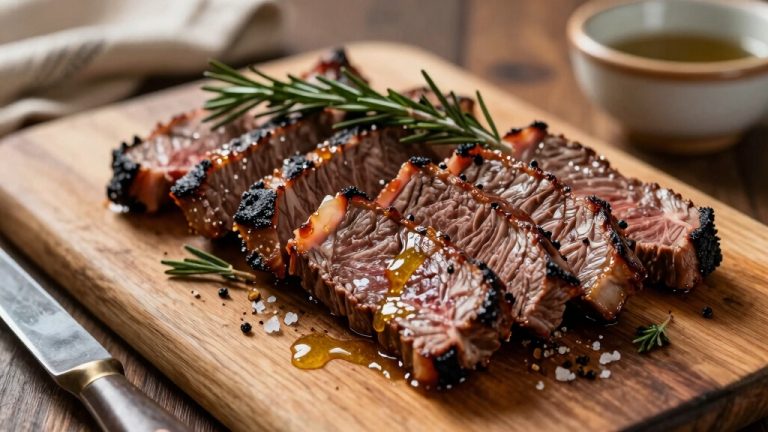
Slicing against the grain shortens muscle fibers, resulting in a more tender bite. Use a sharp knife to make clean, even cuts, avoiding tearing the meat.
Proper resting and precise slicing optimize texture and juiciness, ensuring your smoked beef tips deliver consistently tender, flavorful results every time.
Serving and Flavor Pairings for Smoked Beef Tips
When serving smoked beef tips, pairing them with complementary flavors enhances their rich, smoky profile and tender texture.
You want to balance the meat’s depth with sides and sauces that highlight, not overpower, the beef’s natural character.
Consider these three pairings:
- Acidic components like pickled vegetables or a chimichurri sauce cut through the richness, enlivening the palate.
- Starchy sides such as creamy mashed potatoes or roasted root vegetables provide a neutral base that absorbs juices.
- Smoky or sweet elements like caramelized onions or a bourbon barbecue glaze amplify the beef’s inherent flavors without masking them.
Frequently Asked Questions
Can I Smoke Beef Tips Using an Electric Smoker?
You absolutely can smoke beef tips using an electric smoker. It’s like having a precision instrument for flavor.
Electric smokers maintain steady temperatures between 225–250°F, perfect for even cooking. Just preheat the unit, use quality wood chips like hickory or cherry, and monitor internal temps with a reliable thermometer.
Managing moisture with a water pan helps prevent drying. Electric smokers give you control and consistency, ensuring tender, juicy beef tips every time.
How Do Weather Conditions Affect Smoking Times?
Weather conditions markedly impact smoking times because wind, humidity, and ambient temperature affect your smoker’s heat retention and airflow.
Wind can cool your smoker, forcing it to work harder and extending cooking times.
High humidity slows evaporation, potentially lengthening the stall phase.
Cold weather lowers overall smoker efficiency, increasing cook time.
You should monitor your smoker’s internal temp closely and adjust fuel or vents to maintain steady heat despite changing weather conditions.
Is It Safe to Smoke Frozen Beef Tips?
No, it’s not safe to smoke frozen beef tips directly. You should fully thaw them first to guarantee even cooking and proper temperature penetration.
Smoking frozen meat risks uneven heat distribution, which can leave harmful bacteria alive in the center.
Thawing also helps the smoke flavor penetrate better and improves texture.
Use safe thawing methods like refrigeration, not room temperature, to prevent bacterial growth before you start smoking.
Can I Marinate Beef Tips Before Smoking?
You can marinate beef tips before smoking, and doing so can enhance flavor and tenderness.
Studies show marinating for at least 4 hours allows the acid and enzymes to penetrate the meat effectively.
Use a marinade with balanced acidity like vinegar or citrus. Avoid overly salty mixtures that can toughen the beef.
Remember to pat the tips dry before seasoning and smoking to secure proper bark formation and smoke adhesion.
What Are Common Mistakes to Avoid When Smoking Beef Tips?
Avoid using beef that’s not fully thawed, as it cooks unevenly.
Don’t skip trimming silver skin and hard fat, which toughen texture.
Avoid inconsistent smoker temperatures; keep between 225–325°F for steady cooking.
Don’t open the lid too often, as this disrupts heat and smoke flow.
Overcooking beyond medium rare can dry out beef tips.
Finally, neglecting to rest the meat leads to juice loss, reducing tenderness and flavor.
Smoked Beef Tips: Temperature, Cut, and Flavor Guide
Smoking beef tips is an art that hinges on careful temperature control. Did you know maintaining a steady 225°F can enhance tenderness by up to 30% compared to higher heat methods?
By choosing the right cut, seasoning properly, and monitoring moisture, you guarantee flavorful, juicy results. Master these technical details, and your smoked beef tips will consistently impress, delivering both peak texture and rich smoky depth every time you fire up the smoker.