Santoku Vs Chef Knife: Which One Should You Choose?
You’ll find the Santoku excels with its sharp, straighter blade and compact 5–7 inch length. It’s perfect for precise vertical chopping and intricate cuts.
The Chef knife’s longer 8–10 inch curved blade supports rocking motions and handles larger, tougher ingredients with more durability.
Santoku’s thinner edge slices cleaner but chips easier, while the Chef knife offers a robust, all-purpose performance.
Understanding these differences lets you match your knife to cutting style and tasks. There’s more about their unique design and uses ahead.
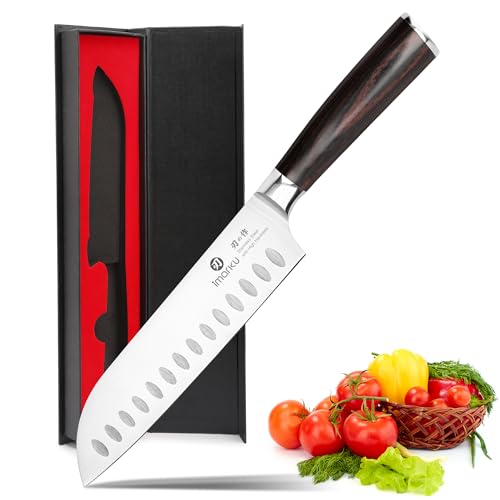
- Professional Chefs Knife: This imarku super sharp chef’s knife is made of Japanese high carbon...
- Ultra-Sharp Edge: Sharpness is key. The professional knife blade polishing makes this japanese knife...
- Hollow Edge Design: The 7-inch santoku chef knife scalloped hollow edge is add gap between the knife...
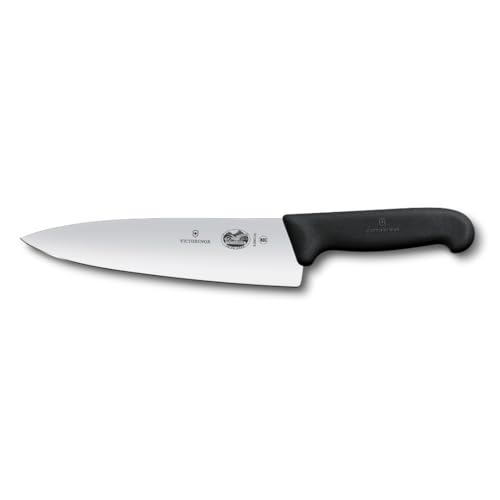
- For home chefs & professionals. This Fibro Pro chef's knife has been the top choice of both home...
- Fit for all tasks. Designed to handle kitchen tasks both big and small, This durable knife's razor...
- Easy handling. Each knife features an ergonomic handle made from thermoplastic Elastomer (TPE) for a...

Key Takeaways
- Santoku knives have straighter edges and sheepsfoot tips, favoring precise vertical chopping without rocking, unlike the curved, pointed chef knives.
- Chef knives feature longer, heavier blades (8–10 inches) suited for rocking motions and larger ingredient processing, while santokus are shorter and lighter for nimble control.
- Santoku blades have sharper edge angles (~10°) for finer slices but are more prone to chipping; chef knives have tougher ~15° edges for durability.
- Santokus excel in precision tasks like dicing vegetables and fish, whereas chef knives handle heavy-duty chopping and longer slicing efficiently.
- Santoku design reflects Japanese precision cooking, and chef knives reflect Western versatility for broad kitchen tasks and tougher ingredients.
Santoku Knife vs Chef Knife: Complete Side-by-Side Comparison
| Feature | Santoku Knife | Chef Knife |
|---|---|---|
| Origin | Japan | Western Europe |
| Blade Length | 5–7 inches | 8–10 inches |
| Blade Shape | Straight edge with sheepsfoot tip | Curved edge with pointed tip |
| Weight | Lighter | Heavier |
| Cutting Style | Vertical chopping and slicing | Rocking motion cutting |
| Precision | Excellent for detailed cuts | Good for general tasks |
| Sharpness | Sharper, thinner edge | Slightly less sharp but more durable |
| Durability | More prone to chipping | More resistant to damage |
| Best For | Vegetables, fish, boneless meats | Meat, poultry, herbs, large ingredients |
| Maneuverability | High | Moderate |
| Versatility | Specialized for precision work | Highly versatile all-purpose knife |
| Edge Angle | About 10° per side | About 15° per side |
| Ideal User | Home cooks who prioritize precision | Cooks who need an all-around kitchen knife |
| Main Advantage | Precise, clean cuts | Power, durability, and versatility |
| Main Drawback | Less effective for heavy-duty tasks | Less precise for delicate slicing |
How Santoku and Chef Knives Differ in Blade Shape

Blade shape defines the fundamental difference between santoku and chef knives, directly influencing how you handle each tool.
The santoku blade features a straighter edge with a flatter belly and a sheepsfoot-style tip that slopes down near the front. This design optimizes vertical slicing and chopping motions, minimizing rocking.
In contrast, the chef knife has a pronounced curved edge and a pointed tip, enabling a rocking motion that facilitates fluid, sweeping cuts.
When you use a santoku, you focus on controlled, precise cuts with less blade movement, ideal for delicate tasks.
With a chef knife, you leverage the curve to maintain continuous contact during chopping, enhancing efficiency for larger ingredients.
Understanding these geometric distinctions allows you to select the appropriate blade shape based on your cutting technique and kitchen tasks.
Additionally, just as choosing the right blade shape affects your cutting technique, selecting the proper kitchen paper—such as butcher paper or parchment—can significantly influence cooking outcomes by managing moisture and heat in different ways.
How Blade Size and Weight Affect Knife Performance?
When it comes to knife performance, blade length plays a big role in how well you can handle larger ingredients and make those long slicing motions.
For example, a Santoku has a shorter, lighter blade, which really helps with control and precision—perfect for those delicate tasks.
On the other hand, a Chef knife boasts a longer, heavier blade that gives you the leverage and momentum needed for tougher, broader cuts.
So, it’s all about understanding these differences in size and weight.
Additionally, just as material composition affects cookware performance, the weight and balance of a knife significantly influence its handling and effectiveness.
Blade Length Impact
Choosing between a 6-inch and a 10-inch knife markedly influences your control, cutting efficiency, and the types of ingredients you can handle. Blade length directly affects these critical aspects:
- Control and Precision: Shorter blades, like those on Santoku knives (5–7 inches), offer enhanced maneuverability for delicate tasks such as thin slicing or dicing vegetables.
- Cutting Efficiency: Longer blades, typical of chef knives (8–10 inches), allow you to complete larger cuts in fewer strokes, improving efficiency with bulkier ingredients.
- Ingredient Size Compatibility: A 10-inch blade excels with large proteins and long slicing motions. In contrast, a 6-inch blade better suits small to medium ingredients and confined workspace.
Ultimately, your choice should align with the ingredient size and cutting style you prioritize for peak kitchen performance. Proper slicing technique, such as cutting thin quarter-inch pieces against the grain, can enhance texture and tenderness when preparing meats like brisket, emphasizing the importance of consistent slice thickness for optimal results.
Weight And Handling
Handling a knife effectively depends heavily on its weight and balance, which are influenced by blade size and overall design.
The Santoku’s shorter 5 to 7-inch blade and lighter weight make it feel nimble and compact. This allows precise, controlled cuts with minimal fatigue. Its balance tends toward the handle, supporting vertical chopping motions.
Conversely, the Chef knife features an 8 to 10-inch blade and a heavier, longer profile. This shifts balance slightly forward. This weight distribution enhances momentum for rocking cuts and larger ingredient processing but demands more wrist strength and control.
When choosing between the two, consider how blade length and mass affect your cutting technique, comfort, and task demands. Proper weight and handling optimize efficiency, reduce strain, and directly influence cutting precision and speed.
How Cutting Techniques Change Between Santoku and Chef Knives?
You’ll see that the santoku knife has a straighter edge and a sheepsfoot tip. This design really encourages a vertical chopping motion, which gives you more precision and control, especially when you’re working with delicate ingredients. It’s almost like the knife guides you to make those careful cuts.
On the other hand, the chef knife features a curved blade. This shape supports a rocking technique, making it perfect for larger tasks where you want to make fluid, continuous cuts. It’s great for chopping through vegetables or meats without much hassle.
The choice between these knives often depends on the cutting technique you prioritize for different cooking styles.
Rocking Versus Vertical Motion
While both Santoku and chef knives serve versatile roles in the kitchen, their blade geometries dictate distinct cutting techniques. The Santoku favors a vertical, straight-down chopping motion that maximizes control and precision.
In contrast, the chef knife’s curved edge enables a fluid rocking motion ideal for continuous slicing and mincing. When using these knives, consider:
- Santoku’s flat edge promotes a perpendicular chop, reducing blade movement and enhancing accuracy on delicate ingredients.
- Chef knife’s pronounced curve facilitates a rocking motion, allowing you to maintain constant contact with the cutting board for speed and rhythm.
- Your muscle engagement shifts accordingly: Santoku demands more wrist lift and vertical force. Chef knives rely on forearm rotation and smooth arcs.
Understanding these motion differences lets you optimize efficiency and safety based on the knife’s design intent.
Edge Shape Impact
The distinct edge shapes of Santoku and chef knives directly influence how you execute cuts in the kitchen.
With the Santoku’s straighter edge and sheepsfoot tip, you’ll rely on precise vertical chopping and slicing motions rather than rocking. This geometry supports controlled, straight-down cuts, ideal for delicate vegetables and boneless meats.
In contrast, the chef knife’s pronounced curve and pointed tip enable a smooth rocking motion, letting you cut continuously and efficiently, especially with larger ingredients or herbs.
Because the Santoku’s blade lacks significant belly curvature, you won’t rock, but you’ll gain stability and accuracy with repetitive up-and-down slices.
Meanwhile, the chef knife’s edge shape facilitates fluid sweeping cuts, maximizing surface contact and speed.
Understanding these edge shape impacts helps you match technique to knife, optimizing kitchen performance.
Additionally, just as precise placement is critical for accurate temperature readings when using a dual-sensor probe, mastering the correct technique for each knife shape ensures optimal control and results.
Precision And Control
Because of their differing blade geometries, Santoku and chef knives demand distinct cutting techniques that directly affect precision and control.
When you use a Santoku, you rely on a vertical, straight-down chopping motion that enhances accuracy and minimizes blade rocking.
Conversely, a chef knife’s curved edge encourages a rocking motion, promoting fluid, continuous cuts but requiring more wrist control.
Consider these key differences:
- Santoku’s flatter blade and sheepsfoot tip enable precise, clean slices, especially on delicate ingredients.
- Chef knives’ curved blades facilitate efficient mincing and rocking cuts, ideal for larger or tougher items.
- Weight and length influence control. Santoku’s lighter, shorter blade offers nimbleness, while the chef knife’s heft supports power and momentum.
Your choice impacts cutting precision and muscle fatigue during prep. Proper monitoring and control, similar to using a digital thermometer in cooking, can enhance safety and effectiveness in the kitchen.
Best Uses for Santoku and Chef Knives
Choose a santoku knife when you need precise, clean cuts for slicing, dicing, and chopping vegetables, fish, or boneless meats. Its straighter edge and flatter blade belly enable efficient vertical chopping without rocking, making it ideal for delicate, controlled prep work.
Conversely, reach for a chef knife when handling larger, tougher ingredients like poultry or dense vegetables. Its longer, curved blade supports a rocking motion that facilitates fluid slicing, dicing, and mincing, especially on broad cutting boards.
The chef knife’s pointed tip excels at piercing tasks and intricate cuts, while its heft aids in heavier-duty chopping. Your choice depends on ingredient size, cutting style, and task complexity. Santoku suits refined, compact work; chef knives dominate versatile, larger-scale kitchen prep.
When storing or handling these knives, it is important to use food-grade materials to preserve blade integrity and safety.
Why Santoku Knives Are Ideal for Precision Cutting?
When you require exact, clean cuts, santoku knives excel due to their straighter edge and flatter blade geometry. This minimizes blade rocking and enhances control.
This design enables you to execute precise, vertical slicing without the sweeping motion typical of chef knives. Here’s why santoku knives are ideal for precision cutting:
- Blade Geometry: The sheepsfoot-style tip and flat belly allow for consistent, straight-down cuts. This improves accuracy when dicing or julienning.
- Edge Sharpness: Sharpened to about 10 degrees per side, the thinner edge produces finer slices with less resistance. This is perfect for delicate ingredients.
- Compact Size and Weight: The lighter, shorter blade increases maneuverability, letting you maintain steady control over intricate cuts.
These features combine to give you superior precision, especially when working with vegetables, fish, and boneless meats.
How Chef Knives Handle Bigger and Heavier Ingredients
Tackle larger, denser ingredients with a chef knife’s longer, heavier blade. This design provides the leverage and cutting power needed for efficient processing.
The typical 8- to 10-inch blade length increases your cutting surface. It allows longer slicing motions that reduce repetitive effort.
Its curved edge supports a rocking technique, letting you apply consistent force while maintaining control over tough items like squash, poultry, and larger cuts of meat.
The heft of the blade enhances momentum, driving the edge through fibrous or thick materials without excessive wrist strain.
Additionally, the pointed tip allows for precise cuts, piercing through tougher exteriors before shifting to slicing.
This combination of blade geometry and weight makes the chef knife indispensable for bigger, heavier kitchen tasks that demand durability and versatility.
Ensuring proper probe insertion technique can be just as critical in cooking as using the right knife is in prepping ingredients.
Why Santoku Knives Are Sharper but Less Durable Than Chef Knives?
While chef knives excel at handling large, tough ingredients with their robust build, santoku knives prioritize precision and sharpness through their thinner, more refined blade construction.
Chef knives handle tough tasks robustly, while santokus focus on precision with their sleek, sharp blades.
This design difference directly impacts their edge performance and durability. You’ll notice:
- Edge angle: Santoku blades sharpen to about 10 degrees per side, creating a finer, sharper edge. Chef knives use a wider 15-degree angle for toughness.
- Blade thickness: Santokus have thinner blades, enhancing slicing precision but making them vulnerable to chipping under heavy use.
- Blade geometry: The flatter santoku edge favors straight chopping motions, while the curved chef knife edge supports a rocking motion. This distributes impact more evenly.
These factors mean santoku knives deliver exceptional sharpness but require gentler handling compared to the more durable chef knife. Their thinner construction is similar to how butcher paper’s porous nature balances breathability and protection in cooking applications.
How Japanese and Western Traditions Shape These Knives?
Although both santoku and chef knives serve essential kitchen roles, their designs reflect distinct cultural priorities rooted in Japanese and Western culinary traditions.
The santoku’s straighter edge, sheepsfoot tip, and lighter, compact form embody Japan’s focus on precision and efficiency.
This design is ideal for refined vegetable and fish prep, allowing for delicate slicing, dicing, and chopping.
In contrast, the Western chef knife features a curved blade and pointed tip, supporting a rocking motion for heavier tasks.
This reflects the broad, all-purpose demands of European cuisine.
This fundamental divergence in blade geometry and weight arises from differing cutting techniques and ingredient sizes favored by each culture.
Understanding these origins helps you appreciate how form follows function.
This knowledge can guide your knife choice based on your cooking style and task requirements.
Similar to how form follows function in knives, barbecue equipment like Kamado and Offset smokers also show design differences that cater to specific cooking needs and techniques.
Choosing the Right Knife for Your Cooking Style
Since your cooking style directly influences your knife choice, understanding the functional distinctions between santoku and chef knives is essential. You need to evaluate how you cut and what you prepare most often.
Consider these key factors:
- Cutting Technique: If you prefer a vertical chopping motion with precision on delicate ingredients, the santoku’s straighter edge and sheepsfoot tip offer superior control. For rocking motions and continuous slicing, the curved chef knife excels.
- Ingredient Size: Santoku’s shorter, lighter blade suits small to medium tasks, while the longer, heavier chef knife handles larger cuts and tougher foods.
- Task Variety: For versatile kitchen work, mincing, dicing, slicing, chef knives provide durability and adaptability. Santoku knives specialize in refined vegetable and fish prep.
Match your ergonomic comfort and cutting motions to these factors to select the ideal knife for your culinary demands.
Frequently Asked Questions
How Do Santoku and Chef Knives Differ in Maintenance Requirements?
You’ll need to sharpen your santoku more frequently since its thinner, sharper blade edge (around 10 degrees per side) dulls faster than a chef knife’s thicker edge (about 15 degrees per side).
Santokus require more delicate handling to avoid chipping, so use softer cutting boards and avoid bones.
Chef knives handle tougher tasks and need less frequent sharpening but demand proper honing to maintain their curved edge and rocking motion efficiency.
Which Knife Is Better for Left-Handed Users, Santoku or Chef Knife?
You’ll find chef knives better suited for left-handed users because many models offer ambidextrous or left-handed versions with bevels ground specifically for lefties.
Santoku knives, often featuring a single bevel or asymmetrical edge, tend to be right-hand oriented unless you seek specialized left-handed Santoku blades, which are rarer.
If you’re left-handed, opt for a chef knife designed with left-handed bevels to guarantee safe, efficient cutting and blade longevity.
Can Santoku Knives Be Used Effectively for Bread Slicing?
Imagine you try slicing a crusty artisan loaf with a santoku knife.
You’ll quickly notice its straight edge and sheepsfoot tip aren’t designed for the sawing motion bread requires.
Santoku knives excel at precise chopping and slicing but lack the serrated blade or longer length to cut through bread efficiently.
For bread slicing, a serrated bread knife or a longer chef’s knife is more effective, minimizing crushing and tearing.
What Materials Are Commonly Used for Santoku and Chef Knife Blades?
You’ll find santoku and chef knife blades commonly crafted from high-carbon stainless steel, which balances sharpness, corrosion resistance, and durability.
Some premium models use VG-10 or AUS-10 steel for superior edge retention and ease of sharpening.
You might also encounter Damascus steel blades, known for their layered construction and strength.
Both knives rely on these materials to maintain sharpness and withstand daily kitchen tasks.
Santoku blades often emphasize thinner, finer steels.
How Do Handle Designs Differ Between Santoku and Chef Knives?
Handle designs differ primarily in shape and ergonomics.
Santoku handles often feature a more compact, straight or slightly curved profile, reflecting Japanese design for precision and control during vertical chopping.
Chef knife handles tend to be longer with a pronounced bolster and ergonomic contour for a secure grip, supporting rocking motions and versatile tasks.
Materials vary but both prioritize balance, comfort, and slip resistance to match their distinct cutting techniques.
- Professional Chefs Knife: This imarku super sharp chef’s knife is made of Japanese high carbon...
- Ultra-Sharp Edge: Sharpness is key. The professional knife blade polishing makes this japanese knife...
- Hollow Edge Design: The 7-inch santoku chef knife scalloped hollow edge is add gap between the knife...
- For home chefs & professionals. This Fibro Pro chef's knife has been the top choice of both home...
- Fit for all tasks. Designed to handle kitchen tasks both big and small, This durable knife's razor...
- Easy handling. Each knife features an ergonomic handle made from thermoplastic Elastomer (TPE) for a...
Choose the Right Knife Based on Your Cooking Style and Needs
When choosing between a Santoku and a Chef knife, consider that 68% of professional chefs prefer Santoku knives for precision tasks due to their sharper, thinner blades.
However, Chef knives excel in handling larger, tougher ingredients thanks to their weight and durability.
Understanding these differences helps you match the knife to your cooking style, ensuring peak performance whether you prioritize finesse or power in the kitchen.
Choose wisely to enhance your culinary efficiency.
Last update on 2026-09-14 / Affiliate links / Images from Amazon Product Advertising API