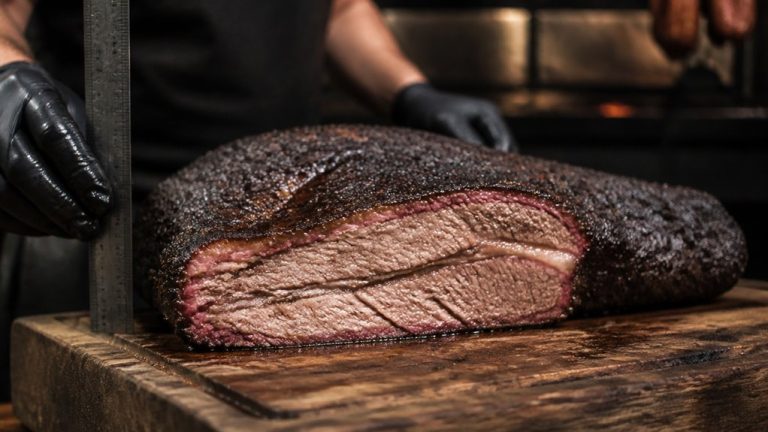
Flat Cut Brisket Vs Point Cut: Which One Is Better?
When choosing between flat and point cut brisket, know the flat offers lean, uniform slices perfect for precise plating and cleaner, beef-forward flavor.
The point cut delivers richer marbling, more intramuscular fat, and dense connective tissue, making it ideal for shredding, slow smoking, and juicy burnt ends.
Fat content in the point protects against drying, while the flat needs careful moisture management.
If you want to master vibrant textures and cooking techniques, there’s more to explore ahead.
Key Takeaways
- The flat cut is leaner, rectangular, and ideal for uniform slices with a firmer texture, while the point cut is thicker, fattier, and more irregularly shaped.
- Point cut has more marbling and connective tissue, making it juicier and better suited for low-and-slow cooking methods like smoking or braising.
- Flat cut is preferred for deli-style sandwiches or corned beef due to its cleaner flavor and consistent thickness.
- Point cut excels in shredded, chopped, or burnt ends preparations, offering richer flavor and tender, fall-apart texture.
- Fat content in the point cut protects against drying and provides forgiving heat management during extended cooking.
Flat Cut vs Point Cut Brisket: Complete Comparison Chart
| Feature | Flat Cut Brisket | Point Cut Brisket |
|---|---|---|
| Shape | Long, rectangular, uniform | Thicker, irregular, triangular |
| Typical Weight | 4–8 lb | 3–6 lb |
| Share of Whole Brisket | About 60–70% | About 30–40% |
| Fat Content | Lower, with a modest fat cap | Higher, with heavy intramuscular fat |
| Marbling | Sparse | Rich and abundant |
| Connective Tissue | Less dense | Denser |
| Texture | Firmer and denser | Tender, juicy, fall-apart |
| Flavor | Cleaner, beef-forward | Richer and more intense |
| Moisture | More prone to drying | More forgiving and resistant to drying |
| Slicing | Produces clean, uniform slices | Less suited to neat slicing |
| Best Presentation | Precise plating and deli-style slices | Chopped, shredded, or rustic preparations |
| Best Uses | Deli sandwiches, corned beef | Burnt ends, tacos, chopped brisket |
| Smoking | Requires careful moisture management | Excellent for long, low-and-slow smoking |
| Braising | Can be used but needs moisture control | Produces moist, fall-apart results |
| Burnt Ends | Not the primary choice | Excellent choice |
| Cooking Forgiveness | Less forgiving due to low fat | More forgiving because of higher fat |
| Moisture Management | Water pan, spritzing, and wrapping can help | Fat naturally helps retain moisture |
| Recommended Pull Temperature | Around 203°F | Around 203°F |
| Typical Smoking Temperature | Around 195–205°F internal cooking range | Burnt ends smoked around 225°F |
| Price | Generally less expensive | Generally slightly more expensive |
| Storage | Tight butcher-paper wrap or vacuum sealing | Can use foil while preserving juiciness |
Differences Between Flat Cut and Point Cut Brisket

While both cuts come from the same brisket muscle group, the flat cut and point cut differ markedly in anatomy, shape, fat content, and cooking properties.
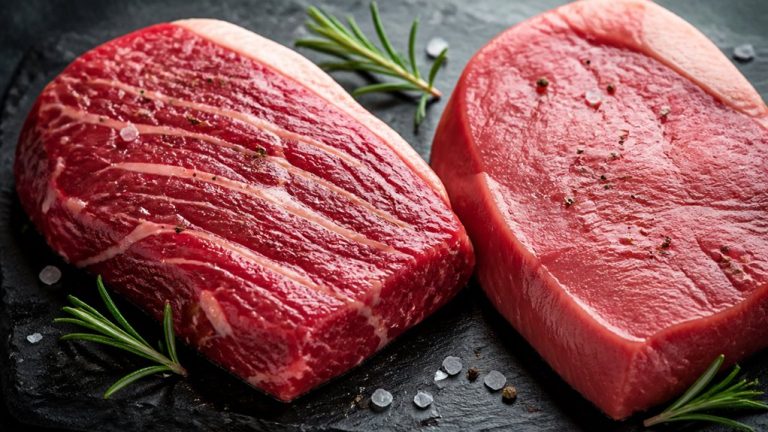
The flat cut is rectangular, long, and fairly uniform in thickness, making it ideal for clean, even slices. It sits beneath the point and typically weighs 4–8 pounds, forming about 60–70% of the whole brisket.
In contrast, the point cut is smaller, thicker, and more irregular or triangular, weighing around 3–6 pounds and making up 30–40% of the brisket. It rests atop the flat, featuring denser connective tissue.
These structural differences dictate their distinct culinary behaviors. Understanding them lets you tailor your cooking approach precisely for texture and presentation goals.
The point’s dense network of intramuscular fat and connective tissue enhances juiciness and flavor, making it especially suited for long, low-and-slow cooking and for making burnt ends.
How Fat and Marbling Change Brisket Flavor and Texture
Because fat and marbling directly influence both flavor and texture, understanding their distribution in brisket cuts is essential for mastering your cooking technique.
Recognizing how fat and marbling shape flavor and texture is key to perfecting brisket cooking.
The point cut’s heavier marbling saturates the muscle fibers, delivering rich juiciness and a buttery mouthfeel that intensifies with slow cooking. This intramuscular fat melts, lubricating connective tissues and enhancing tenderness.
In contrast, the flat cut’s leaner profile, with a modest fat cap and sparse marbling, yields a firmer, denser texture and a cleaner beef flavor. You’ll need to monitor moisture carefully to prevent drying out.
Fat also acts as a heat buffer, making the point more forgiving during extended cooking. By appreciating these fat differences, you can tailor your approach to coax maximum flavor and ideal texture from each brisket section.
Removing the deckle reduces intramuscular fat and connective tissue, which can increase the risk of a drier flat cut if cooking adjustments are not made to retain moisture in the leaner muscle deckle removal.
Best Uses for Flat Cut and Point Cut Brisket?
Choose the flat cut when you want consistently clean, uniform slices that highlight a leaner, beef-forward flavor profile. Its rectangular shape and low fat content make it ideal for presentations requiring precision, like deli-style sandwiches or corned beef.
The flat’s even thickness guarantees predictable cooking, yielding firm, sliceable brisket perfect for elegant plating.
Turn to the point cut when richness and juiciness are your priorities. The abundant marbling and connective tissue break down beautifully during low-and-slow cooking, producing tender, flavorful burnt ends or chopped brisket.
Its irregular shape and higher fat content make it less suited for neat slices but perfect for shredding, tacos, or hearty barbecue sandwiches. Understanding these distinctions lets you confidently match each cut to your culinary vision.
For optimal cooking, maintain at least 1-inch thickness on flats and adjust cook time based on size and fat content.
How to Choose Flat or Point Cut Brisket for Your Recipe?
When selecting between flat and point cut brisket for your recipe, focus on the cooking method and desired texture to guide your decision.
If you want lean, uniform slices with a firm bite, the flat’s rectangular shape and lower fat content make it ideal. It demands precise temperature control to avoid dryness but shines in presentations requiring clean cuts.
Conversely, choose the point cut if your recipe calls for rich flavor and juicy tenderness. Its heavy marbling and connective tissue tolerate long, slow cooking, breaking down into succulent, shred-ready meat perfect for burnt ends or chopped barbecue.
For best results, aim to cook the brisket to a pull temperature around 203°F to ensure optimal tenderness regardless of the cut.
Cooking Tips for Flat Cut Brisket to Keep It Juicy
Mastering moisture retention in flat cut brisket demands careful temperature control and strategic preparation, as this leaner muscle lacks the fat that naturally bastes the meat during cooking.
Start by trimming excess fat but leave a thin, even cap to shield the surface from drying. Use a water pan or spritz periodically with apple juice or a diluted vinegar solution to maintain humidity in the smoker.
Cook low and slow, holding internal temperature around 195–205°F to break down collagen without overcooking. Wrap the brisket tightly in foil or butcher paper once it hits the stall to lock in juices and accelerate tenderization.
Rest the meat for at least an hour post-cook to redistribute moisture evenly. Precision and patience will reward you with a juicy, slice-worthy flat brisket. Pulling the brisket at around 203°F ensures optimal collagen breakdown and juiciness.
Cooking Tips for Point Cut Brisket: Burnt Ends and Beyond
When you’re working with point cut brisket, the key is all about rendering that thick fat and connective tissue. This is what’ll give you the tenderness and flavor you’re after. For those classic burnt ends, after you’ve smoked the meat, go ahead and cube it up. Then, toss it in some sauce to caramelize—this is how you get that amazing bark and richness everyone loves.
But hey, burnt ends aren’t the only way to enjoy point cut brisket! Don’t forget about slow braising. It’s a great method that really highlights the juiciness of the meat. You can also chop it up for all sorts of versatile dishes. The marbling in the point cut brings so much depth, making it perfect for a variety of recipes. So, get creative and enjoy! Remember to trim down large fat deposits that won’t render properly to avoid a waxy texture and improve the final flavor.
Preparing Point Cut Burnt Ends
Transforming the point cut into mouthwatering burnt ends demands careful attention to fat rendering and caramelization.
Start by trimming the point cut into uniform 1.5-inch cubes, ensuring you leave some of the thick marbling intact.
Season generously with a balanced rub that accentuates the beefy richness without overpowering it.
Smoke these cubes low and slow at 225°F until they develop a deep mahogany bark and the fat has rendered to a tender, translucent state. This usually takes 3–4 hours.
Then, toss the cubes in a glaze made from a blend of barbecue sauce, honey, and a touch of vinegar to boost caramelization.
Return them to the smoker, wrapped, to intensify flavor and tenderness.
This method highlights the point’s rich fat content, delivering burnt ends bursting with smoky, succulent complexity.
For best results, monitor the internal temperature closely and wrap the burnt ends once they reach about 170°F to lock in moisture and enhance tenderness during the final cooking phase, following smoking process guidelines.
Versatile Cooking Techniques
Although the point cut brisket shines in burnt ends, its rich marbling and connective tissue open up a range of versatile cooking techniques that can elevate your barbecue game. You can braise it slowly to break down collagen, smoke it low-and-slow for tenderness, or chop it finely for tacos and sandwiches. Its fat content protects against drying, allowing for forgiving heat management. Wrapping the brisket at the stall phase around 165–170°F can help speed cooking and retain moisture.
| Cooking Technique | Purpose & Result |
|---|---|
| Smoking | Tender, smoky, flavorful |
| Braising | Moist, fall-apart texture |
| Chopping/Shredding | Perfect for tacos/sandwiches |
| Ground | Ideal for patties/sausages |
Master these methods, and you’ll unleash the point cut’s full potential beyond burnt ends.
Frequently Asked Questions
Can I Swap Flat and Point Cuts in a Recipe Without Adjusting Cooking Time?
You shouldn’t swap flat and point cuts without adjusting cooking time. The point’s higher fat and connective tissue make it more forgiving and tenderize better with longer, slower cooking.
The flat’s leaner, uniform structure dries out faster and needs precise timing to stay moist. If you switch cuts, you must tweak cooking duration and temperature to match their fat content and texture differences, ensuring peak tenderness and flavor for each.
How Does the Price Compare Between Flat Cut and Point Cut Brisket?
Think of brisket cuts like choosing a camera lens: the flat cut is your reliable prime lens—consistent, lean, and predictable. The point cut is a zoom lens—richer, versatile, but pricier.
Generally, the point cut costs slightly more due to its higher fat content and flavor intensity. This makes it sought after for indulgent dishes.
But prices vary by region and butcher, so always check local markets before deciding which fits your budget and recipe best.
Are There Specific Breeds of Cattle That Produce Better Flat or Point Cuts?
You’ll find that certain cattle breeds, like Angus and Wagyu, excel in producing superior flat and point cuts due to their genetics promoting intramuscular fat and marbling.
Angus often yields a well-marbled point and a tender flat.
Wagyu’s intense marbling enhances both cuts with buttery richness.
Choosing these breeds guarantees you get brisket cuts with peak flavor, texture, and juiciness, essential for perfect barbecue or smoking results.
What Are the Best Storage Methods for Flat Versus Point Cut Brisket?
You should store flat brisket wrapped tightly in butcher paper or vacuum-sealed to maintain its lean texture, as it’s prone to drying out.
Point cut, with 30–40% fat, benefits from a looser wrap like foil, allowing some breathability while preserving juiciness.
Both cuts last up to 5 days refrigerated or 6 months frozen. Proper storage preserves their distinct textures and flavors for perfect cooking later.
Can Flat or Point Cut Brisket Be Cooked Successfully on a Grill Instead of a Smoker?
Yes, you can absolutely cook both flat and point cut brisket on a grill, but you’ll need to master indirect heat and low temperatures to mimic smoking conditions.
Maintain a steady 225–250°F, use wood chips for smoke, and monitor internal temperature closely.
The point’s higher fat helps it stay juicy, while the leaner flat demands more vigilant moisture control.
Patience and consistent heat are key for tender, flavorful results on your grill.
The Bottom Line on Flat Cut and Point Cut Brisket
So, you’ve wrestled with flat cut versus point cut brisket, huh? If you want lean and tidy, grab the flat; if you crave fat-fueled flavor bombs, the point is your soulmate.
Remember, choosing brisket isn’t just a grocery trip; it’s a delicate dance of science and art. Don’t just cook brisket; engineer juicy, melt-in-your-mouth perfection.
Unless, of course, you enjoy dry, flavorless regrets. Your brisket destiny awaits. Choose wisely, chef.