Smoker Top Vent Open or Closed? A Complete Guide
You should keep your smoker’s top vent mostly open during cooking to maintain steady airflow, promote clean smoke, and ensure consistent temperature control.
Open vents prevent moisture buildup and bitter flavors while supporting even combustion and a strong draft.
Use intake vents for primary temperature adjustment and fine-tune airflow with the top vent to avoid smothering the fire.
Avoid fully closing the top vent to prevent unstable heat and poor smoke quality.
Exploring how to optimize vent settings will help you master perfect smoking.
Key Takeaways
- Keep the smoker top vent mostly open during cooking to ensure steady airflow, clean smoke, and consistent temperature.
- Use intake vents as the primary temperature control; reserve the top vent for minor fine-tuning of exhaust flow.
- Fully open the top vent at startup to establish a strong draft and promote even fire combustion.
- Avoid fully closing the top vent during active smoking to prevent smothering the fire and creating bitter, thick smoke.
- Close the top vent only during shutdown to safely extinguish the fire and prevent heat loss.
Should You Keep the Smoker Top Vent Open?
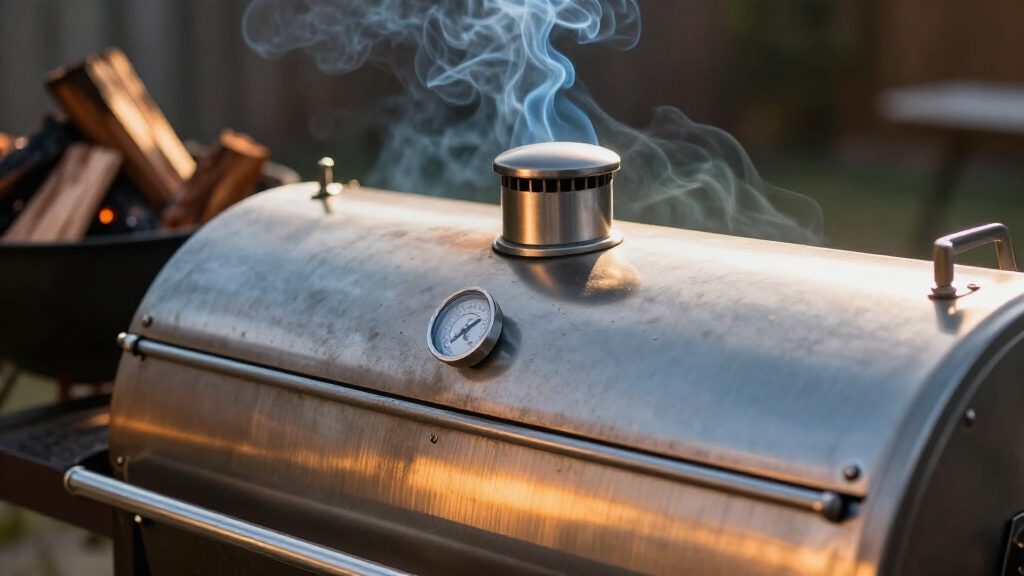
When you’re using a smoker, you should keep the top vent open to maintain proper airflow and guarantee clean combustion. Leaving it open allows smoke and gases to escape efficiently, drawing fresh air in through the intake vents.
Keep the top vent open to ensure proper airflow and clean combustion in your smoker.
This airflow supports a steady draft, preventing stale smoke buildup and ensuring your fire burns evenly. Avoid fully closing the top vent during cooking; doing so restricts oxygen flow, risks smothering your fuel, and produces thick, bitter smoke.
Instead, keep it fully or partially open, adjusting mainly the intake vents to control temperature. Remember, the top vent acts more as a fine-tuning tool than a primary heat control.
Keeping it open during smoking promotes cleaner smoke, stable combustion, and better flavor in your finished product. For safety, always ensure the smoker is fully cooled below 115°F before any vent adjustments or cleaning to prevent burns and damage Safety & Preparation.
Why Keeping the Smoker Top Vent Open Ensures Clean Smoke and Steady Heat?
Because the top vent serves as the smoker’s exhaust outlet, keeping it open guarantees continuous airflow that draws fresh oxygen in through the intake vents, sustaining clean combustion.
This steady airflow prevents smoke from becoming thick or stale, which can impart bitter flavors to your food. By maintaining an open top vent, you also support a consistent draft that stabilizes heat, avoiding temperature swings that can disrupt cooking times.
Use the intake vents primarily to control temperature, while keeping the top vent fully or mostly open to assure smooth exhaust flow. If temperatures rise too high, slightly adjusting the top vent can help fine-tune heat without compromising airflow.
Maintaining steady airflow is essential for achieving the low-and-slow cooking that produces tender, flavorful barbecue.
How the Top Vent Affects Smoke Quality?
Although you might be tempted to close the top vent to control smoke, keeping it open is essential for maintaining smoke quality. The top vent acts as the exhaust outlet, promoting steady airflow that produces thinner, cleaner smoke.
Closing it traps moisture and smoke, leading to bitter flavors and thick, dirty smoke. Proper venting supports combustion and prevents smothering your fire.
| Top Vent Position | Impact on Smoke Quality |
|---|---|
| Fully Open | Clean, thin smoke; steady draft |
| Partially Open | Slightly denser smoke; controlled airflow |
| Mostly Closed | Risk of bitter, heavy smoke |
| Fully Closed | Thick, stale smoke; smothered fire |
| Closed During Shutdown | Prevents heat loss; stops airflow |
Keep the top vent open while smoking to guarantee peak smoke quality.
Top Vent vs. Intake Vents for Temperature Control
You’ll mainly depend on the intake vents to control your smoker’s temperature. They’re the ones that regulate how much oxygen fuels the fire.
Think of it this way: more oxygen means a hotter fire, while less oxygen cools things down.
Now, the top vent? It’s mainly there for exhaust. Keeping it open helps ensure good airflow and clean combustion, which is super important for that perfect smoke flavor.
When it comes to adjusting the heat, focus on those intake vents. You can raise or lower the temperature by tweaking them.
Use the top vent for fine-tuning or to handle any sudden temperature spikes. It’s all about finding that balance!
Proper sealing and precise airflow control optimize temperature stability and smoke quality in your smoker.
Top Vent Role
When managing temperature in your smoker, the intake vents play the primary role by controlling the amount of fresh oxygen feeding the fire. The top vent acts more as a fine-tuning tool.
You should keep the top vent open during smoking to maintain a steady exhaust flow and promote clean, thin smoke. This exhaust draft pulls fresh air through the intake vents, supporting even combustion.
If the temperature spikes, partially closing the top vent can help slow airflow and stabilize heat without smothering the fire. Avoid fully closing the top vent while cooking, as this restricts airflow, traps moisture, and causes bitter flavors.
Think of your top vent as a “brake” for fine adjustments, while your intake vents remain the main temperature control levers. Proper vent management is essential for maintaining consistent temperature and ensuring a clean burn.
Intake Vent Impact
Mastering temperature control in your smoker hinges largely on managing the intake vents, which directly regulate the oxygen feeding the fire.
Opening these vents increases airflow, intensifying combustion and raising heat, while closing them restricts oxygen, cooling the fire.
Although the top vent plays a role in maintaining steady airflow by acting as the exhaust outlet, it’s your intake vents that serve as the primary heat control mechanism.
Keep your top vent open to allow smoke and heat to escape efficiently, preventing stale smoke buildup.
Use the intake vents to fine-tune temperature. Start with them wide open during startup, then adjust gradually to maintain consistent heat.
Avoid drastic intake closures, which can smother the fire and cause temperature swings.
For optimal flavor and cooking, maintain a steady smoker temperature of 300–325°F using indirect heat and fruit woods like apple or cherry to complement your smoked dishes.
Starting Out: Setting Your Smoker’s Top Vent for Success
Setting your smoker’s top vent correctly at the start is essential for establishing proper airflow and temperature control.
Begin by fully opening the top vent to guarantee efficient smoke exhaust and steady draft. This setup pulls fresh air in through the intake vents, promoting clean combustion and stable temperatures.
Avoid closing the top vent during startup, as it restricts airflow and risks thick, bitter smoke. Use the intake vents primarily to adjust heat, while the top vent acts as a fine-tuning control.
Proper vent management is especially important in cold weather to counteract temperature fluctuations and maintain consistent heat.
| Step | Action |
|---|---|
| 1. Initial Setup | Fully open top vent |
| 2. Airflow Check | Confirm steady smoke exhaust |
| 3. Temperature | Adjust intake vents as needed |
| 4. Smoke Quality | Look for thin, clean smoke |
| 5. Vent Control | Use top vent for minor tweaks |
When and How to Adjust the Top Vent During Smoking?
When you’re smoking, it’s a good idea to keep the top vent mostly open. This helps maintain steady airflow and ensures you get clean smoke.
If you notice the temperature starting to spike, you can slightly close the vent. This will slow down the draft a bit and help stabilize the heat without choking the fire.
Just remember to adjust the vent in small increments. Keep an eye on how these changes affect both the smoke quality and the temperature. It’s all about finding that sweet spot for the perfect balance!
Proper vent adjustments are crucial because vertical smokers rely on natural heat rise for even temperature distribution.
Optimal Vent Positioning
Although the top vent plays a secondary role in temperature control compared to the intake vents, knowing when and how to adjust it can markedly improve your smoker’s performance.
Keep the top vent open throughout most of the cook to maintain steady airflow and clean combustion. Use it primarily to fine-tune draft. If temperatures rise too quickly, slightly close the vent to slow exhaust flow without choking the fire.
Avoid fully closing the top vent during active smoking, as this traps moisture and smoke. This can cause bitter flavors and unstable temps.
When starting your smoker, open the top vent fully to establish a strong draft.
For the most accurate heat control, consider using a reliable smoker temp gauge to monitor internal temperatures alongside vent adjustments.
Managing Temperature Fluctuations
Maintaining stable temperatures during smoking requires attentive vent management, especially with the top vent. While the intake vents handle most temperature control, the top vent plays a pivotal fine-tuning role.
Here’s how to adjust it when fluctuations occur:
- If temperatures spike, slightly close the top vent to reduce draft without shutting it completely.
- When temperatures drop, open the top vent fully to improve airflow and help stabilize heat.
- Avoid fully closing the top vent during cooking; this risks smothering the fire and causing unstable smoke.
- Make small incremental adjustments rather than large changes to maintain consistent exhaust flow and prevent temperature swings.
Use the top vent as a brake for temperature rather than the main control. This ensures steady airflow and clean smoke throughout your cook. For example, using an aquarium smoker allows you to monitor temperature and smoke without opening vents frequently, helping maintain steady heat and smoke flow.
Effects Of Vent Adjustments
When adjusting the top vent during smoking, understanding its impact on airflow and temperature is essential for achieving ideal results.
Keep the top vent mostly open to maintain steady exhaust flow, which pulls fresh air through the intake vents and supports clean combustion.
If temperatures spike, slightly close the top vent to reduce draft and stabilize heat. Avoid shutting it completely, as this can smother the fire and produce heavy, bitter smoke.
Use the bottom intake vents as your primary temperature control, reserving top vent tweaks for fine-tuning.
Remember, consistent airflow prevents stale smoke buildup and keeps flavors clean.
When shutting down, fully close the top vent to extinguish the fire safely.
Mastering these adjustments guarantees cleaner smoke, stable temperatures, and better overall smoking performance.
Regular vent maintenance and cleaning help prevent rust and ensure smooth airflow for optimal smoker function, as detailed in rust prevention.
Risks and Consequences of Closing the Smoker Top Vent During Cooking
If you close the smoker top vent during cooking, you risk severely restricting the airflow needed to sustain clean combustion and steady temperatures. This restriction disrupts the draft that pulls fresh oxygen through the intake vents, leading to unstable heat and poor smoke quality.
Closing the smoker top vent restricts airflow, disrupting oxygen flow and causing unstable heat and poor smoke quality.
Here are key risks to bear in mind:
- Reduced oxygen flow smothers coals, causing temperature drops and uneven cooking.
- Stale, thick smoke forms, increasing bitterness and off-flavors in your food.
- Moisture buildup inside the smoker can create a damp environment, harming bark texture and flavor.
- Combustion becomes incomplete, producing dirty smoke that leaves residue on meat and smoker surfaces.
Always keep the top vent at least partially open to maintain airflow. This ensures clean smoke and consistent temperature throughout your cook.
Best Top Vent Settings for Different Smoker Types
Although top vent settings vary between smoker types, you should generally keep the top vent open to guarantee proper exhaust flow and steady airflow.
For offset smokers, always keep the chimney fully open to maintain a strong draft that pulls fresh air through the firebox.
In electric smokers, the top vent usually stays open during cooking to allow smoke and moisture to escape, closing only when storing.
Kamado-style smokers benefit from an open top vent for clean combustion, but you can partially close it to fine-tune temperature without stifling airflow.
For pellet smokers, maintain an open top vent to promote exhaust flow and prevent smoke buildup.
Across all types, avoid fully closing the top vent during cooking, as it disrupts airflow, risking poor smoke quality and unstable temperatures.
Simple Ways to Adjust the Top Vent for Perfect Smoke and Temperature
Mastering your smoker’s top vent adjustments lets you achieve ideal smoke quality and temperature control with minimal effort.
The top vent primarily acts as an exhaust, so keeping it open guarantees steady airflow and clean smoke. Here’s how to fine-tune it:
- Start with the top vent fully open during startup to establish good draft and combustion.
- Adjust the intake vents for main temperature control, using the top vent only for fine-tuning.
- If temperatures spike, slightly close the top vent to slow airflow and stabilize heat without smothering the fire.
- Avoid fully closing the top vent while cooking, as it restricts oxygen, causes thick smoke, and risks uneven temperatures.
Frequently Asked Questions
Can Closing the Top Vent Affect the Flavor of Different Wood Types?
Yes, closing the top vent can impact how different wood types flavor your food.
When you restrict airflow, smoke becomes thicker and less clean. This can make milder woods taste bitter or harsh.
Stronger woods might overpower due to trapped moisture and incomplete combustion.
To preserve each wood’s unique flavor profile, keep the vent open for steady smoke flow.
Adjust intake vents to control temperature, ensuring balanced, clean smoke for the best results.
How Does Altitude Impact Top Vent Adjustments During Smoking?
At higher altitudes, air pressure drops, reducing oxygen availability and slowing combustion.
You’ll need to adjust the top vent to maintain airflow, often keeping it more open than at sea level to guarantee proper exhaust and draft.
Don’t fully close it, or you risk smothering your fire.
Monitor temperature closely and make small vent tweaks to stabilize heat.
This compensates for thinner air and preserves clean smoke quality during your cook.
What Maintenance Is Needed for the Top Vent to Prevent Clogging?
You need to clean the top vent regularly to prevent ash, grease, and soot buildup that can clog airflow.
After each use, scrub it with a wire brush or steel wool while it’s cool.
Periodically remove the vent cover and soak it in warm, soapy water.
Inspect for rust or damage and lubricate moving parts with food-safe oil.
Keeping the vent clear guarantees steady exhaust flow and peak smoker performance.
Are There Specific Top Vent Settings for Cold Weather Smoking?
Cold conditions call for careful control. In chilly climates, you’ll want to keep the top vent mostly open to sustain steady smoke flow and prevent suffocating your fire.
However, slightly throttling the vent can help stabilize temperature without starving oxygen. Avoid full closure, which stifles combustion.
Focus on adjusting your intake vents for primary heat management. Use minor top vent tweaks to fine-tune airflow, ensuring consistent, clean smoke despite the cold.
How Do Top Vent Positions Differ Between Pellet and Charcoal Smokers?
With pellet smokers, you usually keep the top vent open to guarantee proper exhaust and consistent airflow. The unit’s fan manages most air intake.
For charcoal smokers, you rely heavily on controlling both intake and top vents. Keep the top vent mostly open to maintain draft, adjusting it slightly to stabilize temperature.
Closing the top vent on a charcoal smoker risks smothering the fire. Use it carefully for fine-tuning, not full closure.
Final Thoughts on Keeping Your Smoker’s Top Vent Open
Keeping your smoker’s top vent open is vital for clean smoke and steady heat. Did you know that closing the top vent can increase creosote buildup by up to 30%? This leads to bitter, harsh flavors.
Start with the vent mostly open to guarantee airflow. Then adjust as needed to maintain temperature. Remember, the top vent controls smoke quality. Intake vents manage heat. Mastering both gives you perfect, flavorful results every time.