How to Get a Good Bark on Brisket
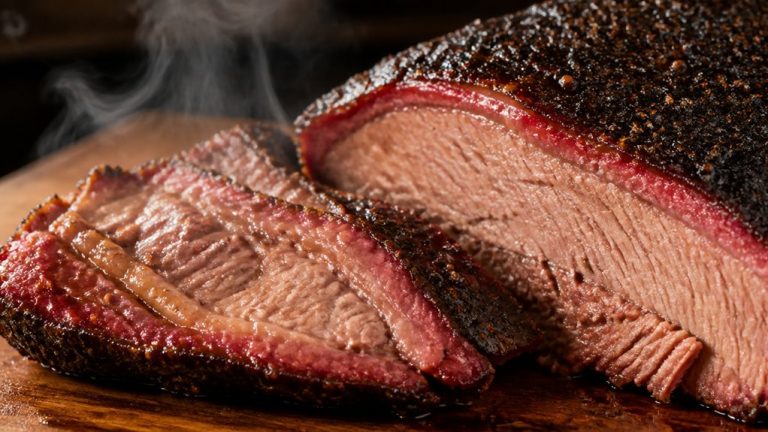
To get a good bark on brisket, start by choosing a well-marbled cut with a trimmed fat cap about a quarter-inch thick to let your rub adhere properly.
Use a coarse rub blending salt, cracked black pepper, paprika, garlic powder, and a touch of brown sugar for flavor and caramelization.
Smoke steadily between 225–275°F with balanced airflow, spritzing occasionally to maintain moisture without softening the crust.
Wrap at the right moment in butcher paper and rest before slicing against the grain to preserve that irresistible bark.
Keep going to reveal the secrets behind each step.
Key Takeaways
- Select a whole packer brisket with an even fat cap and trim it down to a quarter-inch for optimal rub adhesion and bark formation.
- Apply a coarse rub with salt, cracked black pepper, garlic powder, paprika, and brown sugar, using a mustard binder for better adhesion.
- Maintain smoker temperature between 225–250°F with steady airflow and thin, blue smoke to encourage caramelization and smoke particle embedding.
- Spritz the brisket every hour after bark formation with water or apple cider vinegar to keep the surface moist without pooling.
- Wrap the brisket in butcher paper during the stall (165–180°F) to lock in moisture while preserving bark texture and rest before slicing.
How to Choose the Right Brisket Cut for Great Bark?

Start by selecting a high-quality whole packer brisket with a well-distributed fat cap to maximize bark development.
Begin with a premium whole packer brisket featuring an even fat cap for optimal bark formation.
You want a brisket that’s fresh, firm, and displays a consistent marbling pattern, which guarantees even rendering during the low and slow cook.
The fat cap plays a pivotal role. It slowly melts, basting the meat while allowing the rub to adhere and form that signature bark crust.
Avoid briskets with patchy or overly thick fat, as they hinder proper bark formation on the meat surface.
Opt for cuts designed specifically for low-temperature, long-duration smoking. This breaks down collagen, enhancing tenderness while preserving bark integrity.
Choosing the right brisket sets the foundation for a robust, flavorful bark that’s both texturally satisfying and deeply savory.
For best results, consider choosing USDA Prime or Choice grades for their superior marbling and tenderness.
Trim Fat to Balance Brisket Bark Texture and Flavor
Although the fat cap is essential for flavor and moisture, trimming it down to about a quarter-inch guarantees the rub adheres directly to the meat. This enables a firm, deeply textured bark to form.
If you leave too much fat, the rub mostly sticks to fat, which renders down and creates a softer, less desirable bark. Use a sharp knife to carefully sculpt the fat cap, exposing enough meat surface for the rub to grip without sacrificing essential fat for juiciness.
This balance ensures that during low and slow cooking, smoke and seasoning penetrate properly, building that crave-worthy crust. Remember, the goal is a bark with robust flavor and satisfying crunch—not a mushy coating over excess fat.
Trimming precisely transforms your brisket’s bark from ordinary to extraordinary. Wrapping the brisket at the right time can help maintain this bark by preventing it from becoming too soft during the cooking stall, especially when using butcher paper.
Make a Coarse Rub to Build Bark Layers
Craft a coarse rub with intention, combining salt, coarse black pepper, garlic powder, paprika, and brown sugar to create the perfect foundation for your brisket’s bark. The coarse salt penetrates the meat, seasoning deeply, while the coarse black pepper clings to the surface, promoting smoke adhesion and that signature dark crust.
Garlic powder and paprika add depth without overwhelming, and the brown sugar balances with subtle sweetness. Use coarse-ground ingredients to maximize surface texture, allowing smoke particles to embed firmly as the brisket cooks low and slow.
Avoid fine powders; they can create a barrier that blocks smoke penetration. Applying this rub generously and evenly sets the stage for multiple bark layers, ensuring a robust, flavorful crust that crisps beautifully under steady heat.
This step is essential for building a bark that’s both rich in flavor and irresistible in texture. Pressing the rub firmly and allowing the meat to rest enhances bark formation and flavor absorption before cooking.
Add Sugars and Spices to Enhance Bark Flavor and Color
If you’re looking to elevate your bark game, consider adding sugars like brown sugar or honey to your rub. When they caramelize during smoking, they create that gorgeous deep, rich bark color and bring a touch of subtle sweetness. It really makes a difference!
Now, let’s talk about spices. Pairing a bold spice blend with coarse salt and pepper not only amps up the flavor complexity but also helps that bark develop a strong texture that clings beautifully to the meat. It’s all about finding that perfect balance!
Once you master this, you’ll transform your brisket’s crust into a flavorful, visually stunning masterpiece. Trust me, your guests will be impressed!
For best results, using a mustard binder before applying the rub can improve adhesion and help develop a crisp, flavorful bark.
Sugar’s Role In Bark
Boosting your brisket’s bark starts with the strategic use of sugars and spices in your rub.
Sugars like brown sugar or honey don’t just sweeten; they kickstart caramelization and Maillard reactions, creating a deep, rich crust.
As the brisket slowly cooks, these sugars melt and interact with proteins, forming that signature dark, flavorful bark you crave.
But balance is key; too much sugar risks burning, so combine it with coarse spices like black pepper and paprika to build complexity and texture.
This interplay enhances smoke adhesion and develops bold flavor layers.
When applied correctly, sugar transforms the bark from bland to brilliant, delivering that addictive crunch and caramelized taste that defines a perfectly smoked brisket.
Maintaining a steady smoker temperature between 225°F and 250°F is crucial to promote caramelization and prevent burning during bark development.
Spice Blend Benefits
A well-balanced spice blend does more than just season your brisket. It actively enhances the bark‘s flavor complexity and visual appeal.
By combining coarse salt, cracked black pepper, garlic powder, paprika, and brown sugar, you create a textured surface that encourages smoke adhesion and caramelization.
The coarse grind guarantees a deep, dark bark rather than a powdery coating that blocks smoke. Adding sugars like brown sugar or honey promotes Maillard reactions, boosting bark color and a subtle sweetness that balances savory notes.
Each spice plays a role: salt penetrates for seasoning, pepper remains on the surface to bind bark, and paprika adds smoky warmth and rich hue.
This blend transforms your brisket’s exterior into a flavorful, visually enticing crust you’ll crave every time.
For optimal bark development, maintaining consistent smoker temperature between 225–250°F is crucial to support proper Maillard reactions and smoke absorption.
Control Smoking Temperature for Brisket Bark Development
When you control smoking temperature carefully, you set the stage for a rich, deeply developed bark on your brisket. Aim for a steady 225-250°F to render fat slowly and allow the rub to caramelize perfectly.
Starting lower, around 180-200°F for the first three hours, especially on pellet grills, helps build a solid bark foundation without rushing moisture loss. Then, gradually increase to 250°F for a couple of hours before pushing to 275°F until the internal temperature hits 170°F.
This controlled ramp prevents moisture buildup that can soften your bark and guarantees consistent smoke adhesion. Maintaining steady temps is vital; fluctuations cause uneven bark texture.
Mastering this temperature dance lets you craft that coveted dark, flavorful crust brimming with smoky complexity every time. Using a water pan inside the smoker can help maintain humidity to protect the bark from drying out during the cook.
Control Airflow and Smoke for a Shattery Crust
Maintaining a steady smoking temperature lays the groundwork, but controlling airflow and smoke takes your bark to the next level. You want balanced airflow to dehydrate the brisket surface steadily, forming that shattery crust without suffocating it.
Use hardwoods like oak or hickory for rich, penetrating smoke. Avoid thick, white smoke; it deposits bitter residues and softens bark. Instead, aim for thin, blue smoke that evenly coats the rub and meat surface, bonding flavors and building color.
| Factor | Effect on Bark |
|---|---|
| Balanced Airflow | Promotes surface dehydration |
| Thin Blue Smoke | Secures even, flavorful bark |
| Hardwood Smoke | Adds robust, clean smoky flavor |
Master these, and your brisket will boast a crackling, deeply flavored bark every time. Remember that bark formation typically begins within the first 3–4 hours of smoking, so managing these factors early on is crucial.
Spritz Brisket to Balance Moisture and Bark Texture
Although spritzing might seem simple, it plays a crucial role in balancing moisture and bark texture to achieve that perfect crust on your brisket.
You want to spritz every hour with liquids like water, apple cider vinegar, or even a touch of Worcestershire sauce to keep the surface just moist enough without pooling.
This moisture encourages smoke adhesion and bark layering, preventing the crust from drying out or becoming too tough.
Timing is key; spritz too often and you’ll slow bark development, too little and the bark risks cracking.
Weather also influences your spritzing frequency; humid days may require less.
Mastering this balance guarantees your brisket’s bark stays textured, flavorful, and beautifully caramelized alongside that tender interior.
Spritzing after the bark begins to form helps maintain even color and prevents burnt edges by supporting Maillard reaction.
Wrap and Rest to Preserve Bark and Boost Flavor
By wrapping your brisket at the ideal internal temperature, you lock in moisture and protect the carefully developed bark from drying out or becoming soggy during the final cooking stages.
Wrapping in butcher paper preserves bark texture better than foil, which softens it. Adding beef tallow during wrapping boosts flavor without compromising the crust.
After cooking, resting your brisket for 30-60 minutes lets juices redistribute, maintaining bark integrity and juiciness. To achieve the best results, monitor your brisket’s internal temperature closely and wrap it when it reaches the stall temperature range.
| Wrap Material | Bark Texture |
|---|---|
| Butcher Paper | Firm, textured |
| Foil | Softer, moist |
| Beef Tallow Add | Enhanced flavor |
| Rest Time | 30-60 minutes |
| Internal Temp | 165-180°F wrap |
Master this step to elevate your bark and flavor synergy.
Slice Against the Grain to Keep Bark Intact
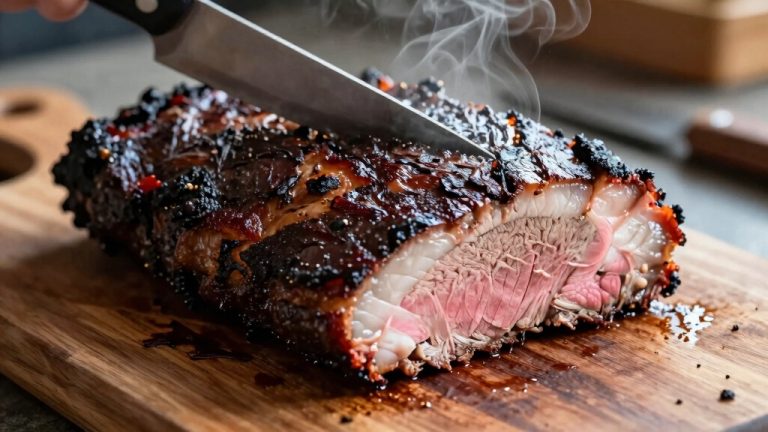
When you slice your brisket against the grain, you make certain each bite stays tender while keeping the bark firmly attached to the meat. Cutting against the muscle fibers shortens them, preventing toughness and ensuring the bark doesn’t flake off.
Use a sharp, long slicing knife to make clean, smooth cuts, preserving the bark’s texture and appearance. Pay attention to the grain direction; it can change across the brisket’s flat and point sections, so adjust your angle accordingly.
Slicing with precision showcases your bark’s hard-earned crust, locking in smoky flavor and caramelized seasoning. This method honors the low-and-slow process, delivering that perfect balance between tender meat and the signature, crackling bark every pitmaster aims for.
Frequently Asked Questions
Can Different Wood Types Affect the Taste of Brisket Bark?
Yes, different wood types definitely affect your brisket bark’s taste.
When you use oak, hickory, or mesquite, each imparts unique smoky notes. Oak offers a robust, earthy flavor; hickory adds a sweet, meat-like richness; mesquite delivers a bold, intense punch.
Choosing the right wood shapes your bark’s complexity and depth. You’ll want balanced airflow and thin blue smoke so those flavors adhere well, creating that irresistible, flavorful crust you crave.
How Does Weather Impact Bark Formation During Smoking?
Oh, perfect weather for bark formation? Rarely.
High humidity slows surface dehydration, making your bark softer and less defined. Dry, windy days speed up crust hardening but risk drying the meat.
You’ll need to adjust spritz frequency and airflow carefully. Too much moisture ruins the bark; too little risks cracking.
Embrace the challenge. Mastering bark means reading the weather like a pitmaster reads smoke, adapting every time you fire up.
Is It Better to Use Butcher Paper or Foil for Wrapping?
It’s better to use butcher paper if you want to preserve a firm, well-textured bark. Butcher paper lets the brisket breathe, maintaining bark integrity while locking in moisture.
Foil traps more steam, which softens the bark but speeds up cooking. If you prioritize bark crispness and flavor depth, go with butcher paper.
Use foil only if you need faster cooking and don’t mind a softer bark finish.
What Role Does Beef Tallow Play in Bark Texture?
Beef tallow is the secret superhero for your brisket bark!
When you add it during wrapping, it dramatically enhances flavor without turning your crust into mush.
It creates a luscious barrier that keeps moisture balanced, preserving the bark’s crisp, shattery texture while infusing a rich, savory depth.
You’ll notice your bark stays firm yet tender, never soggy, giving you that perfect, mouthwatering bite every time you slice into your masterpiece.
How Long Should Brisket Rest Before Slicing for Best Bark?
You should rest your brisket for 30 to 60 minutes before slicing to preserve the bark’s texture and flavor. This resting period lets juices redistribute evenly, preventing dry meat and bark detachment.
Wrapping it in butcher paper during rest helps maintain bark integrity without softening it too much. Don’t rush this vital step. Patient resting guarantees that every bite delivers that perfect, firm bark combined with tender, juicy meat.
A Perfect Brisket Bark Is No Accident—It’s Craft
You want a bark that’s crispy yet tender, dark yet vibrant—a beautiful paradox on your brisket’s surface.
By choosing the right cut, trimming just enough fat, crafting a coarse rub with balanced sugars, and mastering temperature and airflow, you create layers of flavor and texture that contrast and complement.
Spritzing and resting seal the deal, preserving that shattery crust. Slice against the grain, and you reveal a bark that’s both rugged and refined, a true masterpiece.