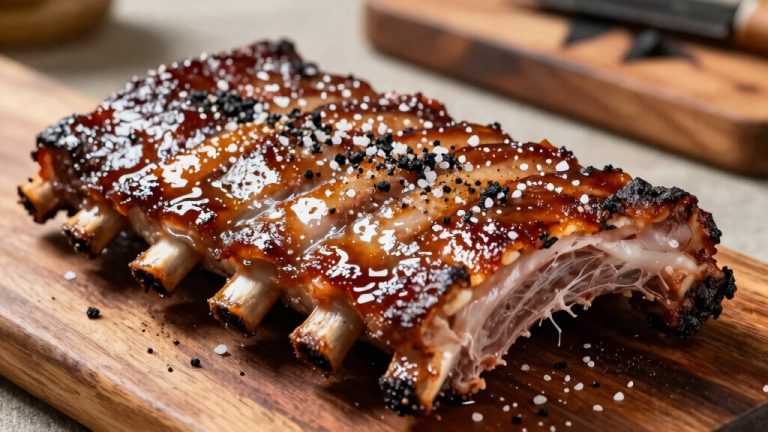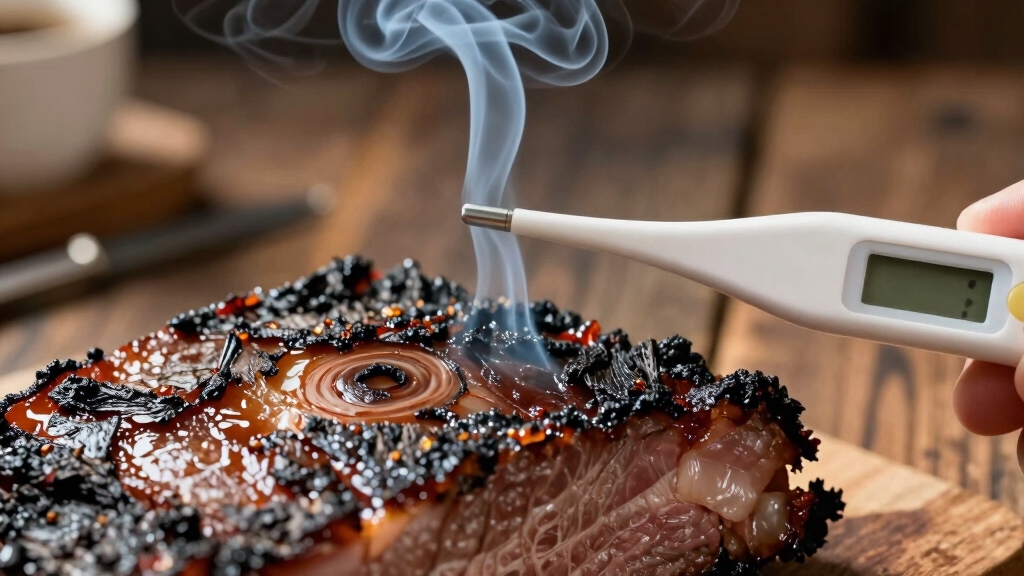
What Temp Does Meat Stop Taking Smoke: Expert Smoking Tips
You’ll find that meat stops effectively absorbing smoke once its internal temperature exceeds about 140°F.
That’s because the chemical reactions producing the signature smoke ring and smoke flavor penetration cease beyond this point.
While smoke flavor continues to develop slowly as temperatures rise, it’s mostly limited after bark forms and moisture drops.
Keeping your smoker low and slow maximizes smoke uptake during those early hours.
Understanding these temperature effects reveals how smoking time and bark interplay shape flavor profiles.
Key Takeaways
- Meat stops forming a visible smoke ring once its internal temperature exceeds 140°F due to halted chemical reactions.
- Most smoke compound penetration occurs within the first 5–6 hours before internal temperature surpasses 190–205°F.
- After 190°F, smoke absorption continues but at a significantly slower rate, reducing flavor uptake efficiency.
- Bark formation and surface drying after early cooking stages limit further smoke penetration into the meat.
- Maintaining smoker temperature between 225°F and 250°F optimizes smoke absorption before higher temps reduce the smoking window.
At What Temperature Does the Smoke Ring Stop Forming?

When exactly does the smoke ring stop forming during smoking? It halts once the meat’s internal temperature surpasses 140°F.
The smoke ring stops forming once the meat’s internal temperature exceeds 140°F during smoking.
Below this threshold, myoglobin reacts chemically with nitrogen dioxide and nitric oxide in the smoke, producing that signature pink smoke ring.
As you monitor the temperature, you’ll notice the smoke ring develops primarily in the first 2 to 4 hours when the meat surface remains under 140°F.
After this point, even if you keep smoking, the smoke ring won’t deepen because the chemical reaction ceases.
However, smoke flavor absorption continues beyond this temperature, though less visibly.
Understanding this temperature cutoff helps you optimize the smoking process to maximize the smoke ring’s visual appeal without compromising overall flavor development.
To achieve the best bark alongside the smoke ring, maintain a steady smoker temperature between 225°F and 250°F to promote proper bark formation and flavor enhancement.
How Bark Development Affects Smoke Flavor Penetration?
Bark formation kicks off pretty early—usually within the first 3 to 4 hours.
During this time, the meat’s surface is still moist, which means it can soak up those smoky flavors really well.
As the bark starts to set and dry out, it creates this rich layer of flavor.
But here’s the catch: once that bark forms, it actually makes it harder for more smoke to get absorbed beneath the surface.
So, keeping an eye on that timeline is crucial.
It helps you find the right balance between developing that delicious bark and maximizing the smoke flavor throughout the entire cooking process.
Spritzing during this phase helps smoke particle adhesion and enhances bark development without significantly affecting cooking time.
Bark Formation Timeline
Although bark formation begins within the first few hours of smoking, its progression markedly influences how smoke flavor penetrates the meat.
As the bark develops, the surface dries and forms a protective layer, which gradually limits further smoke absorption.
Understanding this timeline helps you optimize smoke flavor without overcooking.
Key points in bark formation include:
- Initial 3-4 hours: Surface remains moist, allowing maximal smoke compound deposition and bark development.
- Mid-cook phase: Bark sets, reducing smoke penetration but adding concentrated exterior flavor.
- Wrapping (Texas crutch): Bark formation pauses, but internal smoke flavor continues to develop.
- Final stage: Higher heat solidifies bark color and texture, with minimal new smoke absorption.
Maintaining proper smoker humidity during bark formation can help balance moisture loss and optimize smoke flavor penetration.
Impact On Smoke Absorption
At the onset of smoking, the moist surface of the meat actively absorbs smoke compounds, enabling deep flavor penetration and robust bark formation.
As the bark develops during the first 3-4 hours, the surface gradually dries and thickens, creating a barrier that slows further smoke absorption.
This crust traps concentrated smoke flavors but reduces the efficiency of smoke compound penetration into the underlying meat.
Although smoke flavor continues to build internally beyond bark formation, its intensity diminishes due to this protective layer.
You’ll notice that wrapping the meat mid-cook halts bark growth but allows internal smoke uptake to persist.
Ultimately, bark development marks a turning point where surface smoke absorption decreases, shifting flavor enhancement from external penetration to subtle, layered accumulation within the meat’s interior.
Wrapping the brisket at the stall temperature range can reduce smoke absorption by increasing surface moisture and interrupting bark development, particularly when using foil wrap.
How Cooking Temperature Influences Smoke Flavor Absorption?
When you control cooking temperature carefully, you directly influence how well smoke flavors penetrate the meat.
Maintaining a temperature between 225°F and 250°F maximizes smoke absorption throughout the cook. Higher temperatures shorten the smoking window, reducing flavor uptake.
Keeping the temperature between 225°F and 250°F ensures optimal smoke flavor absorption during cooking.
Even as the internal temperature climbs past 190°F, smoke flavor continues to develop, though at a slower rate.
Surface moisture and bark formation also affect absorption efficiency.
Consider these points:
- Low and slow temperatures extend the smoke absorption window effectively.
- Temperatures above 275°F accelerate cooking but limit smoke penetration time.
- Bark formation occurs early, concentrating surface smoke flavor yet limiting deeper penetration.
- Internal smoking continues past the smoke ring phase, adding subtle flavor layers.
Adjust temperature to balance tenderness and the best possible smoke flavor. Smoking brisket at 300°F, for example, balances heat and time to develop a rich bark while locking in moisture through timely wrapping, enhancing overall smoke flavor absorption and tenderness. This technique is detailed in Smoked Brisket at 300.
Why Smoking Low and Slow Brings the Best Smoke Flavor?
Several factors make smoking low and slow the preferred method for maximizing smoke flavor in meat.
When you maintain temperatures between 225-250°F, the meat surface stays moist longer, allowing smoke compounds to penetrate efficiently throughout the cook.
This extended exposure enhances smoke absorption well past the initial smoke ring formation, which only occurs below 140°F.
You also give the meat ample time to develop a flavorful bark during the first 3-4 hours, concentrating smoke flavor on the exterior.
Low and slow cooking prolongs the period before surface drying limits smoke uptake, unlike hot and fast methods that shorten the smoke absorption window.
By controlling temperature precisely, you optimize the slow chemical reactions that embed complex smoke flavors deep into the meat’s fibers.
This produces a richer, more balanced smoked taste.
Wrapping the brisket around the stall temperature range of 150°F to 170°F helps maintain moisture and even smoke absorption throughout the cook.
When Does Smoking Time Add Less Flavor to Meat?
While smoking low and slow extends the window for smoke absorption and flavor development, there comes a point where additional smoking yields minimal gains.
You’ll notice that after the first 5-6 hours, the majority of smoke compounds have penetrated the meat. Beyond this, flavor enhancement slows down markedly due to surface drying and bark formation, which reduce smoke uptake efficiency.
Here’s when smoking time adds less flavor:
- After bark sets, moisture loss limits smoke penetration.
- Beyond 50% of total cooking time, diminishing returns on flavor occur.
- Once internal temperature surpasses 190-205°F, smoke absorption efficiency decreases.
- During final hours, smoke intensifies bark color but adds little new flavor.
Recognizing these points helps you optimize smoking time without over-smoking. Maintaining an internal temperature around 195–205°F supports optimal collagen breakdown while balancing moisture retention during smoking and resting.
Ideal Smoking Durations for Different Meats
Because different meats vary widely in texture, fat content, and thickness, you’ll need to adjust smoking durations carefully to maximize both tenderness and smoke flavor.
For instance, whole chicken reaches safe temperature and peak smoke flavor in about 4-5 hours, with most smoke uptake occurring early.
Baby back ribs typically finish in 4-6 hours, achieving full smoke penetration by hour 4.
Meat shoulder and beef brisket require longer cooks, 10-14 hours and 12-20 hours respectively, with the primary smoke absorption window during the first 6-8 hours.
Turkey’s smoking time depends on size but generally falls between 3-6 hours, with significant smoke uptake in the initial 3 hours.
Maintaining ideal smoker temps between 225°F and 350°F is crucial for consistent smoke flavor and proper cooking.
Frequently Asked Questions
How Do Different Wood Types Affect Smoke Flavor Absorption?
Different wood types impact smoke flavor absorption by releasing distinct compounds, influencing your meat’s taste profile.
Hardwoods like hickory and oak provide strong, bold flavors that penetrate deeply.
Fruitwoods such as apple and cherry offer milder, sweeter smoke, which your meat absorbs more subtly.
You’ll notice resinous woods like mesquite deliver intense, quick flavor, ideal for shorter cooks.
Choosing wood based on flavor intensity and cooking time helps you tailor smoke absorption precisely.
Can Marinating Meat Influence Smoke Penetration?
Sure, marinating meat won’t turn it into a smoke sponge overnight.
But if you think slathering your brisket in BBQ sauce is like rolling out a red carpet for smoke molecules, think again.
Marinating can slightly alter the meat’s surface moisture and pH, which tweaks how smoke compounds bond.
Does Humidity Impact Smoke Ring Formation and Flavor?
Yes, humidity markedly impacts smoke ring formation and flavor. When you maintain higher humidity inside the smoker, the meat’s surface stays moist longer, allowing nitrogen dioxide and nitric oxide in the smoke to react efficiently with myoglobin, enhancing the smoke ring.
Moisture also improves smoke particle adhesion and penetration, deepening flavor. Too low humidity dries the surface, limiting smoke absorption and reducing both the smoke ring’s depth and overall smoky taste.
How Does Meat Thickness Alter Smoke Absorption Rates?
You’ll find that thicker meat slows smoke absorption because the smoke compounds penetrate more gradually through its dense structure.
The surface develops bark and smoke ring normally, but the interior takes longer to absorb flavors.
Thinner cuts absorb smoke faster and more evenly, reaching saturation sooner.
When smoking thick cuts, you’ll need extended low-and-slow times to maximize smoke penetration without overcooking the exterior or drying the meat.
What Role Does Fat Content Play in Smoke Flavor Retention?
Fat content acts like a flavor sponge, soaking up and holding smoke compounds more effectively than lean meat.
When you smoke fattier cuts, the fat melts and distributes smoke flavor deeper and longer, enhancing richness and moisture.
This means your meat retains a more pronounced smoky taste and juiciness.
Where Smoke Meets Science: Unlocking BBQ Perfection
You’ll notice smoke stops seeping into meat once temperatures rise above 300°F, halting the hallmark smoke ring.
Bark builds a barrier, blocking further smoke flavor penetration, while cooking temperature critically controls absorption.
Smoking low and slow guarantees steady smoke saturation, maximizing flavor. Beyond ideal durations, smoke influence diminishes, making timing tactical.
Understanding these temperature thresholds and timeframes lets you master mouthwatering meat, marrying method with meticulous measurement for magnificent, smoky meals.