What Does Cure Do for Beef Jerky: Benefits, Process & Tips
Curing your beef jerky inhibits harmful bacteria like Clostridium botulinum by lowering water activity and adding antimicrobial agents such as salt and nitrites.
It stabilizes flavor and color through chemical reactions that prevent oxidation and browning while extending shelf life.
Preheating to 160°F after curing kills surviving pathogens that the cure alone can’t eliminate.
Curing also improves texture and moisture balance. You’ll find deeper insights on flavor, preservation, and safety ahead.
Key Takeaways
- Cure inhibits harmful bacteria like Clostridium botulinum by creating an antimicrobial environment with salt and nitrates/nitrites.
- Nitrates and nitrites preserve color by stabilizing myoglobin and preventing oxidation, maintaining jerky’s pink appearance.
- Salt and curing agents lower water activity, reducing moisture to inhibit microbial growth and spoilage.
- Cure enhances flavor by intensifying savory notes and balancing sweetness through salt and sugar interactions.
- Curing extends shelf life and safety by combining antimicrobial action, moisture control, and antioxidant properties.
Why Curing Makes Beef Jerky Safe?

Safety lies at the core of curing beef jerky, as it actively inhibits harmful bacteria like Clostridium botulinum from developing.
You guarantee safety by applying a cure containing antimicrobial agents such as salt and sometimes nitrates or nitrites, which restrict bacterial growth.
The curing process removes moisture, reducing water activity essential for microbial survival and enzymatic reactions.
You must preheat the meat to 160°F to eliminate pathogens, then dry it at approximately 140°F, maintaining an environment unsuitable for bacterial proliferation.
This method acts as insurance against imperfect cooking or storage conditions.
By following these precise temperature controls and moisture reduction steps, you effectively prevent foodborne illnesses.
This extends shelf life while preserving product integrity without relying solely on refrigeration or additives beyond the cure.
Properly drying the jerky to a texture where strips bend without breaking ensures both safety and quality in the finished product, as outlined in drying techniques.
What Ingredients Are in a Typical Jerky Cure?
A typical jerky cure usually starts with salt as the main ingredient. It’s essential for flavor and preservation.
On top of that, sugar often joins the mix to really enhance the taste.
You’ll also find nitrates or nitrites in a good jerky cure. These little guys help keep bacteria at bay and maintain that nice, appealing color we all love.
And let’s not forget about spices and seasonings! They play a big role in creating that rich flavor profile that makes jerky so delicious. So, it’s really a blend of ingredients that come together to make jerky a tasty snack!
Additionally, using curing agents like sodium nitrite during preparation is important to inhibit bacterial growth and ensure the jerky’s safety.
Common Cure Ingredients
Typically, a jerky cure contains a combination of salt, sugar, and sometimes nitrates or nitrites to inhibit bacterial growth and enhance flavor. Salt acts as the primary preservative, drawing moisture out to limit microbial activity.
Sugar balances the saltiness and intensifies flavor. You may also encounter curing salts like Prague powder, a blend including nitrites for additional preservation. Some recipes add spices and seasonings to customize taste.
Curing salts are often dyed pink to distinguish them from regular salt and to prevent accidental misuse, which is critical for food safety due to their nitrite content.
| Ingredient | Function |
|---|---|
| Salt | Moisture reduction, preservation |
| Sugar | Flavor enhancement, browning agent |
| Nitrates/Nitrites | Bacterial inhibition (optional) |
| Spices | Flavor complexity |
| Prague Powder | Standard curing salt with nitrites |
Understanding these components makes certain you select the right cure for safe, flavorful jerky.
Role of Nitrates
Nitrates and nitrites play a critical role in jerky curing by inhibiting the growth of Clostridium botulinum and other harmful bacteria.
When you include these compounds in your cure, they act as preservatives, extending shelf life by preventing microbial spoilage.
Typically found in curing salts like Prague powder, nitrates slowly convert to nitrites during the curing process, ensuring sustained antibacterial action.
Their antioxidant properties also help maintain the jerky’s pink color, preventing the grayish hue that can occur with oxidation.
You’ll find nitrates particularly important as a safety measure, providing a safeguard against imperfect cooking or storage conditions.
While salt and sugar form the base of most cures, nitrates or nitrites are essential to control bacterial risks, ensuring your beef jerky remains safe and stable over time.
Proper moisture control and dehydration temperature are also crucial to safety when curing and drying jerky.
Flavor Enhancers Used
Among the key components in a typical jerky cure, salt serves as the primary ingredient, providing both preservation and flavor enhancement.
You’ll find sugar included to intensify flavor and balance saltiness.
Additionally, nitrates or nitrites play a pivotal role in inhibiting bacterial growth, especially Clostridium botulinum.
These ingredients work synergistically to guarantee safety, taste, and color retention.
Key flavor enhancers in a typical jerky cure include:
- Salt – preserves meat and boosts flavor
- Sugar – amplifies sweetness and masks harshness
- Nitrates/nitrites – prevent bacterial contamination and preserve pink color
Understanding these components helps you control the flavor profile and safety of your beef jerky through precise curing techniques. Proper curing combined with temperature control during smoking is essential to ensure safe and flavorful jerky.
How Sugar and Salt Improve Jerky?
When it comes to making jerky, you might be surprised to learn just how important sugar and salt are. They don’t just add flavor; they really help with the curing process, too.
So, let’s talk about salt first. It acts like a superhero when it comes to preserving your jerky. By keeping bacterial growth in check, salt helps ensure your jerky stays safe to eat. Pretty neat, right?
Now, sugar may seem like just a sweet addition, but it does more than just balance out the flavors. It also helps retain moisture during the drying process. This means your jerky won’t end up too dry or tough; it’ll have that perfect texture.
Together, sugar and salt really work their magic. They improve not only the taste but also the safety and shelf life of your jerky. So, next time you’re making a batch, remember: these two ingredients are key players in creating a delicious snack! Additionally, using curing salt carefully can enhance preservation while avoiding safety concerns during the drying process.
Flavor Enhancement Roles
Salt and sugar play essential roles in enhancing the flavor profile of beef jerky. Salt intensifies the meat’s natural taste by balancing and amplifying savory notes. Sugar contributes subtle sweetness that rounds out the overall flavor complexity. Together, they create a harmonious taste experience.
When you add salt and sugar during curing, you achieve:
- Flavor balance: Salt reduces bitterness; sugar offsets saltiness.
- Taste depth: Sugar aids in developing caramelized, rich flavors through the Maillard reaction during drying.
- Seasoning penetration: Salt enhances the absorption of spices and seasonings, improving uniform flavor distribution.
Additionally, precise measurement and combination of salt and sugar are crucial to achieving consistent curing results and ensuring optimal flavor development.
Moisture Retention Effects
Although sugar and salt primarily enhance flavor, they also play essential roles in controlling moisture content within beef jerky.
Salt draws moisture out of the meat initially but later helps retain water by binding proteins, improving texture and chewiness.
Sugar contributes by attracting and holding water molecules through hygroscopic properties, preventing excessive drying.
Together, they regulate water activity (aw), maintaining a balance that preserves tenderness without compromising shelf stability.
This moisture modulation prevents jerky from becoming too brittle or overly soft during drying.
By controlling water retention, sugar and salt also influence the drying rate, ensuring uniform dehydration.
Ultimately, their combined action optimizes jerky’s mouthfeel and consistency, critical for consumer acceptance and product quality in cured beef jerky production.
Additionally, maintaining proper water activity levels is crucial to inhibit microbial growth and ensure the safety of the final product.
Preservation And Safety
When curing beef jerky, sugar and salt play critical roles in preservation and safety by inhibiting bacterial growth and extending shelf life.
Salt primarily restricts Clostridium botulinum and other pathogens by lowering water activity.
Sugar complements salt by enhancing flavor and contributing to moisture balance, which helps maintain texture.
Together, they form a barrier against spoilage during storage.
Focus on these key effects:
- Salt’s antimicrobial properties prevent dangerous bacterial proliferation.
- Sugar stabilizes moisture content, improving texture and flavor retention.
- Both ingredients assist in preserving color and reducing enzymatic spoilage.
Additionally, maintaining a water activity level of ≤0.75 through curing is essential for suppressing microbial proliferation and enhancing microbial safety.
Dry vs. Wet Curing: Which Is Better for Jerky?
Choosing between dry and wet curing methods markedly impacts the texture, flavor, and moisture content of your beef jerky.
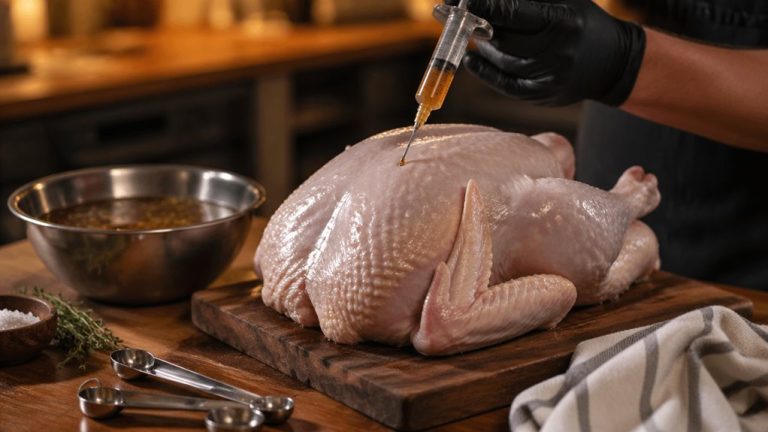
Dry curing involves rubbing a spice and cure mixture directly onto the meat, resulting in a firmer, drier texture with concentrated flavor.
Wet curing soaks the meat in a liquid marinade, which yields juicier jerky with more uniform seasoning but slightly less chew.
Both methods inhibit bacterial growth and enhance shelf life.
Vacuum sealing with adjustable vacuum modes can help preserve the desired moisture level and texture after curing.
| Feature | Dry Curing | Wet Curing |
|---|---|---|
| Texture | Firmer, drier | Juicier, tender |
| Flavor Intensity | More concentrated | Milder, evenly infused |
| Preparation Time | Longer rub time | 12–36 hour soak |
| Moisture Content | Lower | Higher |
Select based on your desired jerky characteristics.
Why You Must Pre-Heat Jerky to 160°F After Curing?
Both dry and wet curing methods effectively inhibit bacterial growth. However, they don’t eliminate all potential pathogens. That’s why you must pre-heat jerky to 160°F after curing.
This step assures safety by killing any surviving bacteria that the cure couldn’t inactivate. Pre-heating acts as a critical control point in food safety.
You need to raise the internal temperature uniformly to 160°F to destroy harmful bacteria, including Clostridium botulinum spores.
This also secures long-term preservation by preventing post-cure microbial growth. Additionally, it guarantees compliance with USDA guidelines for safe jerky production.
Skipping this step increases the risk of foodborne illness and spoilage. Always use a calibrated thermometer and confirm your jerky reaches 160°F before moving on to drying or packaging.
How Curing Stops Harmful Bacteria in Jerky?
Although curing alone doesn’t eliminate all bacteria, it effectively inhibits the growth of harmful pathogens, particularly Clostridium botulinum, by creating an environment hostile to their survival.
The salt content in curing draws moisture from the meat, reducing water activity essential for bacterial proliferation.
Additionally, nitrates and nitrites in curing salts interfere with bacterial metabolism, further restricting pathogen growth.
This combination of lowered moisture and chemical inhibition prolongs shelf life and enhances safety during storage.
However, curing isn’t a standalone safety measure; you must still preheat the jerky to at least 160°F to kill residual bacteria.
How Curing Preserves Color and Enhances Flavor?
Curing beef jerky is a fascinating process! When you cure it, specific compounds like nitrites play a crucial role in preserving that vibrant pink color we all love. They do this by preventing oxidation, which is pretty cool when you think about it.
But it’s not just about keeping that color. The curing mixture, which typically includes salt and sugar, really enhances the flavor too. It intensifies the meat’s natural taste and balances those savory notes perfectly. Plus, let’s not forget about the blend of seasonings! They add complexity and depth, making the final flavor profile truly delicious. So, curing not only keeps the jerky looking great but also amps up the taste!
Color Retention Mechanisms
Because curing introduces specific compounds like nitrates and nitrites, it effectively preserves the pink color of beef jerky by preventing oxidation and enzymatic browning.
These compounds act as antioxidants, stabilizing myoglobin, the pigment responsible for meat’s red hue, and inhibiting enzymes that cause discoloration.
When you cure beef jerky, you minimize the natural greying that occurs during drying and storage.
Key mechanisms include:
- Binding of nitrites to myoglobin, forming nitrosomyoglobin, which gives cured meat its characteristic stable pink color.
- Inhibition of oxidative reactions by antioxidants within the cure, reducing pigment degradation.
- Suppression of enzymatic browning, which otherwise leads to undesirable color changes.
This controlled chemical environment guarantees your jerky retains its fresh, appealing appearance throughout shelf life.
Flavor Intensification Factors
Maintaining the vibrant color of beef jerky goes hand in hand with amplifying its flavor profile through curing. The curing process uses salt and sugar to intensify natural beef flavors while nitrates or nitrites inhibit bacterial growth and act as antioxidants, preserving the characteristic pink hue.
By reducing moisture and controlling enzymatic activity, curing stabilizes flavor compounds, preventing spoilage and flavor degradation. The low-temperature drying following curing retains volatile flavor molecules, ensuring a robust taste.
Additionally, curing minimizes oxidative rancidity, preserving both color and flavor integrity. You’ll find that properly cured jerky exhibits a more pronounced savory profile, as the chemical interactions during curing enhance taste complexity without relying on added seasonings.
This controlled biochemical environment is essential for consistent, high-quality jerky flavor.
Role of Seasonings
Seasonings play a critical role in curing by not only enhancing flavor but also stabilizing the color of beef jerky. When you apply curing agents like salt, sugar, and nitrites, you inhibit bacterial growth and preserve the meat’s pink hue.
This dual function guarantees safety and visual appeal.
You should consider these key effects of seasonings during curing:
- Salt and sugar intensify flavor while aiding moisture control.
- Nitrites act as antioxidants to maintain the vibrant red color.
- Spice blends contribute additional savory notes and complexity.
How Smoking and Seasonings Improve Jerky Flavor?
When enhancing beef jerky, smoking plays a vital role by infusing wood-fired aromas that complement the meat’s natural flavors while contributing to preservation.
Smoking introduces phenolic compounds that inhibit microbial growth and oxidation, improving safety and shelf stability. You’ll notice it also deepens flavor complexity through Maillard reactions during controlled heating.
Additionally, seasonings applied before or during curing amplify savory notes. Salt, sugar, and spice blends intensify the beef’s inherent taste while balancing moisture and texture.
Precise seasoning proportions guarantee flavor enhancement without overpowering the meat. Combined, smoking and seasonings create a layered flavor profile that elevates the jerky’s sensory appeal and functional quality, making it both enjoyable and stable for consumption.
How Curing Extends Beef Jerky’s Shelf Life?
Because curing inhibits bacterial growth and reduces moisture, it plays a critical role in extending beef jerky’s shelf life.
When you cure beef jerky, you create an environment unfavorable for pathogens, especially Clostridium botulinum.
This is achieved by lowering water activity and introducing antibacterial agents like nitrates or nitrites.
This preservation process guarantees the jerky remains safe and stable over extended periods.
Here’s how curing extends shelf life:
- Salt and curing agents draw out moisture, preventing microbial growth.
- Nitrates and nitrites inhibit anaerobic bacteria, reducing spoilage risk.
- Antioxidant properties of cure maintain color and delay rancidity, preserving quality.
Best Storage Practices to Keep Cured Beef Jerky Fresh
Properly storing cured beef jerky markedly prolongs its freshness and safety. You should vacuum-seal or use airtight containers to minimize oxygen exposure, which prevents spoilage.
Store jerky in a cool, dry place away from direct sunlight to reduce oxidation and rancidity risks. Refrigeration extends shelf life after opening, especially in humid environments.
Avoid excess moisture to inhibit microbial growth.
| Storage Method | Benefit |
|---|---|
| Vacuum-sealing | Reduces oxygen, extends shelf |
| Airtight container | Maintains dryness, blocks air |
| Cool, dark place | Decreases oxidation rate |
| Refrigeration | Slows microbial activity |
| Oxygen absorbers | Maintains freshness |
Following these practices guarantees your cured beef jerky retains peak flavor, color, and safety over time.
Frequently Asked Questions
Can Curing Beef Jerky Cause Allergic Reactions?
Yes, curing beef jerky can cause allergic reactions, primarily due to ingredients like nitrates, nitrites, or specific spices in the cure blend.
If you’re sensitive or allergic to these additives, consuming cured jerky might trigger symptoms ranging from mild irritation to severe reactions.
You should carefully check ingredient labels and consult with a healthcare professional if you have known allergies to curing agents or preservatives before consuming cured beef jerky.
Is It Safe to Consume Jerky Without Nitrates or Nitrites?
Yes, it’s safe to consume jerky without nitrates or nitrites if you follow strict food safety practices.
Proper cooking to 160°F and drying at 140°F inhibit harmful bacteria like Clostridium botulinum.
Without these additives, guarantee low moisture and acidity levels, and store jerky in airtight packaging.
However, nitrates and nitrites provide additional protection. Jerky made without them requires more careful handling to prevent spoilage and foodborne illness.
How Long Can Cured Jerky Last at Room Temperature?
You can expect properly cured beef jerky to last about 1 to 2 months at room temperature if stored in airtight, vacuum-sealed packaging with oxygen absorbers.
The curing process inhibits bacterial growth and reduces moisture, extending shelf life without refrigeration.
However, jerky should be kept in a cool, dry place away from direct sunlight to maintain quality.
Once opened, consume within a few days or refrigerate for longer preservation.
Does Curing Affect the Nutritional Value of Beef Jerky?
Think of curing as a guardian rather than a thief of nutrients.
It slightly alters beef jerky’s nutritional profile by adding sodium and sometimes sugar, but it doesn’t markedly diminish protein or essential minerals.
You’ll retain most of the jerky’s original nutrients, as curing mainly preserves and enhances flavor and safety.
Can Homemade Jerky Be Cured Without Specialized Curing Salts?
Yes, you can cure homemade jerky without specialized curing salts by using salt and sugar alone. However, this won’t inhibit Clostridium botulinum growth as effectively.
Without nitrates or nitrites, you must guarantee thorough cooking to 160°F and proper drying at 140°F to maintain safety. Rely on refrigeration during marinating and airtight packaging post-drying to reduce spoilage risks.
Specialized curing salts provide added bacterial protection and color preservation beyond basic salt curing.
Cure It Right, Enjoy It Longer: The Science Behind Great Jerky
Curing beef jerky isn’t just about flavor; it’s essential for safety and preservation.
You might worry that curing involves too many additives, but typical cures use simple, controlled amounts of salt, sugar, and nitrites to inhibit harmful bacteria.
By curing and then heating jerky to 160°F, you make sure it’s safe to eat while extending shelf life and maintaining color and texture. Proper curing is a precise step you can’t skip for quality jerky.