How to Defrost a Duck: Safe Methods for Perfect Cooking
To defrost a duck safely, keep its temperature below 40°F and avoid thawing it on the counter. The best method is refrigerator thawing: place the duck on a tray in the fridge for 24–48 hours, depending on size.
For quicker thawing, use cold water in a sealed bag, changing the water every 30 minutes. Cook immediately after thawing. Microwave thawing is riskier and also requires immediate cooking.
Understanding these methods helps you maintain quality and safety perfectly.
Key Takeaways
- Thaw a duck safely in the refrigerator below 40°F, allowing 24–48 hours for a whole 4–6 lb bird.
- Submerge sealed duck in cold water, changing water every 30 minutes, and cook immediately after thawing.
- Use the microwave defrost setting in short intervals, rotating the duck, and cook immediately after thawing.
- Avoid thawing at room temperature, in warm water, or open air to prevent bacterial growth and foodborne illness.
- Always monitor temperatures with a calibrated thermometer and handle thawed duck promptly following food safety guidelines.
Safe Duck Thawing: Key Principles and Why to Avoid Counter Thawing

When thawing duck, you need to keep the meat below 40°F to prevent harmful bacteria from multiplying.
Avoid thawing on the counter because room temperature promotes rapid bacterial growth, making the duck unsafe.
Instead, use safe methods like refrigerator thawing, which maintains a steady temperature below 40°F, or cold water thawing in a leak-proof bag.
This ensures the meat stays protected and cool.
You must also avoid thawing in warm water or open air since these conditions raise the meat’s temperature too quickly.
Always plan ahead to allow sufficient time for safe thawing.
Keeping the duck cold throughout the process preserves both safety and quality.
This gives you confidence in your cooking and prevents foodborne illness.
For best results, use a calibrated thermometer to monitor temperatures during thawing.
Defrosting Times for Different Duck Sizes
Keeping your duck cold throughout thawing is essential, but knowing how long to defrost based on the size will help you plan effectively.
Smaller portions thaw faster, while whole ducks need more time.
Here’s a quick guide for defrosting times:
- Small 1 lb packages: thaw overnight in the refrigerator.
- Medium 3-4 lb cuts: take 2-3 hours in cold water, changing water every 30 minutes.
- Whole ducks (4-6 lbs): require 24-48 hours in the fridge or about 2 hours in cold water.
Always ensure thawing is done at safe temperatures to avoid the USDA danger zone and prevent bacterial growth.
Thaw Duck Safely in the Refrigerator
Although refrigerator thawing takes longer than other methods, it offers the safest environment by maintaining a consistent temperature below 40°F.
To thaw your duck this way, place the frozen bird on a tray or shallow pan to catch any drips and set it on the lowest fridge shelf.
Smaller portions, like duck breasts, typically thaw overnight.
For a whole duck weighing 4 to 6 pounds, allow 24 to 48 hours.
Plan your cooking accordingly, as you should cook the duck within 1 to 2 days after it’s fully thawed.
This method is ideal for larger cuts or whole birds, ensuring even thawing without risk of bacterial growth.
Avoid opening the fridge frequently to maintain a steady temperature throughout the process.
Refrigerate thawed duck promptly and cook it within 1 to 2 days to minimize the risk of foodborne illness.
Defrost Duck Quickly Using Cold Water
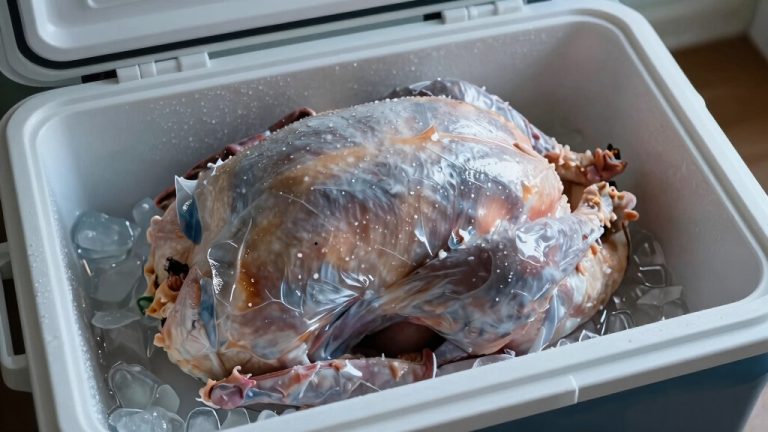
To defrost your duck quickly, submerge it in cold water while keeping it sealed in a leak-proof bag. This method speeds up thawing without compromising safety.
Follow these steps to guarantee proper thawing:
- Change the cold water every 30 minutes to maintain a safe temperature below 40°F.
- Allow about 1-2 hours for duck breasts and approximately 2 hours for a whole 4-6 lb duck.
- Cook the duck immediately after thawing to prevent bacterial growth.
Using a leak-proof bag prevents water absorption, preserving texture and flavor.
Avoid warm or stagnant water to keep the duck safe. This method is ideal when you need to defrost quickly but don’t want to risk uneven thawing or bacterial contamination.
Ensure you cook the duck immediately after thawing to avoid the 40–140°F danger zone, where bacteria multiply rapidly.
Microwave Thawing: Risks and Instructions
When you decide to microwave thaw a duck, it’s important to keep a few things in mind.
Uneven heating can create those pesky hot spots that might cook the edges while leaving the center still frozen. So, it’s a good idea to plan your thawing time carefully.
You don’t want to end up with partially thawed meat!
And here’s the thing: once you’ve thawed the duck, you need to cook it right away.
This is crucial for preventing any bacterial growth. It’s a quick method, sure, but it definitely requires your attention when it comes to safety and timing.
Microwaving should be done using low power and short intervals to minimize uneven heating and maintain moisture.
Microwave Thawing Safety
Since microwave thawing can create uneven heating, you need to monitor the process closely to avoid partially cooking the duck’s edges while the center remains frozen.
To make certain of safety and quality, follow these guidelines:
- Use your microwave’s defrost setting and thaw in short intervals, typically 2-3 minutes. Check and rotate the duck each time to promote even thawing.
- Always place the duck on a microwave-safe plate to catch any juices that may leak during thawing. This prevents cross-contamination.
- Cook the duck immediately after thawing since bacteria can rapidly multiply once the temperature rises above 40°F.
- Use a calibrated, reliable thermometer to ensure the duck reaches a safe internal temperature during cooking.
Thawing Time Considerations
Monitoring thawing time closely is key to preventing uneven heating and assuring food safety during microwave defrosting.
You need to set your microwave to the defrost setting and check the duck frequently, pausing to rotate or rearrange it for even thawing.
Small portions may thaw in a few minutes, while larger pieces require more time.
Be aware that edges can start cooking while the center stays frozen, so monitor carefully to avoid partial cooking.
Since microwave thawing can raise the temperature above 40°F, you must cook the duck immediately afterward to prevent bacterial growth.
Avoid leaving it sitting after thawing.
Ensure your microwave’s interior is clean and free of residue to avoid contamination during thawing, as recommended in cleaning removable parts guidelines.
Immediate Cooking Necessity
Although microwave thawing offers speed and convenience, you must cook the duck immediately after thawing to prevent bacterial growth. Microwaves create uneven heat, causing hot spots that partially cook some areas while leaving others frozen. This uneven thawing puts your duck at risk for bacteria multiplying rapidly above 40°F.
To safely microwave-thaw your duck, follow these steps:
- Use the defrost setting and check the duck every few minutes.
- Rotate and flip the duck regularly to promote even thawing.
- Begin cooking immediately once thawing finishes; don’t refrigerate.
For best results and safety, always ensure the duck is fully thawed and excess moisture is drained to prevent steaming during drying and uneven cooking.
Post-Thaw Care: Cooking and Safety Guidelines
When you finish thawing your duck, you must handle it carefully to guarantee safety. If you thawed it in the refrigerator, plan to cook it within 1-2 days to prevent bacterial growth.
For ducks thawed using cold water or microwave methods, cook them immediately after thawing since these methods can raise the temperature above 40°F, increasing risk. Always keep the duck below 40°F before cooking.
Avoid refreezing thawed duck unless you cook it first. Use airtight packaging during thawing to prevent contamination and water absorption. Proper cooking after thawing assures harmful bacteria are destroyed.
Thawing in the refrigerator is the safest method to retain peak texture and flavor while minimizing microbial risks.
Frequently Asked Questions
Can I Refreeze Duck After Thawing Safely?
You can only safely refreeze duck if you thawed it in the refrigerator and kept it below 40°F the entire time.
If you thawed it using cold water or a microwave, you must cook it immediately and avoid refreezing raw.
Always cook the duck before refreezing if it was thawed by faster methods.
This keeps bacteria growth in check and guarantees your duck stays safe to eat.
What Is the Best Way to Store Duck Before Thawing?
Picture a treasure chest. Your duck should be stored in the freezer at 0°F or below to lock in freshness before thawing.
Keep it tightly wrapped or vacuum-sealed to prevent freezer burn and contamination. Avoid fluctuating temperatures by placing it away from the freezer door.
This careful storage preserves quality and safety, so when you’re ready to thaw, your duck is in prime condition for cooking.
How Do I Know if the Duck Has Thawed Completely?
You’ll know your duck has thawed completely when it feels soft all the way through, with no ice crystals or hard spots inside.
Gently press the thickest part, usually the breast or thigh. If it’s pliable and yields to pressure without resistance, it’s ready.
Also, check the cavity for any frozen areas. If you spot firmness or ice, it needs more time.
Always handle thawed duck promptly to guarantee safety.
Can Thawed Duck Be Marinated Before Cooking?
Before you set free your inner Renaissance chef, yes, you can marinate thawed duck before cooking.
Just make sure it’s fully thawed and kept below 40°F to prevent bacterial growth.
If you used the refrigerator method, marinate within 1-2 days.
For cold water or microwave-thawed duck, marinate immediately and cook right after.
Use airtight containers to avoid contamination and guarantee your duck soaks up all those delicious flavors safely.
Does Duck Skin Affect Thawing Time?
Yes, duck skin does affect thawing time slightly because it acts as an insulating layer, slowing heat transfer.
When you thaw a duck with skin on, expect it to take a bit longer than skinless portions.
For example, whole ducks with skin require 24-48 hours in the fridge, while skinless breasts thaw faster.
Always plan accordingly, especially with refrigerator thawing, to make certain the meat reaches a safe temperature evenly.
The Smart Way to Prepare Duck for Your Table
Just like a skilled chef respects every ingredient, you’ll want to treat your duck with care by thawing it safely.
Avoid the tempting but risky counter thawing and choose your method wisely: refrigerator for patience, cold water for speed, or microwave with caution.
By following these steps, you guarantee your duck stays safe and delicious, ready to shine at your table like a timeless classic. Safe thawing leads to a perfect feast.