Can You Freeze Cooked Prime Rib: Best Way to Preserve Flavor
You can freeze cooked prime rib by first cooling it to room temperature to reduce condensation. Trim excess fat and pat dry to minimize freezer burn.
Wrap tightly using vacuum-sealed bags or heavy-duty foil, double wrapping if needed, and label with the freezing date. Consume within three months for best quality.
Thaw slowly in the refrigerator and reheat gently at low temperatures to keep it juicy. Detailed steps guarantee your prime rib stays flavorful and safe over time.
Key Takeaways
- Cooked prime rib can be frozen after cooling to room temperature to prevent condensation and preserve quality.
- Slice or portion the meat and trim excess fat before freezing for even thawing and reduced oxidation.
- Wrap tightly in vacuum-sealed bags or double wrap with cling film and foil to prevent freezer burn.
- Consume frozen prime rib within 3 months for best taste and texture, though it remains safe up to 6 months.
- Thaw slowly in the refrigerator and avoid rapid thawing to maintain flavor and avoid bacterial growth.
How To Prepare Cooked Prime Rib For Freezing?

Before freezing cooked prime rib, you should first let it cool to room temperature to minimize condensation and ice crystal formation. This can degrade texture and flavor.
Allow cooked prime rib to cool to room temperature before freezing to prevent condensation and preserve flavor.
Next, slice or portion the meat into smaller pieces. This promotes even thawing and helps with portion control.
Trim excess fat, as fat can oxidize and negatively affect meat quality during storage. If the surface is moist, pat it dry to reduce moisture that accelerates freezer burn.
Cooling immediately after cooking preserves texture by preventing residual heat from raising freezer temperatures.
For best preservation, wrap the prime rib tightly in heavy-duty foil or use vacuum-sealing to prevent freezer burn and extend shelf life.
Best Wrapping Methods For Cooked Prime Rib To Prevent Freezer Burn
To effectively prevent freezer burn on cooked prime rib, you’ll want to wrap it tightly using materials that block air exposure. Start by patting the meat dry and cooling it to room temperature.
Then, choose airtight options like vacuum-sealed bags or double wrapping with plastic wrap and aluminum foil. These methods minimize moisture loss and oxidation, preserving texture and flavor.
| Wrapping Material | Air Barrier Quality | Recommended Use |
|---|---|---|
| Vacuum-Sealed Bags | Excellent | Best for individual slices |
| Plastic Cling Film | Good | For initial tight wrapping |
| Aluminum Foil | Very Good | Adds extra protection layer |
| Freezer Zip-lock Bag | Good | Convenient for portion control |
| Airtight Containers | Moderate | Suitable for irregular shapes |
Use double wrapping when vacuum sealing isn’t available to maximize protection. Proper packaging and rapid freezing are key to limiting ice crystal damage and maintaining the meat’s quality during freezing.
Safe Freezing Times For Cooked Prime Rib
When you freeze cooked prime rib, maintaining peak quality depends on adhering to recommended storage durations. For ideal taste and texture, consume the meat within 3 months of freezing.
While it remains safe to eat up to 6 months, extended storage risks gradual quality degradation, such as dryness and flavor loss. The USDA confirms that properly frozen meat is safe indefinitely, but prime rib’s marbled fat makes timely consumption essential to avoid rancidity and off-odors.
Always label packages with freezing dates for precise tracking. Refrigerate leftovers for 5–7 days before freezing to minimize bacterial growth. Proper packaging with airtight, freezer-safe containers helps prevent freezer burn and preserves flavor during storage.
How To Thaw Frozen Cooked Prime Rib Safely?
Although thawing frozen cooked prime rib requires patience, following safe methods preserves its texture and flavor. The recommended approach is to thaw it in the refrigerator overnight, allowing even temperature distribution and minimizing bacterial growth.
Keep the meat tightly wrapped to prevent moisture loss and cross-contamination. Avoid rapid thawing methods such as microwaving or warm water baths, which can cause uneven thawing and degrade meat quality.
If you need a quicker method, use a cold water bath, changing the water every 30 minutes; however, this suits raw cuts better than cooked prime rib. After thawing, consume the meat within 3–4 days for safety and peak taste.
Always avoid refreezing thawed prime rib to maintain structural integrity and avoid microbial risks. Proper thawing and storage practices help minimize bacterial growth and maintain meat quality.
How To Reheat Cooked Prime Rib So It Stays Juicy?
Preserve the juiciness of cooked prime rib by reheating it slowly and at low temperatures. This prevents moisture loss and texture degradation. Rapid reheating causes protein fibers to contract and expel moisture, resulting in dryness.
Slow, low-temperature reheating preserves prime rib’s juiciness by preventing moisture loss and texture damage.
To maintain tenderness and flavor, reheat the meat gently while retaining its internal moisture content.
Wrap the prime rib tightly in foil with a splash of beef stock or au jus to create a moist environment.
Reheat in a preheated oven at 250–300°F, checking internal temperature frequently; target 120–130°F for medium-rare.
Avoid microwaving, which heats unevenly and dries the meat.
Use sous vide if possible for precise temperature control and even reheating without overcooking.
Following these methods preserves texture and flavor, scientifically proven to retain meat’s natural juices.
For best results, always monitor the internal temperature with a reliable meat thermometer to ensure safe and optimal reheating.
Frequently Asked Questions
Can Freezing Cooked Prime Rib Affect Its Flavor?
Freezing cooked prime rib can slightly affect its flavor due to moisture loss and potential oxidation of fats. To minimize this, you should cool it promptly, trim excess fat, and wrap it airtight, preferably vacuum-sealed.
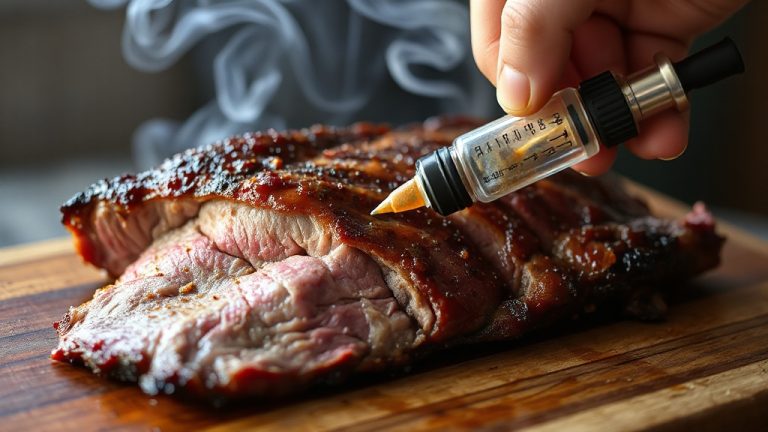
Adding au jus before freezing helps retain moisture and flavor.
While freezing up to three months preserves taste well, longer storage risks subtle flavor degradation. Proper thawing and gentle reheating also maintain the prime rib’s original flavor profile.
Is It Safe to Refreeze Cooked Prime Rib After Thawing?
You shouldn’t refreeze cooked prime rib once thawed because each freeze-thaw cycle increases bacterial risk and degrades texture.
However, if you thaw it in the refrigerator and haven’t left it out over two hours, it’s technically safe to refreeze, though quality may suffer.
To guarantee safety and maintain peak flavor, consume thawed prime rib promptly or reheat it thoroughly if you must freeze leftovers again.
How Does Marbling in Prime Rib Impact Freezing Quality?
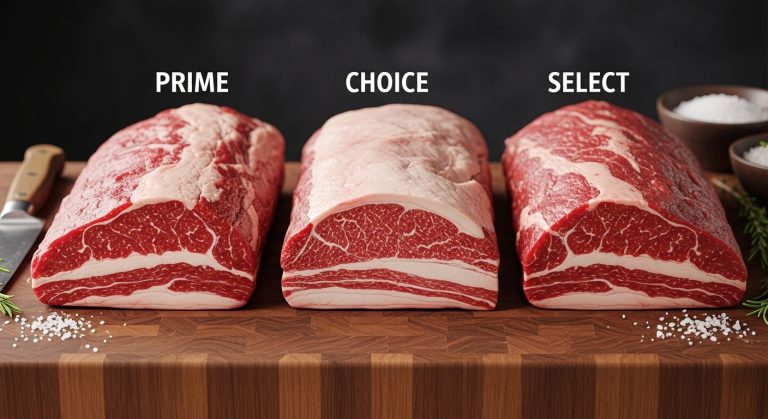
Marbling in prime rib markedly affects freezing quality because the intramuscular fat acts as a barrier against moisture loss and freezer odors.
When you freeze marbled meat, the fat helps preserve juiciness and flavor by reducing ice crystal damage.
However, you must wrap it airtight to protect the fat from oxidation and off-odors.
Proper packaging maintains the marbled fat’s integrity, ensuring the meat remains tender and flavorful after thawing and reheating.
Can You Freeze Prime Rib With Bone-In or Should It Be Boneless?
You can freeze prime rib either bone-in or boneless without compromising quality.
Studies show bone-in cuts retain moisture better during freezing, reducing weight loss by up to 10% compared to boneless.
However, boneless prime rib freezes more uniformly and is easier to portion.
Make sure you wrap tightly with plastic and foil, cool to room temperature first, and label packages.
Both methods preserve flavor well if frozen up to three months properly.
What Are Signs That Frozen Cooked Prime Rib Has Spoiled?
You’ll know frozen cooked prime rib has spoiled if you see discoloration like gray or greenish hues, or if the meat develops an off or sour odor when thawed.
Slimy or sticky texture also indicates spoilage. Ice crystals alone don’t mean it’s bad, but freezer burn causing dry spots can degrade quality.
If you notice any of these signs, it’s safer to discard the meat to avoid foodborne illness.
From Freezer to Feast: Keeping Your Prime Rib Delicious
Freezing cooked prime rib is a smart way to preserve its flavor and juiciness, much like sealing a treasure chest to keep its gems intact.
By wrapping it tightly with airtight materials, you prevent freezer burn and maintain quality. Stick to safe freezing times to ensure peak taste and texture.
When thawing and reheating, follow precise methods to keep the meat tender and moist. This approach guarantees your prime rib stays delicious for your next meal.