Can You Cut a Brisket in Half: Smart Prep Tips for BBQ Lovers
Yes, you can and should cut a brisket in half along its natural fat seam to separate the lean flat from the marbled point.
This allows you to manage cooking times more precisely, ensuring even doneness and reducing undercooked areas.
Halving also improves airflow in your smoker and makes portion control easier, including freezing one half for later use.
Proper trimming and temperature monitoring are vital for best results. Understanding these steps will enhance your brisket preparation appreciably.
Key Takeaways
- Yes, you can cut a brisket in half along the natural fat seam to separate the lean flat from the marbled point.
- Cutting halves allows more precise cooking times for each muscle, promoting even doneness and reducing overcooked areas.
- Smaller portions improve airflow and temperature stability in the smoker, enhancing overall cooking consistency.
- Halving brisket enables freezing one half for better portion control and future meal planning.
- Use a sharp filet knife and trim fat cap to about 1/4 inch for optimal moisture retention and even cooking.
Why Cut a Brisket in Half Before Cooking?
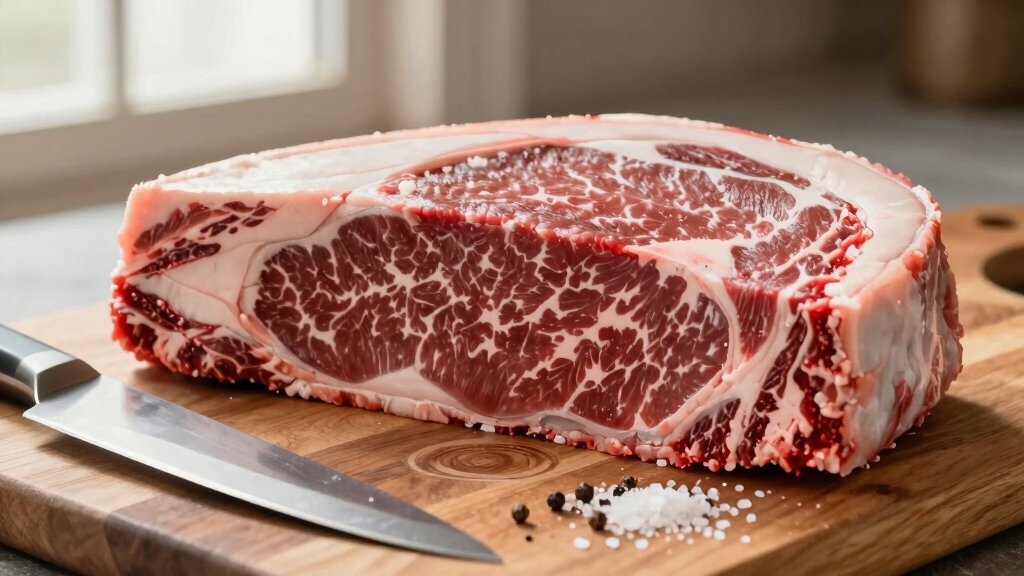
Although you can cook a full brisket whole, cutting it in half before cooking offers practical benefits.
Cooking a brisket in halves provides practical advantages over cooking it whole.
By splitting along the natural fat seam, you separate the leaner flat from the marbled point. This allows you to manage cooking times more precisely.
Smaller portions cook more evenly, reducing the risk of undercooked or overcooked areas. This division also lets you freeze one half for future use, optimizing portion control and storage.
Handling halves simplifies trimming, heat penetration, and monitoring internal temperature. Many pitmasters report improved consistency and flexibility by cooking halves separately.
While a full packer brisket typically weighs 12–14 pounds, splitting reduces bulk on your smoker. This improves airflow and temperature stability.
This approach enhances overall cooking efficiency without compromising the brisket’s structural integrity. Using multiple probes to monitor the flat and point separately ensures accurate temperature tracking and perfect doneness.
How to Cut and Trim Your Brisket Halves?
Start by placing your brisket flat side down on a clean cutting board to clearly identify the fat seam separating the flat and point muscles. Use a sharp filet knife to carefully cut along this seam, separating the two halves.
Trim the fat cap to about 1/4 inch on both pieces, removing any silverskin or brown edges for even cooking. Leave some bottom fat on the flat to retain moisture.
Separating the flat and point allows you to control doneness and achieve the desired texture for each cut during cooking.
| Step | Tool Needed | Purpose |
|---|---|---|
| Identify seam | Cutting board | Locate flat-point divide |
| Cut along seam | Sharp filet knife | Separate halves precisely |
| Trim fat cap | Chef’s knife | Ensure even cooking |
This method guarantees uniform thickness and peak texture in each half.
Cooking Tips for Perfect Results With Halved Brisket
Once your brisket halves are trimmed and separated, focus on maintaining consistent cooking conditions to achieve even doneness. Set your smoker or oven to a steady 225°F, guaranteeing stable ambient temperature throughout the cook.
Place the halves fat side up to promote self-basting. Monitor internal temperatures using a probe thermometer inserted into the thickest part of each half. Aim for 204°F internal temp before resting.
Wrap the halves in butcher paper or foil at around 160°F to prevent excessive moisture loss and push through the stall efficiently. Rotate the halves periodically for uniform heat exposure.
Smaller portions reduce cook time variability, so adjust your schedule accordingly. Avoid opening the cooker frequently to maintain temperature stability and guarantee tender, juicy results with each halved brisket.
For optimal tenderness, pull at around 203°F when the brisket feels like room-temperature butter on the probe for best collagen breakdown.
How to Slice a Halved Brisket for Serving?
When slicing your halved brisket for serving, pay close attention to the grain direction to guarantee tenderness.
Start with the flat portion, cutting perpendicular to the grain in ½-inch thick slices. Use a sharp slicing knife and maintain a consistent 90-degree angle for uniformity.
As you reach the point section, note that the grain changes direction. Rotate the brisket 90 degrees before slicing to continue cutting against the grain.
Match slice width to about the diameter of a #2 pencil for ideal texture. Keep slices even to avoid toughness.
If desired, separate the point to create burnt ends or other dishes. Proper slicing maximizes the brisket’s tenderness and presentation, ensuring each serving is tender and easy to chew.
For best results, slice your brisket when it has rested and cooled to around 140–150°F internal temperature to retain maximum juiciness and tenderness.
Pros and Cons of Cutting Brisket in Half
Although cutting a brisket in half can streamline cooking and portion management, it comes with trade-offs you should consider carefully.
Splitting the brisket along the fat seam lets you cook smaller, more even portions and freeze half for later. However, it risks uneven cooking if trimming isn’t precise, and grain misalignment can increase toughness.
You’ll need to handle the cut with care to avoid over-trimming or exposing meat prematurely.
Maintaining a steady smoker temperature during cooking is crucial to prevent uneven heat penetration and ensure both halves cook properly.
| Benefit | Challenge | Practical Tip |
|---|---|---|
| Faster, even cooking | Risk of tougher edges | Trim fat cap to 1/4 inch |
| Portion control | Grain misalignment | Use filet knife for splitting |
| Freezing convenience | Potential uneven cooking | Straighten edges pre-cook |
| Easier handling | Over-trimming risk | Separate flat, point carefully |
| Flexibility in serving | Requires skillful trimming | Monitor internal temp closely |
Frequently Asked Questions
What Type of Knife Is Best for Cutting Brisket in Half?
You’ll want to use a sharp filet knife to cut a brisket in half, especially along the fat seam separating the flat and point muscles.
Its narrow, flexible blade gives you precise control, allowing you to follow the fat seam cleanly without damaging the meat.
Avoid serrated or bulky knives, as they can cause uneven cuts or tear the brisket.
Keeping your knife sharp guarantees smooth, efficient separation for even cooking portions.
Can You Cut a Brisket in Half After Cooking?
Cutting a brisket in half after cooking is tricky, much like trying to split a baked loaf without crumbling it.
The meat’s tender fibers and fat have melded, making a clean divide tough.
You can do it, but you’ll risk tearing the brisket and losing juices.
Instead, it’s best to separate the flat and point before cooking to guarantee even cooking and easier handling later on.
How Long Does a Halved Brisket Take to Smoke?
A halved brisket typically smokes faster than a whole one, taking about 4 to 6 hours at 225°F, depending on size and thickness.
You should monitor the internal temperature closely, aiming for 200-205°F for tenderness.
Since halves have less mass, heat penetrates quicker, so use a reliable probe thermometer.
Wrapping the brisket once it hits around 165°F can help maintain moisture and speed up the stall phase.
Is It Better to Freeze Brisket Before or After Cutting?
It’s better to freeze brisket after cutting, especially if you separate the flat and point. This way, you store smaller portions that thaw and cook more evenly.
Trim excess fat and silverskin before freezing to improve texture and reduce waste.
Freezing whole brisket risks uneven thawing, while pre-cut pieces let you defrost only what you need.
This preserves quality and simplifies portion control when you’re ready to cook.
How Does Grain Direction Affect Slicing a Halved Brisket?
Grain direction dictates how you slice a halved brisket to ensure tenderness. The flat and point muscles have grains running in opposite directions.
You’ll want to slice the flat against its grain, then rotate the brisket 90 degrees at the point shift to slice against the point’s grain. Ignoring grain direction leads to tough, chewy slices.
Always identify grain changes and adjust your slicing angle accordingly for prime texture.
From Prep to Perfection: Why Splitting a Brisket Works
Cutting a brisket in half before cooking isn’t just practical; it can be a game-changer for your BBQ efficiency.
By trimming and halving, you control cooking times and achieve even heat distribution, avoiding that dreaded dry edge. Just remember, precise slicing after cooking guarantees every bite is tender perfection.
While it might seem like splitting an empire in two, this method maximizes flavor and convenience, making your brisket prep smarter and your results consistently impressive.