Brisket vs Roast: Which Cut Is Better for Your Meal?
When choosing between brisket and roast, consider brisket for its rich, smoky flavor and dense connective tissue that needs long, slow cooking to become tender.
Chuck roast offers more marbling, making it softer and quicker to braise with moist heat. Plus, it’s more budget-friendly.
Brisket is ideal for sliced, smoky barbecue, while chuck shines in stews or shredded dishes.
Understanding their anatomy, cooking methods, and flavor profiles will help you get the best results every time.
Key Takeaways
- Brisket comes from the breast/chest with dense connective tissue, while roast (like chuck) comes from shoulder/upper arm with more internal marbling.
- Brisket requires longer low-and-slow cooking (12+ hours) to break down tough collagen; chuck roast softens faster with moist braising (3–4 hours).
- Brisket’s exterior fat renders during cooking, yielding a robust smoky flavor; chuck roast’s intramuscular fat melts for a buttery, tender texture.
- Brisket is best sliced thin against the grain for barbecue, while chuck roast is ideal for shredding or thick slices in stews and pot roasts.
- Brisket is pricier (~$8/lb) due to demand and cooking time; chuck roast is more economical (~$6/lb) and versatile for slow-cooked meals.
Brisket and Chuck Roast: Complete Side-by-Side Comparison
| Feature | Brisket | Chuck Roast |
|---|---|---|
| Cut Location | Breast/Lower Chest | Shoulder/Upper Arm |
| Muscle Structure | Dense connective tissue | More marbled muscle groups |
| Marbling | Moderate, mostly exterior fat | Higher internal marbling |
| Tenderness | Tough before slow cooking | Naturally more tender after cooking |
| Flavor Profile | Smoky, rich, robust beef flavor | Deep, beefy, buttery flavor |
| Fat Distribution | Primarily external fat cap | Intramuscular fat throughout |
| Texture | Fibrous and sliceable | Soft and shred-friendly |
| Best Cooking Method | Smoking, slow roasting | Braising, slow cooking, pot roast |
| Typical Cooking Time | 10–12+ hours | 3–4 hours |
| Ideal Doneness | Tender and sliceable | Fall-apart tender |
| Best For | BBQ, sliced beef, sandwiches | Pot roast, stews, shredded beef |
| Slicing Style | Thin slices against the grain | Thick slices or shredded |
| Difficulty Level | More challenging | Easier for beginners |
| Price Per Pound | Typically higher | Usually more affordable |
| Value for Money | Great for barbecue enthusiasts | Excellent everyday value |
| Moisture Retention | Good when cooked correctly | Excellent due to marbling |
| Main Advantage | Classic barbecue flavor and texture | Tender, versatile, and budget-friendly |
| Main Drawback | Long cooking time and higher cost | Less distinctive BBQ flavor |
Brisket or Chuck Roast: Which Should You Choose?

When deciding between brisket and chuck roast, you need to take into account both the cooking method and the flavor profile you want to achieve.
Brisket, from the breast, has a coarser grain and denser connective tissue, requiring long, slow cooking, often 12+ hours, to break down collagen into gelatin.
It offers a robust smoky flavor, especially when smoked, with fat mostly on the outside.
Chuck roast, from the shoulder, contains more internal marbling and fat, which melts during cooking, yielding a tender, buttery texture.
Its rich, beefy flavor shines in braises and stews.
If you want a versatile cut that softens relatively quicker and suits pot roasts or shredded beef, chuck is your choice.
For a distinctive barbecue profile and sliced beef, brisket stands out.
Choosing the appropriate grade, such as Prime or Choice, can further enhance the texture and flavor to match your cooking method and desired outcome.
Brisket: Origin And Anatomy
Although brisket originates from a less muscular area compared to other beef cuts, its position in the breast or lower chest of the cow just above the front legs gives it a unique composition.
Brisket’s unique placement in the cow’s lower chest shapes its distinctive texture and composition.
You’ll find brisket divided mainly into two parts: the flat and the point. The flat is leaner with a tighter grain, while the point contains more fat and marbling, offering a richer texture.
This cut has a high concentration of connective tissue, which makes it tough before cooking but ideal for slow, low heat methods that break down collagen into gelatin.
Unlike cuts from the shoulder or neck, brisket’s muscle structure results in a coarser grain and external fat rather than internal marbling.
This demands precise slicing to optimize tenderness and flavor.
Choosing a brisket with consistent intramuscular marbling especially in the point, ensures juiciness and rich flavor after cooking.
Chuck Roast: Understanding The Cut And Terminology
Explore the chuck roast, a versatile cut sourced from the shoulder and upper arm regions of the cow, including the neck and shoulder blade.
This cut comprises several muscles with varying fiber directions, making it structurally different from brisket. When you select chuck roast, you’re dealing with a complex muscle group that supports the animal’s movement, which affects its texture and cooking behavior.
The terminology “chuck” encompasses various subprimal cuts like the shoulder clod and chuck eye, each with distinct traits. Understanding this helps you choose the right piece for your recipe.
Unlike brisket, chuck roast’s muscle arrangement demands slow, moist cooking methods to break down connective tissues effectively. This ensures tenderness and flavor development without needing high precision in slicing.
The shoulder clod tends to be leaner and firmer, offering a different texture and cooking approach compared to other chuck cuts.
Fat, Texture, And Flavor Differences Between Brisket And Chuck Roast
You’ll notice that brisket has its fat mostly on the outside, while chuck roast tends to have more marbling inside between the muscles. It’s an interesting contrast, right?
Brisket has a coarser grain and denser connective tissue, which really sets it apart from chuck. After slow cooking, chuck often ends up with a softer texture, making it quite enjoyable to bite into.
When it comes to flavor, these differences really shine through. Brisket offers that smoky, robust taste that many people love, while chuck roast has this deep, buttery beefiness that’s hard to resist.
It’s like they each have their own unique personality in the world of meats!
Chuck roast’s connective tissue breaks down during slow cooking, enhancing both tenderness and flavor.
Fat Distribution And Marbling
Fat distribution and marbling play a crucial role in defining the texture and flavor profiles of brisket and chuck roast.
When you examine brisket, you’ll notice its fat is mostly concentrated on the exterior, especially on the point, with relatively less marbling within the meat fibers. This external fat renders down slowly during cooking, adding moisture and flavor.
In contrast, chuck roast boasts more intramuscular fat, marbling, distributed throughout the muscle. This internal fat melts into the meat during slow cooking, creating a richer, more tender bite.
Because chuck roast’s marbling is more abundant and even, you’ll find it delivers a buttery mouthfeel and intensified beefiness. Understanding these differences helps you select the right cut based on your desired balance between fat content, juiciness, and flavor depth.
When cooking brisket, it’s important to monitor the internal temperature closely to achieve optimal tenderness and juiciness.
Texture And Grain Characteristics
Beyond fat distribution, the texture and grain of brisket and chuck roast set them apart in both cooking behavior and eating experience.
Brisket boasts a coarser grain with dense connective tissue, demanding slow, low heat to break down toughness and tenderize properly. Its grain runs long and distinct, so slicing against it’s essential for tenderness.
Chuck roast, sourced from shoulder muscles, presents a finer, more interlaced grain with abundant marbling, which softens the texture during cooking. This intramuscular fat cushions muscle fibers, lending a buttery finish.
While brisket’s texture can feel firmer and chewier if overcooked, chuck roast’s fat content typically yields a more uniformly tender bite. Understanding these grain and texture differences helps you tailor cooking methods and slicing techniques for best results.
Additionally, brisket’s higher fat content contributes to exceptional juiciness and a more intense, beefy flavor profile compared to chuck roast.
Flavor Profiles Compared
Although both brisket and chuck roast offer rich beef flavors, their distinct fat distribution and muscle composition create different taste experiences.
Brisket’s fat typically concentrates on the exterior, while chuck roast features more internal marbling between muscles. This difference influences texture and flavor: brisket’s coarse grain and connective tissue convert into gelatin during long cooking, producing a smoky, robust profile with juiciness.
Chuck roast, with higher internal fat, yields a deeper, more intensely beefy taste and a buttery, tender finish. When you slow-cook chuck roast, the fat renders evenly, enhancing moisture and richness.
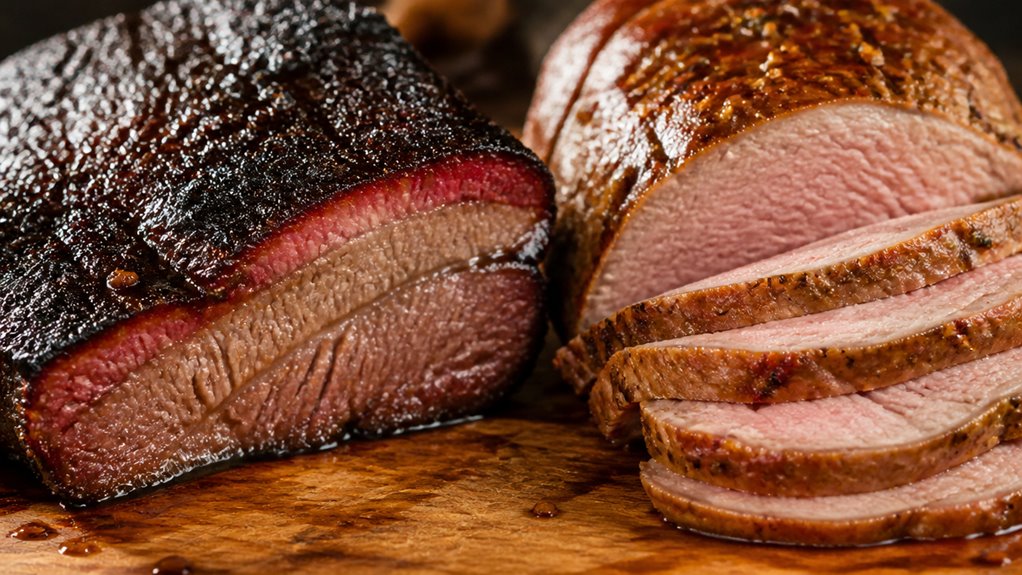
Brisket, often smoked, develops a distinctive barbecue character that’s less intensely beefy than chuck but more complex in texture. Understanding these nuances helps you choose the cut that best suits your desired flavor and cooking method. Smoking brisket fat-side-down can enhance bark development and smoke ring for a more visually appealing and flavorful result.
Why Low-And-Slow Cooking Works For Both Cuts?
Low-and-slow cooking is a game changer, especially when it comes to cuts like brisket and roast. You see, this method really helps break down that tough collagen, turning it into tender, mouthwatering gelatin. Pretty amazing, right?
Now, keeping a close eye on the temperature is key here. It prevents the meat from drying out or getting tough, which is something we definitely want to avoid. With this slow cooking process, the muscle fibers have all the time they need to soften up. The result? A tender, flavorful dish that you can enjoy every single time. Managing internal temperature carefully ensures optimal collagen breakdown and prevents overcooking.
Collagen Breakdown Benefits
Unfastening the full potential of brisket and chuck roast depends largely on breaking down their dense collagen through low-and-slow cooking.
Collagen, a tough connective tissue, dissolves into gelatin at low temperatures over extended periods. This transformation changes both cuts from tough to tender and moist.
This process enhances texture and mouthfeel, revealing rich flavors and juiciness that quick cooking can’t achieve.
When you cook low and slow, you:
- Convert collagen into gelatin, delivering a silky, luscious bite.
- Allow muscle fibers to relax gradually, avoiding toughness.
- Preserve moisture within the meat, preventing dryness.
For best results, aiming for an internal temperature around 203°F ensures optimal collagen breakdown and juiciness.
Temperature Control Importance
When cooking brisket or chuck roast, maintaining a consistent low temperature is essential for transforming their tough connective tissues into tender, flavorful meat.
Low-and-slow cooking ensures the collagen within these cuts dissolves gradually into gelatin without toughening the muscle fibers.
Rapid heat causes protein contraction, squeezing out moisture and resulting in dryness and chewiness.
By controlling the temperature precisely, generally between 200°F and 275°F, you allow the fat and connective tissue to render evenly, enhancing juiciness and richness.
Both cuts demand patience; brisket often requires longer due to its dense connective tissue, while chuck’s higher marbling softens more quickly.
Ultimately, temperature control balances breakdown and moisture retention, releasing each cut’s full flavor potential and delivering a tender, satisfying eating experience.
Using a water pan during cooking can help maintain moisture and stabilize temperature for optimal results.
Texture Transformation Process
Although brisket and chuck roast come from different parts of the cow and have distinct muscle structures, both cuts undergo a vital texture transformation when cooked low and slow.
This method breaks down tough connective tissues, turning collagen into gelatin, which tenderizes the meat and enhances juiciness.
The slow, gentle heat allows fat to render gradually, lubricating muscle fibers and creating a tender, moist texture.
You’ll notice that rapid cooking toughens these cuts, but extended low temperatures reveal their full potential.
Key aspects of this transformation include:
- Collagen conversion to gelatin, softening the bite and adding moisture.
- Gradual fat melting, ensuring tenderness and richness.
- Muscle fiber breakdown, making slicing and shredding easier.
Understanding this process helps you optimize cooking for both brisket and chuck roast.
Cost Comparison: Brisket vs Chuck Roast
Understanding the cost difference between brisket and chuck roast can help you make smarter choices for your meals and budget.
Brisket typically costs more due to its demand in barbecue and longer cooking times, averaging around $8 per pound. Chuck roast, often priced near $6 per pound, offers a more economical option without sacrificing the slow-cooked richness you expect.
| Cut | Average Price (per lb) | Cooking Time |
|---|---|---|
| Brisket | $8 | 10-12+ hours (smoking) |
| Chuck Roast | $6 | 3-4 hours (braising) |
| Value | Moderate to High | Longer cook, higher cost |
Choosing between the two hinges on budget priorities and cooking style preferences.
Best Uses For Brisket And Chuck Roast
In selecting the ideal cut for your meal, consider how brisket and chuck roast cater to distinct culinary purposes.
Brisket excels in smoked barbecue and sliced beef dishes, where its robust flavor and textured grain shine. Chuck roast suits pot roasts, stews, and shredded beef, offering versatility and a tender, buttery finish when slow-cooked.
Brisket shines in smoked barbecue and sliced dishes, while chuck roast is perfect for tender pot roasts and stews.
Choose brisket for barbecue identity and dishes requiring uniform slicing, especially the flat cut. Opt for chuck roast when you want a budget-friendly, all-purpose cut ideal for braises and slow cooker recipes.
Use brisket’s point cut for fattier, more marbled barbecue preparations, enhancing juiciness and flavor depth. Understanding these uses helps you match the cut to your cooking style and desired flavor profile effectively.
How To Cook And Slice Brisket And Chuck Roast?
Knowing the best uses for brisket and chuck roast sets the stage for mastering their cooking and slicing techniques.
When cooking brisket, low-and-slow smoking or oven roasting at low temperature breaks down its dense connective tissue over 12+ hours, yielding tender meat.
Slice brisket thinly, always against the grain, to counter its coarse muscle fibers and assure tenderness.
Chuck roast, with more internal marbling, cooks faster in braises or pot roasts at moderate low heat, typically 3-4 hours, producing a softer texture.
When slicing chuck roast, cut across the grain but thickness can vary depending on dish—thicker for stew, thinner for sandwiches.
Mastering these techniques maximizes each cut’s texture and eating quality, respecting their distinct muscle structures and collagen content.
Tips For Getting The Most Flavor And Tenderness
Although brisket and chuck roast demand patience, applying targeted techniques can unlock their full flavor and tenderness potential. You need to respect their connective tissue and marbling differences to optimize cooking.
For brisket, low-and-slow smoking or braising converts collagen into gelatin, enhancing juiciness and creating a distinctive barbecue profile. Chuck roast benefits from slow braising to render its internal fat, yielding a buttery, tender texture with deep beefy notes.
Monitor internal temperature carefully to avoid drying out leaner brisket flats. Slice brisket against the grain to counteract its coarse muscle fibers. Use braising liquids enriched with aromatics to penetrate chuck roast’s marbled muscles.
Master these tactics, and you’ll consistently elevate both cuts’ eating experience.
Frequently Asked Questions
Can Brisket and Chuck Roast Be Used Interchangeably in Recipes?
You can use brisket and chuck roast interchangeably in some slow-cooked recipes, but expect differences.
Brisket needs longer cooking to tenderize its tough connective tissue.
Chuck roast cooks faster due to more internal fat.
Flavor and texture will vary; brisket offers a smoky, coarse grain while chuck roast delivers a richer, buttery finish.
Adjust cooking time and method to suit each cut’s unique qualities for best results.
What Is the Shelf Life of Brisket Versus Chuck Roast in the Refrigerator?
You’d think brisket and chuck roast could last forever in your fridge, but they can’t.
Typically, you’ve got about 3 to 5 days for either raw brisket or chuck roast when stored properly at or below 40°F.
Cooked versions hold up around 3 to 4 days.
Brisket’s higher fat content doesn’t extend freshness, so always check for off smells or sliminess before cooking or eating.
How Do Brisket and Chuck Roast Differ in Nutritional Content?
You’ll find brisket generally leaner with fat concentrated on the outside, making it lower in intramuscular fat than chuck roast.
Chuck roast has more marbling and internal fat, increasing its calorie and fat content.
Nutritionally, brisket offers slightly less saturated fat and fewer calories per serving, while chuck roast provides richer fat and a more tender texture post-cooking.
Your choice depends on whether you prioritize leaner protein or richer flavor and mouthfeel.
Are There Specific Marinades That Work Best for Brisket or Chuck Roast?
If flavor were a dance, brisket loves a smoky, tangy marinade with ingredients like mustard, vinegar, and Worcestershire sauce to break down its toughness and enhance its barbecue soul.
Chuck roast, on the other hand, thrives with rich, savory marinades featuring garlic, herbs or soy sauce, which tenderize and boost its deep beefy notes.
Tailor your marinade to each cut’s texture and flavor for the best results.
Can Brisket or Chuck Roast Be Cooked Successfully on a Grill?
Yes, you can successfully cook both brisket and chuck roast on a grill, but you’ll need to use indirect, low-and-slow heat to tenderize these tough cuts.
Brisket benefits from long, slow smoking that breaks down connective tissue, while chuck roast responds well to slow grilling wrapped in foil or a smoker box.
Avoid direct flames and high heat, as they’ll dry out or toughen the meat rather than tenderize it.
Compare Brisket and Chuck Roast for Flavor, Texture, and Value
When choosing between brisket and chuck roast, consider your flavor and texture preferences alongside cooking time and budget.
Both cuts thrive with low-and-slow methods, releasing rich, tender results like slow-cooked treasures unearthed from a bygone era.
Brisket offers a smoky, fibrous bite, while chuck roast delivers a beefier, melt-in-your-mouth experience.
Armed with this knowledge, you’ll confidently select and prepare the perfect cut, ensuring every meal is a savory success.