How to Grill Ribs Quickly: Easy and Effective Cooking Tips
Choose smaller ribs like baby backs or rib tips for faster cooking. Preheat your grill to 300–325°F and use a two-zone setup. Sear ribs over direct heat briefly, then finish them indirectly.
Wrap ribs in foil around 150–160°F to lock in moisture and speed tenderness. Monitor with a meat thermometer, aiming for 190–205°F internal temperature. Add sauce near the end to avoid burning.
Follow these steps to master quick, flavorful rib grilling and avoid common pitfalls.
Key Takeaways
- Choose smaller ribs like baby back or rib tips for faster cooking and easier portioning.
- Preheat grill to 300°F–325°F and use a two-zone setup for searing and indirect cooking.
- Start ribs over direct heat briefly for color, then move to indirect heat to finish cooking evenly.
- Wrap ribs in heavy-duty foil at 150–160°F internal temperature to lock moisture and reduce cooking time.
- Apply sauce only in the last 3–5 minutes to prevent burning and maintain flavor.
Pick the Fastest Ribs for Quick Grilling

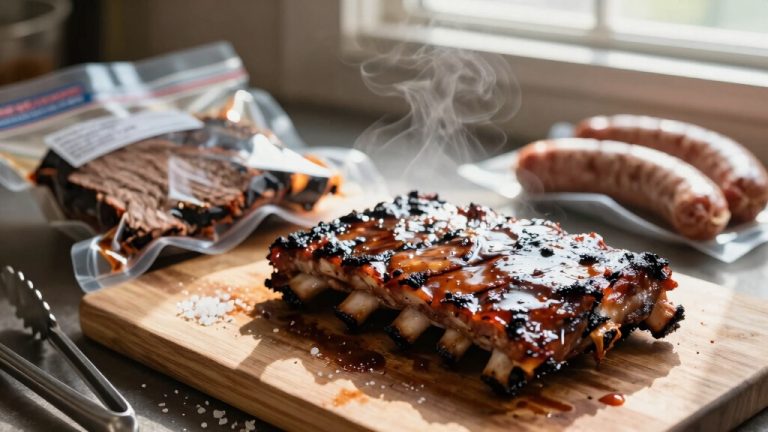
Choose your ribs wisely to speed up grilling without sacrificing flavor. Opt for smaller, thinner racks like baby back ribs, which cook faster than larger spareribs.
Country-style ribs offer a great shortcut; their thick, steak-like meat grills quicker than bone-in spare ribs. Rib tips and individual rib portions are also smart choices—they finish much faster than whole racks.
Avoid full racks if you’re pressed for time, as they require markedly longer cooking. Cutting ribs into smaller sections reduces grilling time and ensures more even heat distribution. Maintaining a consistent temperature during grilling is key to achieving tender, flavorful ribs quickly.
Preheat Your Grill to the Perfect Temperature
So, you want to get your grill ready, right? Start by preheating it to about 300°F. This way, you’ll speed up the cooking process without toughening those delicious ribs.
Now, let’s talk about temperature control. It’s super important! Keeping an even heat helps avoid those pesky flare-ups that can burn your meat.
And hey, don’t rush it! Taking a little time to stabilize the heat before you start grilling really pays off. You’ll get consistent results every single time. Happy grilling!
For best results, consider using pellet grill temperatures to maintain steady heat and enhance smoke flavor.
Ideal Grill Temperature
Although it might be tempting to crank the heat to the highest setting, preheating your grill to a steady temperature around 300°F strikes the best balance between speed and tenderness when grilling ribs quickly.
This temperature allows the ribs to cook faster than traditional low-and-slow methods without risking toughness. Maintaining consistent heat is vital to avoid flare-ups and uneven cooking, especially if you’re using indirect heat.
Use a reliable thermometer to monitor the grill temperature. Aim for 300°F to 325°F for efficient cooking with foil wrapping or uncovered ribs.
Avoid temperatures above 400°F unless you’re closely monitoring to prevent burning. Use indirect heat to control flare-ups and cook ribs evenly.
Preheating guarantees stable heat for consistent results and shorter cooking times. Smoking at 300°F encourages the Maillard reaction, which enhances flavor development while maintaining tenderness.
Preheating Benefits Explained
When you preheat your grill to the perfect temperature, it creates a stable cooking environment that guarantees ribs cook evenly and efficiently. This step ensures the grill reaches the target heat, around 300°F for quick ribs, before you start cooking. Without preheating, your ribs cook inconsistently, risking underdone or burnt spots. It also minimizes flare-ups and shortens overall cooking time.
| Benefit | Explanation |
|---|---|
| Even Cooking | Maintains consistent heat across the grill. |
| Time Efficiency | Reduces total cook time. |
| Flavor Development | Helps sear meat quickly for better taste. |
| Reduced Flare-ups | Prevents sudden flames from dripping fat. |
| Moisture Retention | Locks juices by starting at stable heat. |
Preheat to optimize each grilling phase and achieve tender, flavorful ribs fast. Adjusting your grill’s vents and airflow during preheating helps maintain a controlled temperature for the best results.
Temperature Control Tips
Because consistent temperature is essential for quick, tender ribs, mastering grill heat control sets the foundation for success.
You’ll want to preheat your grill to an ideal range, typically around 300°F, balancing speed and tenderness. Avoid temperature fluctuations by monitoring heat closely and adjusting vents or burners as needed.
Keep these tips in mind for precise temperature control:
- Preheat grill fully before placing ribs to guarantee steady heat.
- Use indirect heat to prevent flare-ups and burning.
- Consider foil wrapping ribs at 325°F for faster, moist cooking.
- Employ a reliable meat thermometer to track internal temperature toward 190°F–205°F for tender results.
For best results, tightly wrap ribs in heavy-duty aluminum foil to lock in moisture and enhance tenderness during cooking.
Understand Quick Grill Temperatures for Ribs
When grilling ribs, you’ll want to aim for temperatures between 300°F and 325°F. This range helps speed up the cooking process while still keeping those ribs nice and tender.
If you’re in a hurry, cranking it up to around 400°F can really cut down on cooking time. Just keep a close eye on them, though; higher heat can dry out the meat if you’re not careful.
For best results, monitoring the internal temperature of the ribs is essential to ensure tenderness and prevent drying out.
Optimal Temperature Ranges
Mastering ideal temperature ranges is essential for grilling ribs quickly without sacrificing tenderness or flavor.
You want to balance heat intensity so ribs cook fast but stay juicy and tender. Aim for a grill temperature around 300°F to accelerate cooking without toughening the meat.
Wrapping ribs in foil and cooking at about 325°F traps moisture and further speeds the process. Avoid very high temperatures that can dry out ribs or cause uneven cooking.
Maintain 300°F for direct grilling with careful attention. Use 325°F for foil-wrapped ribs to lock in moisture. Avoid temperatures above 350°F to prevent toughness.
Monitor internal rib temperature aiming for 190°F to 205°F for tenderness. Controlling heat precisely makes certain quick, flavorful ribs every time.
For best results, wrap ribs when they reach the 150–160°F internal temperature window to lock in moisture and accelerate tenderness development.
High Heat Considerations
When grilling ribs quickly at high heat, striking the right temperature balance is essential to avoid drying out or burning the meat. Aim for grill temperatures around 300°F to 325°F for faster cooking without sacrificing moisture.
If you push heat to 400°F, monitor ribs closely since this speed demands constant attention to prevent charring. Using foil wrap at 325°F traps steam and accelerates cooking while maintaining juiciness.
Start ribs briefly over direct heat for color, then move them to indirect heat to finish evenly. Preheat your grill thoroughly and place ribs bone-side down to shield meat from intense flames.
Always use a meat thermometer to track doneness, targeting 190°F to 205°F internal temperature for tender results without drying out your ribs.
Controlling airflow and oxygen levels can help maintain consistent cooking temperatures and extend your grill’s heat duration.
Balancing Speed And Tenderness
Although grilling ribs quickly demands higher temperatures, you must carefully balance heat to preserve tenderness without extending cook times unnecessarily.
Aim for grill temperatures around 300°F to 325°F to speed cooking while maintaining juiciness. Use foil wrapping to trap moisture and accelerate the process, and monitor internal temperature to avoid toughness.
Choosing smaller rib cuts like baby backs or rib tips also reduces cook time and helps maintain tenderness.
- Grill at 300°F–325°F for prime speed and tenderness balance
- Wrap ribs in foil to retain moisture and speed cooking
- Use a meat thermometer to reach 190°F–205°F internal temperature
- Select smaller or cut-up rib portions for quicker, tender results
Balancing heat and timing is key to fast, tender ribs. However, avoid over-moisturizing surfaces before grilling to encourage crust formation and better texture.
Use Foil Wrapping to Speed Up Rib Cooking
By wrapping ribs in foil, you trap heat and moisture, markedly speeding up the cooking process while maintaining juiciness. This method works best after seasoning or applying a dry rub.
Set your gas grill to about 325°F and place the foil seam-side up to keep juices inside. Typically, ribs wrapped this way cook in 60 to 75 minutes, sometimes up to 2 hours for larger racks.
This technique reduces the cooking time noticeably compared to traditional low-and-slow methods while preserving tenderness. Wrapping creates a sealed, moist environment that accelerates cooking by reducing the stall duration.
| Aspect | Recommendation |
|---|---|
| Grill Temperature | 325°F |
| Cooking Time | 60–75 minutes (up to 2 hours) |
| Foil Placement | Seam-side up |
| Preparation Stage | After seasoning/rub |
| Benefit | Traps moisture, speeds cook |
Use foil wrapping to efficiently grill juicy ribs fast.
Start With Direct Heat and Finish With Indirect Heat
Since direct heat quickly builds color and grill marks, you’ll want to start your ribs over a hot flame briefly before moving them to indirect heat.
Starting ribs over direct heat quickly develops color and grill marks before finishing over indirect heat for tenderness.
This two-stage grilling method guarantees you get that appealing caramelization without burning the ribs.
Begin by placing the ribs directly over the flame for 5 to 15 minutes, depending on heat intensity, to develop a flavorful crust.
Then, relocate the ribs to indirect heat to finish cooking gently, preserving juiciness and tenderness.
Start over direct heat at around 500°F for 5–15 minutes to sear.
Move ribs to indirect heat at 300–325°F to cook through.
Position ribs bone-side down to protect meat from flare-ups.
Finish with a short direct heat blast to caramelize sauce if desired.
This method balances speed with quality.
Check Rib Doneness Using Temperature and Appearance
After you’ve developed a flavorful crust and moved the ribs to indirect heat, it’s time to determine when they’re perfectly cooked. Use a meat thermometer to check the internal temperature; aim for 190°F to 205°F for tender ribs.
Temperatures around 145°F are safe but won’t yield that fall-off-the-bone texture. Alongside temperature, examine the ribs’ appearance: the meat should pull back about 1/4 to 1/2 inch from the bone.
Look for visible tenderness and slight bone separation, which indicate doneness. Avoid relying solely on time; ribs vary by size and grill heat.
Checking both temperature and appearance makes certain you pull ribs off at peak tenderness, avoiding toughness or undercooking. This precise approach guarantees flavorful, juicy ribs every time you grill quickly.
Add Sauce at the End to Prevent Burning
Although it’s tempting to slather sauce on ribs early for maximum flavor, applying it too soon can cause the sugars to burn and turn bitter during a fast cook.
To keep your ribs perfectly caramelized without burning, wait until the final minutes of grilling to add the sauce. This approach preserves the sauce’s sweetness and avoids unpleasant charred flavors.
Keep these points in mind when saucing your ribs:
Apply sauce during the last 3 to 5 minutes of cooking.
Use a brush to evenly coat without drenching the meat.
Finish with a short direct-heat blast to caramelize the sauce.
Avoid repeated saucing sessions to prevent buildup and burning.
This method guarantees your ribs stay juicy with a balanced, smoky-sweet finish.
Use a Meat Thermometer to Nail the Timing
To make certain your ribs reach the perfect tenderness without drying out or undercooking, a meat thermometer is your best tool.
Ensuring perfectly tender ribs without drying out is easy with a reliable meat thermometer.
Aim for an internal temperature between 190°F and 205°F; this range guarantees the meat pulls back from the bone and becomes tender.
Checking temperature is more reliable than guessing cook time, especially with faster grilling methods.
Insert the thermometer probe into the thickest part, avoiding bones for an accurate reading.
Monitor early and often once you approach 180°F to avoid overshooting.
Remember, pork is safe at 145°F, but ribs won’t be tender until much hotter.
Using a meat thermometer lets you nail the timing precisely, preventing guesswork and delivering juicy, perfectly cooked ribs every time.
Prevent Flare-Ups and Overcooking When Grilling Ribs
When grilling ribs quickly, flare-ups can easily char the meat and ruin your cook. Controlling heat and managing grease are essential to prevent overcooking and maintain juicy results.
To avoid flare-ups, use indirect heat whenever possible and keep your grill clean of excess fat drippings. Place ribs bone-side down to shield the meat from direct flames.
Monitor the temperature closely and add sauce only near the end to prevent burning sugars.
Preheat grill to stabilize temperature and reduce flare-ups.
Use a two-zone setup: direct heat for searing, indirect to finish.
Trim excess fat to minimize grease dripping and flames.
Keep a spray bottle handy to quickly douse flare-ups.
These steps help you maintain control, ensuring perfectly cooked ribs without charring or drying out.
Frequently Asked Questions
What Type of Wood Chips Add the Best Flavor for Quick-Grilled Ribs?
Hickory wood chips add the best bold, smoky flavor for quick-grilled ribs, giving you that classic barbecue taste.
Applewood chips offer a milder, slightly sweet smoke that complements pork nicely without overpowering.
If you want something more subtle, cherry wood chips provide a fruity aroma and rich color.
Soak your chips before grilling and add them to a smoker box or foil pouch for consistent smoke during your faster rib cook.
How Long Should Ribs Rest After Grilling Before Serving?
You should let ribs rest for about 10 to 15 minutes after grilling. This pause is just enough time to finish prepping your sides.
Resting lets juices redistribute, making the meat juicier and more tender when you cut into it. Don’t skip this step; otherwise, you’ll lose moisture right away.
Tent the ribs loosely with foil to keep them warm and let that carryover cooking work its magic before serving.
Can Marinating Ribs Reduce Cooking Time Significantly?
Marinating ribs won’t markedly reduce cooking time since ribs need to reach a specific internal temperature for tenderness and safety.
However, marinating can help tenderize the meat slightly and add flavor.
To speed cooking, focus on factors like rib cut, grill temperature, and foil wrapping.
Use a meat thermometer to guarantee proper doneness, as marinating alone won’t make ribs cook much faster or more thoroughly.
What Side Dishes Pair Best With Quickly Grilled Ribs?
You’ll want side dishes that complement smoky, tender ribs without overpowering them.
Classic options like coleslaw, baked beans, and cornbread provide sweet, tangy, and hearty contrasts.
Grilled vegetables or a crisp green salad add freshness and balance.
Potato salad or mac and cheese offer creamy textures that pair beautifully with ribs.
Choose sides that enhance flavors while keeping your meal balanced and satisfying.
How Do I Adjust Cooking Times for High-Altitude Grilling?
At high altitudes, water boils at lower temperatures, so you’ll need to increase your cooking time by about 10-25%.
Keep your grill temperature steady around 300°F to compensate for thinner air and slower heat transfer.
Use a reliable meat thermometer to check for ribs reaching 190°F to 205°F internally.
Wrapping ribs in foil helps retain moisture, preventing dryness during the extended cook time you’ll require at altitude.
How to Grill Ribs Quickly Without Drying Them Out
Grilling ribs quickly demands a balance between speed and care. While high heat accelerates cooking, it risks drying out your meat.
Slower indirect heat preserves juiciness but takes longer. By mastering temperature control, using foil wrapping, and timing your sauce application, you can achieve tender, flavorful ribs without compromise.
Remember, quick grilling isn’t about rushing; it’s about smart techniques that deliver delicious results efficiently every time.