What Does Chili Powder Do for Smoking Meat: Flavor and Benefits
When you use chili powder for smoking meat, you add earthy, mildly sweet heat and a rich red-brown color. This deepens the flavor and enhances the visual appeal.
It helps form a delicious crust by promoting caramelization and a textured bark that locks in moisture. Chili powder blends well with smoky paprika, garlic, and cumin, creating balanced layers of flavor on fatty cuts like brisket or meat shoulder.
Keep exploring to uncover expert tips on rub application and flavor pairing.
Key Takeaways
- Chili powder adds earthy, mildly sweet, and peppery flavors that enhance the savory profile of smoked meat.
- It promotes the formation of a textured, flavorful bark by adhering well and encouraging caramelization.
- Chili powder imparts a deep red-brown color that improves the visual appeal of smoked meat crusts.
- When combined with salt, sugar, and paprika, chili powder balances heat and sweetness to prevent scorching.
- Applying chili powder rub at least an hour before smoking helps develop a moist, flavorful crust and pellicle.
What Flavor and Heat Chili Powder Adds to Smoked Meat?

When you reach for chili powder in your spice rack, you’re adding more than just heat to your smoked meat. You’re building a complex flavor foundation.
Chili powder contributes earthy, mildly sweet, and pepper-forward notes that deepen the savory profile without overwhelming the meat. It’s a core element in many barbecue rubs, blending seamlessly with salt, garlic, paprika, and cumin to create balanced seasoning layers.
Unlike pure chile powders, chili powder offers mild to moderate heat, often softer and more nuanced. This makes it perfect for long smoking sessions. Many popular seasoning blends include chili powder combined with garlic powder and black pepper for a well-rounded flavor profile.
Which Meats Benefit Most From Chili Powder Rubs
Chili powder really shines when it comes to meats that have rich, robust textures, like brisket, meat shoulder, and ribs. You know, those cuts that just beg for some deep flavor?
The earthy, savory notes of chili powder create a complex flavor foundation that’s hard to beat. Plus, its mild heat and vibrant color really enhance these meats without hiding their natural taste. That’s how you get that amazing smoky bark everyone loves!
But don’t overlook chicken and leaner meat cuts! They can definitely benefit from a chili powder rub too—just be sure to balance it out. When you do, you’ll add a nice depth of flavor without overpowering their lighter profiles. It’s all about finding that sweet spot!
For the best results, pairing chili powder rubs with woods like hickory, which offers a sweet, mild smoky flavor, can enhance the overall taste experience without overwhelming the meat’s natural profile, thanks to its steady burn characteristics.
Best Meats For Chili
Several meats truly shine when enhanced with chili powder rubs, each benefiting from its savory, earthy notes and balanced heat.
You’ll find chili powder elevates beef brisket and meat shoulder by deepening flavor without overpowering. It also complements ribs, adding complexity to the smoky crust.
Chicken benefits by gaining a subtle warmth and vibrant color, while meat ribs develop a rich, savory bark. When using chili powder, consider the meat’s fat and texture to maximize flavor absorption.
Maintaining balanced airflow during smoking helps chili powder rubs develop a flavorful, textured bark that enhances the overall meat experience.
| Meat | Flavor Benefit | Best Use |
|---|---|---|
| Beef Brisket | Earthy, balanced heat | Long smoke, bark development |
| meat Shoulder | Deep savoriness | Pulled meat, slow smoking |
| Ribs | Complex crust | Dry rub, moderate heat |
| Chicken | Mild warmth, color | Whole or pieces, grilled |
| meat Ribs | Rich, smoky bark | Low & slow smoking |
Meat Texture And Flavor
Although chili powder enhances a variety of meats, its true magic shines on cuts with rich textures and robust flavors that can hold up to its earthy, savory notes.
Meats like brisket, meat shoulder, ribs, and beef chuck soak up the mild heat and complex spice layers without getting overwhelmed.
Their dense fibers and higher fat content create a perfect canvas for chili powder’s nuanced blend, allowing the rub to form a flavorful bark that complements smoky undertones.
Chicken and leaner cuts benefit too, but you’ll find the seasoning truly elevates meats that develop deep, tender textures during long smoking sessions.
When you use chili powder on these cuts, you release layers of flavor that enhance every bite without masking the meat’s natural character.
For cuts like brisket, selecting the right USDA grade ensures optimal marbling that works harmoniously with bold rubs like chili powder.
Why Chili Powder Works Perfectly in Dry Rubs?
Chili powder really shines when it comes to creating that delicious, savory bark on your meat. You’ll find that it locks in all those smoky flavors beautifully.
Plus, its earthy and slightly sweet notes add depth to the overall taste without taking away from the natural juices.
When you’re applying a dry rub with chili powder, it’s like setting the stage for a crust that not only tastes amazing but also looks fantastic. It’s all about that perfect balance!
Incorporating smoky paprika alongside chili powder can add an extra layer of depth while preserving the natural flavors of the meat.
Enhances Bark Formation
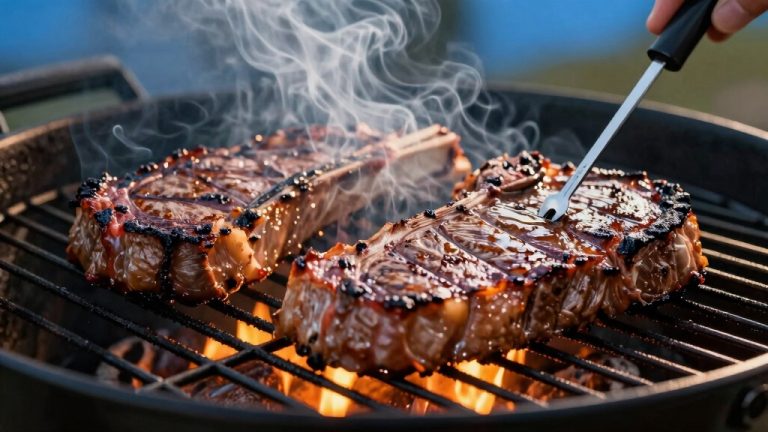
Chili powder plays a crucial role in forming the distinctive bark on smoked meat by creating a dry, flavorful crust that locks in moisture and enhances texture.
When you apply a chili powder-based rub, its combination of spices, salt, and sugar encourages caramelization and Maillard reactions on the meat’s surface.
This results in that coveted dark, savory crust barbecuers prize. You’ll notice the rich red-brown color and a slightly crisp texture that contrasts beautifully with the tender interior.
Coarse spices like 16 mesh black pepper can be combined with chili powder in rubs to add a crunchy texture and enhance flavor complexity in the bark.
| Component | Role in Bark Formation | Effect on Meat |
|---|---|---|
| Chili Powder | Adds color and mild heat | Enhances crust depth |
| Sugar | Caramelizes during smoke | Creates slight crispness |
| Salt | Draws moisture outward | Helps dry rub adhere |
Using chili powder in your rub guarantees you get bark that’s both flavorful and visually appealing.
Boosts Flavor Depth
The rich, savory crust formed by chili powder-based rubs doesn’t just look and taste great. It also sets the stage for deeper, more complex flavors to develop throughout the smoking process.
When you apply a chili powder rub, you’re layering earthy, mildly sweet, and pepper-forward notes that complement smoke without overwhelming the meat. This broad, balanced flavor base enhances each bite, allowing subtle nuances to emerge as the meat absorbs smoke and heat.
Unlike harsher spices, chili powder’s mild heat blends smoothly, enriching the taste profile while supporting other rub ingredients like garlic, cumin, and paprika. By using chili powder in your dry rubs, you create a dynamic seasoning foundation that deepens flavor complexity and elevates your smoked meat to bold, mouthwatering perfection.
It’s often combined with paprika and brown sugar to provide both sweetness and smoky warmth, which helps form a rich, red-hued crust during cooking.
How Chili Powder Builds Bark and Crust on Smoked Meat?
When you apply a dry rub containing chili powder, it doesn’t just season the meat. It actively helps develop the signature bark that defines smoked barbecue.
Chili powder’s fine texture adheres well to meat, forming a flavorful layer that dries and tightens during smoking. Combined with salt and sugar in rubs, it fosters a crust that’s both savory and slightly caramelized without becoming wet or mushy.
This crust or bark locks in moisture and intensifies flavor with every bite. Applying the rub ahead of time lets chili powder bind deeply to the surface, ensuring the bark builds gradually as smoke and heat work their magic.
Ultimately, chili powder gives you that satisfying, textured crust that transforms smoked meat from good to unforgettable. Its role in promoting caramelization and Maillard reactions is key to creating that distinctive flavor and texture.
How Chili Powder Changes the Color of Barbecue Rubs?
A rich, vibrant color can make your barbecue rub as appealing as its flavor.
A bold, vibrant color can elevate your barbecue rub’s visual appeal just as much as its taste.
Chili powder plays a pivotal role here, imparting a deep red-brown tint that enhances the visual allure of your rub.
When you mix chili powder with paprika, it creates that classic reddish bark so prized in smoked meats.
Darker chili powders or smoked chili varieties deepen the crust’s color, making it look rich and mouthwatering.
This color effect is most pronounced in dry rubs, where the spices cling directly to the meat’s surface, unlike in sauces or marinades.
Keep in mind that chili powder blends vary widely by brand, so the intensity of color can differ.
Using the right chili powder guarantees your barbecue looks as good as it tastes.
For the best adherence and color impact, apply the dry rub generously and press firmly to help the spices form a pellicle on the meat surface before cooking.
Balancing Chili Powder With Other Spices in Rubs
Color sets the stage, but flavor wins the meal. Chili powder shines brightest when paired thoughtfully with other spices in your rub.
You want to build layers: the earthy, mildly sweet notes of chili powder blend seamlessly with garlic and onion powders for savory depth.
Paprika adds vibrant color and a subtle smoky undertone, while cumin brings warmth and complexity.
Salt balances and enhances all flavors, and a touch of black pepper or cayenne lets you dial the heat precisely.
Remember, chili powder’s moderate heat acts as a foundation, so don’t overpower it with too much spice.
Crafting your rub means balancing these elements so chili powder supports, not dominates, the meat’s natural flavor and the smoke’s richness.
This creates a harmonious, mouthwatering crust every time.
For the best flavor development, ensure that your seasoning complements the meat’s internal temperature by monitoring with leave-in probes during smoking.
When and How to Apply Chili Powder Rubs for Best Results?
Mastering the timing and technique of applying chili powder rubs can transform your smoked meat from good to unforgettable.
Apply the dry rub generously on all sides at least an hour before smoking to let the spices bind and penetrate the meat surface.
For deeper flavor, rub it on immediately after trimming, then wrap and refrigerate the meat overnight.
This allows chili powder’s savory, earthy notes to develop and meld with the meat. Use your hands to massage the rub in, ensuring even coverage without clumps.
Avoid applying too close to cooking time, as the rub needs time to form that signature bark.
Tips for Enhancing Smoke Flavor With Chili Powder
When you want to boost the smoky depth of your meat, incorporating chili powder strategically can make all the difference.
Start by choosing a chili powder blend that complements your smoke profile. Smoked chili or chipotle powders add richer, deeper notes.
Select chili powders like smoked chili or chipotle to deepen and enrich your smoke’s flavor profile.
Apply your chili powder-based rub at least an hour before smoking to let the spices bind and form a savory bark.
Balance chili powder with salt, paprika, garlic, and a touch of sugar to enhance color and crust without scorching.
For more heat, blend in cayenne carefully. Use chili powder on cuts like brisket or meat shoulder, which soak up smoke well.
Finally, pair chili powder with wood types like hickory or mesquite to harmonize its earthy, peppery flavors with robust smoke. This elevates your barbecue to the next level.
Frequently Asked Questions
Can Chili Powder Be Used in Marinades for Smoked Meat?
Yes, you can use chili powder in marinades for smoked meat, but keep in mind it’s more common in dry rubs.
Chili powder adds savory, earthy notes and a mild heat that infuses well when left to marinate. Just balance it with acidic ingredients like lime juice or vinegar to help tenderize the meat.
Since chili powder is a dry spice blend, mixing it with oil or liquid ensures it coats the meat evenly before smoking.
How Does Chili Powder Affect the Shelf Life of Smoked Meat?
Chili powder doesn’t appreciably extend the shelf life of smoked meat on its own. While its spices may offer mild antimicrobial properties, they won’t replace proper smoking, curing, or refrigeration.
You should still store your smoked meat properly to prevent spoilage. Think of chili powder as enhancing flavor and bark formation rather than preservation.
For longer shelf life, focus on smoking techniques and safe storage rather than relying on chili powder’s seasoning.
Is Chili Powder Suitable for Vegetarian or Vegan Smoked Dishes?
Yes, chili powder is perfect for vegetarian or vegan smoked dishes.
You’ll find it adds rich, savory layers and a mild heat that complements vegetables, tofu, tempeh, or plant-based proteins beautifully.
It enhances smoky flavors without overpowering, creating a balanced, complex profile.
Just mix it into your rubs or marinades to boost depth and color.
You can confidently use chili powder to elevate any plant-based smoked meal.
What Are Common Mistakes When Using Chili Powder in Smoking?
Don’t let chili powder become the villain in your barbecue story.
Common mistakes include using too much, which can overpower your meat’s natural flavor, or not applying it early enough, missing out on that flavorful bark.
Another pitfall is ignoring brand variations; some powders pack more heat or salt than others.
Finally, avoid mixing it with too much sugar; it can scorch during smoking, leaving a bitter crust instead of a savory masterpiece.
Can Chili Powder Cause Allergic Reactions in Some People?
Yes, chili powder can cause allergic reactions in some people, especially if they’re sensitive to chili peppers or the spices blended into the mix.
You might experience symptoms like itching, swelling, or digestive issues if you’re allergic. Always check ingredient labels carefully since chili powder blends vary widely.
If you’re cooking for others, it’s wise to ask about allergies beforehand to avoid triggering any reactions during your smoking sessions.
Final Thoughts on Using Chili Powder for Smoked Meat
You might think chili powder’s just a spicy add-on, but it’s quietly doing the heavy lifting. It builds bark, deepens color, and balances heat in your smoked meat.
It’s ironic how such a simple spice can transform your rub into a complex flavor symphony. It enhances smoke without stealing the spotlight.
So next time you skip it, remember: you’re missing the secret hero that makes your barbecue unforgettable. Don’t underestimate chili powder’s smoky magic.