What to Stuff a Smoked Turkey With: Best Flavor Ideas
When stuffing a smoked turkey, prioritize food safety by using a loosely packed bread base like toasted sourdough or cornbread to absorb moisture without sogginess.
Enhance flavor with sautéed onions, celery, fresh sage, and savory meats like ground sausage or meat for depth.
Add fruits like diced apples and toasted pecans for balance and texture.
Remember, smoking slows heat penetration, so consider cooking stuffing separately or monitoring temps closely to keep everything safe and tasty.
More insights can elevate your preparation.
Key Takeaways
- Use classic bread cubes like sourdough, French, or cornbread as a base for texture and moisture absorption in smoked turkey stuffing.
- Incorporate sautéed onions, celery, garlic, and fresh herbs like sage and thyme for a savory, aromatic flavor foundation.
- Add cooked meats such as ground sausage or meat for rich, smoky depth and contrasting textures.
- Include fruits like diced Granny Smith apples or dried cranberries and toasted nuts to balance richness with brightness and crunch.
- Prepare stuffing separately or ensure it reaches 165°F safely when inside to avoid food safety risks and uneven cooking.
Why You Might Want to Skip Stuffing Your Smoked Turkey?

Although stuffing a turkey is a traditional practice, you might want to skip stuffing your smoked turkey to guarantee food safety and peak cooking results.
While traditional, stuffing a smoked turkey can compromise safety and cooking quality—consider skipping it for best results.
When you stuff the bird, the interior temperature of the stuffing must reach 165°F to be safe. This can slow down cooking and risk uneven heat distribution.
Smoking cooks at lower temperatures over longer periods, making it harder for the stuffing to reach this safe threshold without overcooking the turkey.
Additionally, stuffing inside the bird traps moisture, potentially preventing the skin from crisping and causing uneven smoke flavor penetration.
For ideal texture, flavor, and safety, it’s best to prepare your stuffing separately. This allows you full control over cooking times and ensures both the turkey and stuffing reach their ideal doneness.
Smoking at a steady temperature of 225–250°F helps maintain even cooking and moisture retention, which can be compromised by stuffing the bird.
Food Safety Tips for Smoked Turkey Stuffing
When you’re smoking a turkey, it’s super important to keep food safety in mind—especially when it comes to the stuffing. You see, stuffing inside the bird can be a bit tricky. If it doesn’t reach the right temperature, it can hold onto bacteria, which is definitely something you want to avoid. Always use a reliable meat thermometer to ensure the stuffing reaches a safe internal temperature throughout.
Stuffing Safety Risks
Because smoking a turkey involves lower and slower cooking temperatures, you need to be extra cautious with stuffing safety to prevent bacterial growth.
Stuffing inside the bird can stay in the temperature “danger zone” (40°F–140°F) too long, allowing harmful bacteria to multiply.
The USDA advises against smoking a stuffed turkey because the stuffing center may not reach a safe 165°F as quickly as the meat.
If you choose to stuff, prepare ingredients separately, combine just before cooking, and make certain the stuffing cooks thoroughly.
Also, avoid overpacking the cavity to promote even heat circulation.
Always use a food thermometer to check both the stuffing’s and the turkey’s internal temperatures.
Prioritize safety by considering cooking stuffing outside the bird when smoking your turkey.
When reheating a smoked turkey, it is crucial to ensure the internal temperature reaches at least 165°F for safety to prevent foodborne illness.
Proper Cooking Temperatures
Making sure your smoked turkey and its stuffing reach the proper internal temperatures is crucial for food safety and preventing foodborne illness.
You need to monitor both the turkey and stuffing carefully because undercooked stuffing can harbor harmful bacteria.
Here’s what you should do:
Use a food thermometer to check the thickest part of the turkey thigh and the center of the stuffing.
Confirm both reach at least 165°F (74°C) for safe consumption.
Avoid stuffing the turkey if you’re smoking it, as uneven heat can prevent the stuffing from cooking properly.
If you do stuff, prepare the stuffing separately and combine just before cooking.
Let the turkey rest 20 minutes after cooking to allow juices and heat to stabilize.
Following these steps makes certain safety without compromising flavor.
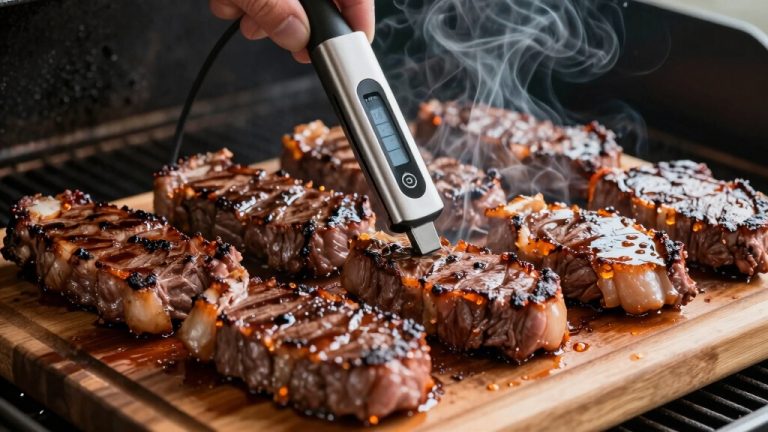
For best results, use a continuous probe thermometer to monitor internal temperatures accurately throughout the cooking process.
Best Bread Bases for Smoked Turkey Stuffing
When you’re making smoked turkey stuffing, the first step is choosing a sturdy bread base. You want something that can soak up all those delicious flavors without turning mushy, right? Classic bread cubes are a great option—they provide a neutral canvas that works perfectly with savory veggies and herbs.
On the other hand, if you’re looking for something a bit different, cornbread might be your go-to. It adds a nice crumbly texture and a hint of sweetness, which is fantastic if you’re going for bold, Southwestern-inspired seasonings. For best results, consider the moisture management of your stuffing ingredients to prevent sogginess and maintain texture during smoking.
Classic Bread Cube Options
Several types of bread cubes form an ideal base for smoked turkey stuffing, each bringing unique textures and flavors to the dish. Choosing the right bread guarantees your stuffing absorbs drippings well while maintaining structure.
Here are classic bread cube options to consider:
White bread: Soft texture, neutral flavor, soaks up moisture evenly.
French bread: Chewier crust adds texture contrast.
Whole wheat: Nutty flavor enhances depth, adds heartiness.
Sourdough: Slight tang complements smoky notes, holds shape well.
Italian bread: Dense crumb with crisp crust, balances softness and firmness.
Torn cubes work better than sliced for better absorption and texture.
Toasting cubes lightly before mixing prevents sogginess, guaranteeing the stuffing stays fluffy yet cohesive during smoking.
Maintaining temperature stability during smoking is essential to ensure the stuffing cooks evenly and safely inside the turkey.
Cornbread For Bold Flavors
While classic bread cubes like sourdough and French bread offer balanced textures and subtle flavors, cornbread brings a distinctly bold profile that stands up well to smoky turkey.
Its slightly sweet and crumbly texture complements robust seasonings and Southwestern-style fillings like roasted poblanos, black beans, and cilantro.
Cornbread readily absorbs drippings, enhancing moisture and flavor without becoming soggy if loosely packed.
To maximize depth, combine cornbread cubes with sautéed onions, celery, and sage cooked in butter or turkey drippings.
Adding ground sausage or nuts such as pecans further enriches the stuffing’s complexity.
Remember, prepare and cook stuffing separately to guarantee food safety.
Using cornbread as your base allows you to craft a stuffing with layers of bold, smoky, and savory flavors that won’t be overshadowed by the turkey’s rich aroma.
For an authentic smoky flavor that complements your cornbread stuffing perfectly, consider using a charcoal drum smoker to infuse your turkey with rich, traditional smoke.
Bold Flavor Builders for Smoked Turkey Stuffing
Because smoked turkey benefits from robust, well-defined tastes, bold flavor builders become essential in stuffing recipes. You want ingredients that hold their own against smoky richness and add depth.
Smoked turkey calls for bold, well-defined flavors that stand up to its rich, smoky depth.
Start by sautéing onions, celery, and sage in butter or turkey drippings to create a savory foundation. Then, consider these powerful additions:
- Ground sausage for richness and seasoning
- Sautéed mushrooms and wild rice for an earthy, umami punch
- Meat paired with shallots and shredded Brussels sprouts for smoky texture
- Toasted nuts to add crunch and complexity
- Sharp cheeses that melt into the mixture, enhancing flavor layers
Incorporating these bold components will elevate your smoked turkey stuffing, ensuring every bite complements the smoky, juicy meat without being overshadowed. For best results, allow the turkey to come to room temperature before stuffing to promote even cooking and flavor distribution, a crucial step in preparing raw turkey legs.
Fruits, Nuts, and Herbs for Smoked Turkey Stuffing
When you want to brighten and balance the rich, smoky flavors of your turkey stuffing, incorporating fruits, nuts, and fresh herbs is key. Diced Granny Smith apples introduce a tart juiciness that cuts through the richness.
Dried cranberries add subtle sweetness and a vibrant color contrast. Toasted pecans or walnuts contribute a satisfying crunch and deepen the flavor profile.
Fresh herbs like sage, thyme, parsley, and rosemary bring aromatic complexity, enhancing the traditional poultry notes. For added brightness and moisture, consider placing citrus quarters—lemon, orange, lime, or grapefruit—inside the cavity.
These elements not only elevate the taste but also help maintain moisture, ensuring your smoked turkey stuffing is flavorful and perfectly balanced. Using a water pan during smoking can help retain moisture in both the turkey and its stuffing by maintaining stable humidity levels.
Savory Vegetables and Meats for Smoked Turkey Stuffing
Enhance your smoked turkey stuffing by incorporating savory vegetables and meats that bring depth and texture.
Start with a sautéed blend of onions, celery, and garlic to build a rich umami base. Ground sausage adds a robust, seasoned richness that stands up well to smoke.
Mushrooms contribute earthiness and absorb smoky notes beautifully. Meat lends smoky depth and a crispy texture contrast.
For a hearty twist, roasted Brussels sprouts mixed with shallots provide a slightly bitter balance and crunch.
- Sautéed onions, celery, and garlic
- Ground sausage for richness
- Mushrooms for earthiness
- Crispy meat for smoky texture
- Roasted Brussels sprouts and shallots
These ingredients enhance flavor complexity and create a balanced, satisfying smoked turkey stuffing. Pairing these savory elements with a bold hickory smoke flavor can elevate the overall taste experience.
How to Serve and Boost Your Stuffed Smoked Turkey?
Building on the rich flavors of savory vegetables and meats, serving your stuffed smoked turkey with complementary sides and finishing touches can elevate the entire meal.
Focus on balance: pair the smoky richness with bright, acidic, or crunchy elements. Offer sauces like tangy cranberry relish or a citrus herb gravy to enhance moisture and flavor contrast.
| Side Dish | Flavor Profile | Serving Tip |
|---|---|---|
| Roasted Root Veggies | Earthy, sweet | Serve warm, tossed in fresh herbs |
| Citrus Salad | Bright, invigorating | Add nuts for texture and crunch |
| Wild Rice Pilaf | Nutty, savory | Incorporate dried fruit and herbs |
| Cranberry Sauce | Tart, sweet | Prepare fresh for vibrant color |
These choices help boost your stuffed smoked turkey, creating a memorable, well-rounded feast.
Frequently Asked Questions
Can I Prepare Smoked Turkey Stuffing Ahead and Refrigerate It?
Yes, you can prepare smoked turkey stuffing ahead and refrigerate it.
Just make sure to cook any raw meat or sausage thoroughly before mixing.
Assemble your stuffing, cover it tightly, and refrigerate for up to 24 hours.
When ready, reheat it separately to 165°F before serving.
Avoid stuffing the turkey before smoking to prevent food safety risks.
Prepare and cook stuffing outside the bird to guarantee safety and flavor.
What Types of Wood Are Best for Smoking Turkey?
You might worry fruit woods taste too sweet or overpower the turkey, but that’s not the case if you balance them right.
The best woods for smoking turkey include apple, cherry, and pecan, which offer a mild, slightly sweet flavor complementing the meat’s natural taste.
Hickory and maple add a richer, deeper smoke, but use them sparingly to avoid bitterness.
Avoid strong woods like mesquite; they can overwhelm your turkey’s delicate flavor.
How Long Should Smoked Turkey Rest Before Carving?
You should let your smoked turkey rest for about 20 minutes before carving.
This resting period allows the juices to redistribute, ensuring moist, flavorful meat.
Tent the bird loosely with foil to retain warmth.
Avoid cutting too soon, or the juices will run out, leaving dry meat.
Use this time to prepare your carving tools and plating, making sure your turkey stays hot and juicy when you serve it.
Can I Use Gluten-Free Bread for Stuffing?
You absolutely can use gluten-free bread for stuffing, and it works beautifully.
Picture golden, toasted cubes soaking up savory drippings, mingling with sautéed onions, herbs, and maybe some sausage or nuts.
Just choose a sturdy gluten-free bread that holds its shape well.
Remember to toast it first for better texture and to avoid sogginess.
This way, your stuffing stays flavorful and safe, complementing your smoked turkey perfectly.
What Side Dishes Complement Smoked Turkey Stuffing?
You’ll want sides that balance the smoky richness of the stuffing.
Roasted Brussels sprouts with meat or sautéed wild rice with mushrooms complement earthy flavors.
Cornbread or herb-infused bread rolls add a comforting touch.
Bright, acidic sides like cranberry sauce or a citrusy salad cut through the richness.
Mashed potatoes or sweet potatoes provide creamy texture.
Don’t forget a fresh herb gravy to tie everything together perfectly.
Smoked Turkey Stuffing: Flavor, Safety, and Preparation
If you skip stuffing your smoked turkey, you’re missing out on a flavor explosion that could rival a five-star feast!
But if you do stuff it, you’ve got to nail food safety to avoid turning dinner into a disaster.
Choose your bread base wisely, pile on bold flavors, and don’t forget fruits, nuts, and savory touches. They transform ordinary into extraordinary.
Master this, and you’ll serve a turkey so unforgettable, guests will be dreaming about it for years!