How Long Does Homemade Beef Jerky Last in the Fridge
You can keep homemade beef jerky refrigerated for 1 to 2 weeks if it’s fully dried, cooled to room temperature, and stored airtight in the coldest part of your fridge at 34°F to 40°F.
Proper drying, including reaching 160°F internally and low moisture, plus vacuum sealing, can extend quality up to a month.
Watch for mold or off smells as spoilage signs. Understanding these storage and safety factors helps you maximize jerky freshness and flavor.
Key Takeaways
- Homemade beef jerky typically lasts 1 to 2 weeks in the refrigerator when properly dried and stored.
- Fully cool and dry jerky before refrigerating to prevent condensation and mold growth.
- Store jerky in airtight or vacuum-sealed containers to minimize moisture and oxygen exposure.
- Maintain refrigerator temperature between 34°F and 40°F for optimal jerky preservation.
- Discard jerky immediately if it develops off odors, mold, or unusual texture changes.
How Long Does Homemade Beef Jerky Last in the Fridge?

Typically, homemade beef jerky lasts between one to two weeks in the fridge when stored properly. You should use airtight or resealable containers to minimize moisture exposure, which significantly affects shelf life.
While some sources suggest jerky can last up to a month refrigerated, consuming it within 1–2 weeks guarantees optimal safety and freshness, aligning with food science recommendations. Avoid placing warm jerky directly into the fridge, as condensation promotes spoilage.
Keep the jerky in the coldest part of your fridge, away from direct moisture. If you notice unusual odors, texture changes, or mold, discard the jerky immediately. By maintaining proper storage practices and consuming within this timeframe, you reduce the risk of bacterial growth and ensure the jerky’s quality remains intact. For longer preservation, consider using vacuum-sealed bags and freezing the jerky to maintain freshness and prevent freezer burn.
Ingredients and Drying Methods That Extend Jerky’s Shelf Life
Because the drying method and ingredients you choose directly affect the jerky’s longevity, understanding their roles is essential for extending shelf life.
Proper drying reduces moisture, limiting bacterial growth, while certain ingredients inhibit spoilage. To maximize shelf life, focus on:
- Drying Technique: Use low, consistent heat to thoroughly remove moisture without cooking the meat. Achieve a water activity below 0.85 to prevent microbial growth.
- Curing Agents: Incorporate curing salts like sodium nitrite, which inhibit Clostridium botulinum and other pathogens. This extends safe refrigeration time.
- Marinade Composition: Include acidic components such as vinegar or citrus juice. They lower pH, discouraging bacterial proliferation and enhancing preservation.
Additionally, always ensure the jerky reaches an internal temperature of 160°F to safely eliminate harmful bacteria during the drying process, a critical step for food safety.
How Temperature and Preparation Affect Homemade Beef Jerky Storage?
You definitely want to let your homemade beef jerky cool down to room temperature before tossing it in the fridge. This little step helps prevent condensation, which can lead to mold growth—yikes!
Also, keeping your fridge at a steady, cool temperature is key. Ideally, you should store the jerky in the coldest spot. This way, you not only maintain the texture but also keep it safe to eat.
Ensuring the jerky is fully cooled and moisture-free before sealing is essential to prevent microbial growth during storage.
Cooling Before Refrigeration
Before placing homemade beef jerky in the refrigerator, make sure it has completely cooled to room temperature. Putting warm jerky in the fridge causes condensation, which increases moisture and promotes bacterial growth. This reduces shelf life. Cooling also stabilizes jerky texture and flavor.
To optimize storage, follow these key steps:
- Cool the jerky on a wire rack for even air circulation.
- Avoid covering jerky while cooling to prevent trapped moisture.
- Confirm jerky is fully dried before refrigeration; partial drying invites mold.
Evidence shows that skipping this step compromises safety and freshness. It often shortens fridge life to less than one week. Proper cooling before refrigeration supports the recommended 1 to 2-week safe consumption window for homemade beef jerky. Proper moisture control and maintaining water activity levels are essential for preserving jerky safety during storage.
Ideal Fridge Temperature
Properly cooling your homemade beef jerky sets the stage for effective refrigeration, where maintaining the ideal fridge temperature plays a significant role in preserving quality and safety.
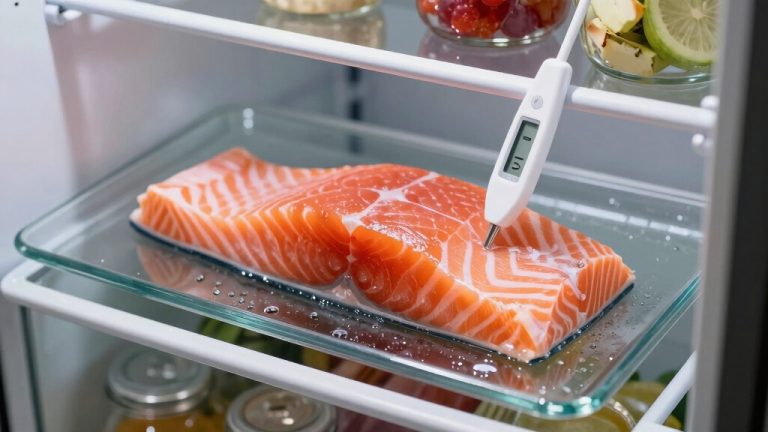
You should keep your fridge between 34°F and 40°F (1°C to 4°C) to inhibit bacterial growth while avoiding freezing textures.
Placing jerky in the coldest section, usually near the back or bottom, guarantees a consistent temperature.
Avoid storing jerky near moisture-prone areas to prevent mold development.
Additionally, jerky must be fully dried and cooled before refrigeration; warm or moist jerky accelerates spoilage.
Using airtight or vacuum-sealed containers at this temperature range extends shelf life up to two weeks, aligning with USDA recommendations for homemade jerky safety and freshness.
Consistent temperature control is critical to prevent microbial hazards and maintain jerky’s texture and flavor.
Marinating the meat in a sealed bag for at least 6 hours before drying helps enhance flavor and ensures even dehydration.
Best Storage Methods to Keep Homemade Beef Jerky Fresh Longer
When aiming to extend the freshness of homemade beef jerky, selecting the right storage method is essential. Proper storage minimizes moisture exposure and bacterial growth, preserving texture and flavor.
Follow these evidence-based strategies:
- Use airtight or vacuum-sealed bags. Vacuum sealing reduces oxygen, markedly slowing spoilage and extending fridge life up to a month, compared to 1–2 weeks in standard ziplock bags.
- Store jerky in the coldest part of your fridge, usually the back or bottom, to maintain a consistently cool temperature and inhibit microbial activity.
- Make certain jerky is fully cooled and dried before refrigeration. Warm or moist jerky encourages condensation and mold, reducing shelf life.
Implementing these methods will optimize your homemade jerky’s safety and quality during its refrigerated storage period. Additionally, keeping jerky stored at or below 40°F helps prevent microbial growth and maintain quality.
How to Store Jerky to Prevent Mold and Spoilage?
To keep your jerky safe from mold and spoilage, it’s super important to store it in an airtight container. This really helps block out moisture and limit any mold growth.
Oh, and a key tip: make sure the jerky is completely cooled to room temperature before you seal it up. Trapping heat can lead to condensation inside the container, which is a recipe for spoilage.
For longer storage, especially if you don’t use curing salt, it’s best to refrigerate or freeze the jerky to maintain safety and freshness.
Airtight Container Importance
Seal your homemade beef jerky in an airtight container to markedly reduce exposure to moisture and airborne contaminants that promote mold growth. This step is essential to preserving texture and safety during refrigeration.
Moisture accelerates spoilage by encouraging microbial growth, so limiting air contact is key.
To optimize storage, follow these guidelines:
- Use vacuum-sealed bags or containers with tight seals to prevent humidity infiltration.
- Place jerky in the coldest part of your fridge to maintain consistent low temperatures.
- Avoid containers that allow air exchange, such as loosely closed bags or unsealed jars.
Adhering to airtight storage protocols greatly extends jerky’s fridge life, keeping it safe for 1 to 2 weeks. This method minimizes spoilage risks and preserves flavor by controlling environmental variables effectively. Additionally, ensuring proper moisture control and dehydration temperature during preparation is critical for safe storage and long-lasting quality, as outlined in the Drying Methods group.
Proper Cooling Techniques
Allow your homemade beef jerky to cool completely to room temperature before refrigerating to prevent condensation buildup. This buildup promotes mold growth and spoilage.
Warm jerky traps moisture inside storage containers, increasing humidity and encouraging bacterial proliferation. Once cooled, store the jerky in airtight containers or resealable bags to maintain dryness.
Avoid refrigeration if the jerky isn’t fully dried, as residual moisture accelerates spoilage. Place the sealed container in the coldest part of the fridge, typically near the back or bottom, to maintain a stable low temperature.
Vacuum sealing further reduces oxygen exposure, extending shelf life up to a month. Proper cooling combined with airtight, moisture-free storage markedly reduces mold risk and preserves jerky’s texture and flavor for the recommended 1 to 2 weeks.
For best results, ensure your jerky has reached the target internal temperature of 160°F during drying to guarantee food safety before storage.
How to Tell If Your Homemade Beef Jerky Has Gone Bad?
Frequently, identifying spoiled homemade beef jerky hinges on detecting clear signs of deterioration. You should systematically evaluate its smell, texture, and appearance to guarantee safety.
Here are three key indicators:
- Unusual Odors: If your jerky emits sour, rancid, or off-putting smells, bacterial growth or spoilage is likely.
- Texture Changes: Excessive softness, sliminess, or a sticky surface indicates moisture intrusion and microbial activity.
- Visible Mold: White spots or fuzzy patches on the jerky surface confirm fungal contamination.
If any of these signs appear, discard the jerky immediately to avoid foodborne illness. Regularly inspecting your jerky using these criteria helps maintain food safety and prevents consumption of spoiled products. Proper storage, such as refrigeration at or below 40°F, is essential to prolong shelf life and maintain quality, as noted in storage guidelines.
When Is the Best Time to Eat Homemade Beef Jerky for Optimal Flavor?
After ensuring your homemade beef jerky hasn’t spoiled, the next consideration is when to consume it for the best flavor experience.
Prime taste occurs within the first week of refrigeration, as the meat’s texture and seasoning are freshest.
Prime flavor peaks during the first refrigerated week when texture and seasoning are at their freshest.
Beyond this period, flavor compounds may degrade, and moisture absorption can soften the jerky, diminishing its chewiness and overall appeal.
If you vacuum-seal your jerky, you can extend this window slightly, but even then, consuming it within two weeks maintains peak quality.
Avoid waiting too long, as microbial growth risks increase and flavors deteriorate.
To preserve flavor, store jerky in airtight containers at consistent fridge temperatures and consume promptly.
Prioritize the initial 7 to 14 days for the best balance of safety and taste.
Frequently Asked Questions
Can Homemade Beef Jerky Be Frozen for Longer Storage?
Yes, you can freeze homemade beef jerky to extend its shelf life markedly beyond refrigeration limits. Freezing slows bacterial growth and moisture buildup, preserving texture and flavor.
Make sure to vacuum-seal or tightly wrap the jerky to prevent freezer burn. When frozen properly, your jerky can last several months.
Just thaw it in the fridge before eating to maintain safety and quality. Avoid refreezing once thawed to keep it fresh.
Is It Safe to Eat Jerky Past Its Recommended Fridge Storage Time?
You shouldn’t eat jerky past its recommended fridge storage time. Eating it risks spoilage, bacterial growth, and mold development.
It compromises safety, taste, and texture. Jerky shows signs like off smells, sliminess, or discoloration when bad.
Stick to 1–2 weeks for best quality. If you notice any spoilage signs, discard it immediately.
Prioritize safety over saving jerky to avoid foodborne illness and maintain peak flavor.
How Does Humidity in the Fridge Affect Jerky Preservation?
Humidity in your fridge directly impacts jerky preservation by promoting moisture absorption. This can lead to mold growth and spoilage.
High humidity compromises the jerky’s dryness, reducing its shelf life. It can also cause texture changes like softness or sliminess.
To maintain freshness, store jerky in airtight or vacuum-sealed containers. This minimizes moisture exposure.
Keeping the jerky dry inside the fridge is essential for safe, longer-lasting preservation.
Can Marinades Impact the Shelf Life of Homemade Beef Jerky?
Yes, marinades can impact your homemade beef jerky’s shelf life.
Ingredients like salt and curing agents in marinades act as preservatives, extending freshness by inhibiting bacterial growth.
However, sugary or acidic components might increase moisture retention, potentially reducing shelf life by promoting spoilage.
You should balance marinade ingredients carefully and make sure your jerky is thoroughly dried before refrigeration to maximize safety and longevity.
Always check for spoilage signs regardless.
What Is the Best Way to Rehydrate Jerky for Recipes?
To rehydrate jerky for recipes, soak it in warm water or broth for 20 to 30 minutes until it softens without becoming mushy.
Use broth to add flavor, especially in stews or soups. Avoid boiling, which can toughen the jerky.
You can also simmer gently for 10–15 minutes if you need faster rehydration.
Pat it dry before use to control moisture in your dish and retain the jerky’s texture.
Homemade Beef Jerky Shelf Life: What You Need to Know
Now that you know how ingredients, drying methods, and storage impact your homemade beef jerky’s fridge life, the question remains: how long will yours truly last?
The answer hinges on your preparation and vigilance. Store it properly, watch for signs of spoilage, and you’ll extend its freshness.
But beware, ignore these factors, and what seemed like a tasty snack could quickly turn into a risky bite. Your next jerky experience depends on what you do now.