How to Use Butcher Paper: Step-by-Step Guide
You use butcher paper to wrap meat during smoking to lock in moisture while allowing excess steam to escape, preserving a crisp bark without sogginess.
Make sure to choose food-grade, uncoated, and unwaxed paper designed for heat resistance.
Wrap the meat tightly burrito-style when it hits the stall around 165–175°F.
Insert your thermometer probe gently through the paper to monitor temperature without unwrapping.
Keep your meat wrapped during resting to maintain juiciness and bark texture.
There’s more to mastering butcher paper wrapping that enhances your smoke game.
Key Takeaways
- Wrap meat burrito-style using butcher paper’s waxy side against the meat for a tight, moisture-locking seal during smoking.
- Wrap when meat temperature stalls around 165–175°F to retain moisture and push through cooking plateau.
- Use multiple folds with seam down and tuck paper tightly under meat to prevent air gaps and tearing.
- Insert a clean thermometer probe gently through butcher paper near the thickest part for accurate temperature monitoring without unwrapping.
- Rest wrapped meat 30 minutes at room temperature or several hours in a cooler to redistribute juices while preserving bark texture.
What Is Butcher Paper and Why It’s Ideal for Smoking Meat?

When you wrap your smoked meat in butcher paper, you’re choosing a material that’s both durable and breathable, making it ideal for preserving flavor and texture.
Butcher paper is a thick, uncoated sheet made from unbleached kraft pulp, designed to withstand heat without releasing harmful chemicals.
Butcher paper is thick, uncoated, heat-resistant, and made from unbleached kraft pulp without harmful chemicals.
Its breathability allows moisture to escape during cooking, preventing sogginess while maintaining juiciness inside.
Many butcher papers have two sides: a waxy side for sealing and a plain paper side, letting you wrap meat securely.
Standard widths range from 18 to 24 inches, covering large cuts like brisket fully.
This combination of strength and permeability helps develop a desirable bark while keeping the meat moist.
Butcher paper is a preferred choice over foil or plastic wrap in smoking.
It is also FDA-compliant and safe for wrapping meat during long cooking processes, ensuring food safety throughout.
Choosing Safe Food-Grade Butcher Paper
Although butcher paper looks simple, selecting food-grade, unwaxed varieties is essential to guarantee safety during smoking.
You want paper made from uncoated, unbleached kraft pulp to avoid harmful chemicals that might release under high heat.
Avoid waxed or coated papers since the coatings can melt or emit toxins when exposed to smoke or heat.
Food-grade butcher paper is breathable, allowing moisture to escape, which helps maintain the meat’s texture and prevents sogginess.
When shopping, check the packaging or product description to make certain it’s specifically labeled food-grade and unwaxed.
Standard widths between 18 to 24 inches work best for wrapping large cuts like brisket fully.
Using the right paper keeps your meat safe, flavorful, and lets you get the best results from your smoking process.
It is important to use butcher paper that can withstand moderate heat and avoid temperatures above 450°F to prevent tearing or burning.
Why Butcher Paper Preserves Bark Better Than Foil?
Selecting the right butcher paper sets the stage for preserving your meat’s bark. Here’s why it outperforms foil.
Butcher paper is breathable, allowing moisture to escape while trapping enough juices to prevent dryness. This balance keeps the bark crisp rather than soggy, unlike foil, which seals in moisture completely.
Butcher paper breathes, releasing excess moisture while locking in juices for a perfectly crisp bark every time.
Foil creates steam that softens the bark. Its porous nature also prevents condensation buildup, maintaining the bark’s texture. Additionally, butcher paper’s flexibility lets you tightly wrap your meat without tearing.
This guarantees consistent heat distribution. Foil’s lack of breathability and rigidity often leads to a less desirable bark texture. By choosing butcher paper, you guarantee a flavorful, crunchy bark that enhances your smoked meat’s quality without compromising moisture retention. Butcher paper’s porous and breathable nature absorbs fat and juices, promoting smoke penetration and enhancing flavor complexity.
How to Prepare Meat Before Wrapping in Butcher Paper?
Prepare your meat by allowing it to develop a rich bark during the initial smoking phase before wrapping.
Smoke the meat uncovered to build a flavorful crust, which is essential for texture and taste.
Once the meat reaches the stall temperature, usually between 165°F and 175°F for brisket, inspect the bark.
If dry spots appear, spritz or brush them lightly with water or broth to maintain moisture and pliability.
Tear a piece of food-grade butcher paper slightly larger than the meat to guarantee full coverage.
Position the meat so the waxy side of the paper contacts the surface, promoting a proper seal.
Wrapping at this prepared stage retains moisture while allowing the bark to breathe during continued cooking.
This technique balances moisture retention with bark preservation by utilizing butcher paper’s breathable properties.
When and Why to Wrap Meat in Butcher Paper?
You’ll want to wrap your meat in butcher paper once it hits the stall, which usually happens around 165–175°F. This step is key because it helps you push through the cooking process without losing moisture.
Now, why butcher paper? Well, it allows the meat to breathe, which is great for maintaining that crispy bark you love. Unlike foil, which can trap steam and make things soggy, butcher paper strikes the perfect balance.
It locks in juiciness while keeping the texture just right during those final cooking stages. Trust me, your taste buds will thank you!
Butcher paper’s porosity allows moisture escape, preserving bark better than foil while still moderately speeding the cook.
Ideal Wrapping Temperature
Although it might be tempting to wrap your meat early for convenience, the ideal time to use butcher paper is when the brisket hits the “stall” stage, usually around 165–175°F. At this point, the meat’s temperature plateaus as moisture evaporates, slowing cooking.
Wrapping then traps moisture, speeds cooking, and preserves bark texture. Wrapping too early inhibits bark formation; too late risks drying.
Maintaining a stable smoker temperature around 225°F during this phase helps ensure consistent heat and reduces the duration of the stall effect.
| Temperature Range (°F) | Effect on Meat | Wrapping Recommendation |
|---|---|---|
| Below 160 | Bark forming, moist | Don’t wrap yet |
| 165 – 175 | Stall, moisture loss | Wrap to retain moisture |
| 180+ | Cooking resumes | Keep wrapped until done |
| 195 – 205 | Tenderness achieved | Unwrap, rest before slicing |
| Post-cook | Resting phase | Keep wrapped to retain juices |
Benefits Over Foil
Knowing when to wrap your meat sets the stage for choosing the right material. Butcher paper outperforms foil when you want to maintain a crispy bark and allow the meat to breathe.
Unlike foil, butcher paper’s breathability prevents moisture buildup, avoiding sogginess while keeping juices inside. This balance preserves texture without sacrificing flavor.
You’ll also find butcher paper more flexible, reducing the risk of tearing during wrapping and handling. It’s ideal during the stall phase when you want to lock in moisture yet allow the bark to develop.
Foil works best only if maximum juice retention is your priority, like for pouring over the meat later. Butcher paper’s breathability and durability make it your go-to when texture and moisture balance matter most.
Additionally, butcher paper slows cooking enough to enhance smoke absorption and smoke ring development, giving your ribs a deeper flavor profile.
How to Wrap Meat Burrito Style?
Wrapping meat burrito style is pretty straightforward. First, you’ll want to take your butcher paper and fold it over one long side, tucking it snugly under the meat. This part is key—make sure it’s tight!
Next, you’ll fold the short ends in, just like you’re wrapping a present. You want to ensure there are no gaps here, so everything stays nice and secure.
Finally, just place the seam side down when you’re done. This helps keep the wrap secure and prevents it from opening up while it cooks. And there you have it—easy peasy!
For the best results, always use FDA-approved uncoated butcher paper to avoid any risks during cooking.
Burrito Fold Steps
Start your burrito-style wrap by laying the butcher paper flat and placing the meat near one long edge. This positioning allows you to fold the paper snugly around the meat.
Follow these burrito fold steps to make certain a tight, secure wrap:
Fold the long edge over the meat, pressing firmly to create a seal. Tuck the paper under the meat, rolling tightly to eliminate air pockets.
Fold in the short ends like wrapping a present, making sure no gaps remain. Roll the meat completely until fully enclosed, with the seam facing down to prevent unwrapping during cooking.
This method keeps the meat moist while allowing it to breathe. It preserves bark texture and enhances smoke penetration. Wrapping meat in this way is especially effective when managing the stall phase during smoking to retain moisture and tenderness.
Paper Tucking Techniques
Once you’ve laid the foundation with the burrito fold, mastering the art of paper tucking guarantees your meat stays securely wrapped.
Start by folding the paper tightly under the meat, eliminating gaps. Tuck the short ends firmly, like wrapping a present, ensuring no openings for heat or moisture to escape.
Secure folds prevent tearing and preserve the bark’s texture. Remember to keep the seam facing down when placing the meat back on the smoker.
Using butcher paper allows the brisket to breathe, which helps preserve the bark texture while maintaining moisture.
| Emotion | Technique |
|---|---|
| Confidence | Tight folds |
| Satisfaction | Seam down |
| Security | No gaps |
| Pride | Neat tucking |
| Assurance | Complete coverage |
This method locks in flavor and moisture, making your smoked meat a masterpiece.
Seam Placement Tips
Although wrapping meat burrito style requires careful folding, placing the seam correctly is essential to maintain a tight seal and prevent moisture loss.
When you fold the butcher paper, make sure the seam faces down. This prevents it from opening or burning during cooking. Press the seam firmly to lock in juices and keep the wrap snug around the meat.
Overlap the paper adequately to avoid gaps that let heat or smoke escape.
Keep these seam placement tips in mind:
Position the seam on the smoker’s cooler side to reduce burn risk.
Apply firm pressure along the seam for a secure seal.
Use double layers for larger cuts to reinforce the seam.
Tuck ends tightly like a present to fully enclose the meat.
Proper seam placement makes certain your meat stays juicy and flavorful throughout smoking.
How to Wrap Meat Present-Style?
Master the present-style wrap by centering the meat on a flat sheet of butcher paper and folding opposite corners over it first, creating a secure base.
Center the meat on butcher paper and fold opposite corners first for a secure, stable wrap.
Next, fold the remaining two corners over the meat, overlapping edges tightly to form a neat package. Tuck and roll the butcher paper snugly around the meat, ensuring no gaps remain.
Press firmly with each fold to maintain a compact shape, which aids in even cooking and moisture retention.
Always place the seam side down when returning the wrapped meat to the smoker to prevent unwrapping or burning.
This technique works best for smaller cuts and offers excellent coverage without excess paper.
How to Monitor Meat Temperature Through Butcher Paper?
You can easily keep an eye on your meat’s temperature by slipping a thermometer probe right through the butcher paper. Pretty handy, right? This way, you don’t have to unwrap anything, which helps keep the meat sealed and retains all that precious heat.
Plus, it gives you accurate readings without any fuss. Regularly checking the temperature is a great way to ensure you hit that perfect doneness. You can keep the cooking process smooth and uninterrupted, and that’s always a win!
Thermometer Probe Insertion
Insert your thermometer probe directly through the butcher paper to monitor the internal temperature without unwrapping the meat. This method lets you track progress without disturbing the bark or letting heat escape.
When inserting the probe, be mindful of these tips:
Choose a spot near the thickest part of the meat for an accurate reading.
Insert the probe gently to avoid tearing the paper excessively.
Push the probe deep enough to reach the center but avoid touching bone or fat, which can mislead readings.
Seal any small holes in the paper after insertion to minimize moisture and heat loss.
Temperature Checks Without Unwrapping
How can you accurately monitor the internal temperature of your meat without unwrapping it and risking heat loss or bark disturbance?
Simply insert your thermometer probe directly through the butcher paper. The paper’s flexibility allows the probe to penetrate without tearing or compromising the wrap’s seal.
This method preserves heat and maintains the bark’s integrity while providing an accurate temperature reading.
To avoid contamination, clean the probe before insertion and carefully push it straight into the thickest part of the meat.
Check the temperature quickly to minimize heat escape. Using this technique, you can confidently track your meat’s progress without interrupting the cooking environment, ensuring perfectly cooked, juicy results every time.
Resting and Finishing Meat Wrapped in Butcher Paper
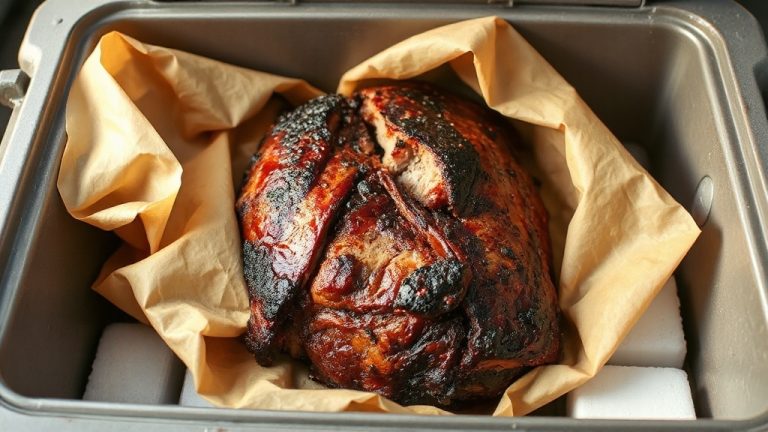
When resting meat wrapped in butcher paper, keeping it covered allows the juices to redistribute while preserving the bark’s texture.
Resting meat in butcher paper locks in juices and keeps the bark perfectly crisp.
This breathable wrap keeps moisture in without making the bark soggy, unlike foil. To rest your meat properly:
Place the wrapped cut on a baking tray to catch any drips.
Let it rest for 30 minutes at room temperature or 2–4 hours in a towel-lined cooler.
Keep the seam side down to prevent the paper from opening or drying out the meat.
If needed, unwrap and return the meat to the smoker for 15–30 minutes to firm the bark.
These steps guarantee juicy, tender meat with a well-maintained crust ready to serve.
Using Butcher Paper for Wild Game Storage
To store wild game properly, start by tearing off a length of butcher paper that’s a bit longer than you need to allow for folding and sealing.
Lay the paper flat, place the game on the waxy side if available, and fold the larger side over tightly to create a secure seam.
Apply firm pressure with each fold to keep the meat compact and minimize air exposure.
Seal the end with masking tape to make certain the package stays closed during freezing.
Label the package clearly with the date and contents.
Butcher paper’s breathability prevents moisture buildup, reducing freezer burn risk while preserving quality better than plastic wrap or foil.
This method keeps your wild game fresh and ready for cooking whenever you need it.
Frequently Asked Questions
Can Butcher Paper Be Reused After Cooking?
You generally shouldn’t reuse butcher paper after cooking.
Once it’s been exposed to heat, moisture, and meat juices, the paper loses its structural integrity and can harbor bacteria.
Using fresh, food-grade butcher paper secures safety and maintains proper breathability for your next cook.
For best results and hygiene, always tear off a new sheet when wrapping meat, especially for smoking or storage purposes.
How Long Does Butcher Paper Keep Meat Fresh in the Fridge?
You can keep meat wrapped in butcher paper fresh in the fridge for about 3 to 5 days.
Make sure the paper is food-grade and unwaxed to avoid chemical leaching.
For best results, tightly wrap the meat, seal with tape if needed, and label it clearly.
Always store wrapped meat on a tray or plate to catch any drips.
Check for any off smells or discoloration before use.
Is Butcher Paper Safe for Oven Cooking at High Temperatures?
You can definitely trust butcher paper to handle high oven temperatures. It’s like armor for your meat!
Just make sure you’re using food-grade, unwaxed butcher paper, so no harmful chemicals sneak into your food.
It breathes well, letting moisture escape, which keeps your roast juicy without steaming it.
Avoid coated or waxed types in the oven, as they might melt or release toxins. Stick to uncoated kraft paper, and you’re good to go.
Can Butcher Paper Be Composted or Recycled After Use?
You can compost food-grade, uncoated butcher paper since it’s made from natural kraft pulp and breaks down well.
However, avoid composting butcher paper with wax or plastic coatings, as they don’t biodegrade.
Recycling butcher paper is less common because it’s often contaminated with food residue, which complicates processing.
To compost safely, remove any tape or non-paper materials and confirm with your local compost facility’s guidelines to guarantee proper disposal.
What’s the Difference Between Waxed and Unwaxed Butcher Paper?
Waxed butcher paper has a thin coating of wax, making it moisture-resistant and ideal for wrapping greasy or wet foods.
However, it’s not suitable for high-heat cooking.
Unwaxed butcher paper is uncoated, breathable, and food-grade safe for smoking meat.
It allows moisture to escape and prevents chemical release under heat.
You should use unwaxed paper when cooking or smoking, and waxed paper mainly for packaging and short-term storage.
The Best Way to Wrap Meat With Butcher Paper
So, you’ve learned that butcher paper isn’t just for wrapping meat. It’s your secret weapon for perfect bark and juicy tenderness.
Ironically, the “paper” that looks plain actually works harder than foil to keep your meat moist and flavorful.
Next time you smoke or store, skip the fancy wrap and grab butcher paper. You’ll wonder why you ever doubted this simple sheet could elevate your barbecue game so effortlessly.