Season Brisket Night Before: Does It Improve Flavor and Bark?
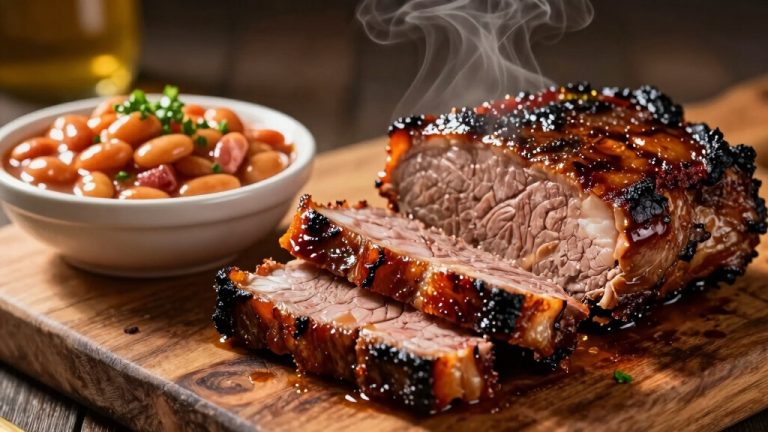
Seasoning your brisket the night before releases deeper, more complex flavors and creates a beautifully caramelized, crunchy bark.
Salt draws moisture to the surface, which then evaporates, leaving a glistening layer that helps the rub stick evenly and caramelize during smoking.
The slow salt absorption firms the texture and mellows savory notes, while overnight refrigeration dries the surface for a perfect bark.
Letting it rest before cooking guarantees even heat and smoke penetration.
Explore how to prep and apply your rub for the best results.
Key Takeaways
- Apply kosher salt first to draw moisture and enhance deep seasoning through overnight dry brining.
- Trim excess fat and pat brisket dry to ensure even rub adhesion and seasoning penetration.
- Rub brisket evenly on all surfaces, pressing gently to create a smooth, caramelizing layer for bark.
- Refrigerate uncovered on a wire rack overnight to dry the surface and develop a firmer, flavorful bark.
- Allow brisket to warm 30 minutes before smoking for consistent heat and improved smoke absorption.
Why Season Brisket Overnight: Key Benefits?

When you season your brisket overnight, you reveal a deeper, more complex flavor that simply can’t be rushed. By rubbing the meat and letting it rest in the refrigerator for 6 to 12 hours, the salt begins to penetrate the surface, enhancing seasoning beyond just the outer bark.
This dry brining process draws moisture to the surface, which then evaporates, helping the rub stick evenly and promoting better bark formation during cooking. You’ll also find that seasoning your brisket the night before eases your cooking day workflow, reducing last-minute prep and trimming.
This method isn’t just about flavor; it sets the stage for a well-textured, richly seasoned brisket that’s ready to smoke with less hassle and more confidence. Proper seasoning also complements bark development during cooking, which is crucial for achieving the desired texture and smoky flavor.
How Overnight Salt Enhances Brisket Flavor and Texture?
Although it takes time, salting your brisket overnight releases a depth of flavor and texture that’s impossible to achieve with a quick rub.
The salt draws into the meat, seasoning it beyond the surface and gently curing the brisket to develop a firmer, pinker texture.
As salt pulls moisture to the surface, it creates a glistening layer that, once refrigerated, dries slightly and helps form a smooth, caramelized coating with the rub.
This process enhances both the fat cap and meat, intensifying savory notes and improving tenderness.
The slow absorption also primes the brisket for better bark formation during smoking, giving you a beautifully textured crust.
Additionally, managing smoker humidity during the cook helps preserve the moisture drawn out by the salt, ensuring optimal bark development.
How to Prepare Your Brisket for Overnight Seasoning?
Alright, let’s dive into preparing your brisket for that overnight seasoning! First things first, you want to trim off any excess fat. This really helps to showcase the brisket’s natural texture.
Once that’s done, give it a good pat dry. This step is super important because it helps the rub stick better.
Now, it’s time for the fun part: the seasoning! Grab your favorite blend and spread it across every surface of the brisket. Make sure you get an even coat; you want all those flavors to soak in overnight.
Finally, place your seasoned brisket on a wire rack in the fridge. This allows air to circulate around it, which is key for deepening those delicious flavors while it rests. Trust me, you’ll be glad you took the time for this step!
For the best cooking results, make sure to insert your temperature probe in the thickest part of the flat muscle when you start smoking to monitor doneness accurately.
Trim And Dry Brisket
Trim your brisket carefully to remove any excessive fat and silver skin. This ensures the seasoning can penetrate the meat evenly overnight.
Use a sharp knife to gently peel away tough, silvery membranes and trim fat caps to about a quarter-inch thickness. Avoid thick slabs that slow seasoning absorption.
Next, pat the brisket dry with paper towels; this step is essential. A dry surface helps salt and spices cling, while moisture can create uneven seasoning spots.
You’ll notice the brisket’s texture shift slightly—firmer and less slick—ready to draw in flavors. Elevate the trimmed brisket on a wire rack so air can circulate, promoting gentle drying in the fridge.
This drying process supports a crisper bark and deeper seasoning penetration by morning. Proper fat cap trimming also helps prevent greasiness while maintaining flavor during cooking.
Apply Even Rub
Sprinkle a generous layer of your chosen rub evenly across the brisket’s surface, making sure to cover every inch from fat cap to meat side. As you work, feel the coarse grains of salt and pepper mingle with aromatic garlic powder, coating the meat in a fragrant, textured crust.
To make certain the rub adheres properly and penetrates overnight, follow these steps:
- Apply the rub first to the fat cap, massaging it gently to help the salt begin drawing out moisture.
- Flip the brisket and repeat on the meat side, covering edges and corners thoroughly.
- Press the rub firmly but evenly, avoiding clumps to create a smooth, consistent layer.
This careful, tactile process sets the stage for deep flavor and a well-formed bark. For optimal results, remember that brisket tenderness is best achieved by monitoring internal temperature and aiming for the 203°F pull temperature during cooking.
Refrigerate On Rack
Once your brisket is evenly coated with rub, the next step is to set it up properly for the overnight rest. Place the brisket on a wire rack over a sheet pan to allow air circulation, helping the rub dry into a caramelized coating.
Refrigerate it uncovered to develop a firmer bark and deepen flavors as salt penetrates the meat. This setup also prevents moisture pooling beneath, ensuring a drier surface for smoke adherence.
Allowing the brisket to rest uncovered overnight promotes the formation of a dry surface, which is essential for optimal bark development.
| Sensation | Action | Result |
|---|---|---|
| Cool chill | Refrigerate rack | Enhanced bark |
| Dry surface | Air circulation | Better smoke grip |
| Salt absorption | Overnight rest | Deep, rich flavor |
| Calm patience | Time in fridge | Tender, juicy brisket |
How to Apply Rub and Salt Evenly to Your Brisket?
First things first, grab your brisket and give it a good pat down to dry it off. This helps the rub stick better, which is super important!
Now, when you sprinkle on the salt and your favorite seasoning blend, do it with a steady hand. You want to cover every inch, but try not to clump it up.
Once you’ve got that seasoning on there, go ahead and press the rub gently into the meat. This step is key—it helps create a nice, caramelizing layer overnight.
Trust me, it’ll make a difference in the flavor! For best results, consider trimming the fat cap to about 1/4 inch before seasoning to improve texture and flavor absorption, as recommended in how to cut and trim your brisket.
Preparing Brisket Surface
Achieving an even coating of rub and salt on your brisket sets the foundation for deep, balanced flavor and a beautifully textured bark.
Before seasoning, pat the brisket dry to help the rub stick better. Then, apply salt and rub with care to create a consistent layer that will penetrate overnight.
To prepare the surface effectively:
- Start with the fat side, spreading salt and rub smoothly to cover every inch without clumps.
- Move to the meat side and sides, using gentle pressure to press the seasoning in, ensuring no bare spots remain.
- Place the brisket on a wire rack to allow air circulation, which aids drying and bark formation during refrigeration.
This preparation primes your brisket for flavor absorption and a perfect bark after smoking. Maintaining surface moisture during cooking, such as by spritzing at intervals, can further enhance bark development and smoke adhesion.
Even Rub Application
Sprinkle your rub and salt with intention, making sure every inch of the brisket is evenly covered to build a balanced flavor profile. Use your hands to gently pat the seasoning, pressing it into the meat for better adhesion.
Avoid clumps or piles; a smooth, consistent layer helps the salt penetrate overnight, encouraging flavor absorption and bark formation. Don’t forget the edges and sides; they need love too. Here’s a quick guide to even rub application:
| Step | Action |
|---|---|
| Pat dry brisket | Guarantees rub sticks evenly |
| Apply rub gently | Prevents clumps, covers fully |
| Press rub in | Helps salt absorb and flavor |
This approach creates a caramelized, flavorful crust after resting and smoking. For best results, apply kosher salt first to draw moisture and then massage the rub firmly to maximize mechanical transfer.
How to Refrigerate Your Seasoned Brisket Safely?
When you refrigerate your seasoned brisket, keeping it properly elevated and contained is key to maintaining its texture and safety.
Elevation allows airflow around the meat, helping the surface dry evenly without sogginess. Containment prevents drips and cross-contamination in your fridge, preserving cleanliness.
Elevation promotes even drying, while containment stops drips and cross-contamination, keeping your fridge clean and safe.
Follow these steps for safe refrigeration:
- Place the brisket on a wire rack set inside a rimmed baking sheet or tray to catch any juices, ensuring airflow underneath.
- Cover loosely with plastic wrap or foil to allow some moisture escape while protecting the meat from fridge odors.
- Store the brisket on the bottom shelf, where temperatures stay coldest and prevent any accidental dripping onto other foods.
These practices keep your brisket fresh, safe, and ready for that perfect smoke. Always refrigerate brisket at or below 40°F (4°C) to inhibit bacterial growth and ensure food safety.
How Overnight Seasoning Helps Build Bark on Brisket?
Overnight seasoning sets the stage for a rich, flavorful bark by allowing the rub to deeply penetrate and dry out the brisket’s surface.
As salt draws moisture to the exterior, you’ll notice a glistening layer that, once refrigerated, dries to create the perfect canvas for bark formation.
This drying process helps the rub stick evenly, preventing clumps and ensuring a smooth, caramelized crust during smoking.
By morning, the fat and seasoning meld into a slightly firmer, cured-like coating that crisps beautifully over low heat.
This texture not only locks in flavors but also encourages the development of that signature, crunchy bark you crave.
Letting the brisket rest overnight means you’ll get a bark that’s both flavorful and visually inviting right from the smoker.
When to Bring Your Brisket to Room Temperature Before Cooking?
Allowing your brisket to come to room temperature about 30 minutes before cooking helps even out the chill from refrigeration. This promotes more consistent heat penetration during smoking.
This step guarantees the meat warms slightly, reducing the shock of cold meat hitting the smoker’s heat. This can affect cooking time and texture.
Here’s why timing matters:
- Even Cooking – The brisket heats uniformly, preventing overcooked edges and undercooked center.
- Better Smoke Absorption – A slightly warmed surface allows smoke to cling more effectively, enhancing flavor.
- Improved Bark Formation – Warming reduces surface moisture, helping the rub crisp up beautifully during the smoke.
Stick to this brief rest, and you’ll notice a more tender, flavorful brisket with a perfectly caramelized crust.
Frequently Asked Questions
Can I Season Brisket Overnight Without Refrigeration?
You shouldn’t season brisket overnight without refrigeration. Leaving it out risks bacterial growth, which can spoil the meat and cause food safety issues.
The cool fridge slows bacteria and helps the salt penetrate evenly, enhancing flavor and texture. You’ll want to keep your brisket chilled on a rack to let air circulate and prevent moisture buildup.
This way, your brisket will develop a rich, caramelized crust and stay safe to enjoy.
Does Overnight Seasoning Affect Brisket Cooking Time?
Like a medieval alchemist perfecting a potion, you’ll find that overnight seasoning subtly influences brisket cooking time. The salt draws moisture and tenderizes the meat, which can slightly speed up the rendering of fat and bark formation.
However, don’t expect a drastic change. It mostly enhances flavor and texture. You might notice a marginally faster cook, but your patience and smoke management remain the true kings of the pit.
What if I Forget to Season My Brisket the Night Before?
If you forget to season your brisket the night before, don’t stress. You can still apply the rub right before cooking, but the flavors won’t penetrate as deeply or develop that rich, caramelized bark.
The seasoning will mostly stay on the surface, giving you decent flavor but less complexity. Just be sure to pat the meat dry first, rub it thoroughly, and expect a slightly different texture and taste than the slow, overnight method provides.
Can I Use Wet Marinades Instead of Dry Rub Overnight?
You can use wet marinades overnight, but they’ll create a different texture and flavor profile than dry rubs.
Wet marinades penetrate deeply and add moisture, but they won’t dry out the surface for that signature bark.
You might lose some crust crispiness, as the moisture can hinder rub adhesion.
If you want a rich, tender inside with a softer exterior, wet marinades work well.
However, expect less bark and a different smoke interaction.
How Does Overnight Seasoning Impact Brisket Leftovers?
Overnight seasoning enhances your brisket leftovers by deepening flavor and tenderness, making each bite juicier and more savory.
The salt and spices have had time to penetrate, so even cold slices carry a rich, caramelized coating.
The texture stays firm yet moist, avoiding dryness common in reheated meat.
When you reheat, that well-developed bark and infused fat create a mouthwatering experience that feels just as satisfying as the fresh cut.
Resting Brisket Overnight Enhances Flavor, Tenderness, and Bark Formation
Letting your brisket rest overnight is like giving it a quiet symphony of flavors to compose. The salt seeps in, tenderizing the meat and weaving a rich, savory melody that bursts with every bite.
As you pull it from the fridge, you’re revealing a canvas ready for the flames. A bark forming like a crusted masterpiece awaits. Trust this patient ritual; it transforms a simple cut into a smoky, juicy celebration of taste and texture.