Cajun Pickled Eggs Recipe: Spicy, Tangy & Easy to Make
You’ll start by hard-boiling eggs, then cool and peel them carefully for smooth, perfect bites.
Next, create a balanced brine with equal parts apple cider and white vinegar, diluted with water, plus brown sugar, kosher salt, and a spicy Cajun seasoning blend.
Simmer to dissolve, pour over eggs in a jar, and refrigerate. After 24 hours, enjoy tangy, zesty pickled eggs with a fiery kick. Keep going to discover tips for ideal flavor and serving ideas.
Key Takeaways
- Hard-boil eggs, cool in ice bath, crack shells, and peel under running water for smooth texture before pickling.
- Prepare brine with equal parts apple cider and white vinegar, diluted 2:1 with water, plus brown sugar, kosher salt, and Cajun spices.
- Simmer brine ingredients until sugar and salt dissolve, cool slightly, then pour over peeled eggs fully submerged in a clean jar.
- Refrigerate jar immediately, brine eggs for at least 24 hours, up to 3 weeks for deeper, well-rounded Cajun flavors.
- Serve pickled eggs chilled or room temperature with Southern dishes, salads, or spicy meats, optionally finishing with smoked salt.
Cajun Pickled Eggs Recipe – Quick Recipe Table
| Recipe Element | Details |
|---|---|
| Main Term | Cajun Pickled Eggs Recipe |
| Recipe Type | Pickled Snack / Southern Appetizer |
| Cuisine | Cajun / Southern American |
| Difficulty Level | Easy |
| Prep Time | 15–20 minutes |
| Cook Time | 10–12 minutes |
| Pickling Time | 24 hours to 3 weeks |
| Total Time | 1 day to 3 weeks |
| Main Ingredient | Hard-boiled eggs |
| Egg Type | White or brown eggs |
| Pickling Method | Refrigerator pickling |
| Brine Base | Apple cider vinegar and white vinegar |
| Vinegar Ratio | Equal parts apple cider and white vinegar |
| Water Ratio | 2:1 vinegar-to-water ratio |
| Main Seasoning | Cajun seasoning |
| Additional Spices | Cayenne pepper, garlic |
| Sweetener | Brown sugar |
| Salt Type | Kosher salt |
| Flavor Profile | Tangy, spicy, savory, zesty |
| Heat Level | Medium to hot |
| Brine Preparation | Simmer until sugar and salt dissolve |
| Container Type | Glass Mason jar with airtight lid |
| Minimum Pickling Time | 24 hours |
| Best Flavor Development | 1–2 weeks |
| Maximum Recommended Pickling Time | Up to 3 weeks |
| Storage Method | Refrigerated at 40°F or below |
| Shelf Life After Opening | 3–4 days |
| Best Serving Temperature | Chilled or room temperature |
| Best Serving Ideas | Salads, snack trays, gumbo, jambalaya |
| Optional Flavor Boost | Smoked salt finishing touch |
| Texture Goal | Firm, smooth, flavorful eggs |
| Food Safety Tip | Always keep eggs fully submerged in brine |
| Pro Tip | Allow at least one week of pickling for the best Cajun flavor balance |
Preparing and Peeling Eggs for Cajun Pickling

Start by hard-boiling your eggs to achieve a firm, fully cooked texture that’s ideal for pickling.
Place your eggs in a pot, cover with cold water, and bring to a boil. Once boiling, lower the heat and simmer for 9-12 minutes.
After cooking, immediately transfer the eggs to an ice bath to stop the cooking process and make peeling easier.
When cooled, gently tap each egg on a hard surface, then roll it to crack the shell all over.
Peel carefully under running water to remove stubborn bits without damaging the egg white.
Rinse peeled eggs to remove shell fragments and pat dry.
Properly prepared eggs guarantee a smooth texture and allow the brine to penetrate evenly, creating that signature Cajun pickled flavor.
For best results, cool the eggs thoroughly before peeling to ease shell removal and prevent damage to the whites, ensuring smooth, firm yolks and an ideal texture for pickling.
Crafting the Perfect Cajun Brine: Ingredients & Ratios
When you craft the perfect Cajun brine, balancing vinegar, water, and spices is key to unsealing that bold, tangy heat that defines this flavorful pickling style.
Start with equal parts apple cider and white vinegar, then add water to soften the acidity and create a smooth base.
Begin with equal measures of apple cider and white vinegar, then dilute with water for a balanced, smooth brine base
Next, layer in your spices to build complexity and punch.
- Vinegar & Water Ratio: Use a 2:1 ratio of vinegar to water for sharpness balanced with mellow smoothness.
- Spice Blend: Combine Cajun seasoning, cayenne pepper, and garlic for that signature heat and aroma.
- Sweetness & Salt: Add brown sugar and kosher salt to round out flavors and enhance preservation.
This formula makes certain your eggs soak up vibrant, spicy brine with just the right tang and kick.
For best results, ensure your Cajun seasoning is well mixed to promote uniform flavor penetration throughout the brine.
Pickling Cajun Eggs: A Step-by-Step Guide
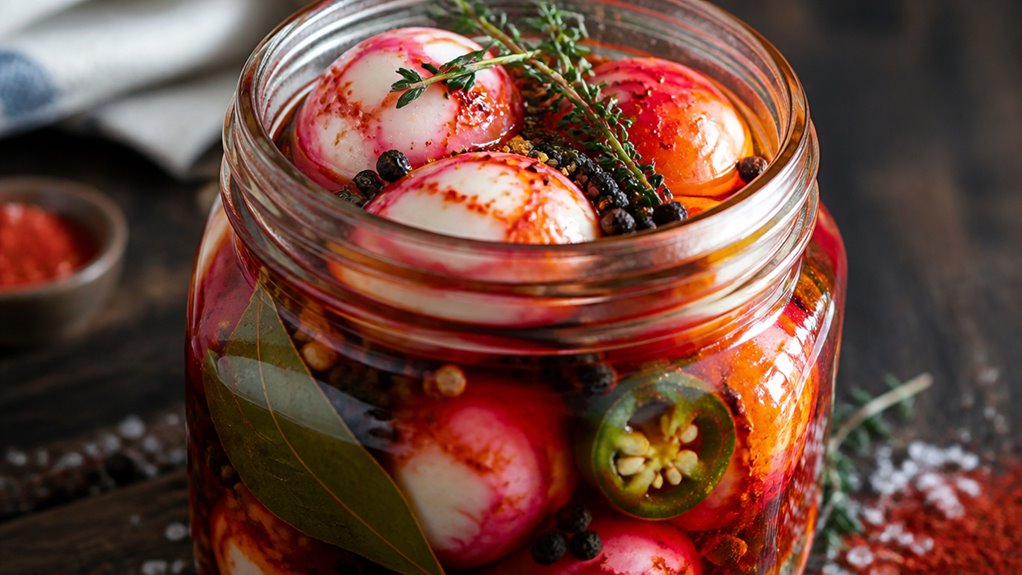
Peel your hard-boiled eggs carefully to maintain their smooth, firm texture. Nestle them snugly into a clean jar to prepare for the brining process.
Next, combine your vinegar, water, Cajun seasoning, cayenne, and any optional spices in a saucepan. Bring the mixture to a simmer, stirring until sugar and salt dissolve completely.
Allow the brine to cool slightly before pouring it over the eggs, ensuring they’re fully submerged. Seal the jar tightly to trap in the vibrant flavors.
Give the jar a gentle shake to distribute spices evenly around the eggs. Refrigerate the sealed jar promptly, and resist opening it too soon to let those bold Cajun spices infuse each egg perfectly.
For an enhanced taste, consider adding smoked salt as a finishing touch to complement the Cajun spices.
Your pickled eggs are now ready to develop their signature zing!
Pickling Time for the Best Cajun Flavor
Once your eggs are snug in the brine, patience becomes your best ally.
The magic of Cajun pickled eggs lies in the time they spend soaking up those bold flavors.
To get the best Cajun punch, follow these pickling timelines:
- Minimum 24 hours: The eggs absorb tangy vinegar and a hint of spice, perfect for a quick snack.
- 1 to 2 weeks: Flavors fully meld, deepening the heat and complexity from Cajun seasoning.
- Up to 3 weeks: The eggs develop rich, balanced layers of zest, garlic, and cayenne, delivering that signature kick.
Refrigerate your jar during this process. Proper storage at or below 40°F is essential to inhibit microbial growth and ensure safety during pickling, especially with protein-based items like eggs, so keep your brine continuously refrigerated for the best results.
Serving and Enjoying Cajun Pickled Eggs
Although Cajun pickled eggs pack a bold punch on their own, you’ll find their spicy, tangy flavor shines brightest when paired thoughtfully.
You can enjoy them as a zesty snack, sliced atop salads, or alongside Southern classics like gumbo or jambalaya. Their firm texture and vibrant taste add excitement to any dish or party platter.
| Pairing Idea | Serving Style | Flavor Impact |
|---|---|---|
| Sliced on salad | Fresh, chilled | Adds tangy heat |
| Whole as a snack | Room temperature | Pure bold flavor |
| Chopped in dips | Mixed, creamy | Balances acidity |
| With spicy meats | Side dish | Enhances smokiness |
Serve chilled or room temp, and enjoy every bold, zesty bite! For an added layer of flavor, consider pairing with peppery, tangy sauces that complement smoky dishes.
Frequently Asked Questions
Can I Use Brown Eggs Instead of White Eggs for Pickling?
Yes, you can definitely use brown eggs instead of white eggs for pickling.
The difference in shell color won’t affect the flavor or texture of your pickled eggs. Just make sure to hard-boil, peel, and submerge them fully in the brine like you’d with white eggs.
Brown eggs might’ve a slightly richer taste, but overall, they work just as well and add a nice rustic touch to your pickled snack.
How Long Do Pickled Eggs Last Once Opened?
Once you open pickled eggs, you should keep them refrigerated and consume them within 3 to 4 days for the best taste and safety.
The brine helps preserve them, but exposure to air can speed spoilage. Always use clean utensils to avoid contamination, and keep the eggs submerged in the brine.
If they smell off or look slimy, it’s best to discard them. Staying cautious keeps your snack fresh and delicious.
Is It Safe to Pickle Eggs Without Refrigeration?
Imagine a prospector in the Old West counting on his preserved eggs for survival.
He’d know it’s risky to pickle eggs without refrigeration nowadays.
You shouldn’t skip the fridge because without cold storage, harmful bacteria can grow, making the eggs unsafe to eat.
The vinegar slows spoilage, but it’s no substitute for cool temperatures.
To keep your pickled eggs edible and tasty, always refrigerate them and enjoy within a few weeks.
Can I Reuse the Cajun Brine for Another Batch?
You shouldn’t reuse Cajun brine for another batch because its acidity and seasoning weaken after the first use. This reduces safety and flavor.
The brine absorbs egg proteins and bacteria from the initial batch, increasing spoilage risk. To keep your pickled eggs tasty and safe, always prepare fresh brine for each batch.
It’s worth the extra effort to make sure that bold Cajun flavors stay vibrant and your eggs stay safe to eat.
What Is the Best Jar Type for Pickling Eggs?
Looking for the best jar type to pickle your eggs? You want a glass Mason jar with a tight-sealing lid.
Why? Because glass won’t react with the vinegar brine and keeps flavors pure. Plus, the clear sides let you watch your eggs soak up all those spices.
Avoid plastic, which can absorb odors and flavors. A wide mouth jar also makes packing and removing eggs easier, ensuring a perfect pickle every time.
Make These Spicy Cajun Pickled Eggs and Impress Everyone
Now that you’ve perfected peeling and pickling, you’re poised to enjoy the punchy, piquant perfection of Cajun pickled eggs.
This zesty zest will zing your taste buds, turning simple snacks into savory sensations. With each bite bursting with bold, briny brilliance, you’ll savor the spice and savor the satisfaction.
So, grab a glass jar, gather your ingredients, and get ready to relish this flavorful feast that’s sure to spice up any spread!