How Long to Cook a 17 Lb Brisket: Expert Smoking Tips
You’ll want to plan on cooking your 17 lb brisket at 225°F for about 14 to 18 hours, including resting.
Expect roughly 1 to 1.25 hours per pound, but factor in extra time for the stall phase, which slows cooking between 145–165°F.
Wrapping around 160–170°F helps speed it up.
Pull your brisket when the internal temp hits 195–204°F and the probe slides in easily.
Managing these steps guarantees a tender brisket and smooth schedule for your meal.
Key Takeaways
- Cook a 17 lb brisket at 225°F for approximately 14–18 hours, allowing 1–1.25 hours per pound.
- At 250°F, expect 8.5–11.5 hours total cook time, estimating 30–40 minutes per pound.
- Wrap the brisket around 160–170°F to shorten the stall and speed cooking.
- Target an internal temperature of 195–204°F with tender probe feel before pulling.
- Rest the brisket for at least 1–2 hours wrapped to improve juiciness and sliceability.
How Long Does a 17 Lb Brisket Take to Cook?

Cooking a 17 lb brisket typically takes between 14 and 18 hours at 225°F, depending on factors like trimming, wrapping, and smoker consistency.
A 17 lb brisket usually smokes for 14 to 18 hours at 225°F, varying by prep and smoker.
You can expect roughly 1 to 1.25 hours per pound, but this varies due to the stall phase and bark development.
Initially, the brisket smokes until it reaches about 160–165°F, where the stall slows temperature rise.
Wrapping usually begins around this point to speed cooking and retain moisture, continuing until the internal temperature hits roughly 195–204°F.
Your goal isn’t a fixed temperature but tenderness, measured by a probe sliding in with minimal resistance.
Plan for a generous rest afterward to let juices redistribute.
Stick to these guidelines, and you’ll manage your cook time effectively without guesswork.
Maintaining a consistent smoker temperature throughout the cook is essential to achieve the best results.
How Trimming and Brisket Size Affect Your Cooking Plan?
While the size of your brisket directly influences total cook time, how you trim it can substantially alter that estimate.
Removing excess fat or silver skin reduces the overall weight, which shortens cooking time slightly. However, leaving a moderate fat cap helps retain moisture and protect the meat during the long smoke.
A brisket trimmed too aggressively may cook faster but risks drying out. Conversely, a larger, untrimmed brisket requires more time to reach the target internal temperature due to increased mass and insulation.
When planning, weigh your brisket after trimming to better estimate cook duration, aiming for about 1 to 1.25 hours per pound at 225°F.
Accurate trimming balances protecting the meat and optimizing cook time, ensuring you achieve tenderness without sacrificing juiciness.
Additionally, maintaining a consistent smoker temperature between 225–260°F is crucial for even cooking and flavor development during the long smoke, helping you avoid overcooking or drying out the brisket by controlling the smoking temperature.
How Smoker Temperature Changes Your Brisket Timing?
After trimming your brisket and estimating its weight, the next major factor influencing your cook time is the smoker temperature you choose.
At 225°F, expect roughly 1 to 1.25 hours per pound. This puts a 17 lb brisket in the 17–21 hour range before resting.
At 225°F, plan for 1 to 1.25 hours per pound for a tender brisket.
If you increase the temperature to 250°F, the time shortens to about 30–40 minutes per pound, or 8.5–11.5 hours total.
Higher temperatures speed cooking but risk drying the meat if you don’t wrap and rest it properly.
Maintaining consistent smoker heat is vital.
Fluctuations can prolong or shorten the cook unpredictably.
Adjust your plan accordingly, monitoring internal temperature and tenderness rather than relying solely on clock time for best results.
Using a Brisket Smoke Time Calculator can help you plan your schedule and achieve consistent results.
How the Brisket Stall Affects Your Total Cook Time?
You might notice that your brisket’s internal temperature tends to slow down or even stall between 145°F and 165°F. This happens because of something called evaporative cooling during the cooking process. It can be pretty frustrating, right?
This stall can add several hours to your total cook time, so it’s super important to plan for it.
Now, understanding this phase is really helpful. It can guide you on when to wrap the brisket. Wrapping it at the right time can speed things up while still keeping that moisture and delicious bark intact.
For best results, consider using the Texas crutch technique by wrapping your brisket tightly in foil or butcher paper once it reaches 165–170°F to trap moisture and reduce the stall duration.
Understanding The Stall
Because the brisket stall markedly impacts your total cook time, understanding its causes and effects is essential for effective planning.
The stall occurs when the internal temperature of your brisket plateaus, typically between 145°F and 165°F.
This happens because moisture evaporates from the meat’s surface, cooling it and slowing temperature rise despite continued heat exposure.
During this phase, you’ll notice the thermometer stalls for hours, extending your cook time.
Recognizing the stall helps you decide when to wrap the brisket to speed cooking and preserve moisture.
You’ll also better anticipate the total duration needed, balancing smoker temperature, stall length, and wrapping strategy.
Mastering this phase guarantees you manage time efficiently without compromising tenderness or bark quality.
Most pitmasters start wrapping around 165–170°F for the best balance of moisture retention and bark preservation.
Stall Impact On Timing
When the brisket hits the stall, its internal temperature can plateau for hours, markedly extending your total cook time. This pause occurs between roughly 145°F and 165°F, as moisture evaporation cools the meat and slows temperature rise.
You should anticipate this delay when planning, as a 17 lb brisket’s stall can add several hours to the total cook, often pushing it toward the 14–18 hour range at 225°F. Wrapping the brisket around 160–170°F helps break the stall faster by reducing evaporation and retaining heat, speeding up the remainder of the cook.
However, even with wrapping, expect variability in stall duration based on your smoker’s consistency and brisket trimming. Always prioritize tenderness and probe feel over clock time to determine doneness accurately.
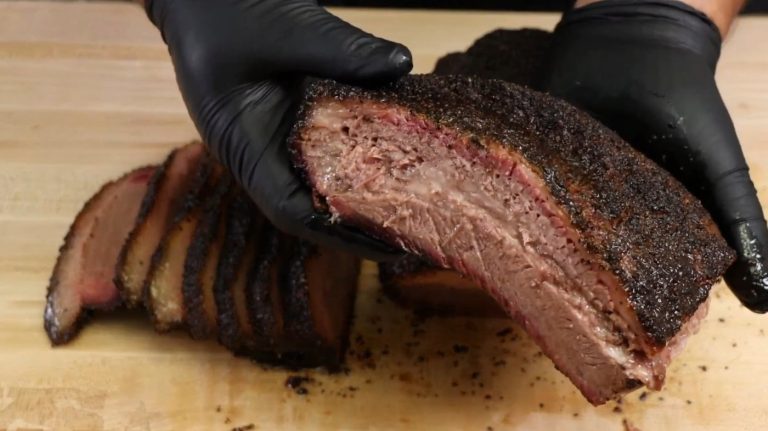
For best results, aim to pull the brisket at around 203°F internal temperature when the probe slides in like room-temperature butter to maximize tenderness and juiciness.
How and When to Wrap Your Brisket to Beat the Stall?
Managing the stall effectively involves wrapping your brisket at the right moment to speed up cooking and lock in moisture.
You want to wrap once the internal temperature hits around 160–170°F, which is typically when the stall begins.
Use butcher paper if you aim to preserve a firmer bark, or foil if you prioritize faster cooking and moisture retention.
Double-wrap with foil and add a splash of beef broth for extra juiciness.
Wrapping minimizes evaporation, helping your brisket push through the stall more efficiently.
After wrapping, expect the cooking phase to continue for several hours until tenderness develops.
Timing your wrap correctly guarantees you maintain bark quality while reducing total cook time.
This strikes a balance between moisture retention and bark texture essential for a perfect brisket.
Unwrapping wrapped briskets during the last 15 minutes can help restore bark crispness before serving.
What Internal Temperatures to Watch for at Each Stage?
As you smoke your brisket, it’s really important to keep an eye on the internal temperature. You’ll want to aim for around 160–165°F before you wrap it up. This temperature range indicates that you’re nearing the end of the stall and getting ready for the final cooking phase.
Once you wrap it, you should continue cooking until the brisket hits about 195–204°F. This is where you’ll achieve that perfect tenderness.
But remember, while these numbers are handy, it’s often better to trust how the probe feels when you insert it. That tactile feedback can sometimes tell you more than the temperature alone!
For the most accurate doneness, always insert your probe in the thickest part of the flat to monitor the internal temperature effectively.
Smoke Phase Temperatures
Smoke phase temperatures typically guide your brisket through critical transformations, so tracking internal temperature closely is vital. During this phase, your brisket moves from raw to the stall zone, where evaporation slows heat penetration.
You’ll want to monitor temperatures carefully to know when to wrap or adjust your smoker.
| Temperature Range (°F) | Brisket Stage |
|---|---|
| 100–140 | Early smoke, color formation |
| 145–165 | Stall begins, evaporation phase |
| 160–170 | Wrap trigger zone |
Knowing when your brisket hits 160–170°F lets you decide the right moment to wrap and push through the stall efficiently. Avoid rushing this phase. Proper temperature control guarantees smoke absorption and bark development, setting a foundation for tender results. For the most accurate cooking progress, insert a probe in the thickest part of the flat muscle to monitor internal temperature precisely.
Final Tenderness Range
Final tenderness depends more on texture than temperature alone, but monitoring internal heat provides critical guidance as you near completion.
You’ll observe key temperature milestones: the initial smoke phase ends near 160–165°F, where the stall typically occurs.
Wrapping at this point helps push through the stall efficiently.
After wrapping, continue cooking until the brisket reaches 195–204°F.
Most experts recommend pulling between 200°F and 204°F, depending on your probe’s resistance.
Aim for a tender feel where it slides in with minimal effort.
Remember, temperature is a guideline; the true test is the probe’s smooth entry, indicating collagen breakdown and optimal tenderness.
Once done, plan for a generous rest to redistribute juices and finalize texture.
This methodical approach guarantees consistent, tender results every time.
Maintaining a steady 225–250°F cooking temperature throughout the process is essential for achieving these ideal internal temperatures and tenderness.
How to Tell When Your Brisket Is Tender Enough to Pull?
Determining when your brisket is tender enough to pull is essential for achieving the perfect texture and juiciness.
Knowing the precise moment to pull your brisket ensures ideal tenderness and flavor every time.
Don’t rely solely on internal temperature; instead, use a probe test. Insert a meat thermometer or skewer into the thickest part of the brisket.
It should slide in with minimal resistance, like inserting into softened butter. If you feel firm or tough spots, continue cooking.
Avoid pushing too hard—ease is key. Also, check the point and flat separately, as they can vary in tenderness.
Wrapping after the stall helps speed tenderness but doesn’t guarantee it; test frequently after 195°F.
Once the probe glides smoothly without a tug, you know your brisket is ready to pull from the smoker and move on to resting.
How Resting Time Affects Juiciness and Texture of a 17 Lb Brisket?
Although cooking your 17 lb brisket to the right tenderness is essential, allowing it to rest properly profoundly impacts its juiciness and texture. Resting lets the meat’s juices redistribute evenly, preventing them from escaping when you slice. It also firms the brisket slightly, improving sliceability and mouthfeel.
| Rest Duration | Juiciness Impact | Texture Effect | Serving Flexibility |
|---|---|---|---|
| 30 minutes | Moderate | Slightly improved | Limited |
| 1–2 hours | High | Noticeably tender | Good |
| 3–4 hours | Ideal | Very tender, moist | Excellent |
| 5+ hours (held warm) | Maintained | Consistent texture | Extended holding time |
Plan for at least 1–2 hours resting wrapped in towels or butcher paper to maximize flavor and slicing quality.
How to Manage Your Smoker Temperature for Consistent 17 Lb Brisket Results?
When you manage your smoker temperature consistently, you gain greater control over the cooking process and guarantee even results for your 17 lb brisket.
Maintain a steady smoker temperature between 225°F and 250°F, adjusting vents and fuel carefully to avoid fluctuations.
Keep your smoker steady at 225°F to 250°F, adjusting vents and fuel to prevent temperature swings.
Use a reliable digital thermometer to monitor both the smoker’s ambient heat and the brisket’s internal temperature.
Recognize the stall phase around 145°F to 165°F and prepare to wrap the brisket then, which helps stabilize temperature and retain moisture.
Avoid opening the smoker frequently, as this causes heat loss and prolongs cooking.
By keeping your smoker’s temperature steady, you make certain the brisket cooks evenly, developing a proper bark and tenderizing throughout.
This results in consistent, high-quality brisket every time.
Adjusting Your Schedule to Serve a 17 Lb Brisket on Time
To serve a 17 lb brisket on time, you need to plan backward from your desired meal time, accounting for both cooking and resting periods.
Estimate roughly 14–18 hours total, including 2–3 hours of resting to guarantee optimal juiciness and tenderness.
Start by calculating the cook time based on your smoker’s temperature. At 225°F, plan for about 1–1.25 hours per pound; at 250°F, expect closer to 30–40 minutes per pound.
Factor in additional time for the stall phase and wrapping. Begin early, especially with low-and-slow cooks, to avoid stress.
Monitor internal temperature and tenderness rather than strictly the clock, adjusting as needed.
Finally, schedule resting in a warm cooler or oven to hold the brisket until serving, guaranteeing perfectly timed, juicy slices.
Frequently Asked Questions
What Type of Wood Pairs Best for Smoking a 17 Lb Brisket?
For smoking a 17 lb brisket, you’ll want to choose hardwoods like oak, hickory, or mesquite.
Oak offers a balanced, medium smoke flavor that won’t overpower your meat.
Hickory provides a stronger, savory profile perfect for beef.
Mesquite brings a bold, earthy taste but can be intense, so use it sparingly or blend with milder woods.
You can also mix in fruitwoods like apple or cherry for subtle sweetness and complexity.
Should I Season or Marinate My Brisket Before Cooking?
You should season your brisket before cooking, not marinate it. You want a dry rub of salt, pepper, and spices to enhance the bark and flavor without adding excess moisture.
Seasoning allows the smoke to penetrate better and helps form that prized crust. Marinating can dilute the natural beef taste and interfere with bark development.
For best results, apply the rub at least an hour before cooking or even overnight in the fridge.
Can I Freeze a Cooked Brisket for Later Use?
Yes, you can freeze a cooked brisket for later use.
Let it cool completely, then wrap it tightly in foil or freezer-safe plastic wrap to prevent freezer burn.
Place it in an airtight container or vacuum-seal it for best results.
When ready, thaw it slowly in the refrigerator for 24–48 hours before reheating gently to preserve moisture and texture.
Proper freezing keeps your brisket tasty and safe for up to 3 months.
How Do Weather Conditions Affect Brisket Smoking Times?
Unpredictable weather conditions can subtly influence your brisket smoking times.
Colder temperatures or high winds may gently extend cooking duration by cooling the smoker and causing heat fluctuations.
Conversely, warmer, calm days might shorten cook times due to steady heat retention.
To maintain precision, you’ll need to monitor your smoker’s temperature consistently and adjust fuel or airflow accordingly.
This methodical approach guarantees your brisket cooks evenly despite nature’s whims.
What Are the Best Side Dishes to Serve With Brisket?
You’ll want classic, hearty sides that complement brisket’s rich flavor. Think creamy mashed potatoes or roasted sweet potatoes for smooth texture contrasts.
Coleslaw or a crisp green salad adds invigorating crunch and acidity. Baked beans bring a smoky sweetness that pairs well.
Don’t forget buttery cornbread or garlic bread to soak up juices. Pickles or pickled onions also brighten the plate, balancing the meat’s richness perfectly.
Patience, Temperature, and Timing Create Incredible Brisket
Cooking a 17 lb brisket isn’t just a task; it’s a full-on culinary mission where timing is your best ally. You can’t rush perfection; even a minute off can turn your masterpiece into a disappointment.
Master the stall, wrapping, and resting like a pro, and you’ll serve brisket so tender it practically melts in your mouth. Stick to your smoker temperature religiously, and your patience will pay off with every juicy, flavorful bite.