How Big Is a Beef Brisket: What to Expect Before Buying
A whole beef brisket typically weighs between 10 and 16 pounds, with common packer sizes around 12 to 14 pounds.
The flat cut usually runs 3 to 6 pounds and is leaner. The point cut is thicker, fattier, and weighs about 4 to 7 pounds.
Brisket size directly impacts cooking time, serving yield, and equipment needs.
Understanding how size affects preparation and cooking can help you get the best results for your meal.
Key Takeaways
- A whole beef brisket typically weighs between 12 and 14 pounds, with common sizes ranging from 8 to over 20 pounds.
- Whole packer briskets usually fall between 10 and 16 pounds, with larger packers sometimes reaching 15 to 18 pounds.
- Flat cuts weigh around 3 to 6 pounds and are leaner, while point cuts weigh 4 to 7 pounds and are fattier.
- Smaller briskets under 10 pounds are often flat cuts or trimmed portions ideal for serving 4 to 6 people.
- Large packer briskets (15–18 pounds) can serve roughly 15 to 20 people, influencing cook time and equipment needs.
What Is the Typical Size and Weight of a Whole Brisket?

A whole beef brisket typically weighs between 12 and 14 pounds, making this range ideal for consistent cooking results.
You’ll find briskets ranging from 8 to over 20 pounds, but selecting one within 12-14 pounds guarantees manageable cook times and even heat penetration.
Larger briskets increase cooking duration markedly and can challenge temperature control.
The typical whole packer brisket combines the flat and point muscles, averaging 10 to 16 pounds overall, but 12-14 pounds hits the sweet spot for most smokers and ovens.
When you pick a brisket in this range, you balance size with uniform thickness, which helps you avoid uneven cooking.
This weight also fits well with standard equipment sizes, enabling you to maintain precise temperature and smoke exposure throughout the process.
Choosing a whole packer brisket weighing 12–15 pounds is recommended for balanced portions, flavor, and tenderness, ensuring optimal cooking results with balanced portions and flavor.
How Big Are the Brisket Flat and Point Cuts?
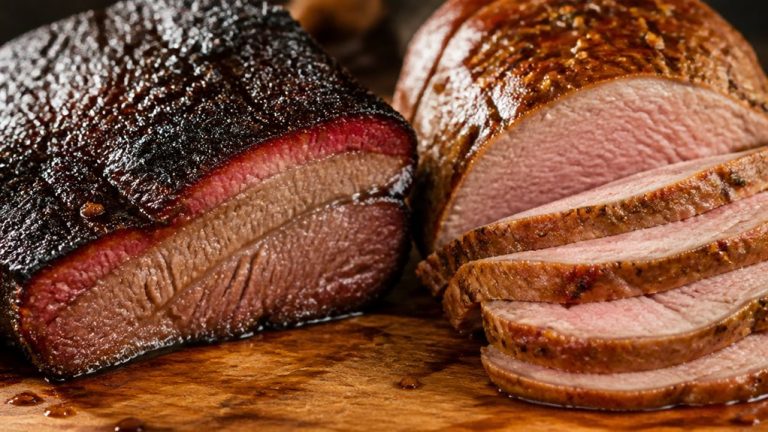
How large are the brisket flat and point cuts typically? The flat cut usually weighs between 3 to 6 pounds, characterized by a leaner profile and a uniform thickness of at least 1 inch for ideal slicing.
The point cut is thicker and fattier, ideal for rich flavor and shredding. Both cuts come from specific areas: the flat attaches near the breastbone, while the point curves under the flat near the ribcage.
Understanding their typical sizes helps you manage cooking times and preparation. Splitting the brisket along the fat seam to separate the flat and point allows for more precise cooking and monitoring of internal temperature, improving overall results through tailored cooking.
| Cut Type | Typical Weight (lbs) | Key Characteristics |
|---|---|---|
| Flat Cut | 3 – 6 | Lean, uniform thickness |
| Point Cut | 4 – 7 | Fattier, thicker, flavorful |
| Whole Packer | 10 – 15 | Flat and point combined |
Expected Brisket Weight Ranges for Buyers
Buyers typically encounter briskets weighing anywhere from 8 to over 20 pounds.
Briskets are commonly found ranging in weight from 8 to over 20 pounds.
The most practical whole packer briskets fall between 10 and 16 pounds.
Within this range, 12 to 14 pounds often provides the optimal balance for both cooking time and yield.
Smaller briskets, generally under 10 pounds, tend to be flat cuts or trimmed portions, weighing between 3 and 6 pounds.
Larger briskets exceeding 16 pounds increase cook times significantly and require careful handling to guarantee even doneness.
When selecting, consider the full packer brisket that includes both the point and flat muscles, as this affects total weight and fat content.
Understanding these weight ranges helps you plan portions, cooking duration, and equipment needs accurately for your brisket purchase.
Because cooking time varies with size, planning for a 1–1.5 hour per pound smoking duration is essential for a perfectly cooked brisket.
Where to Buy Quality Brisket by Size and Grade?
If you’re on the hunt for quality brisket, you can’t go wrong with trusted retailers like Costco, Sam’s Club, and specialty butchers. They usually offer briskets that meet consistent size and grade standards.
When you’re shopping, keep an eye out for USDA Choice grade or higher. That marbling is key, as it enhances flavor and tenderness. You’ll often find these briskets vacuum-sealed in Cryovac packaging, which helps keep them fresh.
And don’t forget, knowing about the different packaging types can really help you gauge freshness and ensure you’re getting the right weight. Happy brisket hunting!
For the best eating experience, consider briskets with moderate to abundant marbling to ensure optimal juiciness and flavor.
Best Retailers For Brisket
Explore top sources for quality brisket that meet your size and grade requirements by focusing on reputable retailers known for consistent USDA Choice grade whole packer briskets.
You’ll want suppliers who offer briskets within the 12-14 pound optimal weight range, with good marbling and proper cryovac packaging to guarantee freshness.
Consider these trusted retailers:
Costco: Reliable for uniform packers, consistent USDA Choice grade, and competitive pricing.
Local Butchers: Personalized selection, often better marbling, and tailored trimming options.
Sam’s Club: Offers large, well-marbled briskets with clear size labeling, ideal for bulk buyers.
Specialty Meat Markets: Higher-end cuts, precise weight portions, and expert advice on grade and size.
Selecting from these sources guarantees you get briskets that align with your cooking needs and desired quality. Proper trimming of the fat cap is essential to ensure even bark development and rub adhesion, which directly impacts the final brisket texture and flavor, so understanding fat cap preparation is beneficial when choosing your brisket.
Grade Standards To Seek
When selecting brisket, focusing on USDA grade standards guarantees you get consistent marbling and tenderness essential for peak cooking results.
USDA Choice is the minimum grade you should accept, offering moderate marbling that guarantees juicy, flavorful meat after low-and-slow cooking.
Prime grade briskets provide superior intramuscular fat, enhancing tenderness and taste but come at a premium price.
Avoid Select grade briskets, as they lack sufficient marbling, often resulting in drier texture.
When buying, inspect the flat cut’s visible marbling; it should be even and fine.
Look for briskets weighing between 12-14 pounds for ideal size and cooking consistency.
Reliable sources include reputable butchers and wholesale retailers like Costco or Sam’s Club, where USDA grade labeling is standard and quality control is consistent.
For best results, aim to pull the brisket at around 203°F internal temperature to ensure optimal collagen breakdown and juiciness.
Packaging Types Explained
Offering both convenience and protection, cryovac packaging is the most common method used for brisket preservation. It seals the meat in airtight plastic to maintain freshness and prevent contamination during transport and storage.
When selecting brisket, you’ll find several packaging types, each affecting shelf life and quality perception.
Consider these options:
- Cryovac-sealed whole packers: Preserve moisture, ideal for 10-16 pound briskets with USDA Choice grade.
- Butcher-wrapped cuts: Offer breathability but shorter shelf life.
- Vacuum-sealed flats or points: Maintain precise portion control and reduce freezer burn.
- Retail plastic wrap: Convenient but less protective, best for immediate use.
You can buy quality brisket by size and grade at specialty butchers, warehouse clubs like Costco, and supermarkets.
Always inspect packaging integrity before purchase. For optimal preservation, it is important to freeze brisket promptly at 0°F (-18°C) to minimize spoilage and maintain quality.
How Brisket Size Affects Cooking Times and Techniques?
When it comes to cooking larger briskets, you can definitely expect longer cook times. This is mainly because they’re thicker and denser. So, it’s a good idea to adjust your techniques a bit. For instance, you might want to separate the point and flat or trim any uneven sections. This helps ensure that heat penetrates evenly throughout the meat.
Oh, and don’t forget about temperature control! Keeping a close eye on it’s super important. You want to avoid overcooking the thinner parts while making sure the thicker sections are cooked just right. Consistent monitoring is key to achieving that perfect brisket!
Maintaining a steady smoker temperature between 225°F and 250°F is essential to prevent uneven cooking and achieve optimal tenderness.
Cook Time Adjustments
Because brisket size varies markedly, from smaller flats weighing around 3 pounds to whole packers exceeding 15 pounds, you’ll need to adjust cooking times and techniques carefully to achieve ideal texture and flavor.
Larger cuts require longer, slower cooking to break down connective tissue, while smaller pieces cook faster but risk drying out.
Consider these adjustments:
Increase cooking time proportionally; a 15-pound brisket may take 12-16 hours at low heat.
Use probe thermometers to monitor internal temperature, targeting 195-205°F for tenderness.
Separate point and flat cuts for more even cooking when size permits.
Allow for resting time post-cook to redistribute juices, especially important for larger briskets.
Tailoring cook time to size guarantees peak moistness and flavor extraction.
Additionally, managing surface moisture through techniques like spritzing intervals can help maintain bark quality and juiciness during long cooks.
Impact Of Brisket Size
Although brisket size varies widely—from smaller flats around 3 pounds to whole packers exceeding 15 pounds—you’ll need to precisely adjust cooking times and methods to guarantee even heat penetration and peak tenderness.
Larger briskets demand extended low-and-slow cooking to break down connective tissue without drying the exterior.
Thicker cuts require careful temperature monitoring, as heat must penetrate deeper, increasing overall cook duration appreciably.
Conversely, smaller flats cook faster but risk drying if left too long.
Fat content in larger points adds insulation, altering heat transfer dynamics and necessitating adjustments in smoke and moisture levels.
You must also consider brisket uniformity; irregular thickness affects heat distribution, influencing internal temperature gradients.
Understanding these variables helps you calibrate your smoker or oven settings meticulously, ensuring consistent texture and juiciness throughout the brisket, regardless of size.
Using a reliable instant-read thermometer to monitor internal temperature closely is essential for achieving optimal tenderness and avoiding overcooking.
Techniques For Even Cooking
Mastering the art of even cooking requires you to tailor your approach based on brisket size. Thickness and weight directly influence heat penetration and moisture retention.
Larger briskets demand longer, lower-temperature cooking to guarantee the heat reaches the center without drying the exterior. Smaller cuts cook faster but need monitoring to prevent overcooking.
To achieve consistent doneness, consider these techniques:
Separate the point and flat cuts for uniform thickness and tailored cook times.
Trim excess fat and silver skin to improve heat transfer.
Use a water pan or moisture source to maintain humidity and prevent drying.
Temper the brisket at room temperature before cooking to promote even internal heat distribution.
Adjusting your method based on size guarantees precise, juicy results every time.
Choosing the Right Brisket Size for Your Recipe
Start by evaluating the number of servings and cooking equipment capacity when choosing your brisket size.
For small gatherings, a brisket flat cut weighing 3-6 pounds suits 4-6 people. This ensures even cooking in smaller smokers.
Whole packer briskets, ranging from 12-14 pounds, serve 12-15 people and require ample smoker space and longer cook times.
Larger briskets over 15 pounds yield more servings but increase cooking complexity and time.
| Brisket Size | Recommended Servings |
|---|---|
| Flat Cut (3-6 lbs) | 4-6 |
| Whole Packer (12-14 lbs) | 12-15 |
| Large Packer (15-18 lbs) | 15-20 |
Choosing brisket size aligned with your recipe and equipment maximizes flavor and efficiency.
Tips for Trimming and Preparing Different Brisket Sizes
When preparing brisket for cooking, trimming plays a crucial role in ensuring even heat distribution and prime texture.
You’ll want to remove the silver skin and excess fat to prevent uneven rendering and tough bites. For smaller cuts like the flat, focus on maintaining a uniform thickness of at least 1 inch to promote consistent cooking.
Larger packers require separating the point and flat to manage differing fat content and cook times effectively. Remember to temper your brisket at room temperature before cooking for best results.
Trim fat membranes and silver skin thoroughly.
Separate point and flat for even cooking.
Maintain at least 1-inch thickness on flats.
Adjust cook time based on brisket size and fat content.
Frequently Asked Questions
How Should Brisket Be Stored Before and After Cooking?
You should store brisket in the refrigerator at or below 40°F before cooking, ideally wrapped tightly in butcher paper or plastic wrap to prevent moisture loss.
After cooking, let it cool to room temperature no longer than two hours. Then wrap it in foil or butcher paper and refrigerate.
Consume within 3-4 days. For longer storage, freeze brisket in airtight packaging, ensuring minimal air exposure to maintain flavor and texture.
What Are the Best Seasoning Blends for Different Brisket Cuts?
Think of seasoning a brisket like painting on a textured canvas.
For the lean flat cut, use a simple blend: kosher salt, black pepper, garlic powder, and onion powder to enhance its subtle flavors without overpowering.
For the fattier point cut, add smoked paprika, cayenne, and brown sugar to balance richness with sweetness and heat.
Apply evenly, let it rest to penetrate, and you’ll release maximum flavor precision in each bite.
How Long Can Cooked Brisket Be Safely Refrigerated or Frozen?
You can safely refrigerate cooked brisket for 3 to 4 days at 40°F (4°C) or below.
If you want to keep it longer, freeze it within two hours of cooking.
Frozen cooked brisket maintains quality for 2 to 3 months at 0°F (-18°C).
Always store brisket in airtight containers or vacuum-sealed bags to prevent freezer burn and maintain moisture.
Thaw frozen brisket in the fridge, not at room temperature, for food safety.
What Are Common Brisket Cooking Mistakes to Avoid?
Don’t rush the process; you’re not in a sprint, but a marathon.
Avoid under-seasoning; brisket thrives on generous, even rubs.
Don’t skip trimming the silver skin and excess fat; it hinders even cooking.
Resist the urge to wrap too early or you’ll lose that essential bark.
Also, avoid cooking at too high a temperature.
Low and slow is key to breaking down collagen and achieving tender, juicy results.
How Can You Tell When Brisket Is Perfectly Cooked?
You’ll know your brisket’s perfectly cooked when the internal temperature hits 195-205°F, allowing collagen to break down fully.
Probe it with a thermometer or skewer; it should slide in with little resistance, like soft butter.
The meat will feel tender but not mushy.
Rest it for at least 30 minutes wrapped in foil to redistribute juices.
This ensures maximum moisture and flavor before slicing against the grain.
Brisket Size Matters: Choose the Perfect Cut Every Time
When choosing your brisket, remember size shapes success. Like Goldilocks, you want it just right. A whole brisket typically weighs 10-20 pounds, with flats and points varying accordingly.
This impacts cooking times and prep techniques, so select based on your recipe’s demands. Trim thoughtfully to optimize texture and flavor. Mastering brisket size lets you wield precision, turning a simple cut into a culinary masterpiece every time.