Can You Reuse a Brine: Safe Practices Matter
You can safely reuse brine only in limited cases, like quick refrigerator pickles, and typically no more than 2–3 batches.
Brines from canned pickles or meats should always be discarded after one use due to contamination risks and loss of acidity and salt concentration.
Brine effectiveness and flavor degrade with reuse, requiring careful monitoring for cloudiness and off-odors. Understanding the limitations and proper handling of different brines helps maintain safety and quality.
Further details clarify best practices and storage tips.
Key Takeaways
- Refrigerator pickle brine can be safely reused 2–3 times if continuously refrigerated and monitored for clarity and off-odors.
- Canned pickle brine should never be reused due to depleted acidity and increased risk of harmful microbial growth.
- Meat and protein brines must be discarded after single use to avoid bacterial contamination and toxin risks.
- Brine acidity and salt levels drop with reuse; refreshing with vinegar and salt can restore preservation qualities for vegetable brines.
- Cloudiness, sediment, or off-odors in any brine signal spoilage and the need to discard or refresh the solution.
How Safe Is It To Reuse Pickle Brine In The Refrigerator?

Although you might be tempted to reuse pickle brine multiple times, it’s safe to do so only for 2-3 batches of quick refrigerator pickles.
Reusing pickle brine is safe for just 2-3 batches of quick refrigerator pickles.
The brine must remain continuously refrigerated to inhibit microbial growth. Before each reuse, check the brine’s clarity; cloudiness indicates degradation or contamination, making it unsafe.
Since quick pickles involve raw vegetables and no heat processing, the risk of cross-contamination remains minimal if proper refrigeration is maintained.
However, after several uses, the brine’s acidity and salt concentration decline as vegetables absorb these components, reducing its preservative effectiveness.
Hence, limiting reuse to a few batches guarantees food safety and quality. You should avoid extending reuse beyond this point to prevent potential spoilage or diminished flavor and safety.
Proper cooling and storage practices are essential to maintain the brine’s microbial stability during reuse.
Why You Should Never Reuse Brine From Canned Pickles?
You really shouldn’t reuse brine from canned pickles. Why? Well, the acidity levels drop after the initial processing, which can mess with preservation.
When that happens, it creates a perfect environment for harmful microbes to grow, and that’s definitely not something you want to risk for your health.
Plus, food safety guidelines are pretty clear about this. They explicitly say not to reuse brine in traditional canning.
It’s all about ensuring that what you’re eating is safe. So, even if it seems like a good idea, it’s better to stick with fresh brine for your next batch. Your health will thank you!
Reusing brine can lead to low acidity levels that promote the growth of dangerous bacteria like Clostridium botulinum.
Acidity Levels Depletion
Because the acidity levels in brine diminish after the initial canning process, reusing brine from canned pickles compromises food safety. The vinegar and salt concentrations drop as vegetables absorb these components, weakening the brine’s preservative power. This depletion means the brine no longer maintains the low pH needed to inhibit spoilage.
| Factor | Impact on Acidity |
|---|---|
| Vinegar absorption | Lowers overall acidity |
| Salt uptake | Reduces saline concentration |
| Vegetable moisture | Dilutes the brine |
| Multiple uses | Successive acidity reduction |
| Heating process | Alters chemical balance |
Since acidity is critical to preservation, using depleted brine increases spoilage risk, making reuse unsafe for canned pickling. Pickling salt’s purity and lack of additives ensure clear brines, which is essential for maintaining effective acid pickling.
Microbial Growth Risks
The depletion of acidity in reused canned pickle brine directly impacts its ability to prevent microbial growth. When acidity drops below safe thresholds, harmful bacteria and pathogens can proliferate, increasing the risk of foodborne illness.
Canned pickle brine initially contains sufficient vinegar concentration to inhibit microbial activity, but after processing, this protective quality diminishes. Additionally, salt concentrations decline as vegetables absorb them, further reducing the brine’s antimicrobial effectiveness.
You can’t rely on reheating to restore safety since heat doesn’t replenish acidity or salt levels. Using brine from canned pickles exposes you to potential microbial contamination that wasn’t present initially.
Consequently, reusing canned pickle brine compromises safety by creating an environment conducive to microbial growth. It’s essential to discard brine after the first canning cycle. Proper food safety practices always recommend avoiding reuse of brine to prevent bacterial proliferation.
Safety Guidelines Restriction
Although reusing brine from canned pickles might seem economical, food safety guidelines strictly prohibit it due to the unpredictable changes in acidity and salt levels after the first use.
When you reuse brine from hot water canning, the solution’s acidity can drop below safe thresholds, creating an environment conducive to harmful microbial growth.
Salt and vinegar concentrations deplete as vegetables absorb these components, undermining the brine’s preservative function.
Since you can’t reliably measure or restore these levels accurately, reusing canned brine introduces significant food safety risks, including botulism.
Consequently, to protect yourself and others, always discard brine used in traditional canning.
While refrigerator pickle brine allows limited reuse, canned pickle brine must never be reused under any circumstances according to established food safety standards.
Additionally, to minimize the risk of foodborne illness, it is critical to refrigerate any leftovers promptly and maintain safe storage temperatures as outlined in safe storage guidelines.
Why You Should Never Reuse Meat Or Protein Brines?
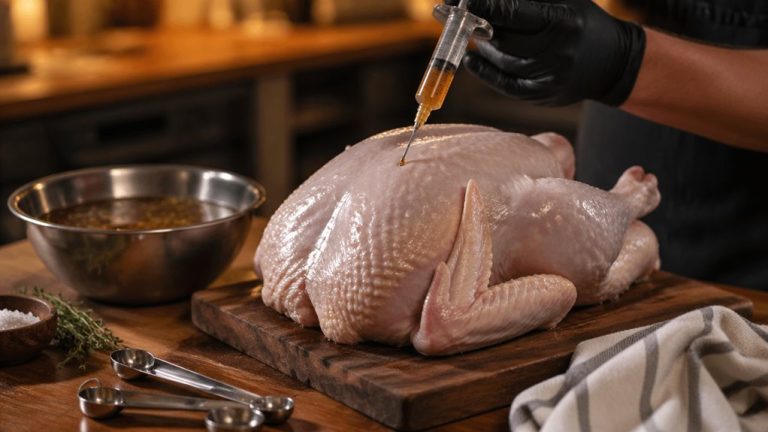
You really shouldn’t reuse brine from meat or protein. Why, you ask? Well, it’s packed with high levels of bacteria and leftover protein residues that can contaminate the solution. Not exactly what you want to be dealing with, right?
Even if you think boiling the brine might save the day, it doesn’t really do the trick. Those contaminants can still hang around, posing some significant food safety risks. Proper curing combined with low moisture and correct storage is essential to guarantee safety and quality.
Bacterial Contamination Risks
Frequently overlooked, reusing meat or protein brines poses significant bacterial contamination risks that can lead to severe foodborne illnesses. When you reuse these brines, bacteria from the meat’s surface multiply rapidly, contaminating the solution.
Even boiling the brine won’t guarantee safety because heat-resistant spores may survive. This contamination risk makes meat brines unsuitable for reuse.
| Risk Factor | Cause | Impact |
|---|---|---|
| Bacterial Growth | Meat residue in brine | Foodborne illness |
| Cross-Contamination | Shared brine between batches | Pathogen transfer |
| Heat-Resistance | Spores survive boiling | Persistent contamination |
| Nutrient-Rich Brine | Protein and blood residue | Bacteria proliferation |
Proper brining requires maintaining the brine and meat at or below 40°F refrigeration to prevent bacterial growth during the entire brining period.
Avoid reusing meat brine to maintain food safety and prevent illness.
Protein Residue Hazards
Handling protein brines requires strict caution due to the heavy presence of meat residues that harbor harmful bacteria.
When you soak meat or other proteins, blood, proteins, and residues leach into the brine, creating a highly contaminated environment.
This contamination markedly raises the risk of foodborne illnesses if you attempt to reuse the brine. The bacterial load in such brines is too high to be neutralized by typical reheating methods, leaving you vulnerable to pathogens.
Unlike vegetable brines, protein brines can’t be safely reused because their microbial contamination and nutrient content promote bacterial growth. Consequently, you should always discard meat brines after a single use to maintain food safety and avoid health hazards associated with protein residue contamination.
Proper handling and refrigeration within two hours are essential to inhibit bacterial proliferation in protein brines and smoked meats, ensuring safe storage practices.
Ineffectiveness of Boiling
The presence of high bacterial loads in meat brines poses a significant challenge for ensuring safety through boiling. You might think boiling kills all pathogens, but bacteria embedded in protein residues can survive or release toxins that heat doesn’t neutralize. This makes reusing meat brine risky despite boiling.
| Factor | Impact on Boiling Safety | Explanation |
|---|---|---|
| Bacterial Load | High | Dense contamination resists heat |
| Protein Residues | Protective Matrix | Shields bacteria from boiling |
| Toxin Formation | Heat-Resistant | Some toxins remain after boiling |
| Risk Level | Elevated | Food poisoning potential persists |
Boiling doesn’t restore meat brine safety. You shouldn’t reuse it under any circumstances. Proper handling and maintaining temperatures at or below 40°F (4°C) before freezing are crucial for controlling bacterial growth and preserving food safety.
How Flavor And Acidity Change When Reusing Pickle Brine?
Because vegetables absorb salt and vinegar from the brine, its acidity and flavor strength diminish with each reuse. When you reuse pickle brine, expect these changes:
- Acidity drops as vinegar is absorbed, reducing the brine’s preservative effectiveness.
- Salt concentration decreases because vegetables extract salt, weakening overall flavor.
- The flavor profile becomes diluted, making subsequent pickles less tangy and vibrant.
You’ll notice a significant decline in brine potency after the first reuse, with minimal flavor left by the second.
This degradation is influenced by the moisture content of the vegetables soaking in the brine.
To maintain pickling quality, monitor these changes closely. Diminished acidity can affect both taste and safety, signaling when it’s time to refresh or discard the brine.
Proper measurement and timing in brining are essential to ensure flavor integrity and food safety when reusing brines.
When And How To Refresh Pickle Brine With Vinegar Or Salt?
You’ll know it’s time to refresh your pickle brine when you notice it getting cloudy or the acidity isn’t quite what it used to be.
Those are clear signs that it’s time for a little TLC!
To keep everything safe and tasty, just add some vinegar to bring those acidity levels back up.
And don’t forget about the salt! You’ll want to replace what the veggies have absorbed over time.
Making these precise adjustments helps ensure your brine stays effective for even more pickling adventures ahead!
Signs Brine Needs Refreshing
Keep an eye on changes in your brine’s clarity and flavor to determine when it needs renewing.
Over time, the brine loses acidity and salt concentration as vegetables absorb these components, weakening its preservative qualities.
You should refresh your brine when you notice:
- Cloudiness or sediment develops, indicating microbial growth or dissolved solids.
- The brine tastes bland or less acidic, signaling diminished vinegar or salt levels.
- The brine has been reused for more than 2-3 batches, reducing effectiveness and safety.
Refreshing involves adding measured amounts of salt or vinegar to restore original concentrations.
Monitor these signs precisely to maintain flavor integrity and food safety when reusing brine for quick refrigerator pickles.
Adding Vinegar For Acidity
When acidity in your pickle brine declines due to repeated use, adding vinegar restores its preservative strength and flavor balance. You should measure the existing acidity and add vinegar carefully to avoid over-acidifying the brine.
Typically, white distilled vinegar (5% acidity) is used to refresh the solution. Add vinegar incrementally and stir well. Then test the flavor and acidity before pickling a new batch.
| Parameter | Recommended Action | Notes |
|---|---|---|
| Acidity level | Add 1-2 tbsp vinegar per cup | Adjust based on taste |
| Vinegar type | Use 5% acidity white vinegar | Guarantees consistent acidity |
| Mixing | Stir thoroughly | Uniform acid distribution |
This method preserves brine efficacy and maintains safety for 2-3 reuses.
Salt Replacement Techniques
Maintaining the proper salt concentration in pickle brine is essential for preserving flavor and ensuring effective preservation during reuse. As vegetables absorb salt, the brine’s salinity decreases, diminishing its preserving power. To refresh your brine, follow these steps:
- Measure the existing brine’s salinity using a hydrometer or taste test to estimate salt depletion accurately.
- Add approximately one tablespoon of salt per reuse cycle to restore the concentration to its original level.
- Stir thoroughly to dissolve the salt completely, ensuring even distribution throughout the brine.
Best Vegetables For Reusing Quick Pickle Brine?
Frequently, vegetables with firm textures and neutral flavors perform best when reusing quick pickle brine. They maintain crispness and absorb the brine’s acidity efficiently without compromising the solution’s quality.
Vegetables such as carrots, green beans, cauliflower, and cucumbers fit this profile. They resist sogginess while allowing the brine’s salt and vinegar to penetrate. Their relatively low moisture content minimizes dilution of the brine’s acidity, preserving its pickling effectiveness across multiple uses.
Conversely, softer or high-moisture vegetables, like tomatoes or leafy greens, tend to degrade the brine faster. This reduces its preservative capacity.
When selecting vegetables for brine reuse, prioritize those with structural integrity and mild flavor profiles. This ensures consistent pickling results and maintains the brine’s balance of acidity and salt concentration over successive batches.
Preventing Cross-Contamination During Pickle Brine Reuse
Choosing the right vegetables for brine reuse helps preserve the solution’s quality, but you also need to manage the risk of cross-contamination. Since refrigerator pickle brine is limited to quick pickles, maintaining safety depends on minimizing bacterial transfer.
You should:
- Always use fresh, raw vegetables that haven’t been cooked or previously contaminated to prevent introducing bacteria into the brine.
- Keep the brine continuously refrigerated between uses to inhibit microbial growth and preserve acidity.
- Inspect the brine for clarity and off-odors before each reuse. Discard it if any cloudiness or unpleasant smells appear.
Keeping Cheese Brine Fresh For Ongoing Use
Cheese brine often requires regular attention to stay effective for continuous use. You need to monitor the brine’s salt concentration carefully, as cheese gradually absorbs salt and moisture, reducing its potency.
Adding about one tablespoon of salt per reuse cycle maintains the brine’s saturation, ensuring cheese remains properly submerged and preserved. Additionally, whey accumulates in the brine over time, which can slightly alter its composition but doesn’t compromise safety.
To keep the brine fresh, store it under refrigeration and check for any off odors or cloudiness before each use. This maintenance prevents spoilage and preserves the brine’s functional properties, allowing indefinite reuse with consistent cheese quality and safety.
Creative Ways To Use Leftover Pickle Brine
While maintaining cheese brine for ongoing use focuses on preservation, leftover pickle brine offers versatile opportunities beyond its initial purpose. You can extend its value by applying it creatively in your kitchen.
Leftover pickle brine unlocks creative culinary uses beyond preservation, adding flavor and zest to your dishes.
Consider these options:
- Replace vinegar with pickle brine in salad dressings, marinades, and sauces to add acidity and unique flavor.
- Quick-pickle firm vegetables like carrots or radishes by soaking them for at least an hour in the brine, enhancing taste and texture.
- Use brine as a seasoning agent in dishes such as coleslaw, pasta salad, or deviled eggs for added tanginess.
How To Store And Freeze Pickle Brine For Cooking?
When storing pickle brine for cooking purposes, maintaining its acidity and flavor integrity is essential to guarantee safety and usability.
Store brine in a clean, airtight container to prevent contamination and preserve its properties. Always refrigerate the brine immediately after use and keep it below 40°F to inhibit microbial growth.
For longer storage, freezing is effective; portion the brine into ice cube trays or freezer-safe containers. Label each container with the date to track freshness.
When thawing, do so in the refrigerator to maintain safety. Keep in mind that acidity and salt concentration may degrade over time, so assess the brine’s clarity and aroma before reuse.
If the brine shows any cloudiness or off-odor, discard it to avoid foodborne risks.
Frequently Asked Questions
Can Brine Be Reused for Fermenting Vegetables?
You generally shouldn’t reuse brine for fermenting vegetables because fermentation relies on specific microbial activity. This activity can be disrupted by leftover bacteria or altered acidity in used brine.
Reused brine may contain contaminants that compromise safety and fermentation quality. To guarantee consistent, safe fermentation, prepare fresh brine each time, maintaining proper salt concentration and pH levels.
This approach minimizes risks and supports peak fermentation conditions for your vegetables.
Does Reusing Brine Affect the Texture of Pickled Foods?
Yes, reusing brine affects the texture of pickled foods. Each use reduces acidity and salt concentration, weakening the brine’s ability to maintain crispness.
Vegetables absorb moisture, causing the brine to dilute further, which can lead to softer, less crunchy pickles. To preserve texture, you should monitor brine clarity and acidity.
Consider adding vinegar or salt before reuse. Otherwise, repeated use results in progressively softer pickled vegetables.
How Long Can Reused Brine Be Stored Safely?
You store reused brine refrigerated for up to 2-3 batches of quick pickles, maintaining clarity and acidity.
You check it before each use, ensuring no cloudiness or off smells.
You avoid leaving it at room temperature or using it beyond these limits to prevent microbial growth.
By consistently keeping brine cold and monitoring quality, you safeguard flavor and safety.
This extends its usability precisely without risking contamination or degradation.
Is It Safe to Mix Old and New Brine Batches?
You shouldn’t mix old and new brine batches if you want to guarantee safety and consistent acidity. Old brine loses vinegar concentration and can harbor bacteria, especially after multiple uses.
Combining it with fresh brine dilutes the acidity and salt levels, increasing microbial risk. Instead, keep reused brine refrigerated and check clarity before reuse.
If flavor or acidity weakens, add vinegar or salt separately rather than mixing batches.
Can Reused Brine Be Used for Brining Seafood?
Using reused brine for seafood is risky. You shouldn’t reuse brine from previous batches for seafood because proteins and bacteria from the seafood can contaminate the solution, increasing food poisoning risks.
Even boiling doesn’t guarantee safety. To ensure precision and food safety, always prepare fresh brine when brining seafood. This avoids the hazards associated with bacterial buildup and compromised acidity in reused brine.
Handle With Care: The Smart Way to Reuse Brine
You might think reusing brine is like trying to squeeze life from a stone, but caution is key. Just as you wouldn’t wear last season’s armor into battle, don’t risk safety with reused brine, especially from canned pickles or proteins.
Refresh it thoughtfully or repurpose it creatively, but always guard against contamination. Like a well-tuned instrument, proper handling keeps your brine sharp, safe, and ready to enhance your next culinary endeavor.