What Meat Is Good to Smoke: Controlled Flavor Science
You’ll get the best results smoking meats rich in fat and connective tissue, like brisket, shoulder, beef chuck, and ribs. These cuts absorb smoke deeply and become tender through slow, low-temperature cooking, typically between 220–250°F.
This process breaks down collagen into gelatin. Marbling keeps the meat juicy, while wrapping and carefully monitoring internal temperature maximize tenderness.
Pairing wood pellets like hickory or cherry enhances flavor profiles. Keep going, and you’ll discover peak times, temperatures, and flavor pairings for perfect smoked meat.
Key Takeaways
- Cuts with high fat and connective tissue, like brisket and shoulder, smoke best due to enhanced tenderness and juiciness.
- Beef ribs and chuck roast develop rich flavors and tenderness from slow smoking and collagen breakdown.
- Prime rib benefits from low-temperature smoking for superior smoke infusion and juicy texture.
- Lean cuts lack sufficient fat and collagen, making them prone to dryness and toughness when smoked.
- Choose meats with visible marbling and connective tissue for optimal smoke absorption and flavorful results.
Which Meats Smoke Best and Why

When selecting meats for smoking, you want cuts with ample connective tissue and fat that break down during low and slow cooking to produce tender, flavorful results.
Brisket, from the cow’s lower chest, excels due to its high connective tissue content and fat cap, requiring roughly 90 minutes per pound at 220-250°F.
Beef ribs, especially plate or chuck ribs, offer substantial meat and connective tissue, enhancing tenderness and bark formation.
Butt or shoulder, with intense marbling, self-bastes and transforms into pulled when smoked slowly, typically two hours per pound wrapped in foil.
Beef chuck roast, fattier than brisket, stays moist and delivers a robust beef flavor.
Prime rib, a premium option, benefits from low-temperature slow cooking, developing superior smoke infusion and juiciness.
These cuts optimize texture and flavor through controlled smoke application.
For best results, monitoring internal temperature and aiming to pull meats when they reach peak tenderness ensures optimal juiciness and texture.
Choosing Cuts With the Right Fat and Connective Tissue for Smoking
Selecting the right cuts for smoking goes beyond choosing meat with ample connective tissue and fat. It requires understanding how these components interact during low and slow cooking.
Connective tissue, primarily collagen, breaks down into gelatin over extended heat exposure, imparting tenderness and moisture. Fat, especially intramuscular marbling, self-bastes the meat, enhancing juiciness and flavor.
Cuts like brisket and shoulder excel because their dense connective tissue and fat content withstand prolonged smoking without drying out. Conversely, lean cuts lack sufficient fat and collagen, resulting in dry, tough textures.
When selecting meat, prioritize those with visible marbling and connective tissue layers, such as beef chuck or butt, to optimize smoke absorption and tenderness. This approach guarantees your smoked meat achieves ideal texture and flavor through controlled collagen rendering and fat melting.
For example, choosing a brisket with intramuscular marbling ensures juiciness and rich flavor during extended smoking.
Smoking Times and Temperatures for Popular Meats
Mastering smoking times and temperatures is essential for achieving perfectly tender, flavorful meat.
You need to control heat and timing precisely to break down connective tissues without drying out the meat.
For instance, brisket demands low and slow cooking at 220-250°F for about 90 minutes per pound, while butt requires roughly two hours per pound, often wrapped for moisture retention.
| Meat | Time & Temperature |
|---|---|
| Brisket | 90 min/lb at 220-250°F |
| Butt | 2 hrs/lb at 225-250°F |
| Beef Chuck | 1.5 hrs/lb at 225-250°F |
| Prime Rib | ~6 hrs at 225°F |
You’ll want to adjust times slightly depending on thickness and smoker consistency to guarantee peak tenderness. Maintaining a steady smoker temperature is crucial to avoid uneven cooking and to ensure the meat reaches optimal tenderness.
Wood Pellet Flavors: Best Pairings for Different Smoked Meats
Understanding the ideal smoke times and temperatures sets the foundation, but the choice of wood pellets materially influences the final flavor profile of your smoked meat.
Selecting the right wood complements the meat’s fat content and texture, enhancing complexity without overpowering natural flavors. For example, fruity cherry pellets balance richly marbled beef ribs, while hickory provides a strong backbone ideal for butt.
Choosing wood that matches the meat’s fat and texture elevates flavor without overshadowing its natural essence
Lighter woods like apple or maple suit poultry, delivering subtle sweetness that enhances tenderness without masking it. Mesquite’s intense smoke is best reserved for robust cuts like brisket or prime rib, where boldness is welcomed.
- Cherry wood adds a sweet, mild fruitiness to beef ribs.
- Hickory imparts a strong, smoky flavor enhancing shoulder.
- Apple pellets bring delicate sweetness ideal for chicken and turkey.
- Maple offers a smooth, gentle smoke complementing lean meats.
- Mesquite provides an intense, earthy flavor perfect for brisket.
Cherry wood also produces a deep reddish-mahogany color on meat, enhancing its visual appeal and perceived juiciness.
Proven Tips for Moist, Tender Smoked Meats
Achieving moist, tender smoked meats hinges on controlling temperature, timing, and moisture retention throughout the cooking process. You need to maintain a consistent low temperature, monitor internal meat temperature, and use techniques like brining, wrapping, or injecting to lock in moisture.
Resting meat after smoking redistributes juices, enhancing tenderness.
| Tip | Purpose | Example |
|---|---|---|
| Low & Slow Cooking | Breaks down connective tissue | Brisket at 220°F |
| Wrapping Meat | Retains moisture | Shoulder in foil |
| Brining | Adds moisture | Turkey overnight |
| Internal Temp | Secures doneness | Beef chuck at 195°F |
| Resting Period | Redistributes juices | Prime rib for 30 minutes |
Using the Texas crutch technique by wrapping meat at the right temperature can significantly reduce cooking time and retain moisture.
Frequently Asked Questions
Can I Smoke Frozen Meat Directly Without Thawing First?
You shouldn’t smoke frozen meat directly without thawing first. Smoking requires consistent low temperatures over several hours to break down connective tissues and develop flavor.
Frozen meat forces your smoker to work unevenly, increasing cooking time and risking unsafe internal temperatures.
Thaw meat fully in the refrigerator to ensure even heat penetration, proper smoke absorption, and safe, tender results.
This also prevents bacterial growth and guarantees peak texture and flavor.
How Do I Store Leftover Smoked Meat Safely?
You should cool leftover smoked meat within two hours to prevent bacterial growth.
Wrap it tightly in aluminum foil or airtight containers to maintain moisture and flavor.
Store the meat in the refrigerator at or below 40°F for up to 4 days.
For longer storage, freeze the portions in vacuum-sealed bags or heavy-duty freezer bags, removing as much air as possible.
Label with dates for proper rotation and thaw safely in the fridge.
What Equipment Is Essential for Beginner Smokers?
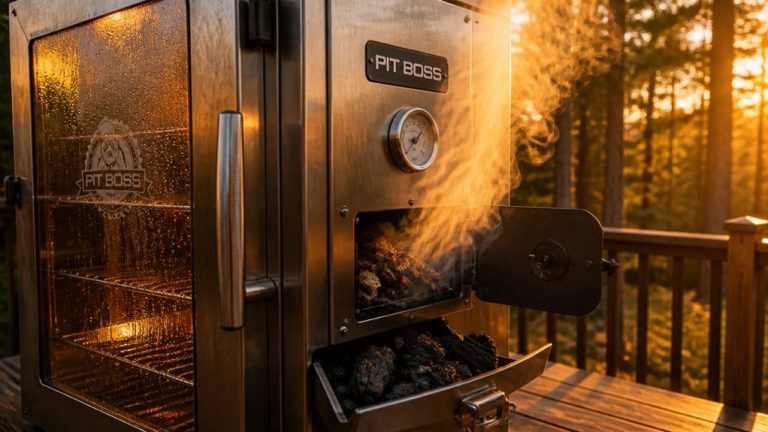
You’ll need a reliable smoker: offset, electric, or pellet, offering consistent temperature control.
Invest in a quality digital thermometer with a probe to monitor internal meat temps accurately.
Use wood chips or pellets suitable for your smoker type to enhance flavor.
Don’t forget heat-resistant gloves for safety, a sturdy grill brush for cleaning, and a water pan to maintain humidity.
These essentials guarantee precise, safe, and flavorful smoking for beginners.
Can I Smoke Meat Indoors or Only Outdoors?
Sure, you can smoke meat indoors if you want a house full of smoke alarms and a surprise visit from the fire department.
Realistically, smoking needs proper ventilation and controlled airflow, which is why it’s designed for outdoor use.
Indoor smoking requires specialized electric smokers with built-in exhaust systems.
Without them, smoke accumulation becomes a hazard.
How Do Different Climates Affect Smoking Times and Results?
Different climates impact smoking times and results markedly. In colder weather, you’ll need longer cooking times as heat dissipates faster, requiring you to maintain steady smoker temperature.
High humidity slows evaporation, potentially extending smoke exposure and intensifying bark formation. Conversely, dry climates accelerate moisture loss, increasing the risk of drying out meat.
You’ll want to adjust your smoke duration and monitor internal meat temperatures closely to guarantee peak tenderness and flavor.
From Rubber to Remarkable: Mastering Smoked Meat
So, if you want your smoked meat to taste like a culinary masterpiece rather than a rubbery science experiment, pick cuts rich in fat and connective tissue. They’re your smoky superheroes.
Master the perfect time and temp like a lab technician, and match wood pellets wisely to avoid flavor disasters. Follow these precise steps, or prepare for a BBQ tragedy that even your dog will politely decline.
Smoking meat isn’t magic; it’s delicious science you can master.