How to Warm Pastrami: Oven, Microwave & Steam Methods
To warm pastrami, first fully thaw and unwrap it, removing all packaging and netting for safety.
Use a method based on its form: steam or sous vide whole cuts to maintain moisture, skillet for sliced pieces to get crispy edges, or microwave slices quickly with added moisture.
Heat until the internal temperature hits 165°F to guarantee safety without drying. Avoid overheating or repeated reheating to preserve texture.
Learn how method choice and temperature control optimize your pastrami’s flavor and tenderness.
Key Takeaways
- Fully thaw pastrami and remove all packaging and netting before reheating to ensure safety and even warming.
- Reheat sliced pastrami quickly in a skillet or microwave with added moisture to maintain juiciness and avoid toughness.
- Use steaming or sous vide for whole pieces to preserve moisture and gently achieve an internal temperature of 165°F.
- For oven reheating, wrap whole pastrami tightly in foil and warm at 250–270°F until reaching 165°F internally.
- Always verify internal temperature with a calibrated thermometer and avoid overheating to prevent dryness and texture loss.
Prepare Pastrami for Reheating

Before reheating your pastrami, make sure it’s fully thawed and free from any packaging or netting. Frozen or partially thawed pastrami reheats unevenly, risking cold spots or overcooked edges.
Remove any plastic wrap, vacuum seals, or metal netting completely to prevent melting or fire hazards. Once thawed and unwrapped, pat the pastrami dry with paper towels to eliminate surface moisture that can hinder browning or steaming efficiency.
If you have a whole piece, consider slicing it after reheating to maintain peak texture. Keep in mind pastrami is pre-cooked; your goal is warming, not cooking.
Proper preparation guarantees even heat penetration, moisture retention, and safety during reheating. This step is critical before applying your chosen warming technique.
Always reheat pastrami until it reaches an internal temperature of 165°F (74°C) to ensure it is safe to eat.
Choose the Best Method to Reheat Pastrami
When selecting the best method to reheat pastrami, consider its form—sliced or whole—and your available equipment. Each technique balances moisture retention, even heating, and texture differently.
Choose your reheating method by pastrami’s form and available tools to preserve moisture and texture.
You want to avoid drying or uneven warmth while preserving flavor and texture.
- Use steaming or sous vide for whole pieces to maintain moisture and achieve uniform internal temperature.
- Choose skillet heating for a crispy edge on sliced pastrami, adding liquid to prevent drying.
- Microwave reheating suits sliced portions only, offering speed but risking toughness if overdone.
- Avoid rapid high-heat methods on unsliced pastrami to prevent rubbery texture and moisture loss.
Select your method based on pastrami’s cut and your patience to optimize juiciness and tenderness. Always ensure reheating reaches the safe internal temperature of 165°F to maintain food safety.
Reheat Pastrami in the Oven
Preheat your oven to a steady 250-270°F to gently warm unsliced pastrami without drying it out.
Remove any netting and packaging before wrapping the meat tightly in aluminum foil to lock in moisture.
Place the wrapped pastrami on the oven’s middle rack to guarantee even heat distribution.
For a 12-ounce piece, heat for approximately 20 minutes; larger cuts around 22 ounces require 1 to 1.5 hours.
This slow, controlled reheating guarantees the internal temperature rises evenly, preventing toughness or dryness.
Use a thermometer to verify the pastrami is heated through but not overcooked.
This precise oven method preserves moisture and texture, making it ideal for unsliced pastrami you want tender and juicy without additional handling or risk of uneven warming.
For best results, reheat pastrami slowly at low temperatures and avoid rapid heating methods like microwaving to preserve moisture and texture.
Warm Pastrami Using Sous Vide
When you’re ready to warm up that delicious pastrami, set your sous vide to anywhere between 145°F and 190°F. The temperature you choose really depends on the texture you’re after and how much time you have.
For a 12 oz piece of pastrami, around 50 minutes at 145°F should do the trick. If you’ve got a larger 22 oz piece, you’ll want to leave it in for about 1 to 1.5 hours, depending on the temperature you picked.
This sous vide method is fantastic because it warms the meat evenly while keeping it juicy. It relaxes the collagen without overcooking, ensuring every bite is tender and flavorful. Enjoy!
Make sure to verify that your pastrami reaches a safe internal temperature of 165°F (75°C) to eliminate harmful bacteria before serving.
Ideal Temperature Settings
Although sous vide offers a range of temperature options, maintaining the ideal setting between 145°F and 190°F guarantees your pastrami warms evenly while preserving its moisture and texture.
This range optimizes collagen relaxation without overcooking, ensuring tenderness and juiciness.
When choosing your exact temperature, consider these factors:
- Lower Range (145°F-155°F): Slowly warms pastrami, best for delicate texture retention.
- Mid Range (160°F-175°F): Balances speed and moisture preservation; ideal for medium pieces.
- Upper Range (180°F-190°F): Speeds up warming, suitable for larger cuts without drying.
- Avoid Exceeding 190°F: Prevents protein tightening and moisture loss, which degrades quality.
Stick to this range, and your sous vide method will yield perfectly warmed pastrami every time.
Always use a calibrated thermometer to monitor temperatures during thawing and reheating to ensure safety and optimal quality.
Timing For Different Sizes
Choosing the right temperature range sets the foundation, but timing varies markedly with pastrami size to guarantee thorough heating without drying.
For a 12-ounce piece, set your sous vide to 145°F and warm it for about 50 minutes. This duration allows even heat penetration and collagen relaxation without overcooking.
When handling larger cuts, like a 22-ounce pastrami, increase the time to 1.5 hours at 145°F or reduce it to 1 hour if you raise the temperature to 190°F.
These adjustments account for the meat’s thickness and density, ensuring the core reaches the desired temperature evenly.
Always vacuum-seal the pastrami after removing its netting to maintain moisture during the process.
Precise timing prevents texture degradation and preserves the meat’s juiciness.
For best results, maintain consistent subzero temperatures during storage before warming to ensure optimal texture and flavor.
Benefits Of Sous Vide
When you warm pastrami using sous vide, you gain precise temperature control that guarantees even heating throughout the meat without overcooking.
This method preserves moisture and texture by heating pastrami in a vacuum-sealed bag at a consistent temperature, typically between 145°F and 190°F.
It also relaxes collagen, enhancing tenderness without drying the meat.
Consider these benefits:
- Uniform temperature penetration prevents hot spots and uneven cooking.
- Maintains juiciness by sealing in natural juices within the vacuum bag.
- Flexible timing allows you to heat different pastrami sizes without compromising quality.
- Minimizes risk of rubbery texture common in microwave or skillet reheating.
Sous vide makes certain your pastrami is warmed thoroughly, tender, and ready to serve with optimal flavor retention.
Using a vacuum sealer with up to 28 Hg vacuum strength can further enhance the preservation of moisture and texture during the sous vide process.
Steam Pastrami to Retain Moisture
Steaming pastrami preserves its moisture and texture by gently reheating it without direct heat exposure.
To do this effectively, place sliced pastrami in a steamer basket over gently boiling water.
Steam for 2-3 minutes until it reaches an internal temperature of 165°F.
For unsliced pastrami, steam a 12-ounce piece for 15-30 minutes and a 22-ounce piece for up to 50 minutes, ensuring even heat penetration.
The steam environment prevents surface drying and maintains the meat’s juiciness by minimizing moisture loss.
Avoid overheating to prevent breakdown of texture. Always remove packaging and netting before steaming.
This method offers precise temperature control and uniform warming, making it ideal for preserving pastrami’s tender, flavorful characteristics without risking dryness or toughness.
Reheating until the internal temperature reaches 165°F (74°C) ensures elimination of harmful bacteria for safe consumption.
Heat Pastrami in a Skillet for Crispy Edges
While steaming preserves moisture for a tender bite, heating pastrami in a skillet lets you achieve a desirable crispy edge that adds texture and flavor complexity.
To do this effectively, preheat your skillet over medium heat and add a small amount of water or broth to prevent drying. Cover with a lid to retain moisture. Flip the pastrami halfway through heating to guarantee even crisping.
- For whole pieces, heat 12 oz for 8-10 minutes and 22 oz for 15-20 minutes, flipping once.
- For sliced pastrami, use medium-high heat and cook 2-3 minutes per side until edges crisp.
- Avoid overheating to prevent toughness.
- Remove packaging and netting before heating to guarantee safety and quality.
Adding a light mist of broth or juice during heating can help maintain surface moisture and prevent dryness, similar to spritzing techniques used in barbecue.
Microwave Pastrami Slices Quickly
To quickly warm up pastrami slices, arrange them evenly on a plate and add a dash of water to maintain moisture during microwaving.
Cover the plate with a microwave-safe lid or microwave pouch to trap steam, preventing drying.
Heat the slices on high power for 1 to 2 minutes, adjusting the time based on quantity.
Avoid microwaving unsliced pastrami, as it tends to become rubbery.
Use short intervals and check the temperature to prevent overheating.
This method is efficient but requires care to maintain texture.
Once warmed, serve immediately to enjoy peak flavor and moisture.
For best results, ensure the pastrami reaches a safe internal temperature to maintain both safety and quality.
Keep Pastrami Moist and Tender When Reheating
Maintaining moisture and tenderness during reheating hinges on controlling temperature and preventing direct heat exposure. To effectively keep pastrami moist, you need to optimize heat distribution and minimize moisture loss.
- Wrap pastrami tightly in foil or vacuum-sealed bags to trap steam and prevent drying.
- Use low and steady temperatures (250-270°F in an oven or 145°F in sous vide) to avoid overheating proteins and toughening collagen.
- Introduce moisture via steam, broth, or a water splash in skillets to maintain juiciness during heating.
- Avoid high heat or direct contact with hot surfaces, which causes rapid evaporation and leads to dryness.
Implementing these controls guarantees your pastrami stays tender while warming evenly without sacrificing texture or flavor.
Safe Internal Temperatures and Serving Tips for Pastrami
Making sure pastrami reaches a safe internal temperature is key to both food safety and ideal texture. Heat your pastrami to at least 165°F internally, especially when using steaming or skillet methods, to eliminate potential pathogens without overcooking.
Use a calibrated instant-read thermometer inserted into the thickest part to verify temperature accurately. Avoid exceeding this target by too much, as it dries the meat and degrades texture.
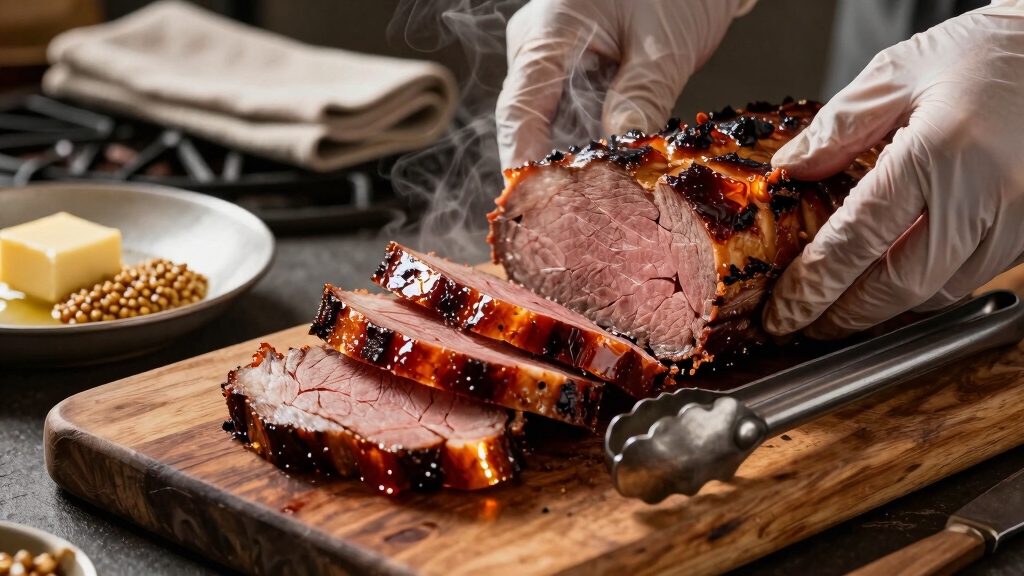
After warming, slice pastrami thinly to enhance tenderness and flavor release. Serve promptly to maintain moisture and avoid repeated reheating, which toughens the protein.
Pair with complementary condiments like mustard or pickles to balance saltiness. Proper temperature control combined with thoughtful serving makes certain you enjoy perfectly safe, juicy, and flavorful pastrami every time.
Frequently Asked Questions
Can I Freeze Cooked Pastrami for Later Reheating?
Yes, you can freeze cooked pastrami for later reheating.
Make sure to wrap it tightly in airtight packaging or vacuum seal it to prevent freezer burn and moisture loss.
Thaw it fully in the refrigerator before reheating to preserve texture and flavor.
Avoid repeated freezing and reheating cycles, as they degrade quality.
Proper freezing maintains safety and taste, allowing you to enjoy pastrami later without compromising its tenderness or moisture content.
How Long Does Cooked Pastrami Stay Fresh in the Fridge?
Think of cooked pastrami as a ticking clock, its freshness fading steadily.
You can safely store it in your fridge for 3 to 5 days.
Keep it sealed tightly in an airtight container or wrapped well to prevent moisture loss and contamination.
Always check for off smells or sliminess before consuming.
Beyond this window, harmful bacteria can multiply, so trust your senses and refrigeration limits to guarantee safe enjoyment.
Is It Safe to Reheat Pastrami Multiple Times?
You shouldn’t reheat pastrami multiple times. Each reheating cycle increases moisture loss and protein breakdown, causing dryness and rubbery texture.
Additionally, repeated warming raises food safety risks by allowing bacteria to grow during cooling and reheating phases. Instead, reheat only the portion you’ll consume immediately.
Store leftovers promptly at safe temperatures and avoid multiple reheats to maintain quality, texture, and minimize foodborne illness risk.
What Are the Best Side Dishes to Serve With Pastrami?
“Variety is the spice of life,” and with pastrami, you want sides that balance its rich, smoky flavor.
Serve classic rye bread or potato salad for texture contrast.
Coleslaw offers a crisp, tangy bite to cut through the meat’s fattiness.
Pickles enhance acidity, while baked beans add subtle sweetness.
For a modern twist, try roasted Brussels sprouts or a light mustard vinaigrette salad.
These sides complement pastrami expertly.
Can Pastrami Be Reheated in an Air Fryer?
Yes, you can reheat pastrami in an air fryer. Set it to 300°F and place the pastrami in a single layer to guarantee even heating.
Heat sliced pastrami for 3-5 minutes, flipping halfway to avoid drying.
For thicker cuts, wrap in foil to retain moisture and heat for 8-10 minutes.
Monitor closely to prevent toughness, as air fryers can dry meat quickly without moisture control.
Bring Pastrami Back to Life: Slow Heat, Big Flavor
When warming pastrami, remember that “slow and steady wins the race.” Choose your reheating method carefully to maintain moisture and flavor, whether it’s the oven, sous vide, or steaming.
Avoid overheating to keep the meat tender and juicy. Always reheat to an internal temperature of 165°F for safety.
With these techniques, you’ll enjoy perfectly warmed pastrami that’s as delicious as freshly sliced. Precision guarantees quality every time.