How Long to Cook a 7 Lb Brisket: Secrets for Perfect Flavor
You should plan about 7 hours to cook a 7 lb brisket at 225°F, using the low-and-slow method. Expect roughly 1 hour per pound, but adjust for thickness, environmental factors, and smoker stability.
Wrapping at around 150°F helps retain moisture and speed cooking through the stall. Always rely on internal temperature, aiming for 200–205°F for perfect tenderness.
Proper prep, monitoring, and resting are key for success. There’s more to mastering brisket timing and technique to explore ahead.
Key Takeaways
- Cook a 7 lb brisket at 225°F for about 7 hours, estimating 1 hour per pound as a base guideline.
- Add 1–2 hours for trimming, seasoning, and smoker prep, totaling approximately 8–9 hours for low-and-slow cooking.
- Wrapping the brisket around 150°F helps retain moisture and reduces stall time during the cook.
- For hot-and-fast cooking at 300°F, expect roughly 3.5 to 4 hours, but monitor closely to prevent drying.
- Final doneness is best judged by reaching an internal temperature of 200–205°F, not just cooking time.
How Long Does a 7 Lb Brisket Take to Cook at 225°F?

How long does it take to cook a 7-pound brisket at 225°F?
You should plan for about 7 hours of cooking time, following the general rule of 1 pound per hour at this temperature.
This estimate assumes consistent smoker heat and typical brisket thickness.
Remember, your total process will extend beyond just the cooking time.
You’ll need an additional 1 to 2 hours for trimming, seasoning, and preparing the smoker, including wood setup.
Target an internal temperature of 200-205°F for doneness, which guarantees tenderness.
Keep in mind that external factors like ambient temperature or frequent smoker door openings can affect timing.
After cooking, allow at least one hour of resting time before slicing to retain juices and optimize flavor.
For best results, check that the brisket reaches probe tenderness similar to room-temperature butter before pulling it off the smoker.
What Is the Low and Slow Method for Brisket Cooking?
Cooking a 7-pound brisket at 225°F naturally brings up the low and slow method, a technique favored for its ability to break down tough connective tissue while preserving moisture and flavor.
Cooking a 7-pound brisket at 225°F highlights the low and slow method’s tenderizing magic.
You’ll smoke the brisket for about one hour per pound, so plan on roughly seven hours of cooking time.
Add another one to two hours for prep, seasoning, and smoker setup, totaling around eight to nine hours.
During cooking, maintain a steady 225°F smoker temperature and target an internal temperature between 200-205°F for prime tenderness.
Wrapping the brisket at about 150°F helps retain moisture.
This method requires patience but rewards you with a tender, juicy brisket that melts in your mouth.
Keep your smoker closed to avoid heat loss and prolonged cook times.
Managing smoker humidity and airflow during the cook can help reduce the duration of the stall and improve overall brisket texture.
How Does Hot and Fast Cooking Speed up a 7 Lb Brisket?
When you cook a 7-pound brisket using the hot and fast method, you’ll notice that the higher temperature really cuts down the cooking time—like, it’s almost halved compared to the traditional low and slow methods. Pretty neat, right?
This quicker approach helps break down the connective tissue more rapidly, which is essential for that tender bite we all love. But here’s the catch: you really have to keep an eye on it to avoid overcooking. It’s all about tracking that internal temperature closely. You want to hit that sweet spot of 200-205°F for optimum tenderness. Trust me, it’s worth the extra attention! Maintaining a steady smoker temperature around 300°F ensures a balance between speed and flavor development through enhanced Maillard reactions.
Reduced Cooking Duration
Although traditional low and slow smoking at 225°F guarantees tenderness and flavor, opting for the hot and fast method markedly reduces the cooking time for a 7-pound brisket.
This approach uses higher heat to accelerate the cooking process without sacrificing key texture qualities. Here’s how it shortens your cook:
- Increases smoker temperature above 225°F to speed heat transfer.
- Cuts cooking time roughly in half, from about 7 hours to 3.5 hours.
- Requires close temperature monitoring to prevent overcooking.
- Maintains brisket’s internal target temperature of 200-205°F for doneness.
However, maintaining temperature consistency is crucial even at higher temperatures to ensure the brisket cooks evenly and remains tender.
Higher Temperature Impact
Since increasing the smoker temperature accelerates heat transfer, the hot and fast method markedly reduces the time it takes to cook a 7-pound brisket.
By raising the temperature above 225°F, you speed up the chemical reactions that break down collagen and render fat, cutting the cook time roughly in half—from about 7 hours to approximately 3.5 hours.
This method demands close attention to avoid drying out the meat, as higher heat can tighten the muscle fibers quickly.
You’ll also need to monitor the bark formation and adjust smoke levels accordingly.
While hot and fast cooking expedites the process, it requires precise control to maintain tenderness and juiciness.
Ultimately, this approach offers a significant time-saving advantage without sacrificing quality when executed properly.
To manage moisture and tenderness during this faster cook, many pitmasters choose to wrap the brisket around the stall temperature using the Texas Crutch technique.
Monitoring Internal Temperature
Hot and fast cooking speeds up a 7-pound brisket by accelerating the internal temperature rise. This reduces the time the meat spends in the stall phase where temperature plateaus.
You must monitor the internal temperature closely to avoid overcooking or drying out the brisket. Unlike low and slow, hot and fast demands more frequent checks since temperature changes rapidly.
Focus on these key points:
- Use a reliable instant-read thermometer for accuracy.
- Begin monitoring once the brisket hits 150°F, the typical wrapping point.
- Check every 30 minutes during the critical 150-200°F range.
- Target a final internal temperature between 200-205°F for ideal tenderness.
Monitoring internal temperature near 203°F ensures optimal collagen breakdown and juiciness.
How to Prepare a 7 Lb Brisket Before Cooking?
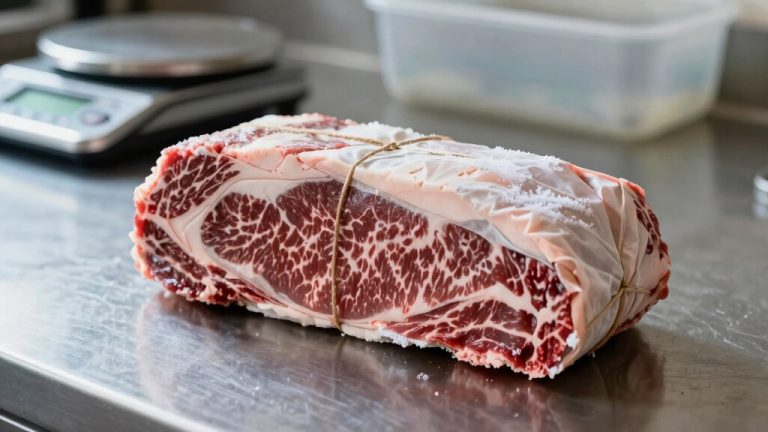
Before cooking your 7 lb brisket, start by trimming excess fat to about a quarter-inch thickness. This helps render fat evenly without causing flare-ups.
Remove any silver skin and hard fat to improve tenderness and allow seasonings to penetrate. Next, apply a dry rub evenly over the entire surface, focusing on salt, pepper, and other spices you prefer.
Let the brisket sit at room temperature for 30 to 60 minutes to promote even cooking. Meanwhile, preheat your smoker to the target temperature, usually around 225°F for low and slow cooking.
Prepare your wood chips for consistent smoke flavor. Finally, make sure your cooking equipment is clean and properly set up to maintain steady heat throughout the process. This methodical preparation sets the stage for optimal brisket results. For the most accurate cooking, insert a temperature probe into the thickest part of the flat muscle to monitor internal temperature and doneness during the cook.
Why You Should Trust Internal Temperature Over Cooking Time?
Why should you rely on internal temperature rather than a set cooking time when preparing brisket?
Because brisket cooking varies due to multiple factors, time alone can mislead you.
Brisket cooking times fluctuate widely, making time an unreliable measure of doneness.
Internal temperature provides a reliable doneness indicator, ensuring tenderness and safety.
Consider these points:
- Meat thickness varies, affecting heat penetration and cooking speed.
- Ambient conditions like wind and temperature can extend or reduce cooking time.
- Frequent smoker access lowers temperature, delaying doneness.
- Brisket may stall around 150-160°F internal temperature, prolonging cooking unpredictably.
Additionally, properly resting the brisket after cooking is essential to maximize moisture retention and tenderness.
When to Wrap a 7 Lb Brisket During Cooking?
You’ll want to wrap your 7 lb brisket once it hits around 150°F. This helps keep it moist and can actually speed up the cooking process.
Now, when it comes to materials, you’ve got a couple of good options: butcher paper or aluminum foil. Each has its own influence on the bark and cooking time, so think about what you’re aiming for.
Wrapping properly can really help you control the final texture of your brisket and can even cut down on the overall smoking time. So, choose wisely!
For best results, wrap your brisket during the stall temperature range (160–170°F) to balance moisture retention and bark quality.
Ideal Wrapping Temperature
Although wrapping a brisket is a critical step in the cooking process, you should wait until the internal temperature reaches around 150°F before doing so.
Wrapping too early can slow cooking and prevent bark formation. You want to hit this temperature because it signals the end of the stall phase, where the brisket’s internal temperature plateaus.
To determine the ideal wrapping time, consider these points:
- Monitor internal temperature closely with a reliable probe.
- Wrap once it stabilizes near 150°F, signaling moisture retention is critical.
- Wrapping helps push through the stall efficiently.
- Avoid wrapping before 150°F to maintain bark texture and cooking rhythm.
This method guarantees tenderness while preserving bark integrity and keeping cook time optimal.
Using multiple probes to monitor different parts of the brisket can ensure you wrap at the perfect time for each muscle.
Wrapping Materials Options
When wrapping a 7 lb brisket during cooking, choosing the right material can materially impact moisture retention and bark development.
You typically have two main options: aluminum foil and butcher paper.
Aluminum foil creates a tight seal, locking in moisture and speeding up the cooking process. This helps prevent drying but can soften the bark.
Butcher paper allows the brisket to breathe, preserving a firmer bark while still retaining sufficient moisture.
Use foil if you want a juicier result quickly, and opt for butcher paper if you prioritize bark texture and a slightly slower cook.
Both should be applied around 150°F internal temperature to avoid drying.
Whichever you choose, make sure it’s securely wrapped to maintain consistent heat and moisture throughout the remaining cook.
Impact On Cook Time
Since wrapping a brisket markedly alters its cooking environment, understanding the timing of this step is essential to managing overall cook time.
You typically wrap your 7 lb brisket when the internal temperature hits around 150°F, signaling the stall phase. Wrapping accelerates cooking by trapping heat and moisture, which reduces evaporation and tenderizes the meat faster.
Consider these points when deciding when to wrap:
- Wrap at 150°F internal temperature to avoid prolonged stall.
- Wrapping shortens cook time by several hours compared to unwrapped.
- Choose foil for faster cooking, butcher paper for balanced smoke retention.
- Monitor internal temperature closely after wrapping for peak doneness (200-205°F).
Proper wrapping timing guarantees you hit target temps efficiently without sacrificing texture or flavor.
How Wind and Temperature Affect Brisket Cooking Time?
Because brisket cooking relies heavily on consistent heat, wind and ambient temperature can markedly alter your cook time.
Consistent heat is key for brisket cooking, with wind and temperature greatly impacting your cook time.
When it’s cold or windy, your smoker struggles to maintain steady temperatures, forcing it to work harder and prolonging the cooking process.
For a 7-pound brisket cooked low and slow at 225°F, expect the cook time to increase beyond the typical 7 hours if conditions are harsh.
Wind amplifies heat loss from your smoker’s surface, causing temperature fluctuations that slow the internal temperature rise of the brisket.
Conversely, warmer, calm conditions help maintain stable heat, keeping cook times closer to standard estimates.
Monitoring your smoker’s temperature closely and adjusting fuel or placement helps mitigate these effects.
This ensures your brisket cooks thoroughly within the expected timeframe.
How to Tell When Your Brisket Is Done?
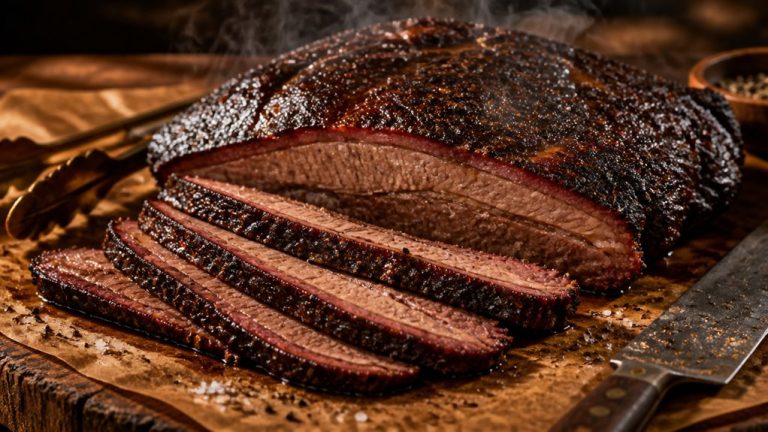
You’ll know your brisket is done when it hits that sweet spot of 200-205°F. That’s where the magic of peak tenderness happens!
Just take a moment to check the texture—it should feel soft and give easily when you poke it. You want it to be tender but not so soft that it falls apart completely.
And don’t forget to check out the bark! You’re looking for a rich, dark crust that signals it’s ready to rest. A little visible moisture is a good sign, too. Once you see all that, it’s time to let it rest and serve up some deliciousness!
Internal Temperature Targets
Although cooking times provide a useful guideline, the best way to determine when your brisket is done is by monitoring its internal temperature.
Temperature takes precedence over clock time because brisket thickness, ambient conditions, and smoker variations affect cooking rates. Aim for the following targets:
- 150°F – Wrap the brisket to retain moisture.
- 160°F – Begin checking for tenderness during the wrapped phase.
- 200-205°F – The ideal final internal temperature range for peak doneness.
- 203°F – Often considered the sweet spot for perfect brisket.
Use a reliable probe thermometer inserted into the thickest part of the brisket. Avoid relying solely on time.
Internal temperature guarantees you catch doneness accurately and consistently every time.
Texture and Tenderness
When evaluating your brisket’s readiness beyond internal temperature, texture and tenderness serve as essential indicators.
You’ll want to test tenderness by inserting a probe or skewer into the meat; it should slide in with little resistance, like softened butter.
If you feel significant resistance, your brisket needs more time.
Pay attention to the texture—properly cooked brisket fibers will feel tender yet cohesive, not mushy or dry.
Avoid relying solely on a fork; instead, use a gentle probe test at multiple points, especially the thickest section.
Remember, tenderness varies slightly by brisket cut, so combine this with temperature readings.
Achieving the right tenderness guarantees your brisket is juicy and easy to slice, delivering the ideal eating experience after your 7-pound brisket’s low-and-slow or hot-and-fast cook.
Visual Appearance Cues
While internal temperature and tenderness remain critical, visual appearance cues offer valuable confirmation of your brisket’s doneness.
You’ll want to observe its surface and structure carefully before pulling it off the heat. Look for:
- A dark, mahogany bark that’s firm yet not burnt.
- Juices pooling slightly on the surface, indicating proper moisture retention.
- Visible fat rendering and translucent, signaling thorough cooking.
- The brisket’s edges pulling back slightly from the foil or pan.
These signs complement your temperature readings and texture checks, ensuring the brisket is ready without guesswork.
Combining these visual cues with your thermometer will help you serve a perfectly cooked 7 lb brisket every time.
Why Resting a 7 Lb Brisket After Cooking Is Essential?
Because the internal temperature of a 7 lb brisket reaches around 200-205°F during cooking, resting allows the meat’s juices to redistribute evenly. This prevents them from spilling out when you slice.
Resting a 7 lb brisket at 200-205°F lets juices redistribute, preventing loss when sliced.
When you remove the brisket from the heat, the muscle fibers relax, and the redistributed moisture reabsorbs. This process enhances tenderness and flavor.
Skipping this step risks dry, tough meat. Aim for a minimum 1-hour rest, loosely wrapping the brisket in foil or butcher paper to retain warmth without causing steaming.
This resting period also equalizes internal temperature, ensuring consistent doneness throughout. By methodically resting your brisket, you improve its texture and juiciness.
This makes every slice flavorful and moist, an essential step after hours of careful cooking. Don’t rush this process; your brisket deserves it.
How to Adjust Cooking Time for Different Brisket Sizes at 225°F?
Adjusting cooking time for different brisket sizes at 225°F requires you to account for the weight-to-time ratio carefully. Typically, you’ll estimate about 1 hour per pound, but factors like meat thickness and ambient conditions can shift this.
To adjust cooking time precisely, follow these steps:
- Calculate the base cook time using 1 hour per pound.
- Add 1-2 hours for smoker preparation and seasoning.
- Monitor internal temperature closely, aiming for 200-205°F.
- Factor in potential delays due to environmental variables like wind or cold.
Frequently Asked Questions
What Type of Wood Is Best for Smoking a 7 Lb Brisket?
For smoking a 7 lb brisket, you’ll want to use hardwoods like oak, hickory, or mesquite.
Oak provides a balanced, mild smoke flavor that won’t overpower the meat.
Hickory offers a stronger, bacon-like taste, ideal if you like bold flavors.
Mesquite burns hot and fast, giving an intense smokiness, so use it sparingly or mixed with milder woods.
Fruitwoods like apple or cherry add subtle sweetness and complexity if you prefer a gentler smoke.
How Often Should I Spray or Mop the Brisket During Cooking?
Think of spraying or mopping your brisket like giving it gentle rain during a slow-growing season.
You should spray or mop it every 45 minutes to an hour to maintain moisture and enhance flavor without washing away the bark.
Use a light hand with a flavorful liquid like apple juice or a vinegar-based mop.
Avoid overdoing it; too much moisture can extend cooking time and weaken the crust you worked hard to form.
Can I Freeze a Cooked 7 Lb Brisket for Later Use?
Yes, you can freeze a cooked 7 lb brisket for later use.
Let it cool completely, then wrap it tightly in foil or plastic wrap.
Place it in an airtight freezer bag to prevent freezer burn.
Label it with the date and use it within 3-4 months for prime quality.
When ready, thaw it slowly in the refrigerator before reheating gently to maintain its moisture and flavor.
What Is the Best Way to Slice a Brisket for Serving?
The best way to slice a brisket is against the grain to guarantee tenderness.
First, locate the grain direction, which runs differently on the flat and point muscles.
Slice the flat into thin, even pieces about ¼-inch thick, cutting perpendicular to the grain.
For the point, which has more marbling, slice against its distinct grain.
Use a sharp carving knife to maintain clean, smooth cuts without shredding the meat.
How Do I Safely Reheat Leftover Brisket Without Drying It Out?
Reheating leftover brisket is like waking a sleeping giant. Handle it gently.
Wrap your brisket slices tightly in foil to lock in moisture. Heat them slowly in a 250°F oven for 20-30 minutes, checking often.
You can add a splash of beef broth to keep it juicy. Avoid the microwave, which dries meat out quickly.
Let it rest briefly after reheating to redistribute the juices evenly for tender, flavorful bites.
Slow Cooking, Big Rewards: Unlock Brisket Perfection
Cooking a 7 lb brisket at 225°F demands patience. Think of it as waiting for a masterpiece to emerge from the flames.
Trust the internal temperature over the clock; it’s your best guide. Remember, prepping properly and accounting for weather variations make all the difference.
Once done, resting the brisket is essential to lock in those flavors. Master these steps, and you’ll serve a brisket so tender it could melt the hardest heart.